 COPPER
What is the national dish of Greenland?
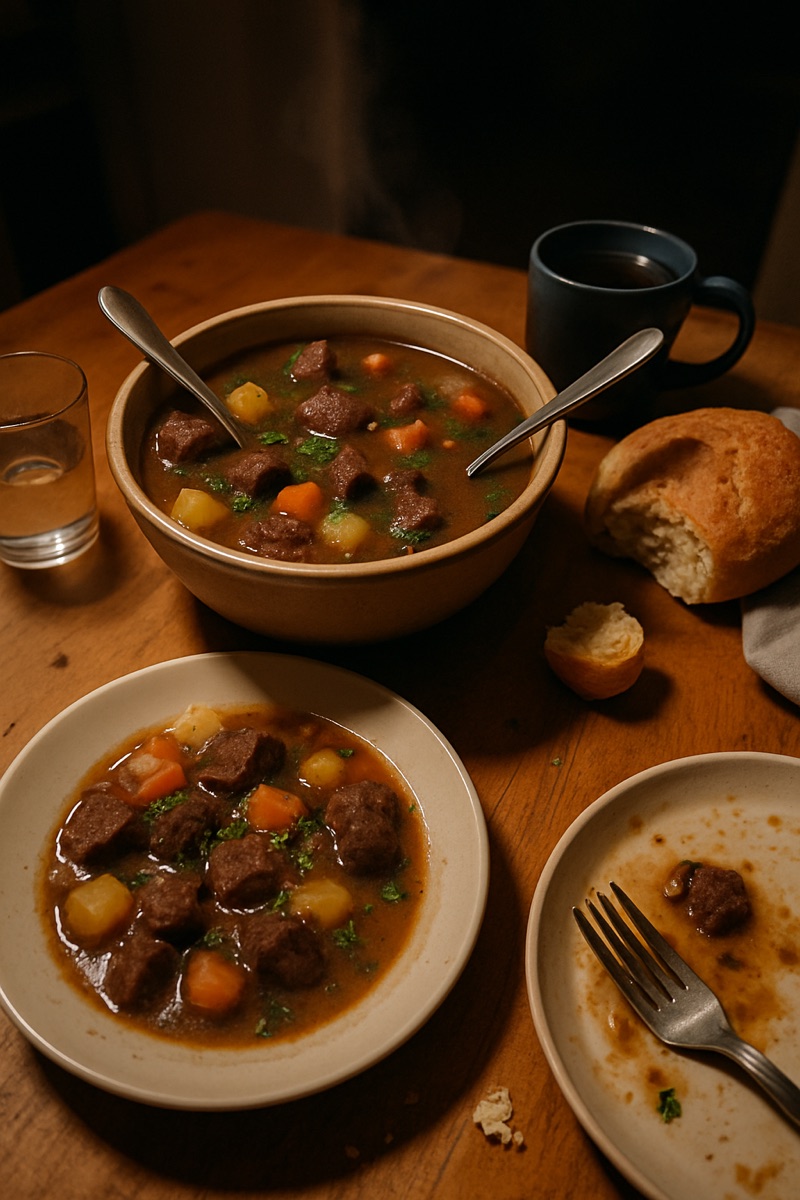
The national dish of Greenland is suaasat, a traditional soup of seal meat simmered on the bone with onion and potatoes, seasoned only with salt, pepper and bay leaf, and thickened with rice or barley soaked overnight. Whale, reindeer or seabirds can replace the seal. There is no law naming it, but suaasat is the dish consistently cited as Greenland's national dish.
What is suaasat?
Suaasat is a soup, and a very plain one. Its base is seal meat, cooked slowly on the bone in water. Onions and potatoes go in, and the seasoning stops at salt, black pepper and bay leaves. What gives it body is the starch: rice, or barley soaked overnight so its starch leaches into the water and turns the broth cloudy.
Seal is the traditional meat, but whale, reindeer and seabirds are all used, depending on what the hunt brought in. Suaasat is also a traditional Inuit food, not only a Greenlandic one.
Is it official? No law or government text names a national dish for Greenland. But the sources agree: the encyclopedic article on Greenlandic cuisine states plainly that suaasat is the national dish, and Wikipedia's list of national dishes gives it as Greenland's only entry, with no rival candidate.
How suaasat is made
Our suaasat recipe follows the traditional method with 800 g of seal meat on the bone:
- Soak 100 g of pearl barley overnight, and keep the soaking water.
- Soak the seal meat in cold water for 1 hour to draw out the blood, changing the water once.
- Bring the meat slowly to the boil in 2 litres of water and skim the grey foam for 15 minutes.
- Add 2 bay leaves and salt, then simmer very gently for 1½ to 2 hours.
- Add a chopped onion and 400 g of potatoes for 25 minutes more.
- Pour in the barley with its water for the last 30 minutes, and season with black pepper.
- Serve very hot in deep bowls, the meat still on the bone and the broth cloudy enough to coat a spoon.
Why seal, and why so little seasoning
Most of Greenland is covered by permanent ice, so the sea feeds the country. Greenlandic cooking has always been built on marine mammals, birds and fish, and it is high in protein. Bearded and ringed seals are hunted all year round, while narwhals and white whales are taken in summer. Hunting hooded seals was traditionally a major yearly event for whole communities, men, women and children together.
The sea also supplies fish: capelin (ammassat), which dries easily, Atlantic and Greenland halibut, redfish and lumpfish off the west coast, Arctic char off the east, plus shrimp and mussels. Since colonisation and the arrival of international trade, Danish, British, American and Canadian food has shaped Greenlandic tables too, and rice and potatoes are now common starches in meals, as they are in suaasat.
How to pronounce suaasat
In Greenlandic, suaasat is pronounced [suaːsat]: roughly "soo-aa-sat", with a long "a" in the middle, written as a double "aa".
Other dishes to know from Greenland
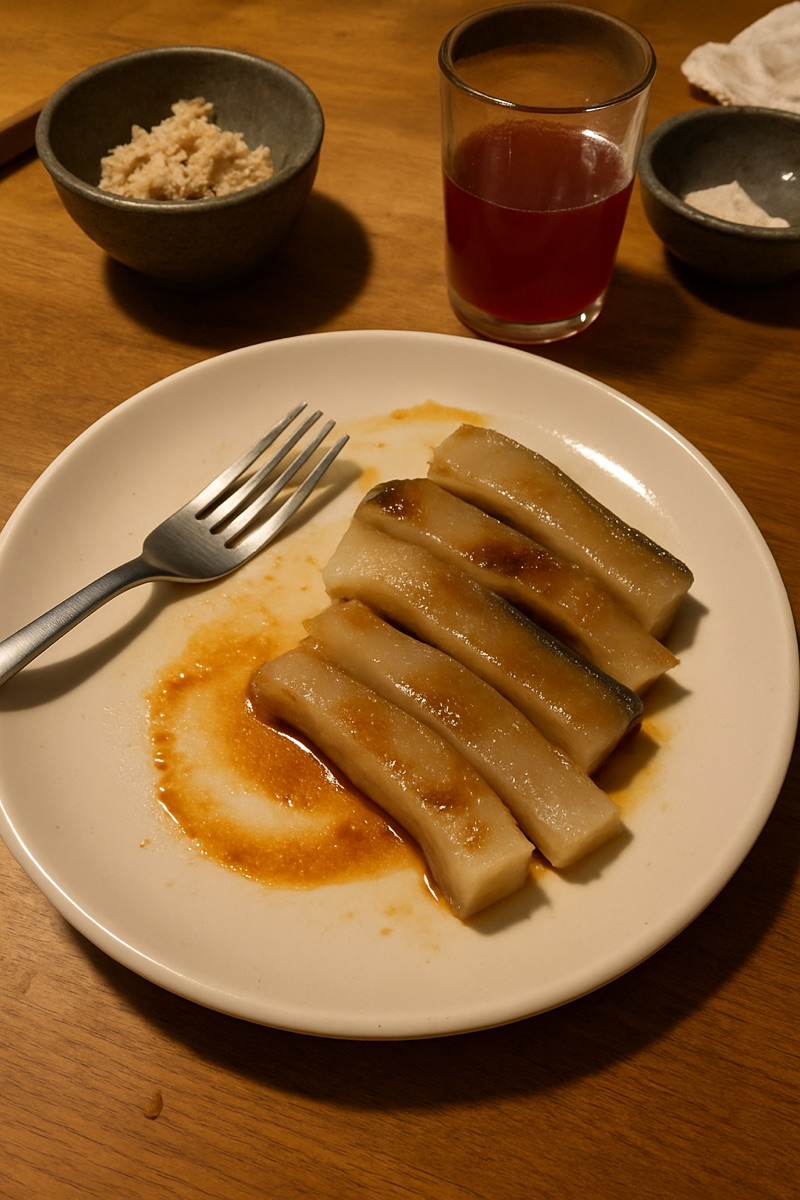
Mattak is the raw skin of narwhal, beluga or bowhead whale with its layer of blubber, cut cold into small cubes. It is a delicacy eaten on special occasions or as a treat, and when eaten raw it is an important source of vitamin C. Today many Greenlanders serve it with a little soy sauce, a modern habit rather than the traditional form, and some add Aromat seasoning salt.
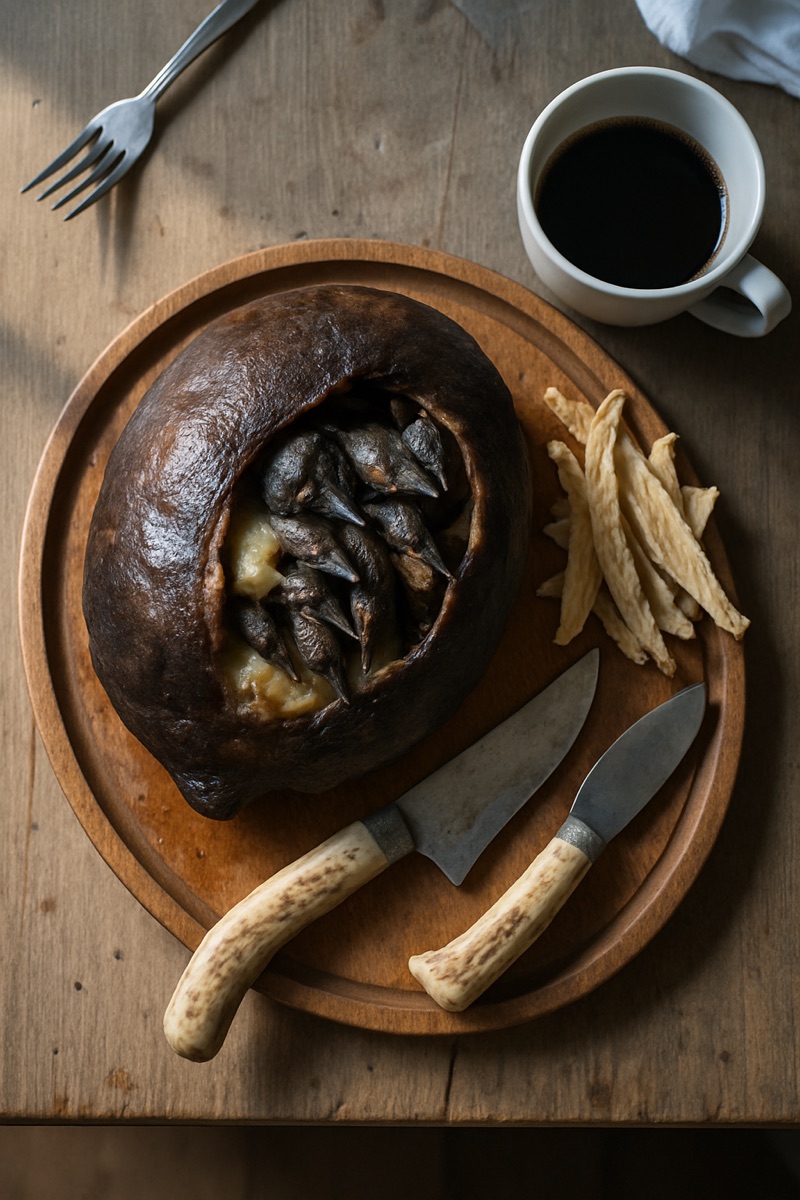
Kiviak is a winter food of Inughuit culture, made as a community effort: up to 500 little auks packed whole, feathers and beaks included, into a seal skin. The air is pressed out, the skin is sewn shut and sealed with seal fat to keep flies away, and the bundle is left under a heap of stones to ferment for months. It is opened for birthdays and weddings in the Arctic winter. It cannot be made safely outside that tradition: the airless fermentation can cause botulism, and in 2013 several people in Siorapaluk died after eating kiviak made from eider instead of auk.
Other foods on Greenlandic tables:
- Dried fish and whale: dried cod or whale with blubber, a common lunch and snack.
- Arfivik: smoked bowhead whale meat with onion and potato.
- Musk ox and reindeer: musk ox hunted in spring, reindeer in autumn; both can be served as tartare.
- Crowberries and blueberries: picked in autumn for desserts and compotes served with meat.
Find the recipes
All three dishes are documented on our page about the food of Greenland. Fermented foods run through the North Atlantic: compare kiviak with the fermented shark of Iceland in our article on the national dish of Iceland, or see our guide to Nordic food.
The recipes
- Suaasat🇬🇱 Greenland · 15 hours and 30 minutes
 Mattak🇬🇱 Greenland · 10 minutes
 Kiviak🇬🇱 Greenland · 90 days
Questions people ask
What is the national dish of Greenland?
Suaasat, a soup of seal meat with onion and potatoes, seasoned with salt, pepper and bay leaf and thickened with rice or soaked barley.
Can suaasat be made without seal?
Yes. Whale, reindeer and seabirds are traditional alternatives, and musk ox is also used when seal is not available.
Is kiviak safe to eat?
Only when made the traditional way with little auks. The airless fermentation can cause botulism, and eider-based kiviak killed several people in Siorapaluk in 2013.
What does mattak taste like?
The skin is firm at first bite then chewy, with a slightly salty taste, while the blubber has little flavour and a fatty feel.
Keep reading
- Traditional food of Greenland: 10 dishes to know
- What is the national dish of Denmark?
- What is the national dish of Finland?
- What is the national dish of Iceland?
- What is the national dish of Norway?
- What is the national dish of Sweden?