 COPPER
Traditional food of Greenland: 10 dishes to know
Traditional Greenlandic food is Inuit hunting food: meat from seals, whales and seabirds, fish, and land animals such as reindeer and musk ox, eaten boiled, dried, frozen, fermented or raw, with rice and potatoes added since colonisation. The most emblematic dishes are suaasat seal soup, mattak (raw whale skin and blubber), kiviak and dried capelin.
What Greenlandic food is built on
Most of Greenland lies under permanent ice, so the sea has always been the larder. Greenlandic cooking is traditionally based on marine mammals, birds and fish, and it is very high in protein. Bearded and ringed seals are hunted all year round, narwhals and white whales in summer, reindeer in autumn and musk oxen in spring, and 21 species of birds may legally be hunted, among them little auk, eider, ptarmigan and thick-billed murre.
Meat and fish can be boiled, dried, frozen, fermented or eaten raw. Drying, freezing and fermentation let food keep through the winter, and raw whale skin was an important source of vitamin C in a diet with very few plants. Plants still play a small part: crowberries and blueberries picked in autumn, seaweed stored for winter, and roseroot and fireweed leaves gathered in summer.
Since colonisation and the arrival of international trade, Danish, British, American and Canadian food has shaped Greenlandic tables. Rice and potatoes are now common starches, onions are in many dishes, and supermarkets sell everyday imported food. Animal foods made up most of the Greenland Inuit diet until about 1980, and they still do in some regions.
Soup and the hunt
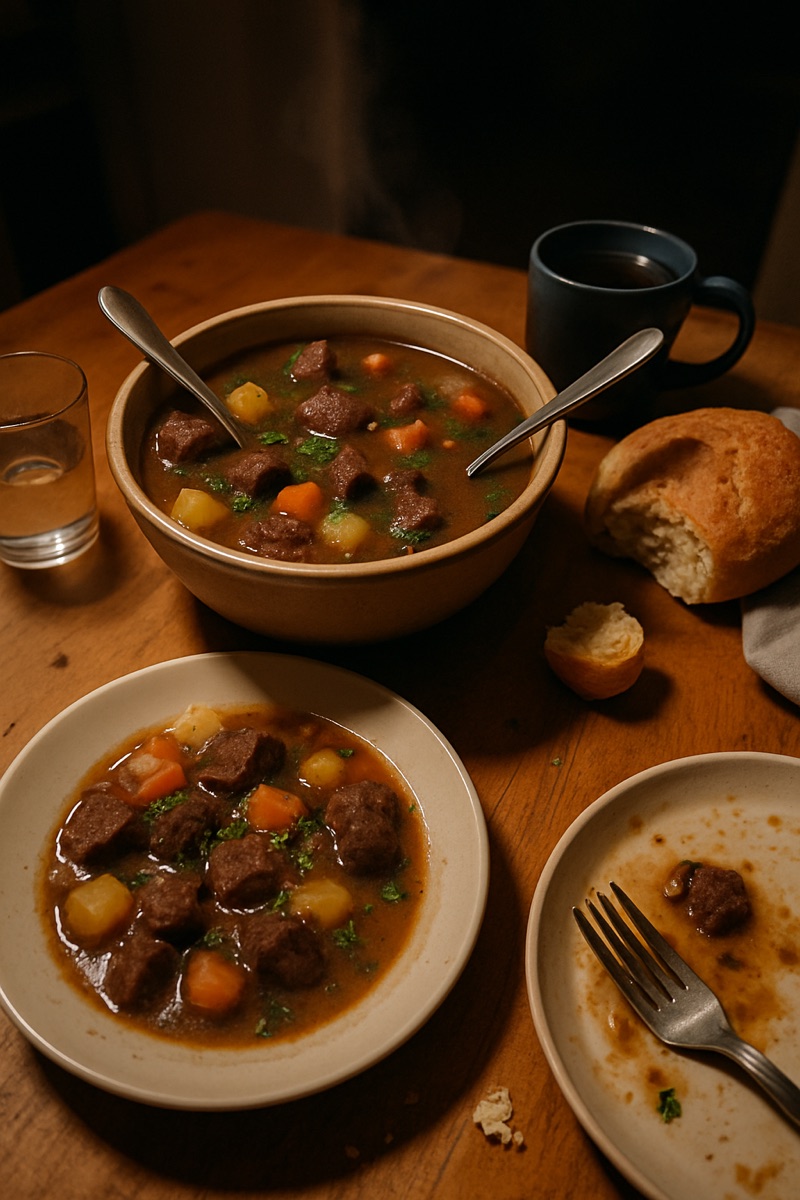
- Suaasat — The national dish: a soup of seal meat cooked on the bone with onion and potatoes, seasoned only with salt, pepper and bay leaf, and thickened with rice or with barley soaked overnight so its starch clouds the broth. Whale, reindeer or seabirds can replace the seal. Our suaasat recipe follows the traditional method, and the national dish of Greenland explains why it holds the title.
- Musk ox and reindeer — The two big land animals of Greenlandic cooking. Musk ox is hunted in spring and reindeer in autumn, and the meat is boiled, dried or frozen, and can be served as tartare. Reindeer liver is eaten raw right after the hunt. Hotel restaurants in Ilulissat serve reindeer and musk ox from Kangerlussuaq, and both meats appear on the kaffemik table at family celebrations.
From the sea: whale, fish and roe
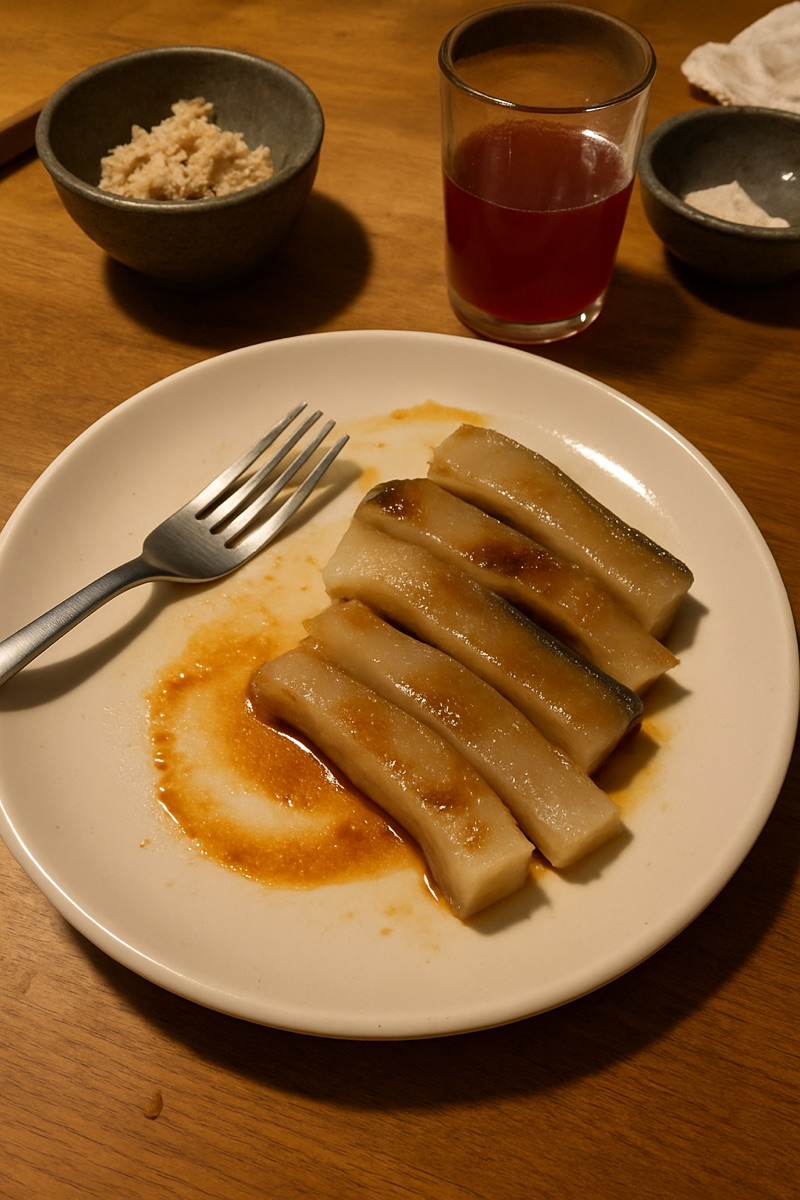
- Mattak — The raw skin of narwhal, beluga or bowhead whale with its layer of blubber, cut into small cubes and eaten as a delicacy at celebrations or as a treat. Eaten raw it is an important source of vitamin C. Many Greenlanders now add soy sauce or the yellow seasoning salt Aromat, and it is sold in Nuuk supermarkets and at the Kalaaliaraq fish market. See our mattak guide.
- Arfivik — Smoked bowhead whale meat, served with onions and potatoes. Subsistence whaling by Greenlanders is legal, and a quarter of the country's whale meat is frozen and distributed by a single company, Arctic Green Food.
- Ammassat — Capelin, a small schooling fish that is commonly eaten in Greenland and dries easily. Dried ammassat are one of the classic traditional foods.
- Dried fish and whale with blubber — Dried cod or dried whale meat eaten with a piece of whale blubber, a popular lunch and snack. Greenland halibut, redfish and lumpfish are fished off the west coast and Arctic char off the east, and fish is often smoked.
- Lumpfish roe — Lumpfish is fished off the west coast, and its roe appears on the home table, served on blinis at the kaffemik, alongside the shrimp and mussels of Greenland's waters.
Fermented food, coffee and cakes
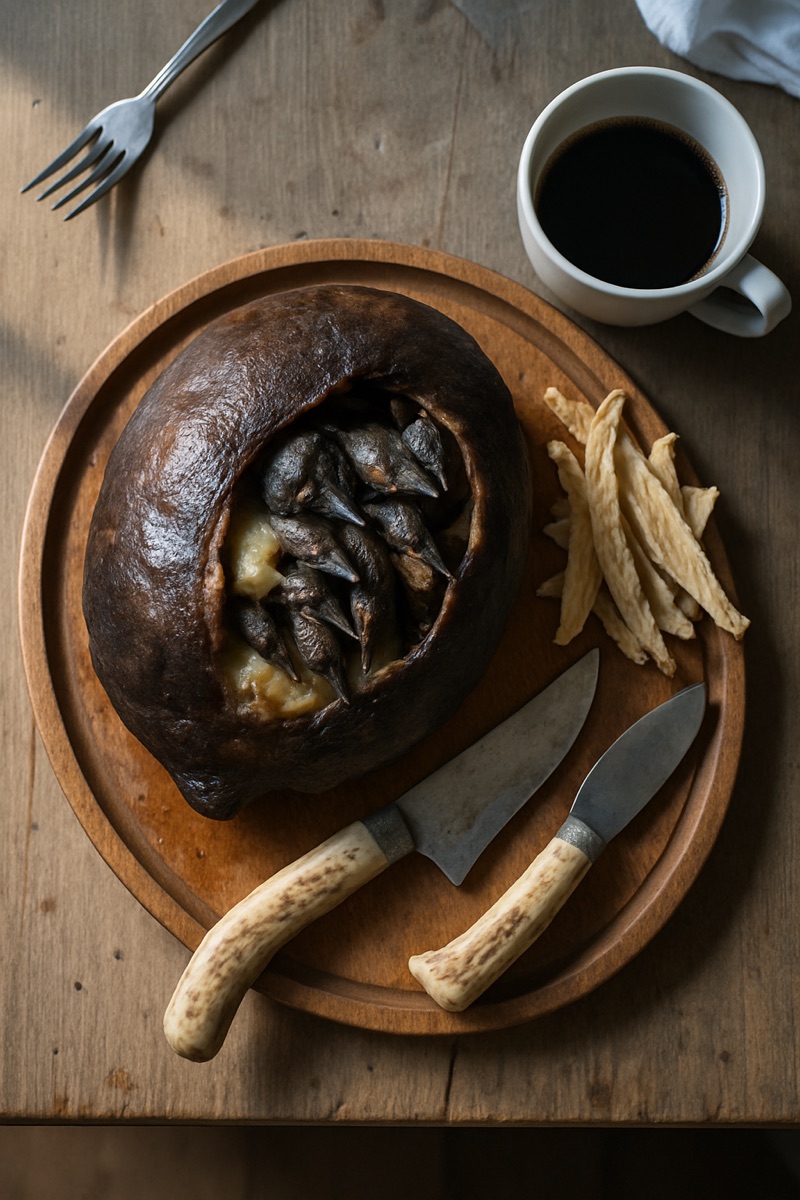
- Kiviak — A winter food of Inughuit culture in the far north: up to 500 little auks packed whole, beaks and feathers included, into a seal skin, sealed with seal fat and left under stones to ferment for about three months, then eaten at birthdays and weddings. The airless fermentation can cause botulism, and in 2013 several people in Siorapaluk died after eating kiviak made from eider instead of auk. Our kiviak page documents how it is actually made.
- Kaffemik cakes — A kaffemik is an open house held for a birthday, a wedding, a christening or a boy's first seal, with guests coming and going all day and, by definition, always a fresh pot of coffee. The table holds homemade cakes, crowberry muffins, apple tarts and marzipan cookies, and often full dishes of reindeer and musk ox, fish soup and lumpfish roe.
- Greenlandic coffee — An after-dinner drink of hot coffee, whisky, Kahlúa and Grand Marnier topped with whipped cream, served in a wine glass and set alight before drinking; it is Greenland's answer to Irish coffee.
Greenland among the Nordic and Inuit kitchens
Greenlandic food sits between two worlds. Its hunting dishes belong to the wider Inuit tradition shared with Arctic Canada, where whale skin is called muktaaq and fermented meats are also eaten; see the traditional food of Canada for the southern side of that country. Its coffee tables, cakes and supermarkets are Danish, which you can compare in the traditional food of Denmark. For the North Atlantic as a whole, see our guide to Nordic food.
Read the Greenlandic recipes
Suaasat has a full step-by-step recipe in Copper, and mattak and kiviak are documented as they are actually prepared in Greenland, with the reasons neither can be reproduced at home. You will find all three on our page about the food of Greenland.
The recipes
- Suaasat🇬🇱 Greenland · 15 hours and 30 minutes
 Mattak🇬🇱 Greenland · 10 minutes
 Kiviak🇬🇱 Greenland · 90 days
Questions people ask
What is the most popular food in Greenland?
Suaasat, a soup of seal meat with onion, potatoes and rice or barley, is the national dish. Mattak, dried capelin and dried fish or whale with blubber are the most common traditional snacks.
Do people in Greenland eat seal?
Yes. Bearded and ringed seals are hunted all year round, and seal meat is the traditional base of suaasat. It is boiled, dried or eaten raw.
Is Greenlandic food spicy?
No. Traditional Greenlandic food is seasoned very simply, often with nothing more than salt, pepper and bay leaf. Its strong flavours come from the meat itself and from drying and fermentation.
What is a kaffemik?
A kaffemik is a Greenlandic open house held for birthdays, weddings, christenings or a boy's first seal. Guests drop in through the day for coffee, cakes and often reindeer, musk ox and fish dishes.
What do Greenlanders drink?
Coffee is at the centre of social life. Greenlandic coffee, with whisky, Kahlúa, Grand Marnier and flaming whipped cream, is the classic after-dinner drink, and breweries in Nuuk and Ilulissat brew beer with glacial water.
Keep reading
- What is the national dish of Greenland?
- Traditional food of Denmark: 13 dishes to know
- Traditional food of Finland: 12 dishes to know
- Traditional food of Iceland: 12 dishes to know
- Traditional food of Norway: 13 dishes to know
- Traditional food of Sweden: 13 dishes to know