 COPPER
Traditional food of Denmark: 13 dishes to know
Danish food is built on sourdough rye bread, pork, herring and other North Sea and Baltic fish, potatoes and dairy, with cold lunches and hot pork dinners. The most emblematic dishes are smørrebrød, open sandwiches on rye, stegt flæsk med persillesovs, crisp pork belly with parsley sauce, voted the national dish in 2014, frikadeller, pork meatballs, and æbleskiver at Christmas.
What Danish food is built on
Danish cooking comes from the peasant food of the countryside before industrialisation: farms kept rye for bread, barley for beer, dried peas for soup and salted or smoked pork, and ate cabbage, fish and later potatoes. Dairy cooperatives spread in the second half of the 19th century, and rye bread and potatoes stayed staples through every change that followed. Imported spices such as cinnamon, cardamom, nutmeg and black pepper have been used since the Middle Ages, which is why so many Danish cakes and Christmas dishes smell of them.
Most Danes eat a cold breakfast, a cold lunch of open sandwiches, often packed from home, and one hot dinner. Pork is by far the favourite meat, and a hot meal is usually meat with potatoes and gravy or sauce. Beer and snaps, an aquavit, go with festive cold tables, and since the early 2000s chefs working with local produce have made the New Nordic kitchen, led by Copenhagen's Noma, known worldwide.
Smørrebrød and the cold table
Lunch in Denmark means rye bread, rugbrød: a dark, heavy sourdough loaf, buttered and topped. The same toppings fill the great cold buffet, det kolde bord, at Christmas and Easter:
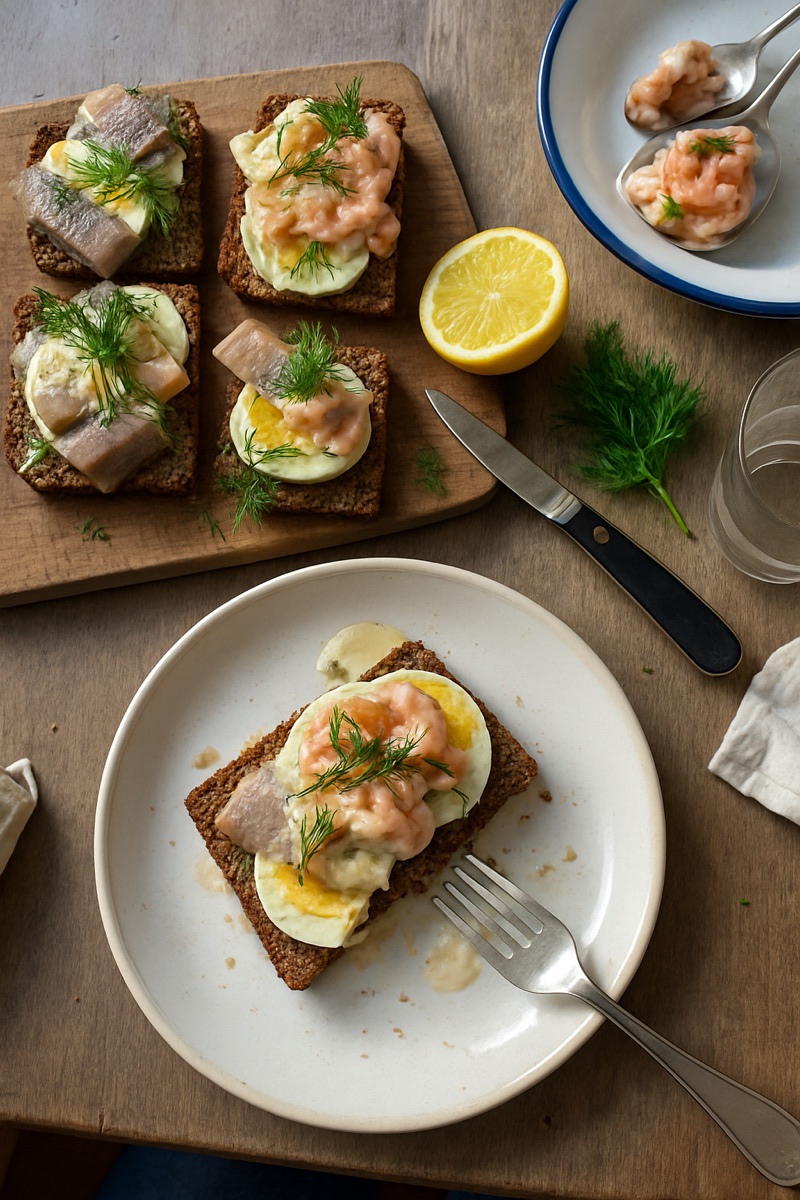
- Smørrebrød — An open sandwich: a slice of rye bread buttered to the edges, then topped with pickled herring, roast beef, egg and shrimp, liver pâté or cold cuts and finished with garnishes. Its name comes from smør og brød, butter and bread, and it dates back to the 19th century: in the 1880s Oskar Davidsen opened a Copenhagen restaurant with a long list of them.
- Stjerneskud — The shooting star, one of the Danes' favourite smørrebrød: a base of bread with steamed white fish on one half and fried, breaded plaice on the other, covered in shrimp, mayonnaise, lumpfish roe or caviar, cucumber and lemon.
- Leverpostej — Liver pâté made from pig's liver and lard, on sale in grocery shops since the end of the 19th century. It is spread on rye bread for lunch, or served warm on rye with bacon, sautéed mushrooms and pickles.
- Sild — Herring, the opening course of every cold table: pickled in a sweet spiced vinegar, in a red sandalwood marinade, in curry sauce, or rye-battered, fried and marinated in vinegar. It is eaten on buttered rye bread with raw onion rings, capers and hard-boiled egg, with a glass of snaps.
Hot dinners: pork comes first
Pork makes up about 42% of the meat Danes cook at home, ahead of poultry and beef, and three pork dishes define the dinner table:
- Stegt flæsk med persillesovs — Slices of lightly salted pork belly, fried or oven-baked until crisp, served with boiled potatoes and a white sauce full of chopped parsley. It won Denmark's first national dish vote in 2014, organised by the Ministry of Environment and Food, and it is everyday, inexpensive food.
- Frikadeller — Flat oval meatballs of minced pork, or pork and veal, mixed with onion, egg, milk and flour and fried in butter. They are served hot with potatoes, brown gravy and red cabbage, or cold on rye bread the next day.
- Flæskesteg — Roast pork with the rind scored and rubbed with coarse salt so it turns into crisp crackling. With roast duck, it is the classic Christmas Eve main course, served with brown gravy, boiled potatoes, sugar-caramelised potatoes and sweet-sour red cabbage.
Hot dogs and pastries
Two Danish food habits are visible on any street: the sausage wagon and the bakery window.
- Røde pølser — Red sausages about 20 cm long in bright red skins, sold from pølsevogne, hot dog wagons that have fed Danes for more than a century. The traditional order comes with a separate bun on the side and ketchup, Danish remoulade and strong mustard; in a bun, it becomes a hot dog with fried and raw onion and sliced pickles.
- Wienerbrød — Vienna bread, the name Danes give to what the rest of the world calls Danish pastry. Austrian bakers first made it in Denmark in the 1840s, and it is now found in every bakery in shapes such as kanelsnegl, the cinnamon snail, and kringle, the pretzel-shaped pastry that has symbolised Danish bakers since the Middle Ages.
Desserts and Christmas sweets
Danish desserts follow the seasons, from cold buttermilk in summer to rice pudding at Christmas:
- Æbleskiver — Round puffs of buttermilk and cardamom batter, turned in a special pan with round hollows. Despite the name, apple slices, they contain no apple. Danes eat them hot throughout December, dusted with icing sugar and dipped in jam.
- Risalamande — Cold rice pudding mixed with whipped cream, sugar, vanilla and chopped almonds, served with hot or cold cherry sauce on Christmas Eve. One whole almond is hidden in the bowl, and whoever finds it wins a prize, traditionally a marzipan pig.
- Rødgrød med fløde — A thick compote of red berries, usually strawberries, rhubarb and raspberries, boiled down and served with cream. Its soft d sounds make it the phrase Danes jokingly ask foreigners to pronounce.
- Koldskål — A sweet, cold buttermilk soup flavoured with vanilla and lemon, the summer dessert of Denmark, sometimes eaten as a light dinner on warm evenings.
Islands, coasts and the calendar
With its long coastline and many islands, Denmark eats a lot of fish, and some places have their own specialities. The Baltic island of Bornholm is known for its smoked fish. The Limfjord and the North Sea supply oysters, eaten in the months with an R in them, and the Limfjord caviar that tops a stjerneskud. The calendar matters as much as the map: julefrokost, the Christmas lunch, runs through December with herring, sylte, a pork meat jelly, and risalamande; roast duck stuffed with apples and prunes is served on Mortensaften, the St Martin's feast in November; and poached cod with mustard sauce is the traditional main course on New Year's Eve.
Cook Danish food at home
Stegt flæsk is the official national dish of Denmark, but smørrebrød is the dish Danes eat most days. Danish cooking belongs to Nordic cuisine: compare its herring and rye bread with the traditional food of Sweden and its pork and pastries with the traditional food of Germany.
Smørrebrød, frikadeller and æbleskiver each have a full recipe, with quantities and step-by-step methods, in the Copper app. You will find them on our page dedicated to Danish recipes.
The recipes
- Smørrebrød🇩🇰 Denmark · 40 minutes
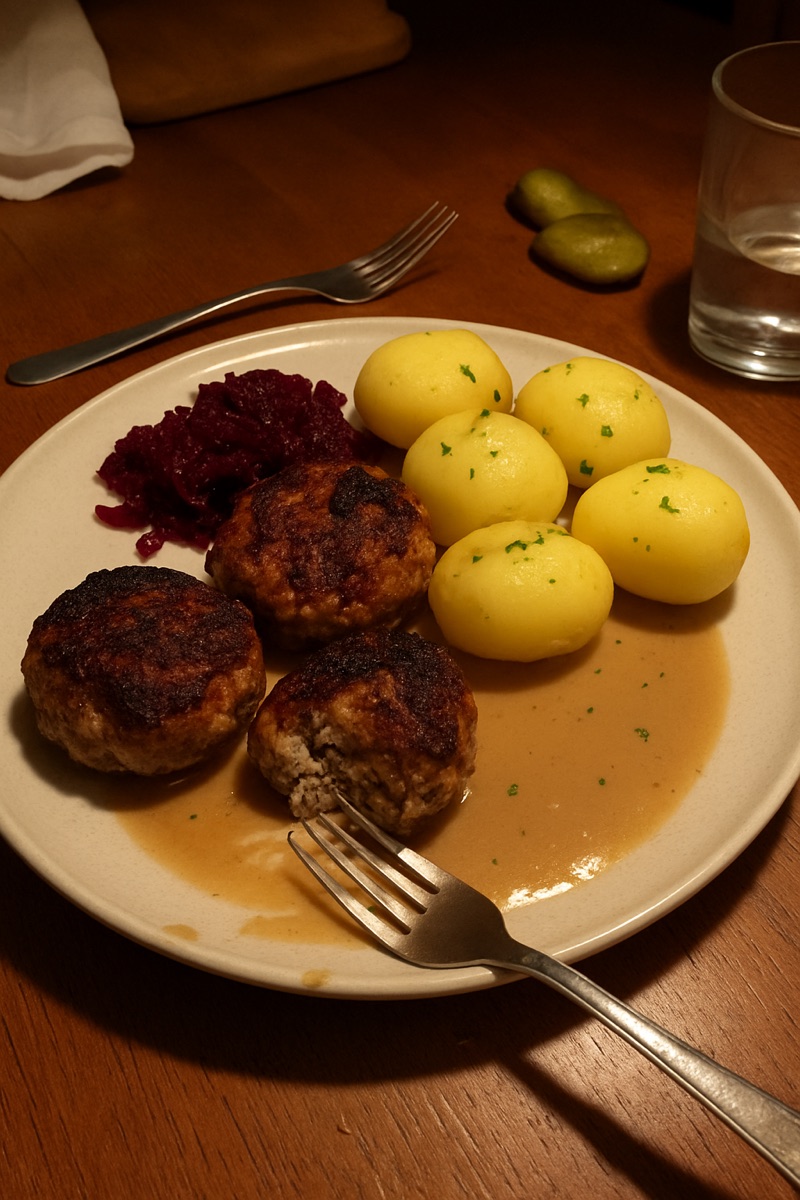 Frikadeller🇩🇰 Denmark · 2 hours and 45 minutes
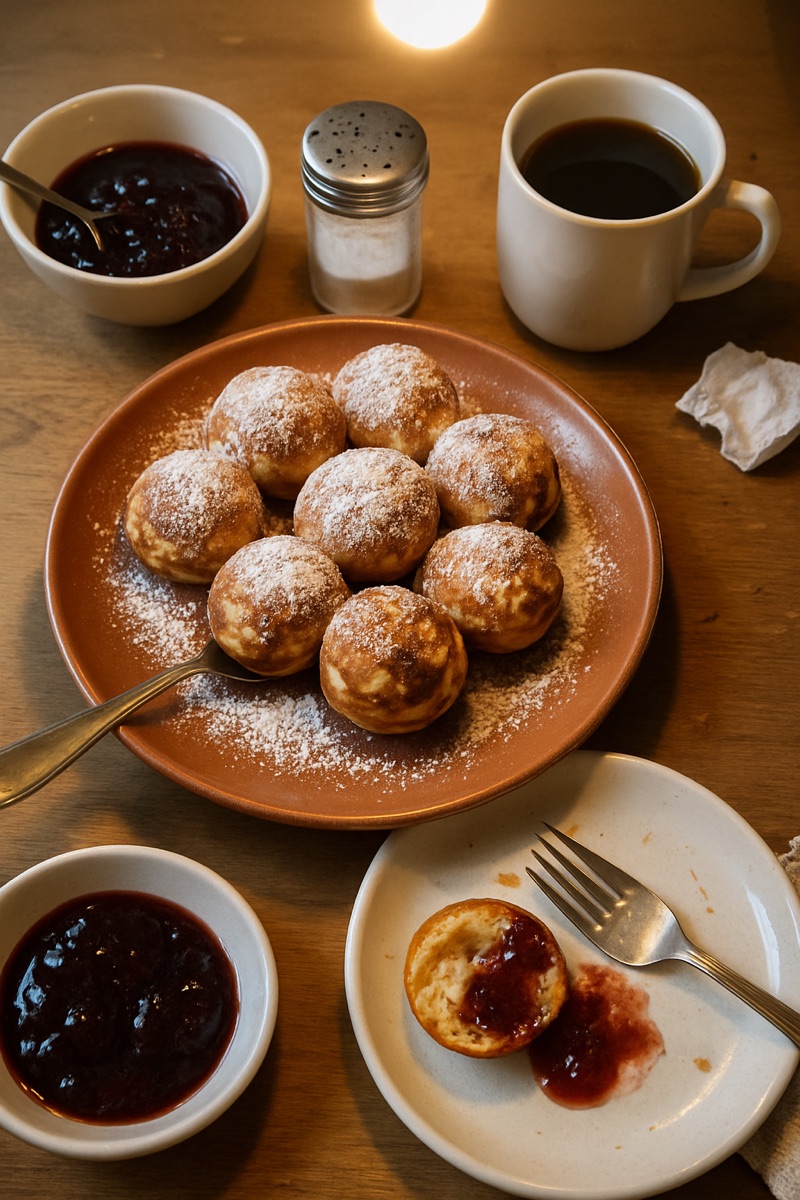 Æbleskiver🇩🇰 Denmark · 55 minutes
Questions people ask
What is the most popular food in Denmark?
Smørrebrød, the open sandwich on rye bread, is the most common Danish lunch. Stegt flæsk med persillesovs was voted the national dish in 2014, and frikadeller and roast pork are everyday favourites.
What do Danes eat for breakfast?
Usually rye bread, white bread or rolls with butter, cheese or jam, with coffee or tea, or cereal and soured milk such as ymer. On Sundays and special days, wienerbrød is added, and øllebrød, a rye bread and beer porridge, is a traditional option.
Is Danish food spicy?
No. Danish food is mild, but it uses warm spices such as cinnamon, cardamom, nutmeg, cloves and black pepper, above all in baking and Christmas dishes.
What do Danes eat at Christmas?
On Christmas Eve, roast pork with crackling, or roast duck or goose, with caramelised potatoes, red cabbage and gravy, followed by risalamande with cherry sauce. Æbleskiver are eaten throughout December.
Is Danish pastry really Danish?
In Denmark it is called wienerbrød, Vienna bread, because Austrian bakers first made it there in the 1840s. Danish bakers have since developed many shapes of their own.
Keep reading
- What is the national dish of Denmark?
- Traditional food of Finland: 12 dishes to know
- Traditional food of Greenland: 10 dishes to know
- Traditional food of Iceland: 12 dishes to know
- Traditional food of Norway: 13 dishes to know
- Traditional food of Sweden: 13 dishes to know