 COPPER
Traditional food of Bolivia: 14 dishes to know
Bolivian food rests on Andean staples, potatoes, freeze-dried chuño, corn, quinoa and beans, combined with Spanish rice, wheat, beef and pork. Highland cooking uses chilli generously, while the lowlands cook with cassava, rice and dried beef. The most emblematic dishes are the juicy baked salteña, the Cochabamba platters pique macho and silpancho, and sopa de maní, a peanut soup.
What Bolivian food is built on
Bolivian cooking grew out of Aymara and Inca traditions, with corn, potatoes, quinoa and beans as staples, to which the Spanish added rice, wheat, beef and pork. Potatoes come in many forms, including chuño and tunta, potatoes dehydrated in the cold of the Altiplano. Bolivia has 70 registered varieties of corn, eaten as choclo (fresh corn), as mote (dried kernels boiled until tender) and in drinks such as chicha.
Chilli is everywhere: ají amarillo and ají colorado in stews, and the fleshy locoto in llajwa, the sauce on every table. Lunch, the almuerzo, is the main meal of the day, with several courses: a soup, then meat with rice and potatoes. In the afternoon, many Bolivians stop for tea with pastries, and dinner is light, often a soup.
Salteñas and street snacks
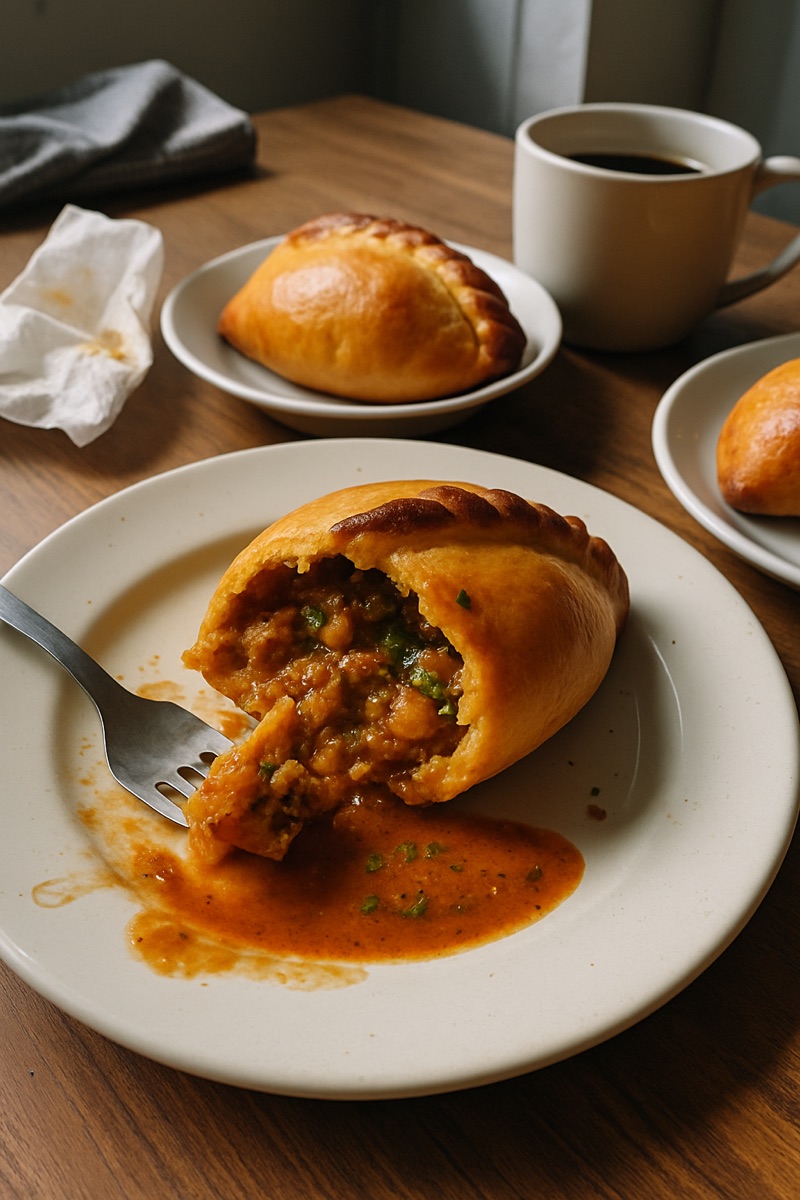
- Salteñas — Baked empanadas with a firm, slightly sweet crust and a filling of beef, chilli, potato and peas set with gelatine, which melts back into broth in the oven. They are eaten mid-morning, especially on Sundays, held upright and bitten carefully so the broth stays inside. Law 485 of 2014 declared the salteña potosina part of the national heritage.
- Tucumanas — Fried empanadas sold on the street, filled with potato, vegetables and beef, chicken or dried meat, sometimes with egg and chilli. Despite the name, which points to the Argentine province of Tucumán, the Bolivian recipe matches none of the Argentine ones.
- Sándwich de chola — A round bread roll filled with slices of slow-roasted pork leg, crisp fried pork skin, pickled vegetables and ají amarillo sauce or llajwa. It is named after the cholas, the women in traditional dress who sell it in La Paz, where a park in the south of the city is known for its stalls.
- Cuñapé — Small baked buns of cassava starch and fresh white cheese from eastern Bolivia, related to Paraguayan chipa. The name comes from Guaraní, and they are eaten at teatime with coffee.
Cochabamba platters
Both come from Cochabamba, in the central valleys, and both are full meals rather than snacks.
- Pique macho — A shared platter of fried potatoes buried under pieces of beef, sliced sausages, onion, tomato and locoto chilli, finished with hard-boiled eggs, mustard and mayonnaise. Everyone eats from the same plate.
- Silpancho — A beef steak pounded as thin as the plate is wide, breaded and fried, laid over rice and fried potatoes, then topped with a fried egg and a raw salsa of tomato, onion and locoto. Packed into bread with all its parts, it becomes the trancapecho sandwich.
Highland stews and soups
- Sopa de maní — A beef broth thickened with ground peanuts to a creamy consistency, with carrot, cabbage and macaroni, finished with fried potatoes and parsley. Peanuts have been grown in the region for centuries, and some families make it with rice or chicken instead.
- Chairo — A thick, very hot Andean soup of chuño, potatoes, lamb or beef and chalona (dried meat), with broad beans or peas, mote and herbs such as mint and oregano. The name comes from Aymara and Quechua words for soup, and it is eaten mostly in the west of the country.
- Plato paceño — A La Paz plate of corn on the cob, potatoes boiled in their skins, broad beans in the pod and a slab of fried cheese, usually with fried beef and llajwa. Local tradition ties its origin to the siege of La Paz in 1781, and it is eaten during the Alasita fair that opens every 24 January.
- Fricasé — A La Paz stew of pork simmered in a sauce of ají amarillo, served with mote and chuño. Its name comes from the French fricassée, but chilli, mote and chuño make it a dish of the Altiplano.
- Sajta de pollo — Chicken in a chilli sauce, served with tunta fried in batter, potatoes and chuño, a traditional dish of western Bolivia; some versions add peanuts. It is prepared for big celebrations such as All Saints and Carnival.
Lowland dishes, drinks and llajwa
- Majadito — A dish from Santa Cruz, Beni and Pando of rice cooked with charque (salted, sun-dried beef) and coloured with urucú, the local name for achiote, served with a fried egg, fried plantain and cassava. Its name comes from majar, to pound, because the dried meat is beaten in a wooden mortar first.
- Api — A thick, hot drink of purple corn with cinnamon, cloves and sugar, of pre-Columbian origin and traditional in La Paz, Oruro, Potosí and Cochabamba. It is drunk at breakfast with buñuelos, sweet fritters, or with a pastel, a pastry.
- Llajwa — A sauce of locoto chilli and tomato ground on a flat stone called a batán, sometimes with onion and the herb quilquiña or huacataya. It is on the table with soups, potatoes and bread all over Bolivia, and street vendors hand it out in small knotted bags.
Altiplano, valleys and the east, and where to cook them
Bolivia eats very differently with altitude. On the Altiplano, cooks rely on potatoes, chuño and quinoa with little meat, mostly lamb and llama, plus trout and small ispi fish from Lake Titicaca. The valleys use more corn, mote, cheese, pork and red chilli. The east, around Santa Cruz, eats more cassava, rice and beef than anywhere else in the country, with milder seasoning. To drink, Bolivians choose between mocochinchi, a cold drink of dried peaches boiled with cinnamon and cloves, and singani, a grape spirit made only in the high valleys and the national spirit.
Which of these dishes deserves the title is the subject of our article on the national dish of Bolivia. Salteñas, pique macho and silpancho have full recipes on our page about the food of Bolivia, within our collection of South American recipes. Bolivia shares the Andes with Peru and cassava breads with Paraguay: read about the traditional food of Peru and the traditional food of Paraguay.
The recipes
- Salteñas🇧🇴 Bolivia · 14 hours and 20 minutes
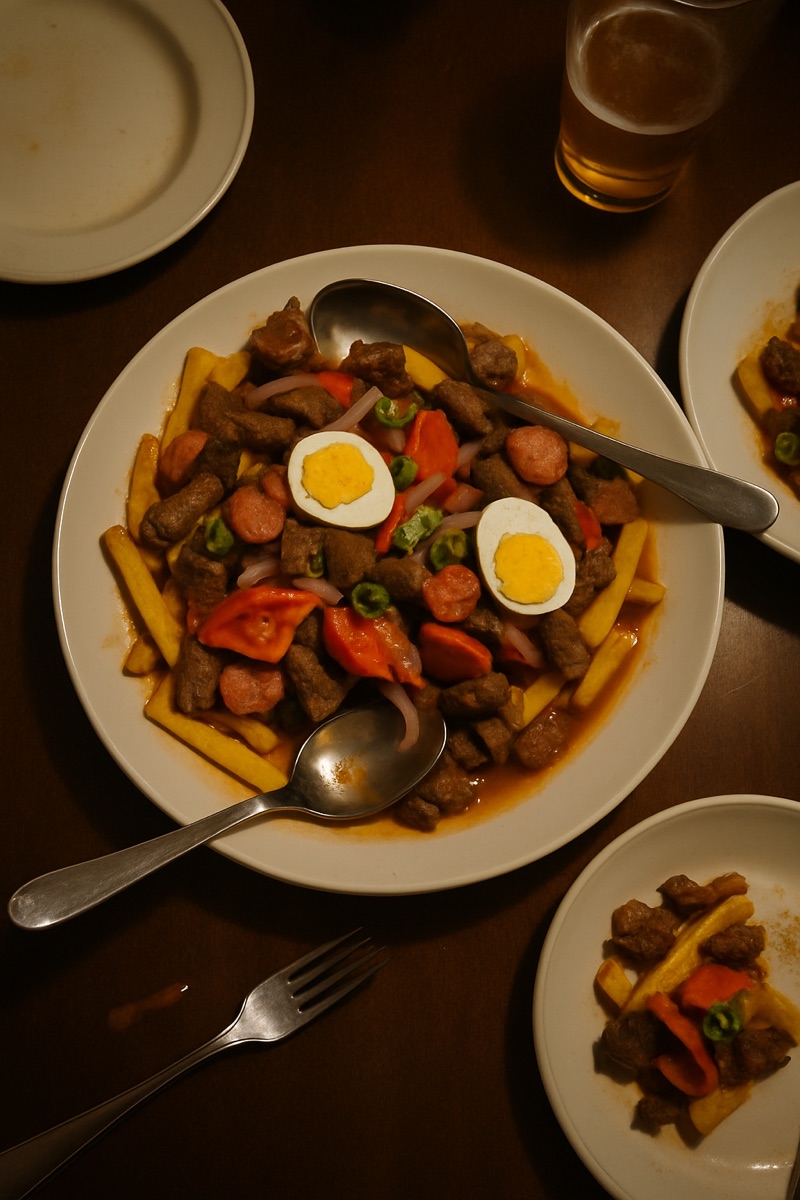 Pique macho🇧🇴 Bolivia · 50 minutes
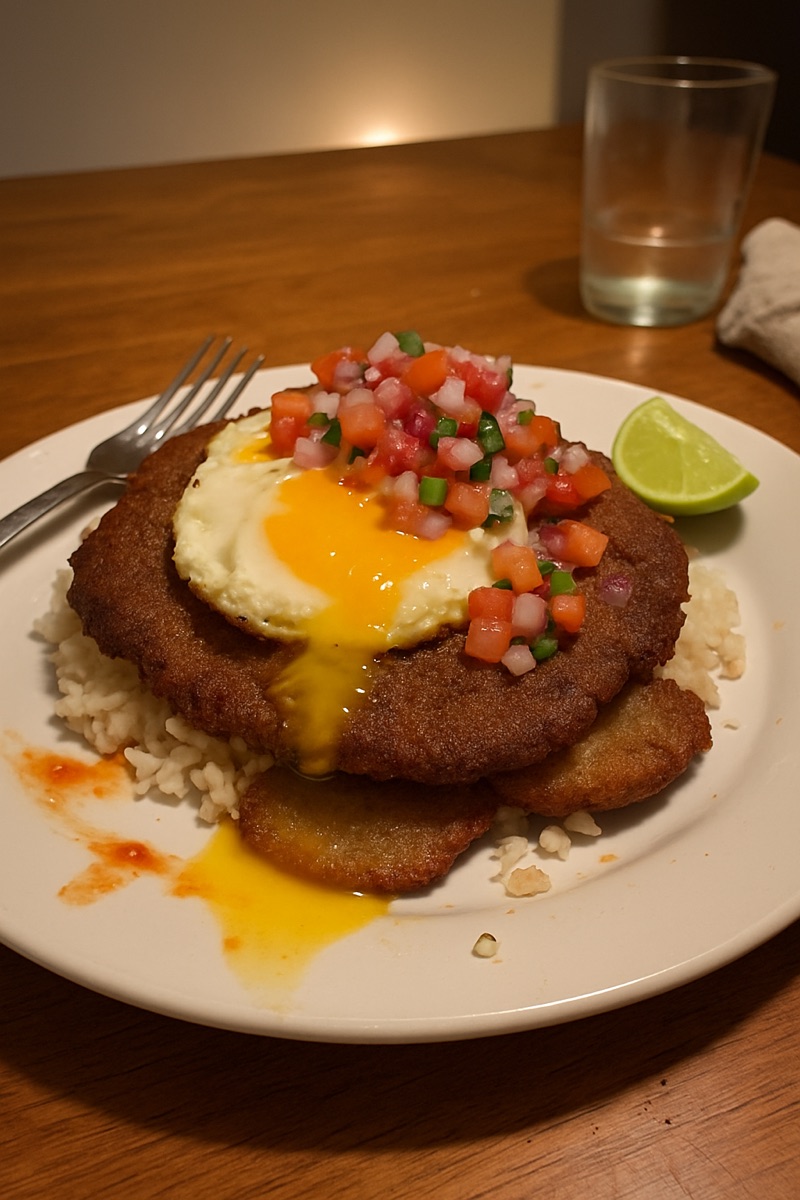 Silpancho🇧🇴 Bolivia · 1 hour
Questions people ask
What is the most popular food in Bolivia?
The salteña, a baked empanada with a juicy stew inside, is sold in every town and city and is the dish most often named as Bolivia's own. Pique macho, silpancho and sopa de maní are among the most eaten dishes.
What do people in Bolivia eat for breakfast?
Many Bolivians start the day simply, with coffee and bread, often a marraqueta roll. Api, a hot purple corn drink, with buñuelos or a pastry, is a traditional breakfast, and salteñas are the mid-morning snack.
Is Bolivian food spicy?
Highland food often is. Ají amarillo and ají colorado season stews such as fricasé and sajta, and llajwa, made with hot locoto chilli, is served on the side. Food in the eastern lowlands is much milder.
What is the national drink of Bolivia?
Singani, a brandy distilled from Muscat of Alexandria grapes grown at 1,600 m or higher, is the national spirit. Among soft drinks, mocochinchi, made from dried peaches, is sold by street vendors and at festivals.
What is the difference between a salteña and an empanada?
A salteña is a type of empanada, but its filling is set with gelatine and melts into a broth as it bakes, and its crust is sweet and firm. Most empanadas have a dry filling.
Keep reading
- What is the national dish of Bolivia?
- Traditional food of Argentina: 13 dishes to know
- Traditional food of Brazil: 14 dishes to know
- Traditional food of Chile: 14 dishes to know
- Traditional food of Colombia: 13 dishes to know
- Traditional food of Ecuador: 14 dishes to know