 COPPER
Traditional food of Paraguay: 13 dishes to know
Paraguayan food grew from the meeting of Guaraní cooking, based on corn and cassava, with the beef, milk, eggs and cheese brought by the Spanish. Corn flour, cassava starch and fresh Paraguay cheese go into dense breads and cakes, broths and stews. The most emblematic dishes are sopa paraguaya, a cornbread, chipa, vori vori and chipa guasu, with tereré to drink.
What Paraguayan food is built on
Paraguayan cooking was born in and around Asunción, from the fusion of Spanish cooking with that of the Cario-Guaraní people, who made breads and cakes called mbujapé from corn or cassava mixed with animal fat. Cattle arrived in Asunción in 1556, bringing beef, milk, eggs and cheese, and these met the native corn, cassava, pumpkin and sweet potato. Many dish names are still in Guaraní, one of Paraguay's two official languages.
Three ingredients sit at the centre: corn, as flour, fresh kernels or hominy; cassava, boiled or turned into starch; and queso Paraguay, a fresh cheese that goes into breads, soups and desserts. Italian and German immigrants later added pasta, cold cuts and pastries. In 2017 Paraguay declared four foods national intangible heritage: vori vori, locro, sopa paraguaya and yopará.
Corn and cassava breads
Paraguayans group their cornbreads and cassava cakes under the Guaraní word tyra: foods eaten alongside a drink such as cocido, milk or coffee, or next to other dishes.
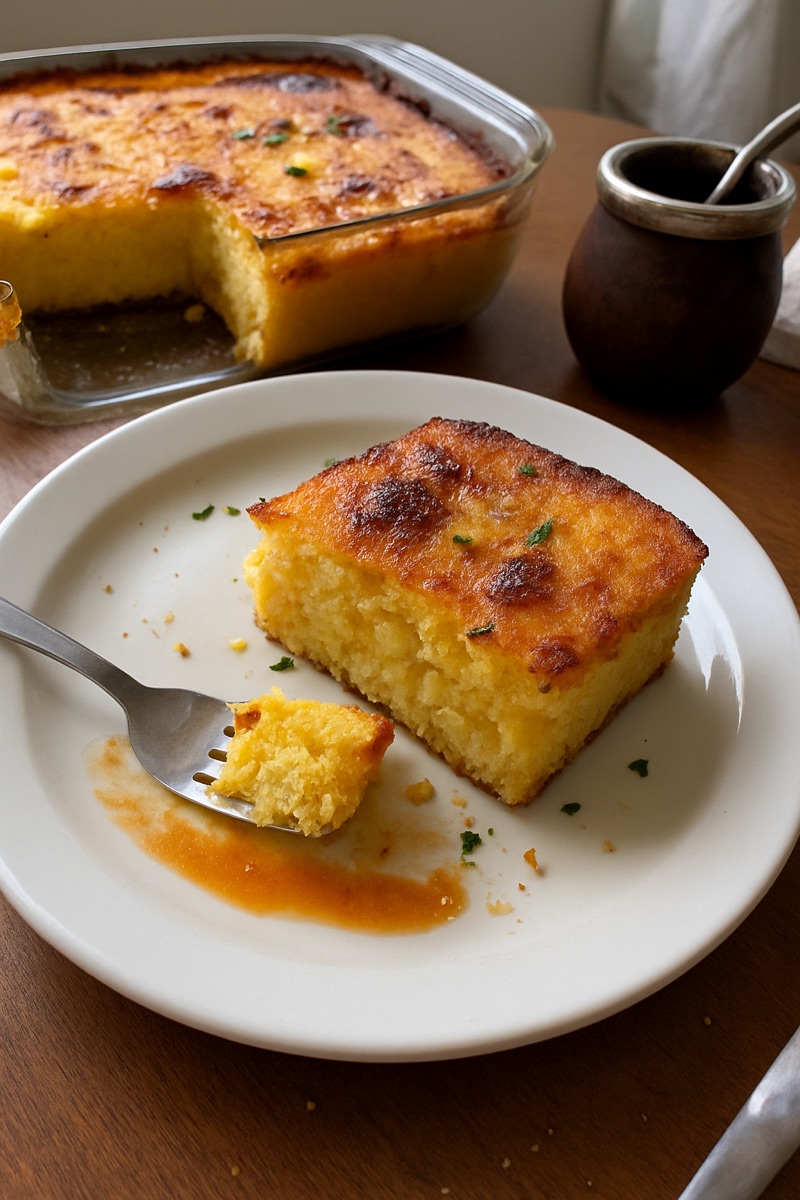
- Sopa paraguaya — Despite the name, not a soup but a dense, spongy cornbread of corn flour, fresh cheese, onions softened in lard, eggs and milk, baked until golden and cut into squares. It is served next to grilled meat at an asado or beside a broth, and eaten as a snack.
- Chipa — A small baked roll of cassava starch kneaded with lard, eggs, anise and plenty of hard Paraguay cheese. It is the mid-morning food of workers of every class, sold from roadside stands and on buses by vendors carrying a basket wrapped in cloth. Paraguay counts around 70 varieties, including chipa so'o, filled with ground meat.
- Chipa guasu — A soufflé-like cake of fresh corn kernels, onions, eggs and Paraguay cheese, eaten warm. It is often served at asados and is as popular as sopa paraguaya, which is made with corn flour instead of fresh kernels.
- Mbejú — A cake of cassava starch, corn flour, pork fat, fresh cheese and milk; a richer version, mbejú avevo, uses more fat, eggs and cheese. Its name means cake in Guaraní, and of the 16 traditional ways to make it, 11 are still recognised. It is eaten with cocido, milk or coffee.
Soups, stews and the Sunday asado
- Bori bori — Also spelled vori vori: a thick, yellowish chicken broth full of small dumplings of corn flour and fresh cheese. The name means plenty of little balls in Guaraní, from the Spanish bolita. It is eaten at every level of society, from formal banquets to farm tables.
- Pira caldo — A fish soup, pira meaning fish in Guaraní, traditionally made with small river catfish such as mandi'i. Onion, tomato, sweet peppers and parsley are fried in fat, water and fish are added, and the broth is cooked until thick and finished with hot chilli.
- Yopará — A stew that mixes locro, a hominy corn stew, with beans; jopara means mixture in Guaraní. It is eaten on 1 October to ward off Karaí Octubre, the figure of hardship who arrives in the leanest month of the farming year. The original recipe has no meat, though many versions now add it.
- Mbaipy — Corn flour cooked with onion, milk and Paraguay cheese into a soft porridge, eaten on its own or under a sauce of minced meat, chicken or sausages. Its roots are pre-Hispanic, and a sweet version, mbaipy he'ẽ, is made with milk and molasses.
- Asado — Beef grilled over embers at weekends and on feast days, a habit Paraguayans trace back to the first cattle of 1556. Paraguay eats about 28 kg of beef per person a year, and an asado comes with sopa paraguaya or chipa guasu on the side.
Sweets and drinks
- Kiveve — A soft orange purée of andaí, a local squash, cooked with milk, sugar, onion, corn flour and fresh cheese. Its Guaraní name means reddish, after its colour.
- Koserevá — Pieces of the thick peel of bitter orange, apepu in Guaraní, cooked in dark cane molasses until bittersweet. Its name is the Guaraní form of the Spanish conserva, and it is served with Paraguay cheese. In 2018 it was registered as part of Paraguay's food heritage by the national intellectual property office.
- Tereré — Yerba mate steeped in ice-cold water, prepared in a large jug with plenty of ice and often with crushed medicinal and cooling herbs called yuyos, the pohã ñana. Law 4,261 of 2011 made it the national drink, celebrated on the last Saturday of February, and in 2019 the culture secretariat declared the knowledge around tereré and its herbs national intangible heritage.
- Cocido — A hot drink of yerba mate and sugar caramelised in a pan with burning coal, then strained with hot water and drunk alone or with milk. It is the classic companion of chipa and mbejú at breakfast and in the afternoon.
Where to cook Paraguayan food
Some historians link the density of these dishes to the aftermath of the Paraguayan War of 1864 to 1870, when filling foods of corn, cheese and fat made up for scarce supplies. Asunción remains the centre of this cuisine, and chipa and tereré have travelled with Paraguayan migrants across the Southern Cone.
Why a cornbread is called a soup, and why it counts as the national dish of Paraguay, is explained in a separate article. Sopa paraguaya, chipa and bori bori have full recipes, with ingredients and step-by-step methods, on our page about the food of Paraguay, within our collection of South American recipes. Paraguay shares chipa with north-eastern Argentina and cassava breads with eastern Bolivia: read about the traditional food of Argentina and the traditional food of Bolivia.
The recipes
- Sopa paraguaya🇵🇾 Paraguay · 1 hour and 15 minutes
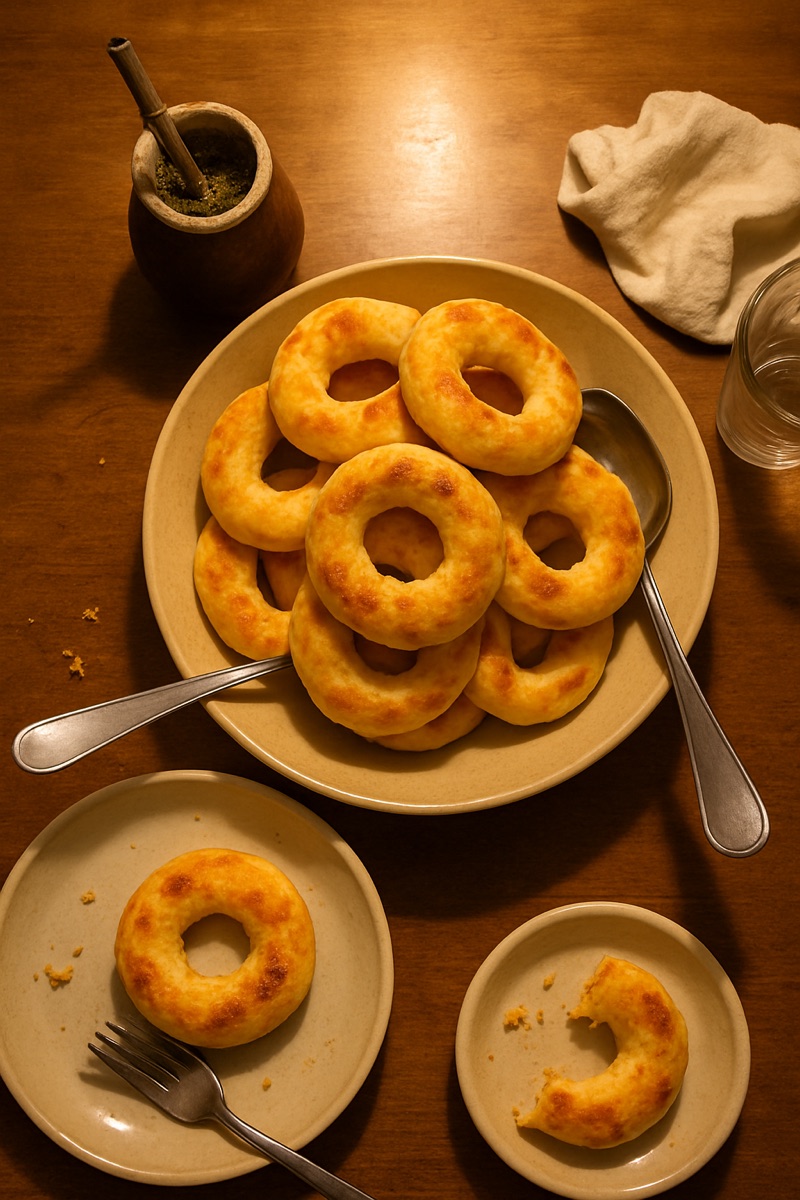 Chipa🇵🇾 Paraguay · 1 hour and 5 minutes
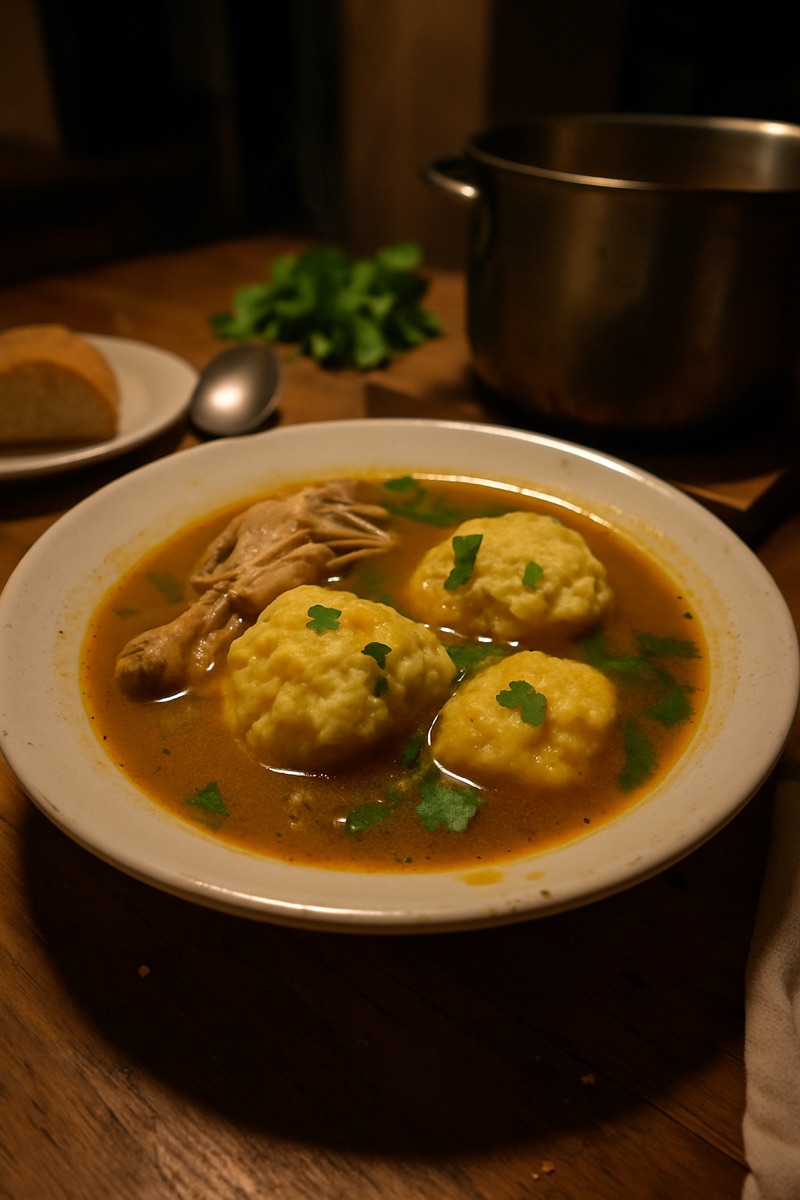 Bori bori🇵🇾 Paraguay · 2 hours and 10 minutes
Questions people ask
What is the most popular food in Paraguay?
Chipa is the most widely eaten food, a cassava and cheese roll sold everywhere from stands and buses. Sopa paraguaya is the dish most often named as the national dish, and vori vori, chipa guasu and asado are staples.
What do people in Paraguay eat for breakfast?
Milk is the base of breakfast for many Paraguayans, along with cocido, a hot yerba mate drink with caramelised sugar, eaten with chipa or mbejú.
Is Paraguayan food spicy?
No. Paraguayan food is mild and rich, built on corn, cassava, cheese and fat. Chilli appears in a few dishes such as pira caldo, the fish soup.
What is the national drink of Paraguay?
Tereré, yerba mate steeped in cold water, often with medicinal herbs. A 2011 law declared it the national drink and cultural heritage, and Tereré Day falls on the last Saturday of February.
Is sopa paraguaya a soup?
No. Sopa paraguaya is a dense cornbread made with corn flour, cheese, onions, eggs and milk, cut into squares and served as a side.
Keep reading
- What is the national dish of Paraguay?
- Traditional food of Argentina: 13 dishes to know
- Traditional food of Bolivia: 14 dishes to know
- Traditional food of Brazil: 14 dishes to know
- Traditional food of Chile: 14 dishes to know
- Traditional food of Colombia: 13 dishes to know