 COPPER
What is the national dish of Paraguay?
The national dish of Paraguay is usually given as sopa paraguaya, a dense, spongy cornbread made with corn flour, fresh Paraguayan cheese, onions cooked in lard, eggs and milk. Despite the name, it is not a soup. No law names it the national dish, but in 2017 Paraguay's culture secretariat declared it intangible cultural heritage, together with vori vori, locro and yopará.
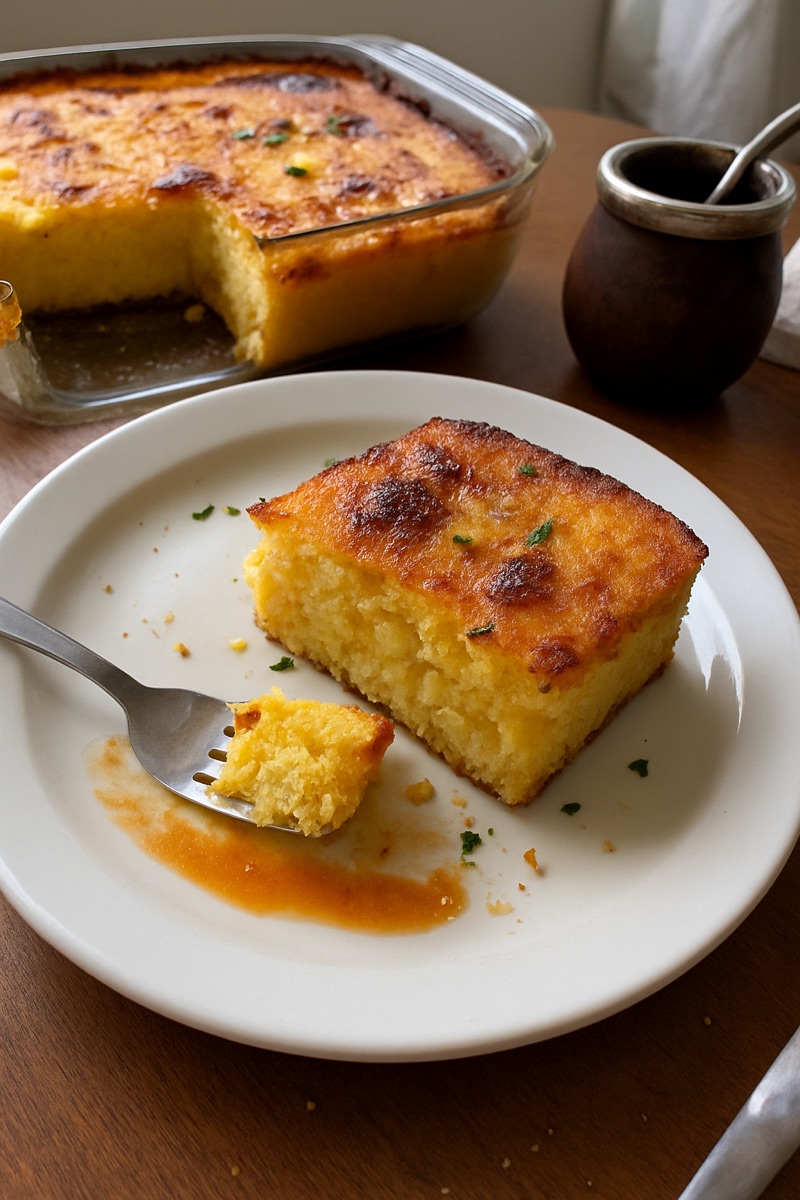
Why is a cornbread called 'Paraguayan soup'?
Sopa paraguaya translates as 'Paraguayan soup', but the dish is solid: a savoury cake close to cornbread, firm enough to cut into squares. It is eaten as a side, next to grilled meat at an asado or beside a broth, and as a snack.
Its status is informal. Paraguay has no law naming a national dish, yet sopa paraguaya is the dish reference works list for the country. In 2017 the National Secretariat of Culture declared the traditional making of four foods to be Intangible Cultural Heritage of Paraguay: vori vori, locro, sopa paraguaya and yopará, a mix of beans and locro.
What is in sopa paraguaya?
The ingredient list is short, and the proportions are what matter. In our recipe, 400 g of fresh cheese goes in with 300 g of corn flour, so the cheese weighs almost as much as the flour.
- Fine corn flour, not polenta
- Queso Paraguay, a fresh local cheese, crumbled
- Onions, four of them, sliced and softened in lard
- Pork lard, or butter in some homes
- Eggs, separated
- Milk, or curd and whey in older recipes
- Salt and black pepper
How sopa paraguaya is made
Four sliced onions cook gently in 80 g of pork lard for 10 minutes, until translucent. They go into a batter of 300 g corn flour and 500 ml milk, with all their fat and four egg yolks, followed by 400 g of crumbled fresh cheese.
There is no baking powder. The lift comes from the four egg whites, beaten to soft peaks and folded in last. The batter goes into a greased dish about 4 cm deep and bakes at 180 °C for 40 minutes, until golden and firm to a skewer, then rests 10 minutes before cutting. The full method is in our sopa paraguaya recipe.
Older recipes add milk cream and use curd or whey in place of fresh milk. Versions called *sopa paraguaya de estancia* or *sopa Don Carlos* keep the same ingredients and change only the quantities, for a firmer or richer result.
Where sopa paraguaya comes from
Its roots are in the food of the Cario-Guaraní people around Asunción, who made breads and cakes called mbujapé ('bread' in Guaraní) from corn flour or cassava starch mixed with animal fat, wrapped in banana leaves and cooked in hot ashes.
Cattle arrived in Asunción in 1556, bringing beef, milk, eggs and cheese. Mixed with corn, cassava and pumpkin, they produced the dishes Paraguay still eats today. Sopa paraguaya has filled versions too: sopa so'o with beef and sopa ryguasu with chicken.
Do not confuse it with chipa guasu, made from fresh corn kernels rather than corn flour, with a texture closer to a cheese soufflé. You can compare it with the dishes of its neighbours in our articles on the national dishes of Argentina and Bolivia.
Other dishes to know from Paraguay
Bori bori, also spelled vori vori, is a chicken broth full of small dumplings of cornmeal and fresh cheese. The name comes from Guaraní, where repeating a word marks abundance: vorí comes from the Spanish *bolita*, 'little ball', so vori vori means 'plenty of little balls'. The dumplings are rolled walnut-sized and dropped one by one into the simmering broth, and are done when they float.
Chipa is the everyday snack: a roll of cassava starch, not wheat flour, kneaded with lard, eggs, anise and plenty of fresh cheese, then baked short in a hot oven at 220 °C. Paraguay counts around 70 varieties of chipa, and it is often eaten with cocido, a hot yerba mate drink made with sugar caramelised over burning coal.
Some historians of Paraguay link the richness of this food to the aftermath of the Paraguayan War of 1864 to 1870, when supplies were scarce and dense, filling dishes of corn, cheese and fat made up for thin daily meals. Vori vori is also one of the few dishes eaten at every level of society, from formal banquets to farm tables.
To drink, Paraguayans pour tereré, made with yerba mate, declared the national drink by Law 4,261 of 2011 and celebrated on Tereré Day, the last Saturday of February. Paraguay's food shares a lot with the wider South American kitchen, and all three dishes above are on our page about the food of Paraguay.
The recipes
- Sopa paraguaya🇵🇾 Paraguay · 1 hour and 15 minutes
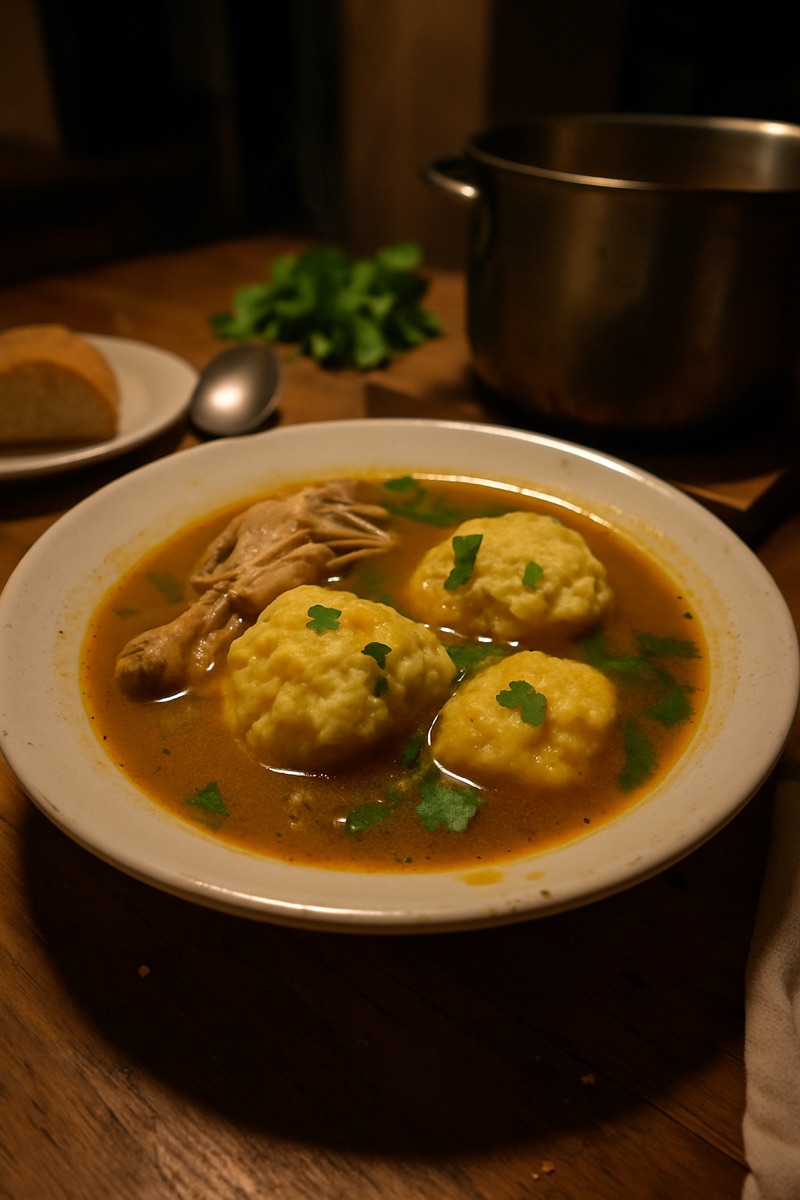 Bori bori🇵🇾 Paraguay · 2 hours and 10 minutes
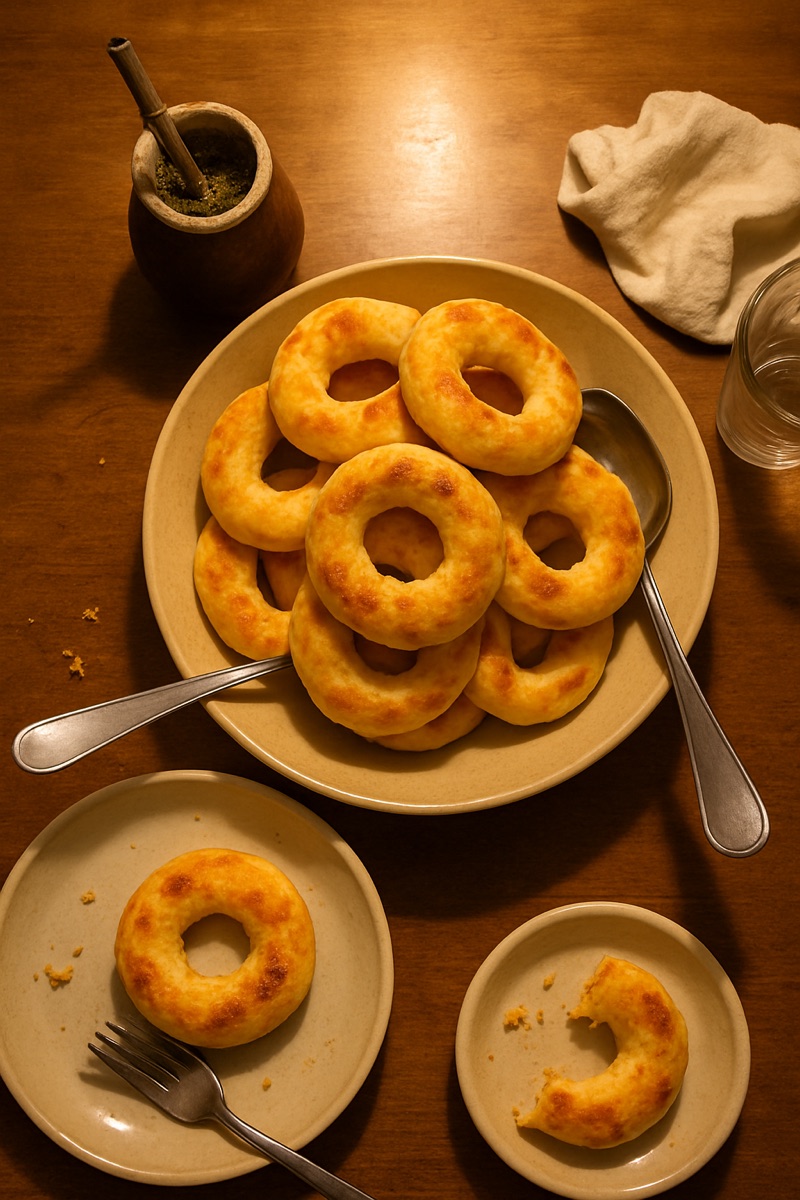 Chipa🇵🇾 Paraguay · 1 hour and 5 minutes
Questions people ask
Is sopa paraguaya a soup?
No. Despite its name, sopa paraguaya is a solid, spongy cornbread made with corn flour, cheese, onion, eggs and milk, cut into squares.
What is the difference between sopa paraguaya and chipa guasu?
Sopa paraguaya is made with corn flour and has the texture of a cornbread. Chipa guasu uses fresh corn kernels and is softer, closer to a cheese soufflé.
What is served with sopa paraguaya?
It is eaten as a side with grilled meat at an asado, beside a broth such as vori vori, or on its own as a snack.
Is sopa paraguaya officially the national dish of Paraguay?
No law names it the national dish. In 2017 Paraguay's National Secretariat of Culture declared it intangible cultural heritage, along with vori vori, locro and yopará.
What cheese is used in sopa paraguaya?
Queso Paraguay, a fresh local cheese, crumbled into the batter. In our recipe 400 g of it goes in for 300 g of corn flour.
Keep reading
- Traditional food of Paraguay: 13 dishes to know
- What is the national dish of Argentina?
- What is the national dish of Bolivia?
- What is the national dish of Brazil?
- What is the national dish of Chile?
- What is the national dish of Colombia?