 COPPER
What is the national dish of Colombia?
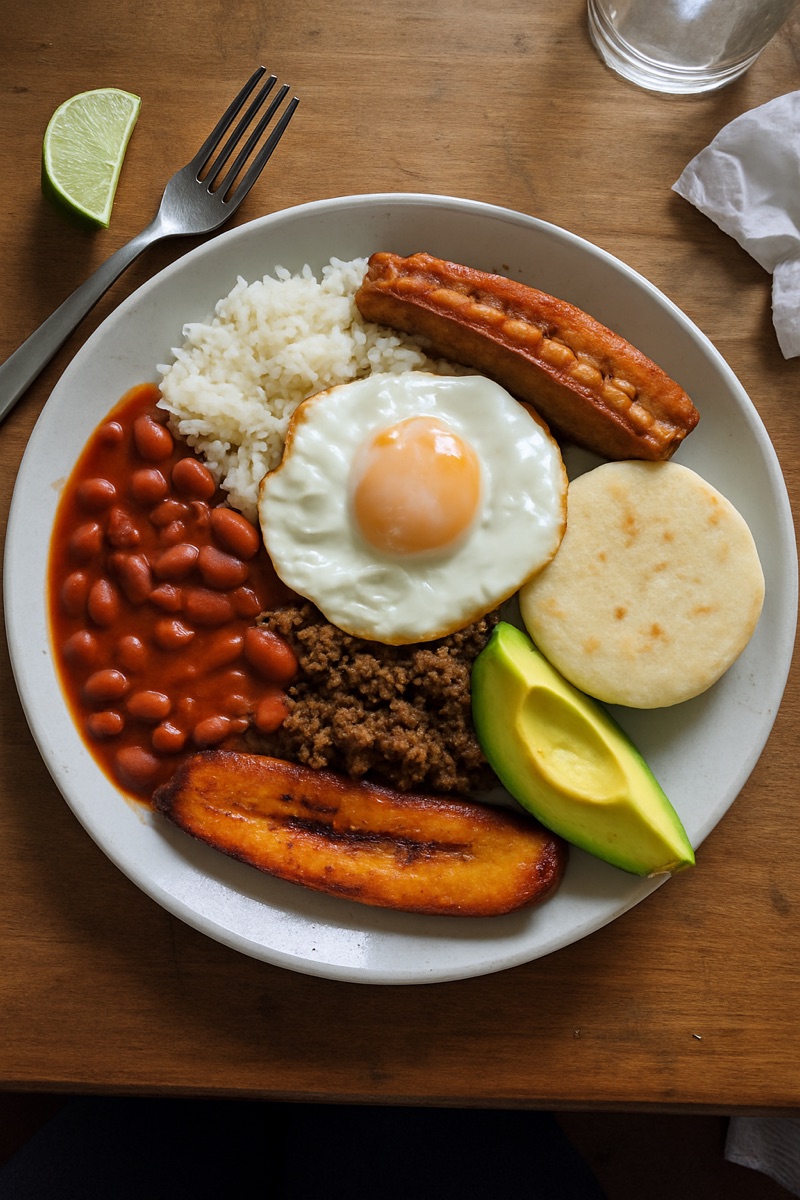
Colombia has no official national dish, and two dishes share the title. Bandeja paisa is a platter from the Antioquia region with beans, rice, ground beef, chicharrón, chorizo, fried egg, plantain, avocado and arepa. Ajiaco is Bogotá's chicken soup thickened with three kinds of potato and scented with the herb guascas. A 2005 government plan to name bandeja paisa never became official.
Why Colombia has two candidates
In 2005 the Colombian government considered making bandeja paisa the national dish, renamed bandeja montañera ("mountain platter") so that it would not belong to the Paisa region alone. The idea met strong objections: only a small share of Colombians eat it regularly, and it comes from a single region, Antioquia.
The alternative put forward, sancocho, has the opposite problem. It is a root-vegetable and meat stew eaten in Cuba, Venezuela, Puerto Rico, the Dominican Republic, Panama and the Canary Islands, so it is not distinctively Colombian. That is why ajiaco is often considered the most Colombian dish instead.
No designation followed. The tourism industry still uses the bandeja paisa as the face of Colombian food on menus and brochures, without any official sanction, and reference works list ajiaco and bandeja paisa side by side as Colombia's national dishes.
What is in a bandeja paisa?
Bandeja means platter, and paisa is a person from the Paisa region around Medellín and the coffee-growing departments. Everything arrives at once on a large oval tray:
Restaurants in Antioquia also sell an extended version, sometimes called the seven meats platter, that adds grilled steak, grilled pork and liver. In Bogotá a lighter version replaces the pork with grilled chicken breast. The traditional drink alongside is mazamorra, a maize drink served with milk and ground panela.
- Red beans, cooked with pork until the liquid is thick and creamy, with white rice.
- Chicharrón: pork belly simmered, then fried in its own fat until the rind blisters.
- Ground beef cooked with hogao, a slow-cooked onion, scallion and tomato sauce.
- Chorizo and often morcilla (blood sausage).
- A fried egg, ripe plantain, avocado and an arepa.
How ajiaco is made
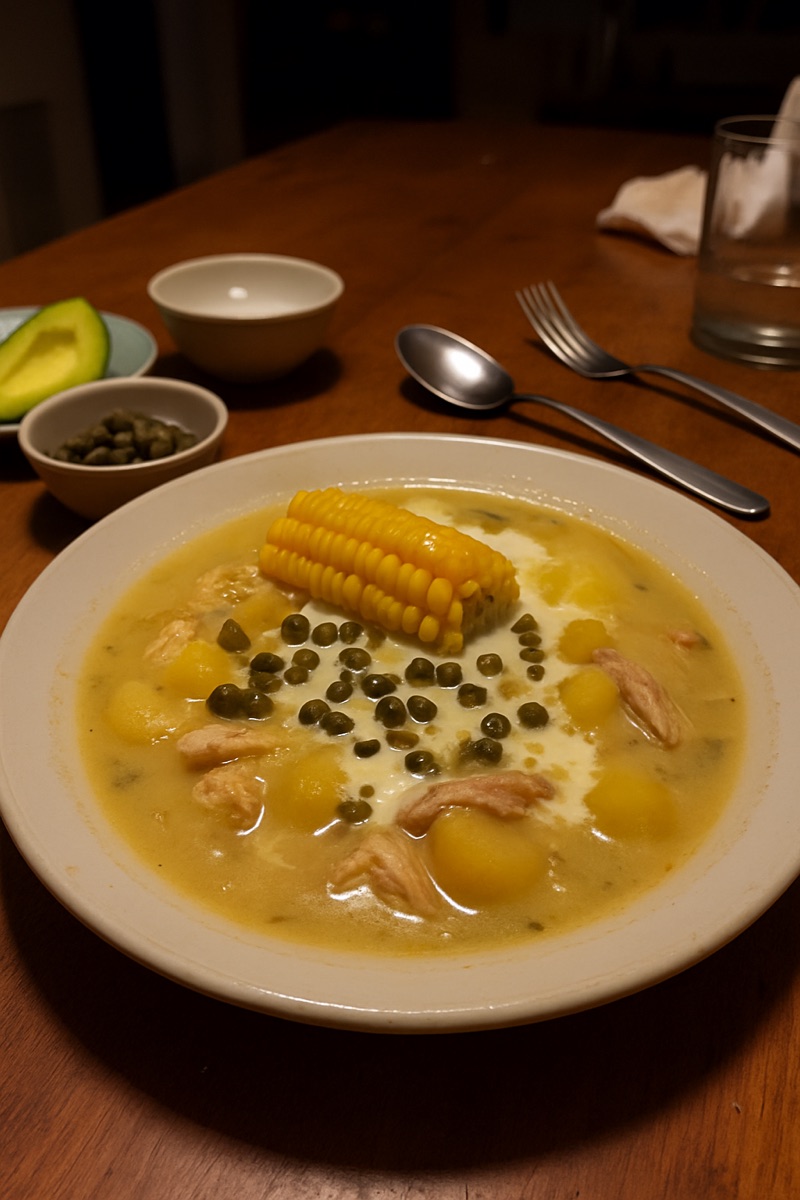
Ajiaco santafereño, Bogotá's version, depends on two ingredients you cannot replace. The first is papa criolla, a small yellow potato that collapses after about 30 minutes in the chicken broth: its starch is what thickens the soup, with no flour. Two firmer potatoes, sabanera and pastusa, are added later and stay in slices, with pieces of corn on the cob.
The second is guascas (Galinsoga parviflora), a herb treated as a garden weed in the United States, where it is called gallant soldier. It goes in for the last 10 minutes only, because long boiling kills its aroma. The chicken is shredded back into the pot, and each person adds cream, capers and avocado at the table. Our ajiaco recipe gives the quantities.
Outside Colombia, both papa criolla and guascas are sold dried or frozen in Latin American shops. No substitute gives the same soup: without guascas it is simply chicken and potato soup.
Where these dishes come from
Bandeja paisa is younger than it looks. There is no mention of it in food writing before 1950, and it is probably a restaurant version of simpler peasant dishes of Antioquia, mixing native ingredients such as beans, corn and avocado with European pork and rice. Our bandeja paisa recipe builds each of its components. The work is in the timing: the soaked beans alone simmer 90 minutes to 2 hours, and half the hogao goes into them while the rest is kept for the table.
Ajiaco is shared with Cuba, where it is a meat and root-vegetable stew, and Peru, where it is a potato dish with chillies. Its origin is debated; one Cuban author traced the name to ají, the Taíno word for hot pepper. The Bogotá chicken, potato and guascas soup is the purely Colombian form. In Cuba the ethnologist Fernando Ortiz used ajiaco as a metaphor for the island as a melting pot, and in the city of Camagüey the San Juan festival opens with the cooking of an ajiaco.
Other dishes to know from Colombia
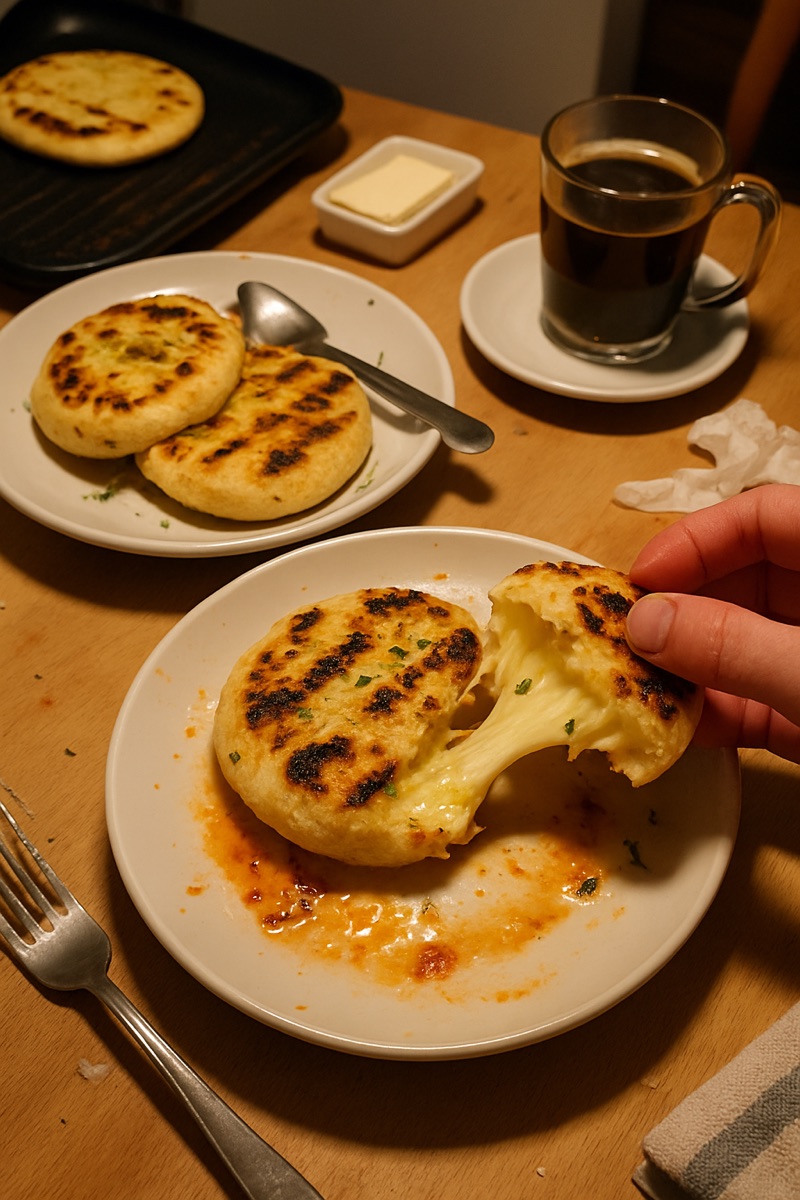
The arepa sits on the bandeja paisa and on almost every Colombian table. It works only with masarepa, precooked corn flour, which forms a dough with warm water alone; it is cooked on a dry griddle 5 to 6 minutes per side. Common brands are Harina P.A.N., Areparina and Goya. Arepas are eaten hot, split open with butter and fresh cheese.
Arepas are just as central next door: compare with the national dish of Venezuela, and with Panama's, where sancocho is the answer. Explore more South American food, or find all three recipes on our page about the food of Colombia.
The recipes
- Bandeja paisa🇨🇴 Colombia · 14 hours and 30 minutes
 Ajiaco🇨🇴 Colombia · 2 hours
 Arepas🇨🇴 Colombia · 30 minutes
Questions people ask
Is bandeja paisa the national dish of Colombia?
It is one of two dishes usually named, with ajiaco. A 2005 government plan to make it the national dish was opposed and never became official.
Is ajiaco Colombian or Cuban?
Both countries have an ajiaco, but they are different dishes. The Colombian one is a Bogotá chicken soup with three potatoes and guascas; the Cuban one is a meat and root-vegetable stew.
What is served with ajiaco?
Heavy cream, capers and avocado are added at the table, and the soup contains pieces of corn on the cob.
What are guascas?
Guascas are the leaves of Galinsoga parviflora, a small herb of the daisy family. They give ajiaco its taste and are sold dried in Latin American shops.
How do you pronounce ajiaco and bandeja paisa?
Ah-HYAH-koh, and bahn-DEH-hah PIE-sah.
Keep reading
- Traditional food of Colombia: 13 dishes to know
- What is the national dish of Argentina?
- What is the national dish of Bolivia?
- What is the national dish of Brazil?
- What is the national dish of Chile?
- What is the national dish of Ecuador?