 COPPER
What is the national dish of Brazil?
The national dish of Brazil is feijoada: a stew of black beans slow-cooked with salted, dried and smoked cuts of pork and beef, served with white rice, sautéed collard greens, farofa (toasted cassava flour) and orange slices. It has no official legal status, but it is the dish most often called Brazil's national dish, ahead of churrasco and moqueca.
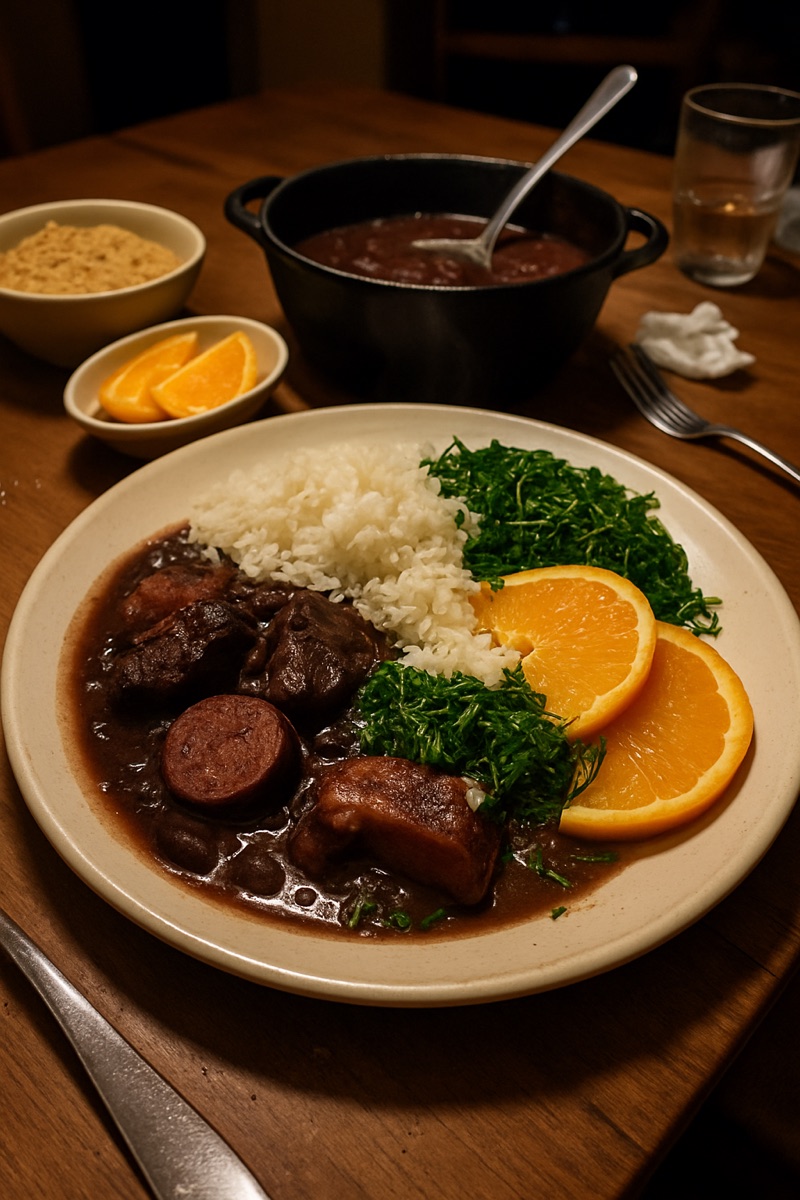
What is feijoada?
Feijoada is black beans and meat, cooked together until the beans turn creamy and the broth goes dark, almost purplish brown. The meats are the salted, dried and smoked kind: carne seca (dried salted beef), smoked pork ribs, smoked sausages such as paio and linguiça, and bacon or pork belly. Traditional versions also use pork ears, tail and feet. It tastes strong and moderately salty, but it is not spicy.
What Brazilians call a feijoada completa is the whole meal, not just the pot:
- White rice, to take the beans.
- Couve: collard greens sliced into thin ribbons and sautéed with garlic.
- Farofa: cassava flour toasted in fat until sandy and golden.
- Orange slices, traditionally served to help digestion.
How feijoada is made
Feijoada is not difficult, but it takes two days. Our feijoada recipe works like this:
The day before, 400 g of carne seca and 400 g of smoked ribs soak 24 hours in cold water in the fridge, with the water changed four times. Skip this and the stew is too salty to eat. The 500 g of black beans soak overnight separately.
The beans then cook 1 hour in fresh water without salt. The desalted carne seca and ribs go in for another hour, then the paio, linguiça and pork belly for a third. Two ladles of beans are mashed with onion and garlic fried in pork fat and stirred back in: that is what thickens the broth. The farofa and the couve are made at the end, in a few minutes each.
Where feijoada comes from
The most repeated story says enslaved people invented feijoada from the pork scraps their masters threw away. Historians reject it. Cuts like pig's feet were already part of Portuguese cooking, an 1889 receipt shows the Imperial Household buying tongue, tripe and offal from a butcher as delicacies, and the historian Carlos Augusto Ditadi called the legend modern folklore.
The more likely origin is Portuguese: feijoada is a name used across Portuguese-speaking countries, and the Brazilian version is probably an adaptation of the Portuguese stew of the same name (see the national dish of Portugal). The beans are American: black beans were domesticated by Indigenous peoples and became a staple of Brazilian settlers, rich and poor. In Bahia, Sergipe and Goiás, brown or red beans are more common. The Brazilian dish was first documented in Recife, in Pernambuco, and the feijoada completa with rice, orange and greens was popularised in Rio de Janeiro in the late 19th century.
As early as 1878, the writer França Júnior was already calling feijoada "the essentially national dish".
When Brazilians eat feijoada
Feijoada is a weekend meal: long Saturday afternoons or Sunday lunch with the extended family, often around a football match, never rushed. In São Paulo, working-class restaurants serve it on Wednesdays and Saturdays; in Rio de Janeiro, restaurants traditionally serve it on Fridays.
Other dishes to know from Brazil
Brazil is too large for one dish to settle the question. Churrasco, the barbecue of the southern gaúcho tradition, is also named as a national dish. And in a 2013 promotional survey by the Ministry of Tourism, moqueca was chosen as the recipe no tourist should miss, ahead of feijoada. The Bahian version is a fish stew layered raw in a clay pot with coconut milk and dendê palm oil, which gives it its orange colour.
Moqueca is itself two dishes. In Bahia, where African influence is strongest, coconut milk and dendê are mandatory. In Espírito Santo, the lighter moqueca capixaba replaces dendê with olive oil, colours the stew with annatto and is always cooked in a black clay pot from the Goiabeiras district of Vitória. The craft of the potters who make them, the Ofício das Paneleiras de Goiabeiras, was registered as cultural heritage by Brazil's national heritage institute, Iphan, in 2002. Our recipe follows the Bahian method: nothing is fried first, everything goes in raw, and the pot simmers 20 minutes without stirring.
Coxinha is the everyday snack: shredded chicken wrapped in a dough made with the chicken's own broth, shaped like a drumstick, breaded and fried. It comes from São Paulo state.
Brazil shares beans, cassava and grilled meat with its neighbours; see our guide to South American food. All three dishes, with step-by-step methods, are on our page about the food of Brazil.
The recipes
- Feijoada🇧🇷 Brazil · 1 day and 4 hours
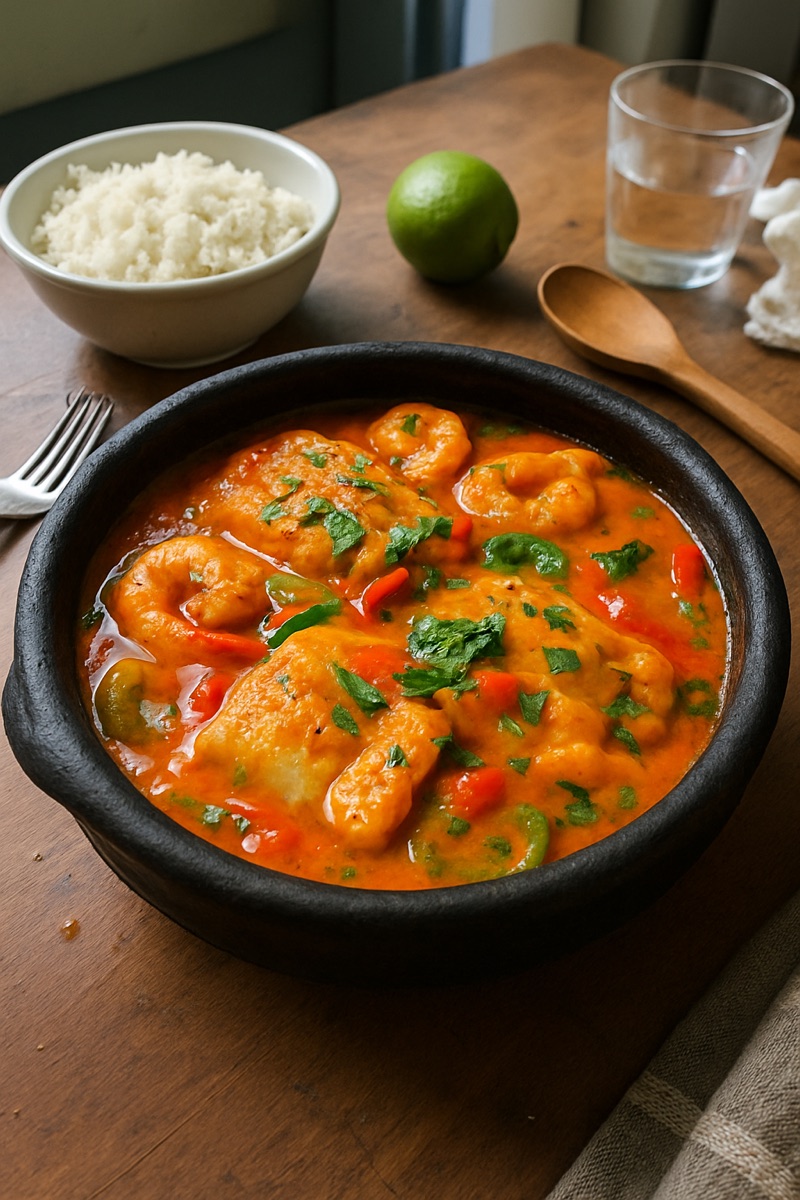 Moqueca🇧🇷 Brazil · 1 hour and 5 minutes
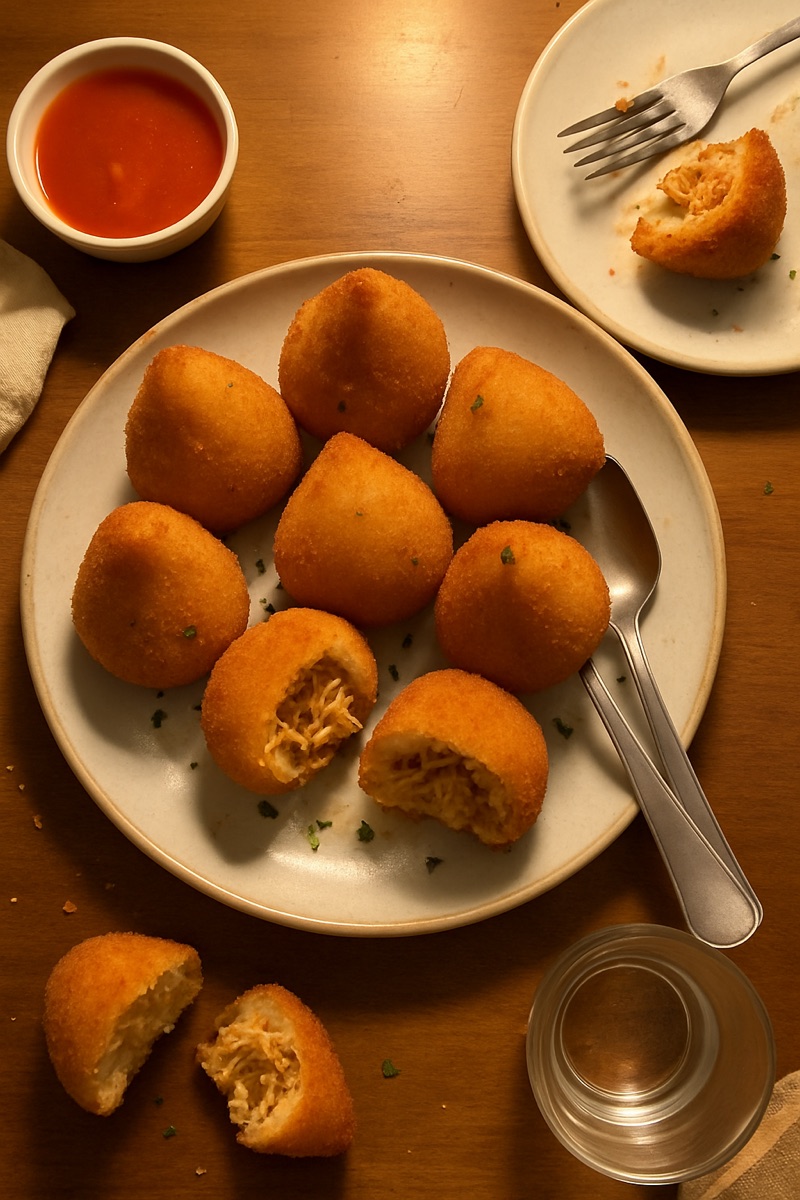 Coxinha🇧🇷 Brazil · 2 hours and 20 minutes
Questions people ask
Is feijoada Brazil's official national dish?
There is no law making it official, but feijoada is the dish most widely called Brazil's national dish. Churrasco and moqueca are its main rivals.
Was feijoada invented by slaves?
Probably not. The story that enslaved people created it from discarded pork scraps is not supported by historical research; the dish is more likely an adaptation of a Portuguese bean stew.
What is served with feijoada?
A feijoada completa comes with white rice, couve (sautéed collard greens), farofa (toasted cassava flour) and orange slices.
What day do Brazilians eat feijoada?
Mostly on Saturdays. In São Paulo it is a Wednesday and Saturday dish in many restaurants, and in Rio de Janeiro restaurants traditionally serve it on Fridays.
Is feijoada always made with black beans?
In Rio de Janeiro, São Paulo and Minas Gerais it is made with black beans. In Bahia, Sergipe and Goiás, cooks more often use brown or red beans.
Keep reading
- Traditional food of Brazil: 14 dishes to know
- What is the national dish of Argentina?
- What is the national dish of Bolivia?
- What is the national dish of Chile?
- What is the national dish of Colombia?
- What is the national dish of Ecuador?