 COPPER
Traditional food of Brazil: 14 dishes to know
Brazilian food is built on rice and beans, cassava flour, pork and beef, with dendê palm oil and coconut milk on the Bahian coast. It mixes Indigenous, Portuguese and West African cooking. The most emblematic dishes are feijoada, a black bean and pork stew, moqueca, a fish stew, pão de queijo, cassava cheese bread, and the brigadeiro, a chocolate sweet.
What Brazilian food is built on
Every Brazilian lunch starts from the same base: white rice and beans, eaten together almost every day. Lunch is usually the biggest meal, served between 11 a.m. and 2 p.m., with a salad, a meat or fish and sides. Cassava is the second pillar: toasted as farofa, it is sprinkled over beans and grilled meat, and its starch replaces wheat in cheese bread.
Three traditions shaped the cuisine. Indigenous peoples gave cassava, corn and the fruits of the Amazon; the Portuguese brought their own cooking traditions; enslaved West Africans brought dendê palm oil and black-eyed peas, still at the heart of Bahian cooking. Later immigrants added their own layer, such as the pastel, brought by Chinese and Japanese immigrants.
Main dishes
These are the dishes Brazilians cook at home and order at lunch counters:
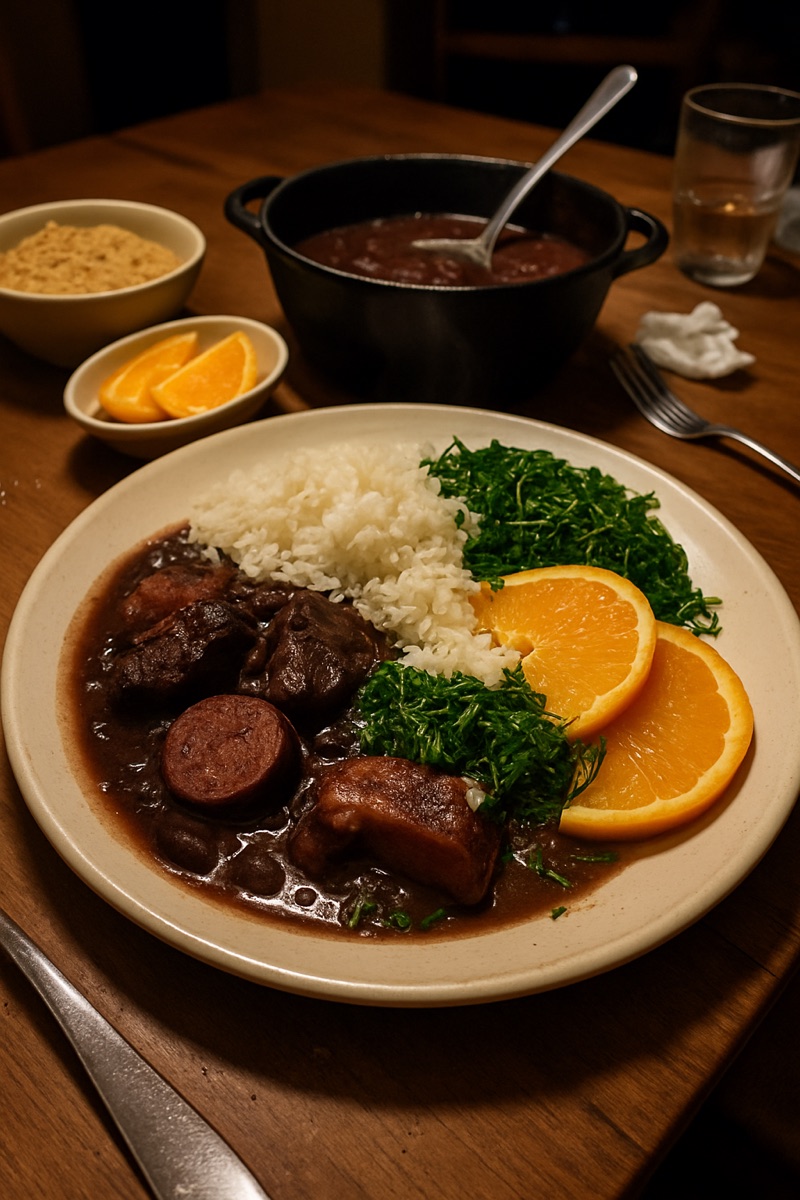
- Feijoada — Black beans simmered for hours with salt-cured and smoked pork cuts, often called the national dish. It is served with white rice, sautéed collard greens, farofa and orange slices, and is above all a long Saturday lunch with family. Read why in our article on the national dish of Brazil.
- Arroz e feijão — Rice and beans, the plate that anchors daily meals across the country. The beans are cooked with garlic and onion until they form a thick broth that soaks into the rice.
- Moqueca — A fish stew cooked in a clay pot with tomatoes, onions, peppers and coriander. The Bahian version is turned orange by dendê palm oil and enriched with coconut milk; the moqueca capixaba of Espírito Santo, of Indigenous origin, uses olive oil and annatto instead.
- Churrasco — The barbecue of the gaúchos of Rio Grande do Sul: beef, pork, sausage and chicken on long skewers over charcoal, seasoned with coarse salt. In a rodízio steakhouse, waiters carry the skewers from table to table and slice meat onto the plate. Picanha, the cap of the rump, is the most prized cut.
- Baião de dois — A dish from Ceará, in the Northeast, where rice and beans (ideally fresh feijão verde) are cooked together with onions, tomatoes, coriander and queijo coalho. Its name refers to baião, a Northeastern music and dance style, and to dois, the two staples cooked as one.
- Tutu de feijão — The bean dish of Minas Gerais: boiled beans sautéed and thickened with cassava or corn flour into a soft, dense mash, usually with bacon, onion and garlic. It reflects the cooking of Minas, a region of corn, pork, beans and chicken.
Street food and snacks
Bakeries, snack bars and street markets sell a whole category of salgados, savoury bites eaten standing up:
- Coxinha — A croquette shaped like a chicken drumstick, with a dough cooked in chicken broth around a shredded chicken filling, often with catupiry cream cheese. It is breaded and deep-fried, and sold in almost every snack bar in the country.
- Pão de queijo — Small, chewy cheese rolls from Minas Gerais made with cassava starch, eggs, milk and cheese, which makes them naturally gluten-free. They date from the mining towns of the 18th century, where wheat was scarce, and are eaten at breakfast or with coffee.
- Acarajé — A fritter of peeled black-eyed peas fried in dendê, split and filled with vatapá and caruru, two pastes of shrimp, nuts and palm oil. It is sold in Salvador da Bahia by the baianas de acarajé in white dresses, whose trade was listed as national heritage in 2004.
- Pastel — A thin fried pastry, half-moon or square, usually filled with cheese or ground meat. Brought by Chinese and Japanese immigrants, it is sold fried to order in bakeries, snack bars and street markets.
Sweets and drinks
- Brigadeiro — Condensed milk, butter and cocoa powder cooked into a thick paste, rolled into small balls and coated in chocolate sprinkles. It was created in the 1940s and is now a fixture of birthday parties and festive events, set out in small paper cases.
- Quindim — A small baked egg custard with grated coconut, turned out of its mould so that its glossy yellow top faces up.
- Açaí — The purple fruit of an Amazon palm, a daily staple around the Amazon delta for centuries. Elsewhere in Brazil it is eaten as açaí na tigela, a frozen purée topped with fruit and granola, popular since the 1990s.
- Caipirinha — The national cocktail: cachaça, the native sugarcane spirit, muddled with lime and sugar and served over ice. Coffee, Brazil's national beverage, is drunk at breakfast and through the day.
Regional cooking, from the Amazon to the pampas
Brazil is a continent-sized country and its food changes from region to region. Bahia has the most African kitchen, with palm oil and chili; Minas Gerais is the land of corn, pork, beans and soft local cheeses; Rio Grande do Sul lives on beef because of its cattle ranching; the cooking of Pará and the Amazon stays close to Indigenous traditions, with cassava, river fish and açaí. In the Northeast, the Afro-Brazilian cooking of the coast contrasts with the interior, where Indigenous-influenced dishes, dried meat and queijo coalho dominate.
Many of these dishes are shared with neighbours: compare Brazil's beef culture with the traditional food of Argentina, and see how Brazil fits into South American cuisine as a whole.
Cook Brazilian food at home
Feijoada, moqueca and coxinha each have a full recipe with quantities and step-by-step instructions in the Copper app. You will find them, with their sources, on our page dedicated to Brazilian recipes.
The recipes
- Feijoada🇧🇷 Brazil · 1 day and 4 hours
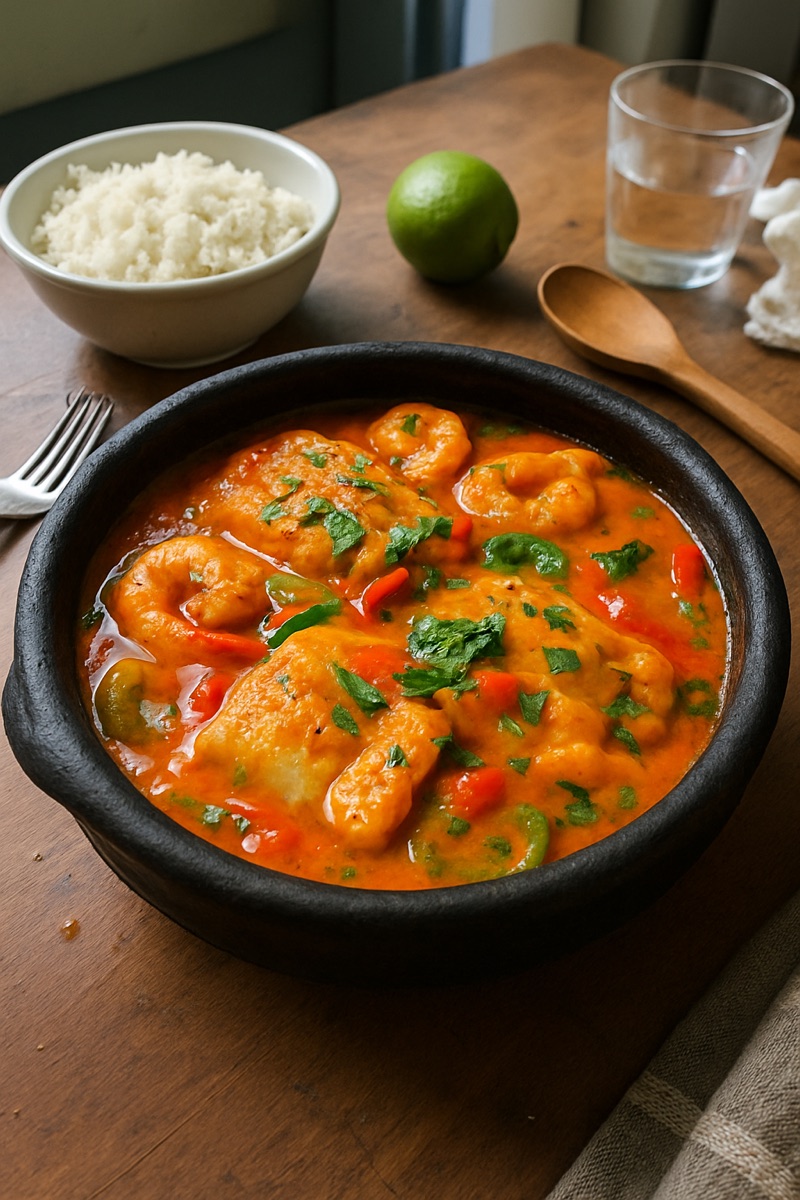 Moqueca🇧🇷 Brazil · 1 hour and 5 minutes
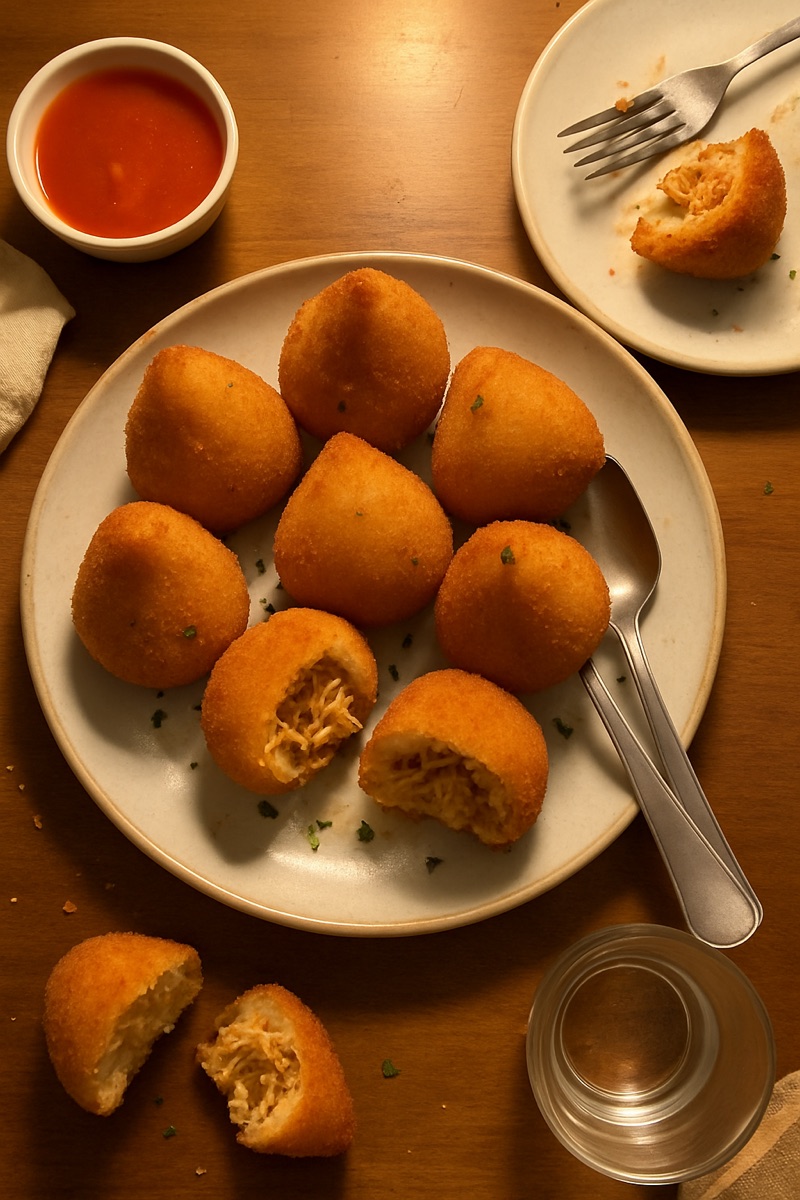 Coxinha🇧🇷 Brazil · 2 hours and 20 minutes
Questions people ask
What is the most popular food in Brazil?
Rice and beans are eaten almost every day and form the base of lunch. Feijoada, the black bean and pork stew, is considered the national dish, and coxinha and pão de queijo are the most common snacks.
What do Brazilians eat for breakfast?
Breakfast is usually light: coffee with bread and butter, cheese, cold cuts, tropical fruit or cake, and often pão de queijo. For many people it is just a slice of bread and a cup of coffee.
Is Brazilian food spicy?
Not in general. Most Brazilian dishes are mild and rely on garlic, onion, coriander, coconut and palm oil. Bahia is the exception, where chili peppers are common.
What is the difference between Bahian and other Brazilian food?
Bahian cooking has the strongest West African influence, with dendê palm oil, coconut milk, shrimp and black-eyed peas in dishes such as moqueca, acarajé and vatapá.
What is Brazil's national drink?
The caipirinha, made with cachaça, lime and sugar, is the national cocktail. Coffee is the everyday national beverage.
Keep reading
- What is the national dish of Brazil?
- Traditional food of Argentina: 13 dishes to know
- Traditional food of Bolivia: 14 dishes to know
- Traditional food of Chile: 14 dishes to know
- Traditional food of Colombia: 13 dishes to know
- Traditional food of Ecuador: 14 dishes to know