 COPPER
What is the national dish of Bolivia?
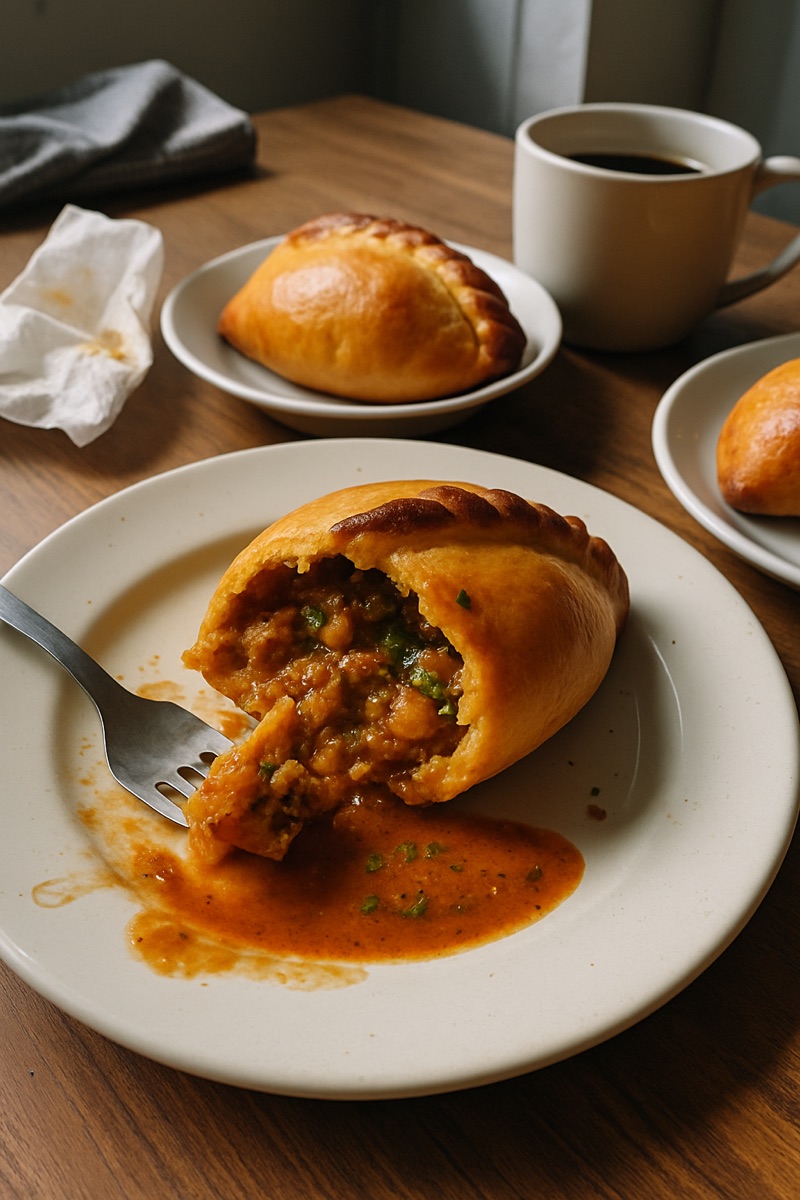
Bolivia has no official national dish. The salteña, a baked empanada whose gelatine-set stew melts back into broth inside the pastry, is the one most often cited, and Law 485 of 2014 declared the Potosí salteña national heritage. Two hearty platters from Cochabamba, pique macho and silpancho, are the other dishes most often put forward.
Does Bolivia have an official national dish?
No law names a national dish of Bolivia. Lists of national dishes give the salteña, which is sold in every town and city in the country, with local variations; Cochabamba and Sucre both claim the best version.
There is official recognition, but for a group of dishes. Law 485, passed in January 2014, declared the representative cuisine of the department of Potosí to be National Heritage of the Plurinational State of Bolivia. It names six dishes: k'alapurka, ají de achacana, sopa de llulluch'a, misk'i lawa, the salteña potosina and the tamales chicheños.
What makes a salteña different from an empanada?
A salteña is a baked empanada with a juicy filling and a firm, slightly sweet crust. The filling, called jigote, is a stew of beef, ají colorado chilli, potato and peas, set with gelatine and chilled overnight into a solid block. In the oven that block melts back into broth inside the sealed pastry. Without it, you get a dry empanada.
In our salteñas recipe, the dough is coloured with lard and achiote, cut into 12 cm discs and filled with cold jigote, a wedge of hard-boiled egg and a black olive. The edge is pinched into 12 to 15 tight pleats, the repulgue, so the seam holds, and the salteñas bake at 250 °C for 15 to 18 minutes.
They are eaten standing, tip upwards, in small bites so the broth stays inside. In La Paz and Santa Cruz they are a mid-morning snack, especially on Sundays.
Where the salteña comes from
Empanadas reached Latin America with the Spanish. In Potosí, a version with broth, chilli and potato appeared, possibly as a response to the cold. The recipe book of Josepha de Escurrechea, written in Potosí in 1776 and the only colonial recipe book found in Bolivia, already gives a large place to empanadas.
The name points to Argentina. A widely repeated account, recorded by the historian Antonio Paredes Candia, links it to the writer Juana Manuela Gorriti, born in the province of Salta, who is said to have sold broth empanadas while in exile in Bolivia and was nicknamed *la salteña*. Other researchers call the story that she invented the dish a legend with no documentary basis. Read how Argentina eats in our article on the national dish of Argentina.
Pique macho and silpancho, the other contenders
Both come from Cochabamba, and both are full meals rather than snacks.
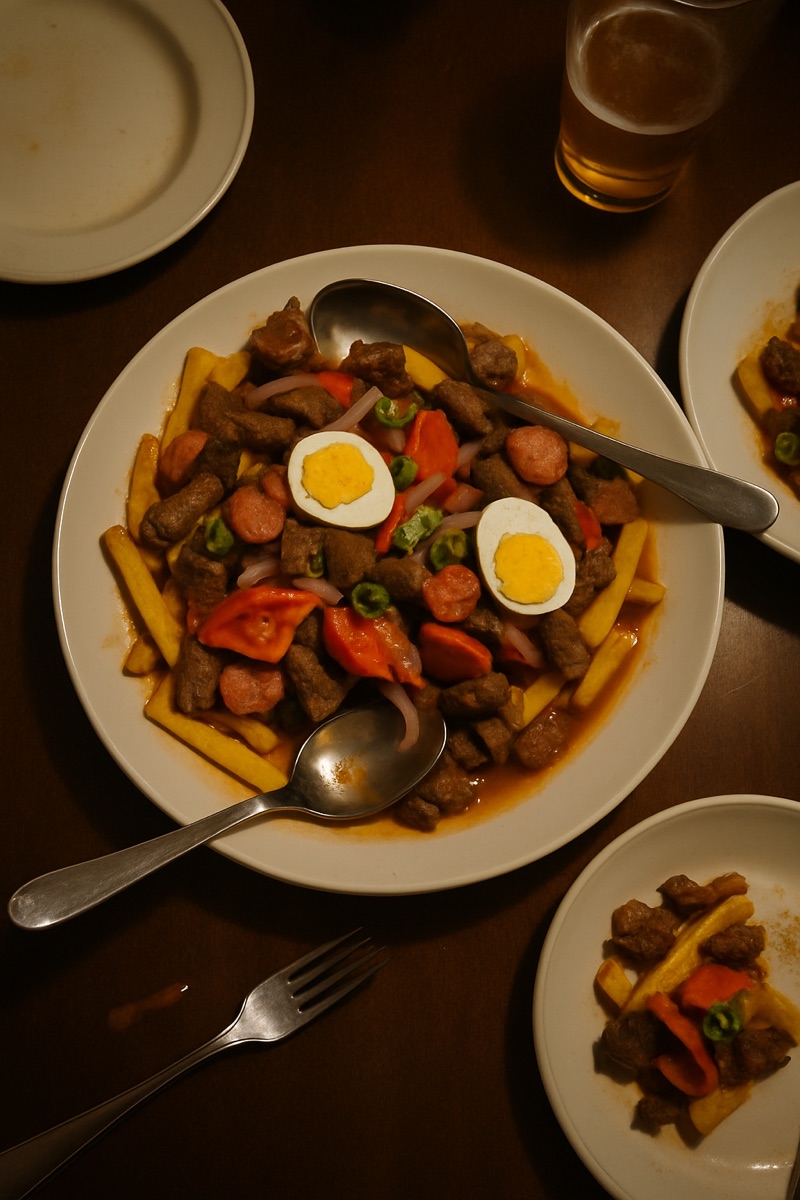
- Pique macho: a shared platter of double-fried potatoes buried under beef cooked pink, sliced sausages, onion, tomato and fried locoto chilli, finished with hard-boiled eggs, raw locoto strips, mustard and mayonnaise. Everyone eats from the same plate.
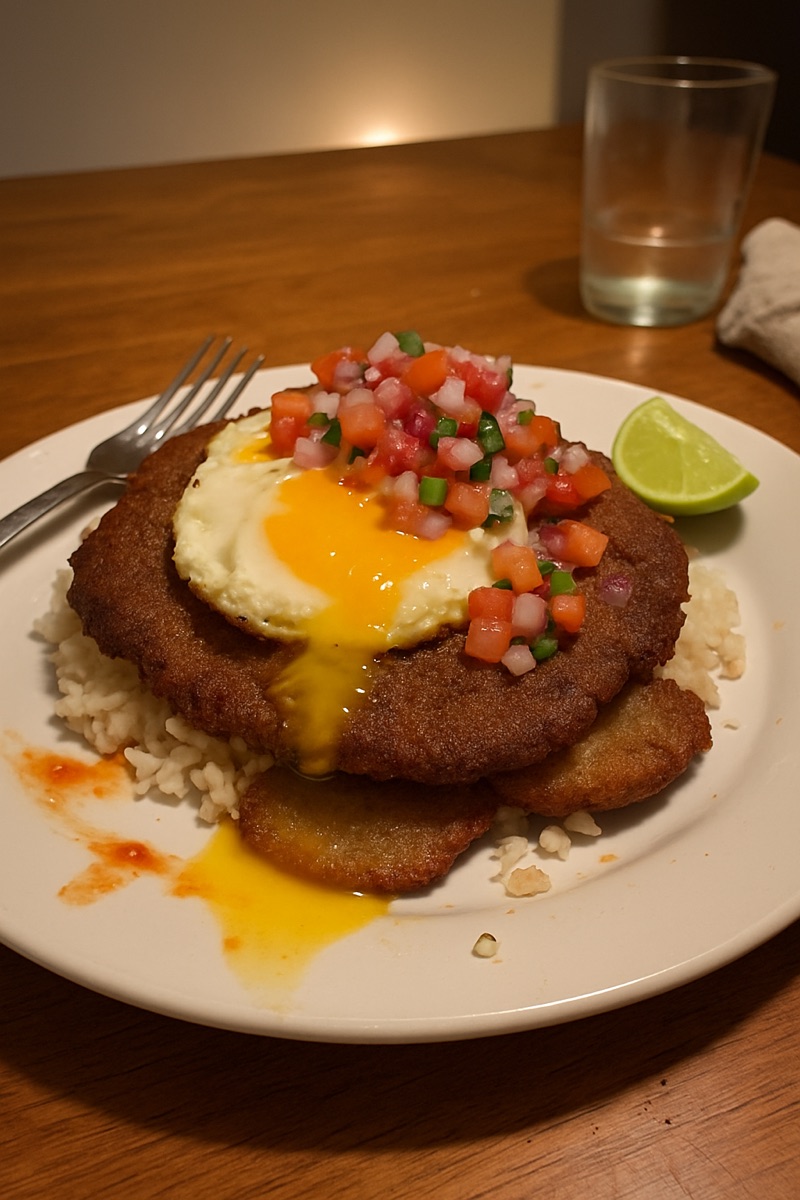
- Silpancho, from the Quechua *sillp'anchu*: a beef steak pounded until almost transparent and as wide as the plate, breaded and fried for 1 to 2 minutes a side, laid over rice and fried potato slices, then topped with a raw tomato, onion and locoto salsa and a fried egg. Packed into bread with all its parts, rice included, it becomes the *trancapecho* sandwich.
Other things to know about Bolivian food
Bolivian cooking draws on Aymara and Inca traditions, with corn, potatoes, quinoa and beans as staples, and on Spanish additions such as rice, wheat, beef and pork. Highland cooking uses more spice; lowland dishes lean on fruit, fish and yuca.
The salteña has travelled with Bolivian emigrants. In the Brazilian border states it is sold as the *saltenha*, which you can set against Brazil's own classic in our article on the national dish of Brazil. Bolivia belongs to the wider South American kitchen, and all three dishes are on our page about the food of Bolivia.
When Bolivians eat salteñas
Lunch, the *almuerzo*, is Bolivia's main meal, often several courses with soup, meat, rice and potatoes. The salteña belongs to the morning: in La Paz and Santa Cruz it is the mid-morning snack, especially on Sundays, and vendors start selling early in the morning.
Every 10 November, Bolivia marks the Día Mundial de la Salteña with tastings and eating contests; in 2020 more than 500 salteñerías in La Paz took part. In 2025 the salteña, served with *api con pastel*, a hot sweet corn drink with a pastry, represented Bolivia in an online breakfast tournament run by the Spanish streamer Ibai Llanos, and reached the semi-finals.
The recipes
- Salteñas🇧🇴 Bolivia · 14 hours and 20 minutes
 Pique macho🇧🇴 Bolivia · 50 minutes
 Silpancho🇧🇴 Bolivia · 1 hour
Questions people ask
Is the salteña from Bolivia or Argentina?
The salteña is Bolivian. Its name is linked to the Argentine province of Salta, but the broth-filled version with chilli and potato developed in Potosí, Bolivia.
How do you eat a salteña without spilling it?
Hold it upright, tip upwards, and take small bites from the top so the broth stays inside the pastry.
When is Salteña Day?
Bolivia celebrates the Día Mundial de la Salteña every year on 10 November, with tastings and eating contests.
Is the salteña an official heritage dish?
Yes, in part. Law 485 of 2014 declared the salteña potosina, together with five other Potosí dishes, National Heritage of Bolivia. That law does not name it the national dish.
What is the difference between pique macho and silpancho?
Pique macho is a shared platter of fries, beef, sausage and locoto chilli. Silpancho is an individual plate of rice, fried potato and a thin breaded steak topped with salsa and a fried egg. Both come from Cochabamba.
Keep reading
- Traditional food of Bolivia: 14 dishes to know
- What is the national dish of Argentina?
- What is the national dish of Brazil?
- What is the national dish of Chile?
- What is the national dish of Colombia?
- What is the national dish of Ecuador?