 COPPER
What is the national dish of Panama?
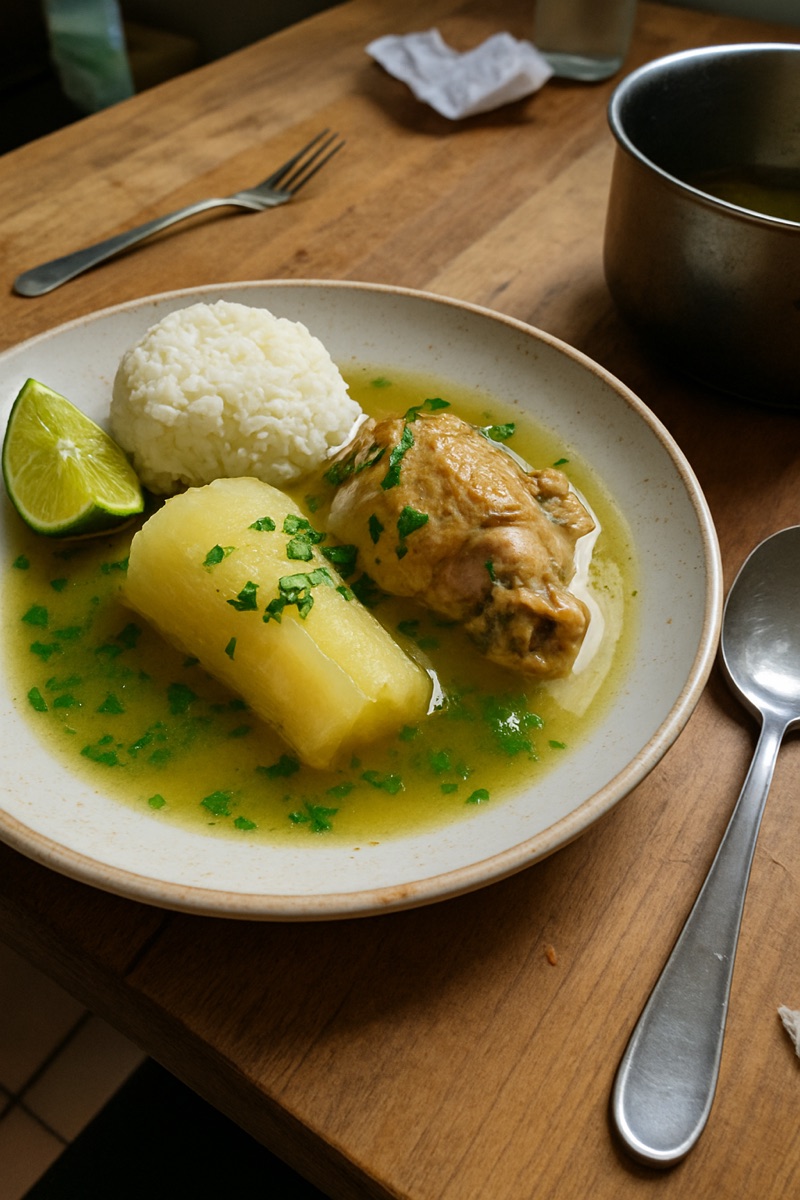
The national dish of Panama is sancocho de gallina, a hen soup thickened by ñame, a yam whose edges dissolve into the broth, and flavoured with culantro, a long serrated herb far stronger than cilantro. It is served very hot with white rice on the side. No law makes it official, but it is the dish most often named as Panama's national dish.
What is Panamanian sancocho?
Sancocho is a soup of meat, tubers and broth made across Latin America and the Caribbean, from Colombia to the Dominican Republic. The name comes from the Spanish verb *sancochar*, 'to parboil'. Panama's version stands apart through two ingredients that cooks treat as essential:
- Ñame, a yam that gives the broth its body, texture and shine as it breaks down
- Culantro, *Eryngium foetidum*, which gives most of the flavour and the greenish tint
- Gallina, a stewing hen rather than a young chicken, for a deeper broth
What goes into the pot besides hen and ñame?
The basic Panamanian sancocho stops at hen, ñame and culantro, seasoned with onion, garlic, salt, peppercorns, chilli and oregano. Many cooks then add yuca, corn on the cob and otoe, a starchy tuber, and sometimes ñampí, the local name for eddoe taro.
Panama's kitchen mixes Spanish, Indigenous and African techniques, and its everyday staples are the ones in this pot: maize, rice, plantain, yuca, chicken, beef and pork. Panamanians eat a lot of rice and a lot of soup, and sancocho is the most popular of those soups.
How sancocho de gallina is made
In our sancocho recipe, a 1.5 kg stewing hen is cut up, rubbed with garlic, salt and dried oregano and left for 30 minutes. It goes into 3 litres of water with a chopped onion, is brought to the boil and skimmed, then simmers covered for an hour: a laying hen needs that time.
Next comes 800 g of ñame in large chunks, simmered uncovered for 40 minutes until the edges dissolve and thicken the broth. A good handful of chopped culantro goes in only in the last 5 minutes. The soup is served very hot, with white rice on the side to be stirred in a spoonful at a time. Hot sauce is often added at the table.
Two habits make the difference. The ñame simmers uncovered until its edges dissolve, which is what thickens the broth; no flour or starch is added. And the culantro goes in only in the last minutes, never at the start with the hen.
Regional versions of sancocho in Panama
Each region adjusts the pot to what grows locally:
- Azuero peninsula: hen or chicken only, with ñame as the single tuber, traditionally cooked in iron pans over a wood fire. Add more and locals call it a *sopa*, not a sancocho. This is the version most found in Panama City.
- La Chorrera (*sancocho chorrerano*): free-range chicken, onion, garlic, chilli, oregano and ñame.
- Chiriquí and Veraguas (*sancocho chiricano*): the fullest version, with yuca, otoe and squash, which turns the broth yellow.
- Bocas del Toro: chicken with beef ribs and pig's tail, sometimes cow's foot and tripe, ñame, ñampí, yuca, corn, otoe, green plantain and squash.
Why sancocho matters to Panamanians
Sancocho is the restorative meal: eaten at lunch, at outings, after hard work and after long parties, and widely recommended as the best cure for a hangover.
It also carries a meaning beyond the bowl. Panamanians use it as a metaphor for the country's mixed population, since every ingredient brings something of its own to the pot and none can be left out. Colombia makes its own sancochos with plantain, potato and cassava; you can compare them in our article on the national dish of Colombia.
Other dishes to know from Panama
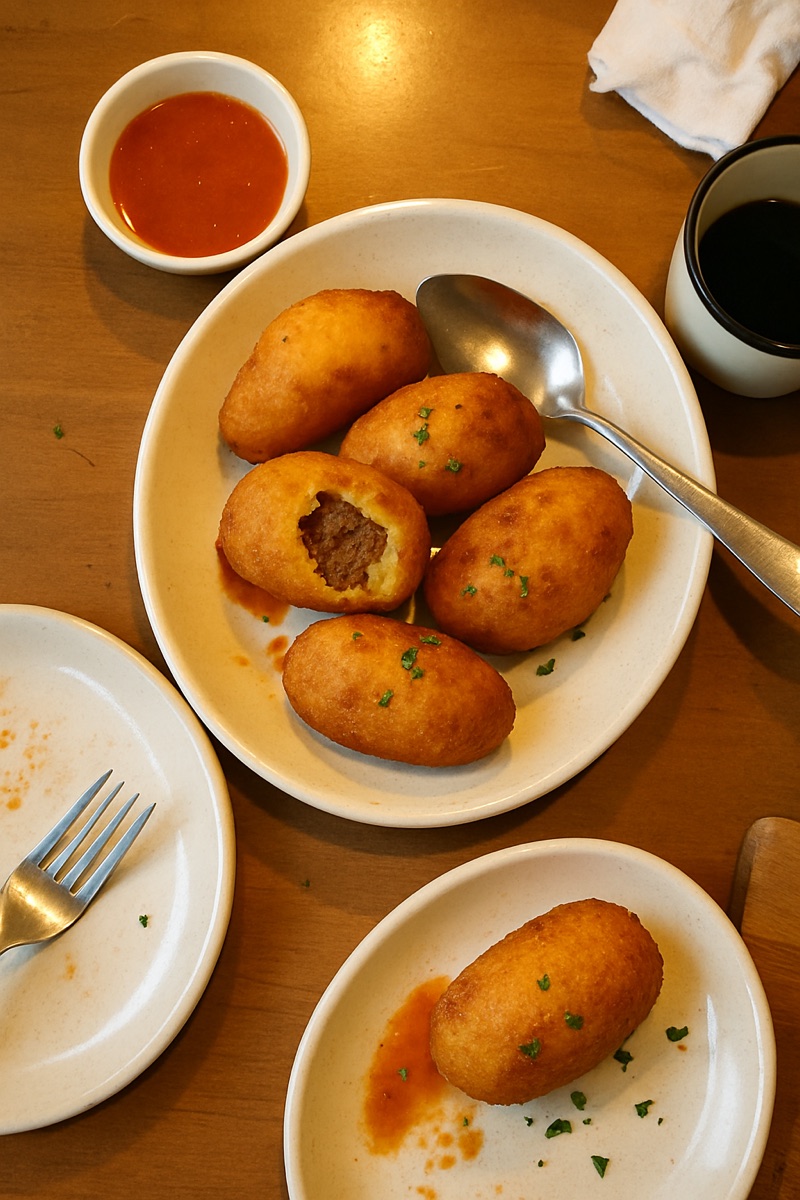
Carimañolas are torpedoes of cassava dough sealed around a dry beef filling seasoned with culantro and cumin, then deep-fried at 180 °C for 4 to 5 minutes and served with suero or ají picante. They are also eaten on the Caribbean coast of Colombia, usually for breakfast or as a snack. The yuca has to be mashed while still steaming, or the dough stays grainy and will not seal.
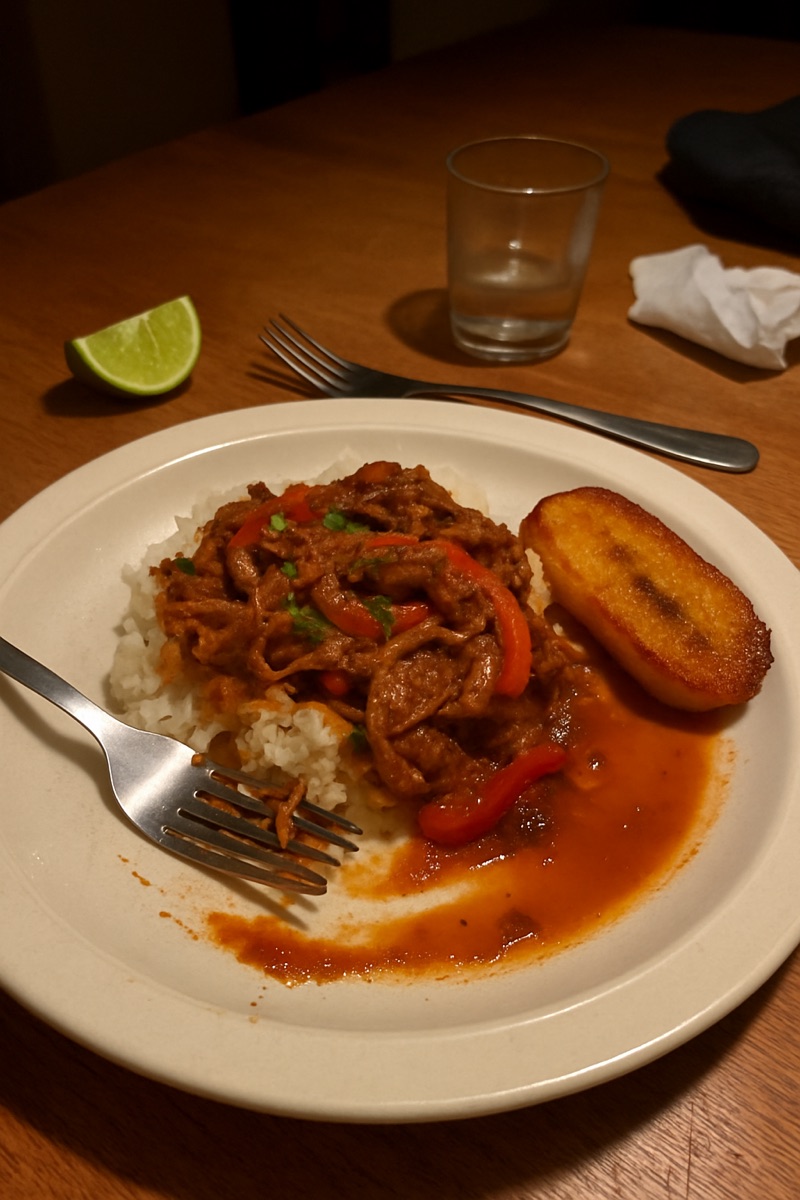
Ropa vieja is beef flank poached whole for 2 hours, shredded along the grain into fine threads, then simmered for 25 minutes in a tomato sofrito with its own broth until the sauce clings to the strands. It is served over white rice with fried ripe plantain.
Panama's kitchen sits at the meeting point of Central American and Caribbean cooking. All three dishes are on our page about the food of Panama.
The recipes
- Sancocho🇵🇦 Panama · 2 hours and 25 minutes
 Carimanola🇵🇦 Panama · 1 hour and 15 minutes
 Ropa vieja🇵🇦 Panama · 3 hours
Questions people ask
Is sancocho from Panama or Colombia?
Both. Sancocho is made in several Latin American and Caribbean countries, including Colombia, the Dominican Republic and Venezuela. Panama's version is defined by ñame yam and culantro.
What is served with Panamanian sancocho?
White rice on the side, stirred into the soup a spoonful at a time. Hot sauce is often added, and in Azuero it may come with fried plantain slices.
What is culantro?
Culantro (*Eryngium foetidum*) is a herb with long, serrated leaves and a much stronger taste than cilantro. In Panamanian sancocho it gives most of the flavour.
What does sancocho mean?
The word comes from the Spanish verb *sancochar*, meaning 'to parboil'.
Why is sancocho eaten after parties?
Panamanians eat it as a restorative meal after hard work or long celebrations, and it is often recommended as a hangover cure.
Keep reading
- Traditional food of Panama: 12 dishes to know
- What is the national dish of Belize?
- What is the national dish of Costa Rica?
- What is the national dish of El Salvador?
- What is the national dish of Guatemala?
- What is the national dish of Honduras?