 COPPER
Traditional food of Panama: 12 dishes to know
Traditional Panamanian food mixes Indigenous, Spanish and Afro-Caribbean cooking around rice, corn, plantain and roots such as yuca and ñame, seasoned with culantro and the hot ají chombo pepper. Rice comes with almost every lunch, soups are everywhere and breakfast is fried. The dishes to know first are sancocho, a hen and ñame soup, carimañolas, hojaldras and corvina ceviche.
What Panamanian food is built on
Before the Spanish arrived in 1502, the peoples of the isthmus lived on maize, yuca, sweet potato, squash, otoe and yams, plus fish and game. Colonisation brought cattle, and beef became a staple; by the late 18th century ordinary people lived on plantain, rice, dried beef and corn. Later, Afro-Antillean workers, who came for the railway, the canal and the banana plantations, brought Caribbean dishes cooked in coconut milk. Panamanian cuisine is the meeting of the three.
Rice is the core of the diet: lunch is almost always rice with meat, beans, plantain or a soup. Roots and tubers matter as much, above all yuca, ñame, ñampí and otoe. The two signature seasonings are culantro, a long serrated herb far stronger than cilantro, and ají chombo, a hot pepper of the Scotch bonnet type. With coasts on both the Pacific and the Caribbean, fish and seafood are cheap and fresh. In 2017 UNESCO named Panama City a Creative City of Gastronomy.
Soups, stews and rice
Panamanians eat a lot of soup, and the midday plate is built around white rice.
- Sancocho — A stewing hen simmered with ñame, the yam whose edges dissolve and thicken the broth, and a handful of culantro added at the end. It is served very hot with white rice on the side, and it is the dish most often named as the national dish of Panama. Panamanians also count on it after long parties.
- Ropa vieja — Beef flank poached whole, pulled into fine threads, then simmered in a tomato sofrito with its own broth. It is a fixture of the fondas, Panama's simple eateries, served over white rice with fried ripe plantain.
- Arroz con pollo — Rice cooked with chicken and vegetables in one pot. It is everyday food in the fondas and one of the standard dishes of the Panamanian Christmas table, alongside chicken tamales and roast pork.
- Guacho — A soupy rice cooked in broth around one main ingredient, often with pigeon peas (guandú), ñame, yuca and culantro. The most traditional versions are made with seafood or with pig's tail. In Portobelo it is traditionally served in bowls made from gourds.
Fried breakfasts and corn
A Panamanian breakfast is fried: tortillas, yuca, hojaldras and carimañolas, with stewed liver, steak and onions or stewed sausages on the side.
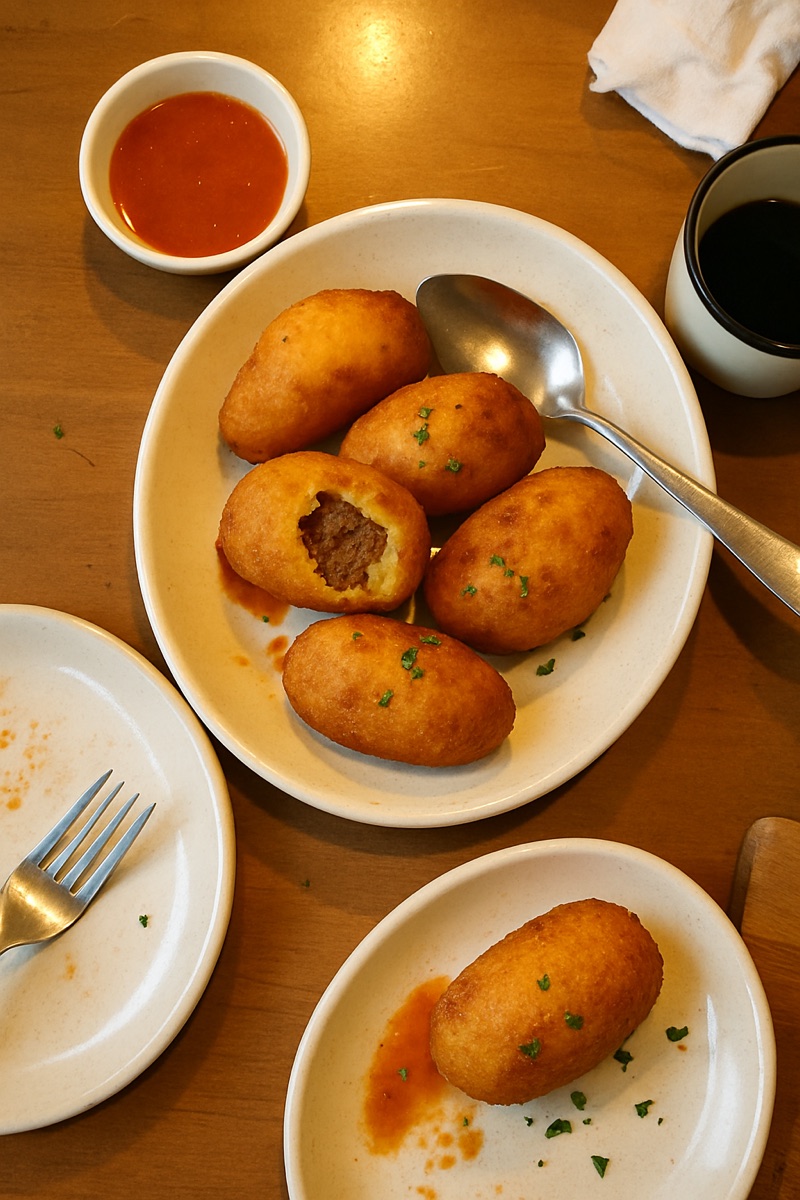
- Carimañolas — Torpedo-shaped fritters of mashed yuca dough sealed around a seasoned beef filling and deep-fried until golden. They are eaten for breakfast or as a snack, also on the Caribbean coast of Colombia.
- Tortilla and changa — The Panamanian tortilla is a thick disc of corn masa, not the thin nixtamalized tortilla of Mexico. The tortilla frita is fried, sometimes with plantain or white cheese in the dough; the changa is a large tortilla of fresh yellow corn cooked on a griddle, typical of the interior provinces. A Spanish account from 1631 already describes tortillas half a finger thick near Panama City.
- Hojaldras — Simple dough of flour, water and salt fried until it puffs up, crisp outside and soft inside. They are a breakfast staple with fried cheese and stews; in Colón province they are simply called harinas.
- Bollos — Corn dough wrapped in palm leaves, corn husks or plantain leaves and boiled, a cousin of the tamal. There are fresh-corn and dry-corn bollos, and the bollo preñado, "pregnant bollo", hides a beef filling.
- Patacones — Slices of green plantain fried, flattened, then fried a second time. They are the standard side with fried fish, especially along the coasts.
Seafood and drinks
With two coastlines, fish is eaten fried, in soups and raw. Fried fish with crisp patacones is the classic seaside lunch, and on the Caribbean side octopus, sea snails and lobster are cooked with coconut and hot pepper. To drink, Panamanians blend fresh fruit into licuados of pineapple, passion fruit or papaya, often heavily sweetened and sometimes with condensed milk.
- Ceviche — Raw fish, most often corvina (white sea bass), cured in lemon juice with chopped onion, celery, cilantro and peppers. It is the starter of most local restaurants, also made with octopus, shrimp or squid, and sometimes spooned into small pastry shells called canastitas. A little ají chombo is added for heat.
- Rondón — A Caribbean soup of fish or seafood simmered in coconut milk with plantain and ñame. It came with Afro-Caribbean workers and is the signature dish of Bocas del Toro and Colón, served with rice or patacones.
- Chicheme — A thick, sweet drink of hulled corn cooked with milk, sugar and cinnamon, sometimes nutmeg and ginger. It is made mainly in Colón and Panamá Oeste, and the town of La Chorrera is known for it.
Regional cooking in Panama
Small as it is, Panama has distinct regional kitchens. The central provinces and the Azuero peninsula keep the cattle-country cooking of tortillas, bollos and the plainest sancocho: hen and ñame only. Chiriquí and Veraguas make a fuller sancocho with yuca, otoe and squash, and the Chiriquí highlands grow the country's potatoes, around Cerro Punta, and its prized Geisha coffee, around Boquete. On the Caribbean side, Bocas del Toro and Colón cook Afro-Antillean food: rondón, johnny cakes, yaniqueque and pan bon, with a reputation for spice.
Panama sits where Central American cooking meets the Caribbean and Colombia. To compare, see the traditional food of Colombia, which shares carimañolas, bollos and sancocho, and the traditional food of Costa Rica.
Cook Panamanian food at home
Three of these dishes are on Copper with full ingredient lists and step-by-step methods: sancocho de gallina, carimañolas and ropa vieja. The habit that matters most is the same in all of them: give the roots time, whether it is ñame melting into the broth or yuca mashed while still steaming. You will find them, with every other Panamanian recipe we have, on our page about the food of Panama.
The recipes
- Carimanola🇵🇦 Panama · 1 hour and 15 minutes
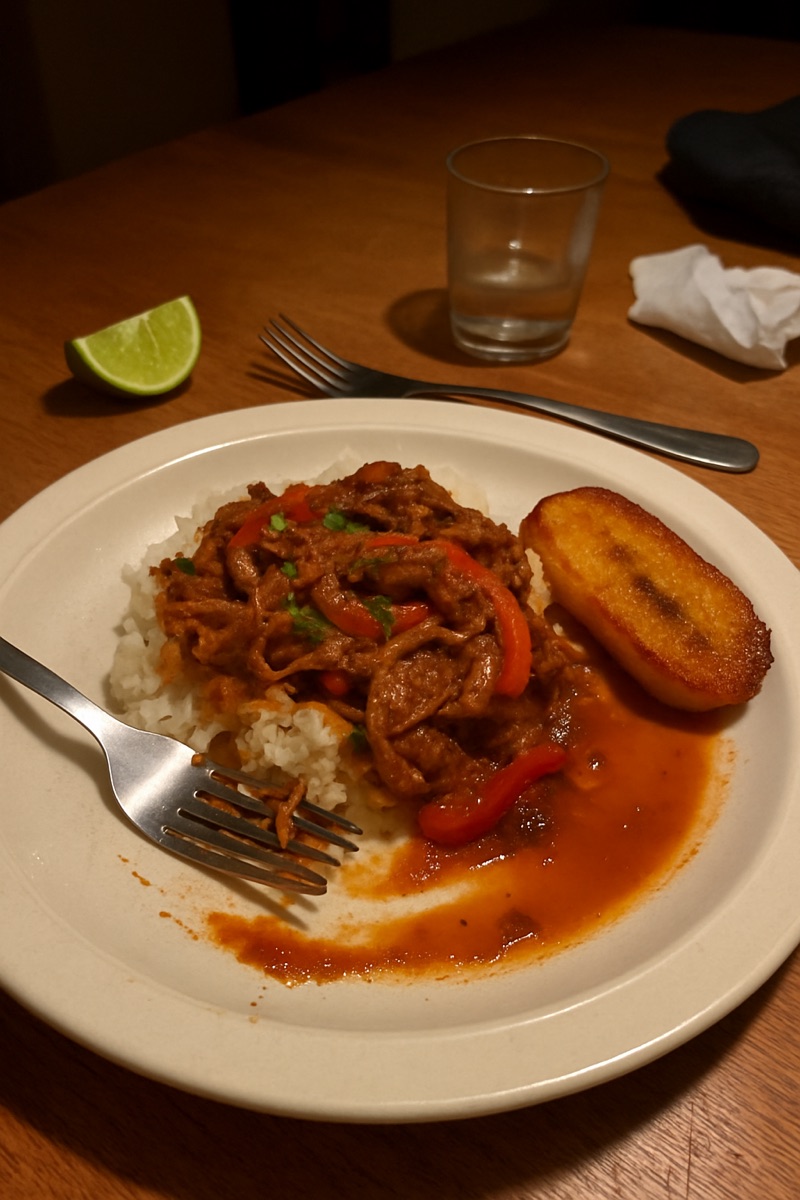 Ropa vieja🇵🇦 Panama · 3 hours
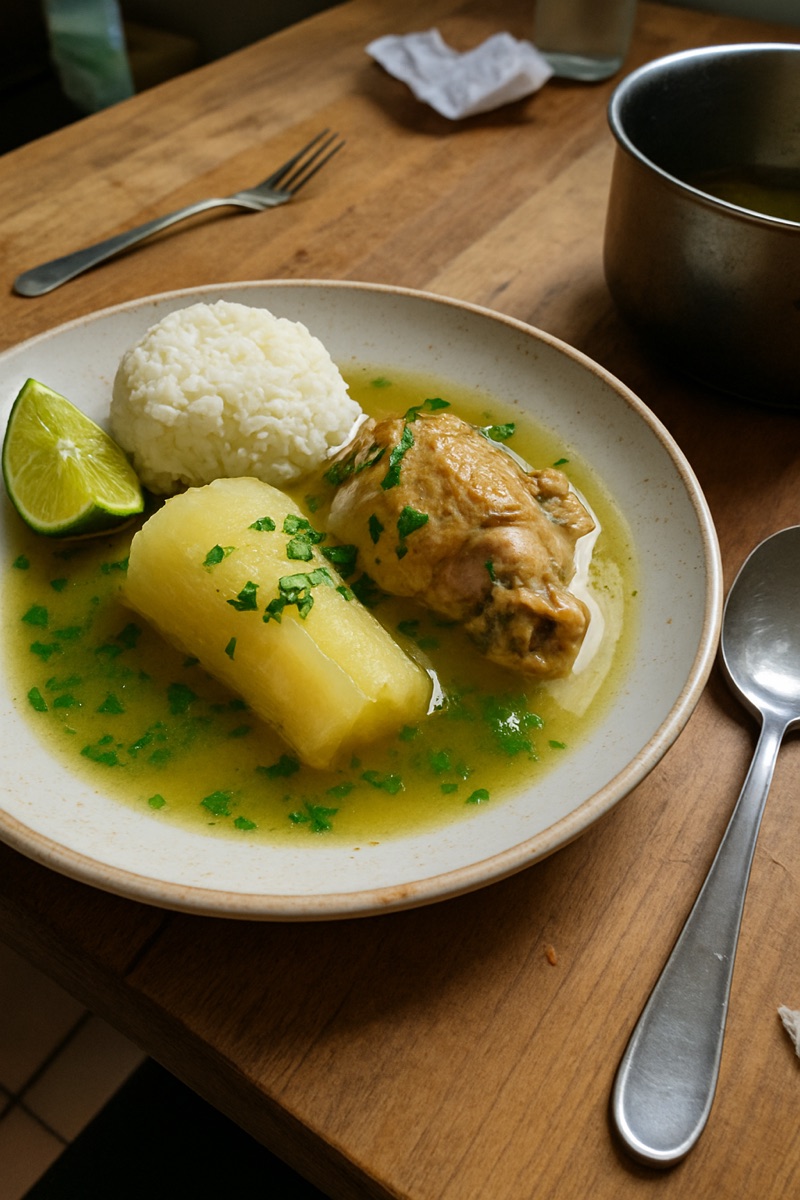 Sancocho🇵🇦 Panama · 2 hours and 25 minutes
Questions people ask
What is the most popular food in Panama?
Sancocho de gallina, a hen soup thickened with ñame and flavoured with culantro, is the most popular soup and is usually called the national dish. Rice with chicken, ropa vieja, carimañolas and ceviche are also everywhere.
What do Panamanians eat for breakfast?
Breakfast is usually fried: corn tortillas, hojaldras, carimañolas or fried yuca, served with fried cheese, eggs, stewed liver, steak and onions or stewed sausages, and coffee.
Is Panamanian food spicy?
Mostly not. Dishes are seasoned with culantro, onion and garlic rather than chilli. Heat comes from ají chombo, a hot pepper added at the table or to ceviche, and the Caribbean cooking of Bocas del Toro is the spiciest in the country.
What do Panamanians eat at Christmas?
Chicken tamales, arroz con pollo, roast pork or pernil, turkey and stuffing, with fruitcake and ron ponche, a rum eggnog, to drink.
What is the difference between a Panamanian and a Mexican tortilla?
The Panamanian tortilla is thick and made from corn that is not nixtamalized; it is fried or cooked on a griddle. The changa is a larger version made with fresh corn.
Keep reading
- What is the national dish of Panama?
- Traditional food of Belize: 12 dishes to know
- Traditional food of Costa Rica: 14 dishes to know
- Traditional food of El Salvador: 12 dishes to know
- Traditional food of Guatemala: 12 dishes to know
- Traditional food of Honduras: 13 dishes to know