 COPPER
Traditional food of El Salvador: 12 dishes to know
Traditional Salvadoran food is Pipil and Maya corn cooking mixed with Spanish dairy, pork and wheat: masa, red beans, rice, fresh cheeses and loroco flowers, with curtido, a vinegar cabbage relish, on the side. The dishes to know first are pupusas, stuffed corn cakes, yuca frita with chicharrón, sopa de pata, a cow's foot soup, and panes con pollo.
What Salvadoran food is built on
El Salvador belongs to Mesoamerica, where maize is the base of the diet. The Pipil, Maya and Lenca peoples cooked corn, beans, squash, cacao, yuca and chillies, and ate turkey, deer and iguana. The Spanish added milk, cream, cheese, rice, wheat, sugar cane, beef and pork, and later immigrants from the Middle East brought their own dishes.
Today the everyday ingredients are corn masa, red beans, rice, chicken, beef, pork and seafood. Dairy matters more than in most of the region: Salvadorans drink about 175 litres of milk per person a year and make many cheeses, from soft quesillo for pupusas to salty, crumbly queso duro. Two local plants stand out: loroco, an edible flower bud, and the flower of the izote, often scrambled with eggs. Alguashte, ground toasted pumpkin seeds, is a seasoning of likely Maya origin, and Salvadoran chorizo is short, fresh and tied in pairs. Corn tortillas here are small and thick, about 10 cm wide and 5 mm thick.
Pupusas and corn dishes
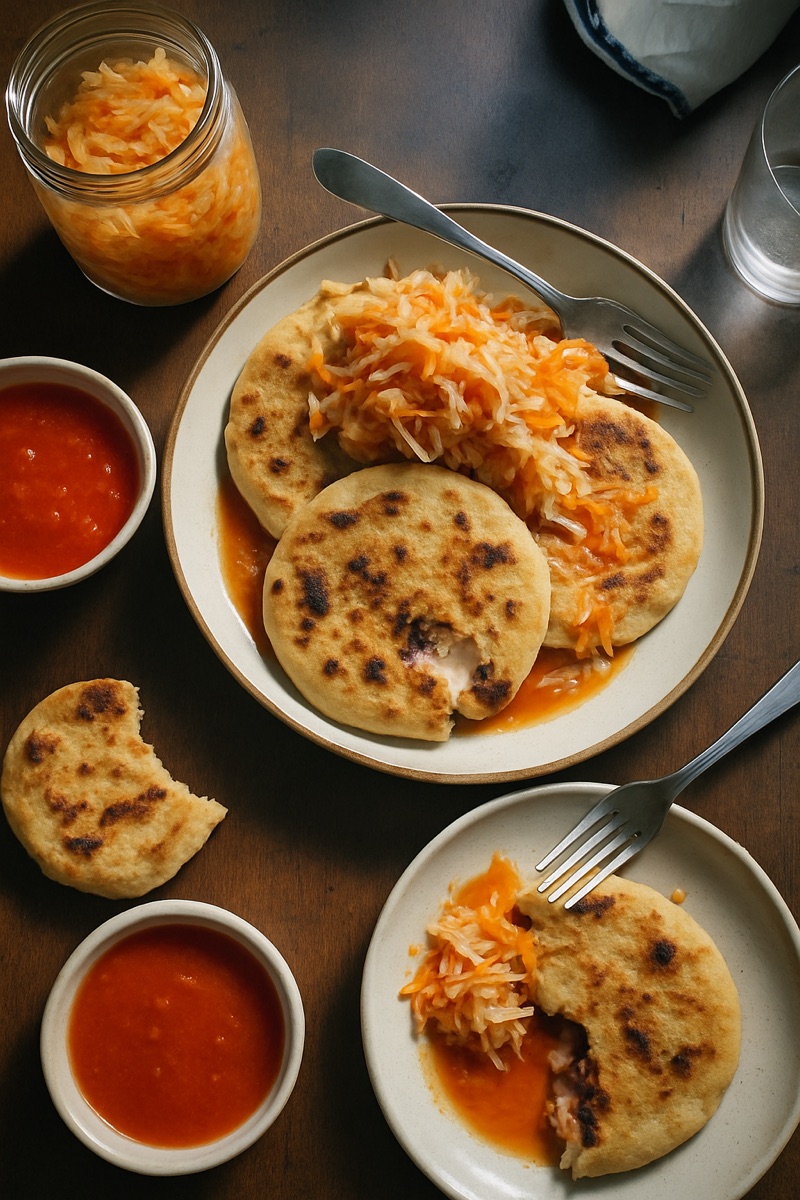
- Pupusas — Thick corn cakes stuffed by hand with cheese, refried beans, chicharrón paste or loroco, sealed and cooked dry on a comal. They are always eaten with curtido and a thin tomato salsa. The oldest evidence of pupusa-making comes from Joya de Cerén, a 1,400-year-old Maya site in El Salvador, where the oldest evidence of cassava growing was also found. El Salvador honours them with a National Pupusa Day, created by law in 2005; read the full story in our article on the national dish of El Salvador.
- Yuca frita — Deep-fried cassava topped with curtido, salsa and pork chicharrón, sometimes with pepesca, tiny fried sardines. The yuca can also be served boiled instead of fried.
- Tamales — Usually wrapped in plantain leaves. The main kinds are tamales de pollo, filled with chicken and potato, tamales pisques with black beans, sweet tamales de elote made from fresh corn, and ticucos, round bean-and-cheese tamales wrapped in dry corn husks and once made for travellers.
- Riguas — Fried cakes of fresh young corn, wrapped in plantain leaf and eaten with beans and sometimes cheese.
- Pasteles — Corn-dough turnovers filled with picadillo, minced meat with vegetables, eaten, like other antojitos, in the middle of the afternoon with a cup of coffee.
Soups and festive dishes
Soups are eaten by Salvadorans of every social level, and each has its day or its occasion: fish soup with corn, tomato and achiote, for instance, is the Good Friday dish.
- Sopa de pata — Cow's feet and tripe simmered with yuca, chayote, corn, plantain, green beans and cabbage, seasoned with culantro and sharpened with lemon. The trotters are cooked the day before, and in San Salvador the soup has been sold at the Tinetti market since the 1960s.
- Sopa de gallina india — A soup of free-range hen with güisquil (chayote), potatoes, carrots, corn and rice. Some cooks add loroco and cream.
- Gallo en chicha — Rooster cooked in Salvadoran chicha, a corn drink, sweetened with panela. Often compared with coq au vin, it takes time to make, so it is kept for holidays and celebrations such as the birth of a child, mostly in the west and centre of the country.
- Panes con pollo — Warm sandwiches of French bread filled with chicken or turkey marinated, roasted with spices and pulled by hand, then soaked in its sauce with tomato, watercress, cucumber and cabbage. The turkey version is called pan con chumpe.
Sweets and drinks
Coffee, El Salvador's leading export, is drunk at every meal. Horchata here is made from rice and spices such as cinnamon, with morro seeds, sesame and peanuts, and ensalada is a juice of pineapple with finely chopped fruit.
- Empanadas de plátano — Very ripe plantain mashed into a dough, filled with vanilla custard or sweet refried beans, fried and rolled in sugar.
- Quesadilla salvadoreña — Not the Mexican quesadilla but a dense cake of rice flour and salty hard cheese topped with sesame seeds, traditionally baked on Sunday mornings and eaten with coffee. It is also made in eastern Guatemala and in Salvadoran bakeries in the United States.
- Atol shuco — A dark corn drink made from purple corn left a few days to ferment, then milled and cooked, and served hot in a gourd bowl called a huacal. Atol de elote, made from fresh corn, is its sweet, pale cousin.
Where Salvadoran dishes come from
The country is small, but places are tied to dishes. Olocuilta is famous for rice-flour pupusas and its rows of pupuserías. In Metapán, yuca frita is eaten with cabbage curtido. San Esteban Catarina, in San Vicente, built its economy on melcochas, chewy panela sweets. The Pacific coast eats ceviches of fish, shrimp and black clams called conchas, dressed with lemon and a tomato and onion sauce or Worcestershire sauce, and mariscada, a soup of fish, clams, octopus, squid, shrimp and crab.
Salvadoran food shares masa, tamales and the comal with the rest of Central American cooking. To compare, see the traditional food of Guatemala and the traditional food of Honduras, which also makes pupusas.
Cook Salvadoran food at home
Three of these dishes are on Copper with full ingredient lists and step-by-step methods: pupusas, sopa de pata and yuca frita. Make the curtido first, ideally the night before, because pupusas and yuca frita are not complete without it, and start the sopa de pata a day ahead so the feet have time to turn tender. You will find them, with every other Salvadoran recipe we have, on our page about the food of El Salvador.
The recipes
- Pupusas🇸🇻 El Salvador · 4 hours
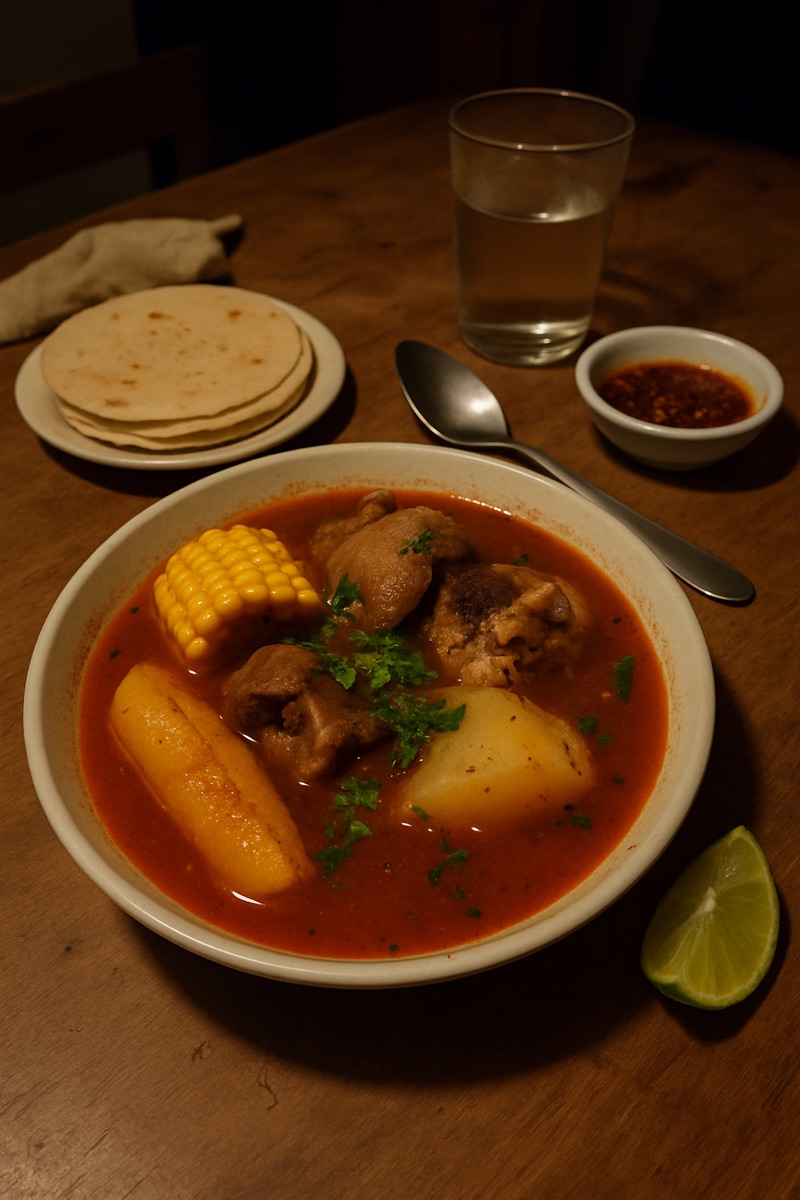 Sopa de pata🇸🇻 El Salvador · 5 hours and 20 minutes
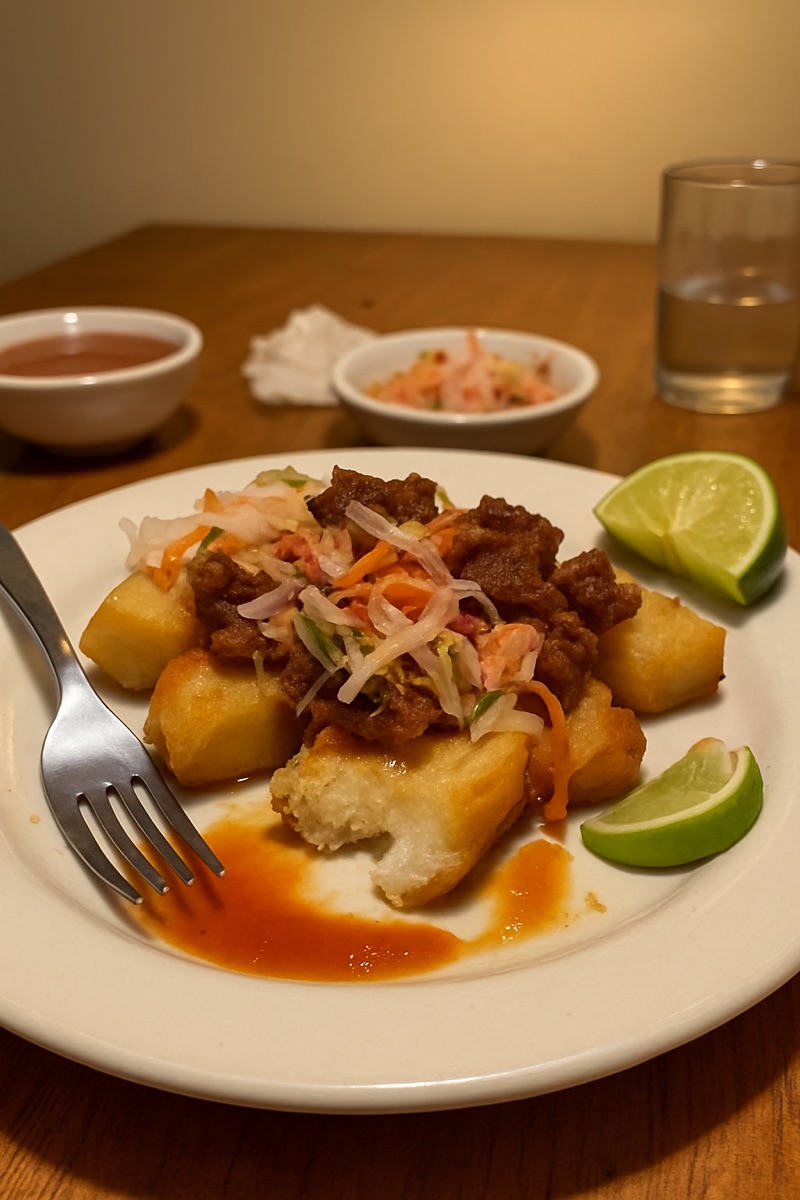 Yuca frita🇸🇻 El Salvador · 5 hours and 30 minutes
Questions people ask
What is the most popular food in El Salvador?
The pupusa, a corn cake stuffed with cheese, beans or pork, is by far the most popular and has its own National Pupusa Day, created by law in 2005. Tamales, yuca frita, pasteles and panes con pollo are also everyday favourites.
What do Salvadorans eat for breakfast?
A typical breakfast is eggs, beans, cream, fried plantain and chorizo, with coffee and sometimes viejitas, biscuits dipped in it.
Is Salvadoran food spicy?
Generally not very. Pupusas come with curtido and a thin cooked tomato salsa rather than a hot sauce, and the sharpness of most dishes comes from vinegar and lemon. Hot chilli is added at the table.
What is curtido?
A lightly fermented relish of cabbage, onion, carrot and oregano in vinegar, served with pupusas, yuca frita and many other dishes.
What do Salvadorans eat at Christmas?
Pavo salvadoreño, roast turkey served with its sauce, is the classic Christmas dish.
Keep reading
- What is the national dish of El Salvador?
- Traditional food of Belize: 12 dishes to know
- Traditional food of Costa Rica: 14 dishes to know
- Traditional food of Guatemala: 12 dishes to know
- Traditional food of Honduras: 13 dishes to know
- Traditional food of Mexico: 12 dishes to know