 COPPER
What is the national dish of El Salvador?
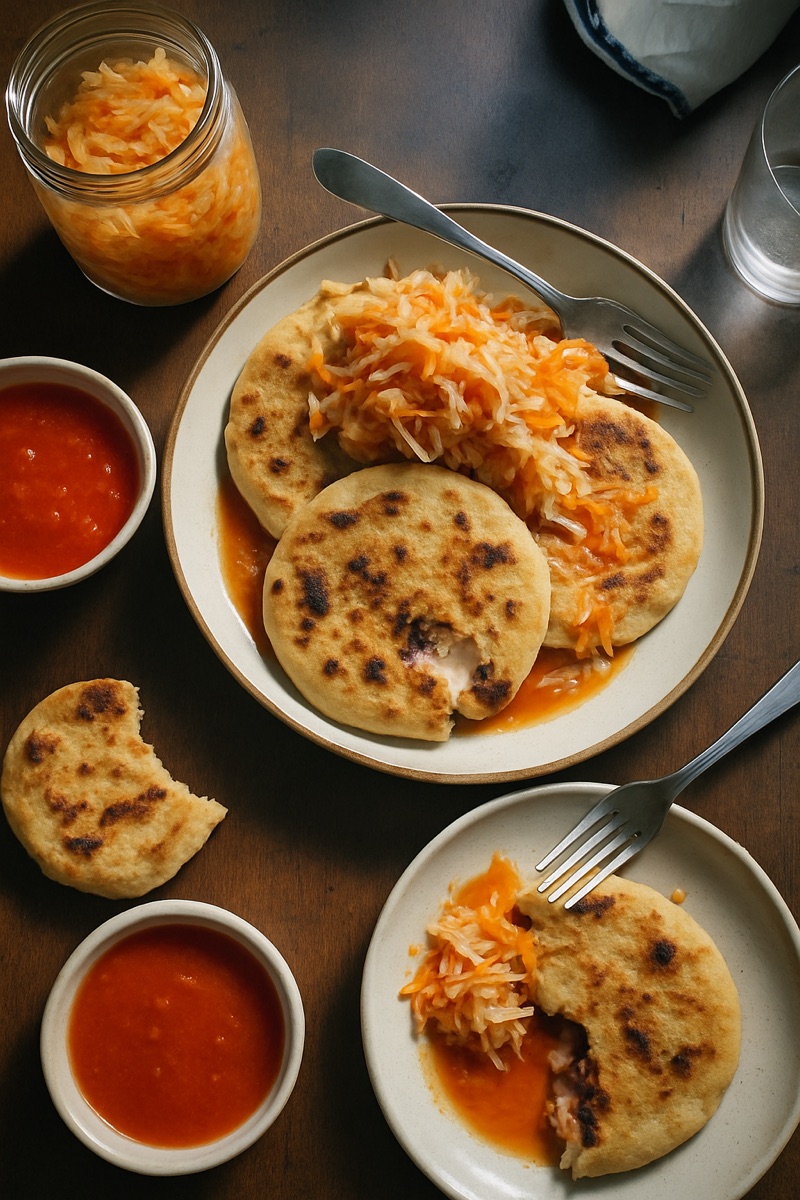
The national dish of El Salvador is the pupusa: a thick corn-dough cake stuffed with cheese, beans or pork, sealed by hand and cooked dry on a hot griddle called a comal. It is always served with curtido, a lightly fermented cabbage relish, and a thin tomato salsa. El Salvador has honoured it by law since 2005, when it created National Pupusa Day on the second Sunday of November.
What exactly is a pupusa?
A pupusa is not a tortilla with toppings. The filling goes inside the dough before it is cooked: a ball of corn masa is hollowed with the thumb, filled, closed completely and patted between the palms into a disc about 12 cm wide and 7 mm thick. That closed seam is what makes it a pupusa.
It is then cooked on a very hot comal with no oil at all. Oil would make it greasy and prevent the dark blisters that tell you it is done. A good pupusa takes 3 to 4 minutes per side, and the cheese just starts to seep out at the edge. You can follow every step in our pupusa recipe.
The classic fillings
Pupuserías in San Salvador all offer the same core fillings, alone or combined:
- Queso: quesillo, a soft melting cheese close to mozzarella with a little more tang.
- Frijoles: refried red beans, puréed smooth.
- Chicharrón: not crackling but cooked pork ground to a paste with tomato, onion and green pepper.
- Revuelta: all three together, the most ordered pupusa in the country.
- Loroco: the edible flower bud of a Central American vine, mixed into the cheese for a green, slightly floral note.
Why curtido is not optional
A pupusa without curtido is only half the dish. Curtido is shredded cabbage and carrot, scalded, then packed with vinegar, dried oregano and salt and left for at least three hours, ideally overnight. Its sharpness cuts through the cheese and the pork fat, which is why Salvadorans eat the two together, with their hands, straight off the comal.
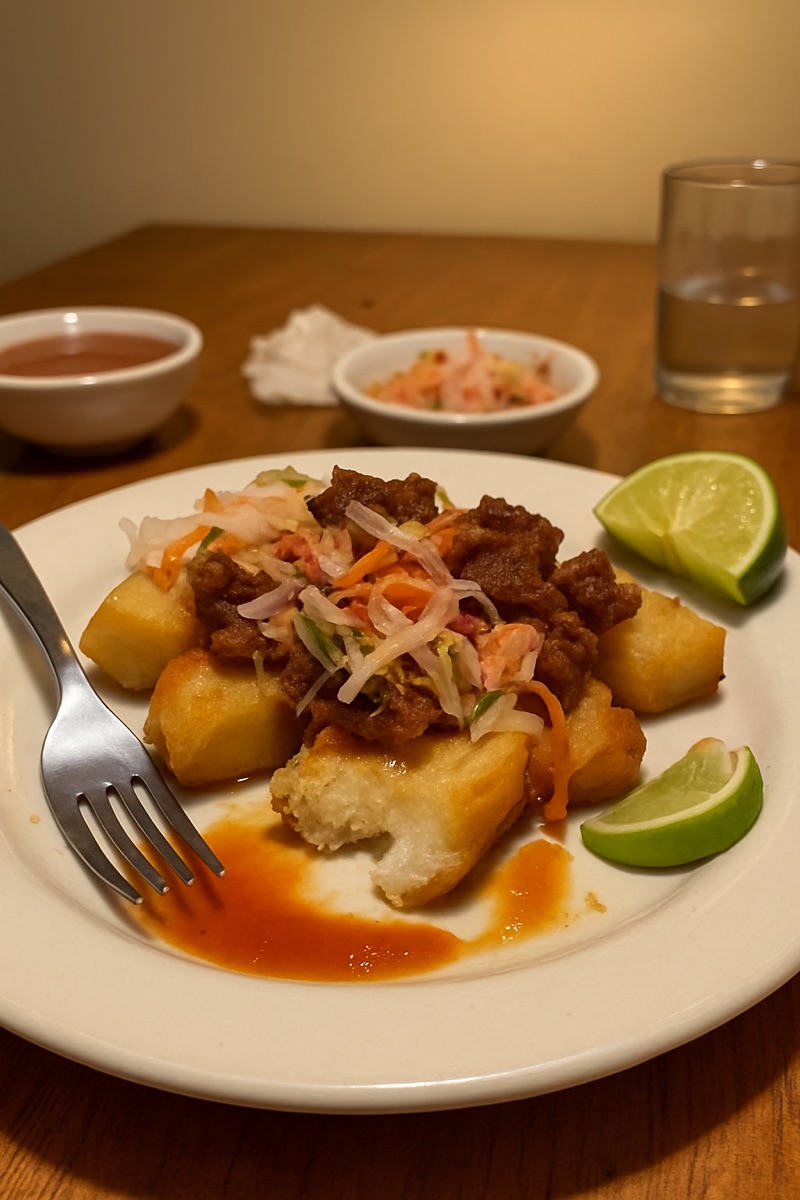
The same relish turns up on yuca frita, fried cassava topped with salsa roja and pork chicharrón, another everyday dish across the country.
Where the pupusa comes from
The pupusa predates the Spanish conquest. It is generally traced to the Pipil people of what is now western El Salvador, who cooked filled corn cakes long before cheese and pork arrived from Europe. Corn masa, the comal and the hand-patting technique are the parts that stayed.
The oldest direct evidence of pupusa-making comes from Joya de Cerén, a 1,400-year-old Maya site in El Salvador. The first written mention of the modern pupusa dates from 1837, when the Guatemalan poet José Batres Montúfar described a similar dish in Nicaragua and placed pupusas in San Salvador.
Honduras also makes pupusas, and the two countries have argued about their origin for years. El Salvador settled the question at home in 2005 by creating a National Pupusa Day.
The date is set in law: Decree 655 of the Legislative Assembly, published in the Diario Oficial on 20 April 2005, made the second Sunday of November National Pupusa Day, timed to the peak of the corn harvest. During the 2003 CAFTA-DR trade talks, Honduras said it would not challenge El Salvador's claim, and in 2018 the World Trade Organization listed El Salvador as the pupusa's designation of origin. For the Honduran side, see the national dish of Honduras.
Rice-flour pupusas appeared in the town of Olocuilta in the late 1930s, when corn ran short. Olocuilta, nicknamed the "city of pupusas", now has whole clusters of pupuserías side by side, known as pupusódromos.
Other dishes to know from El Salvador
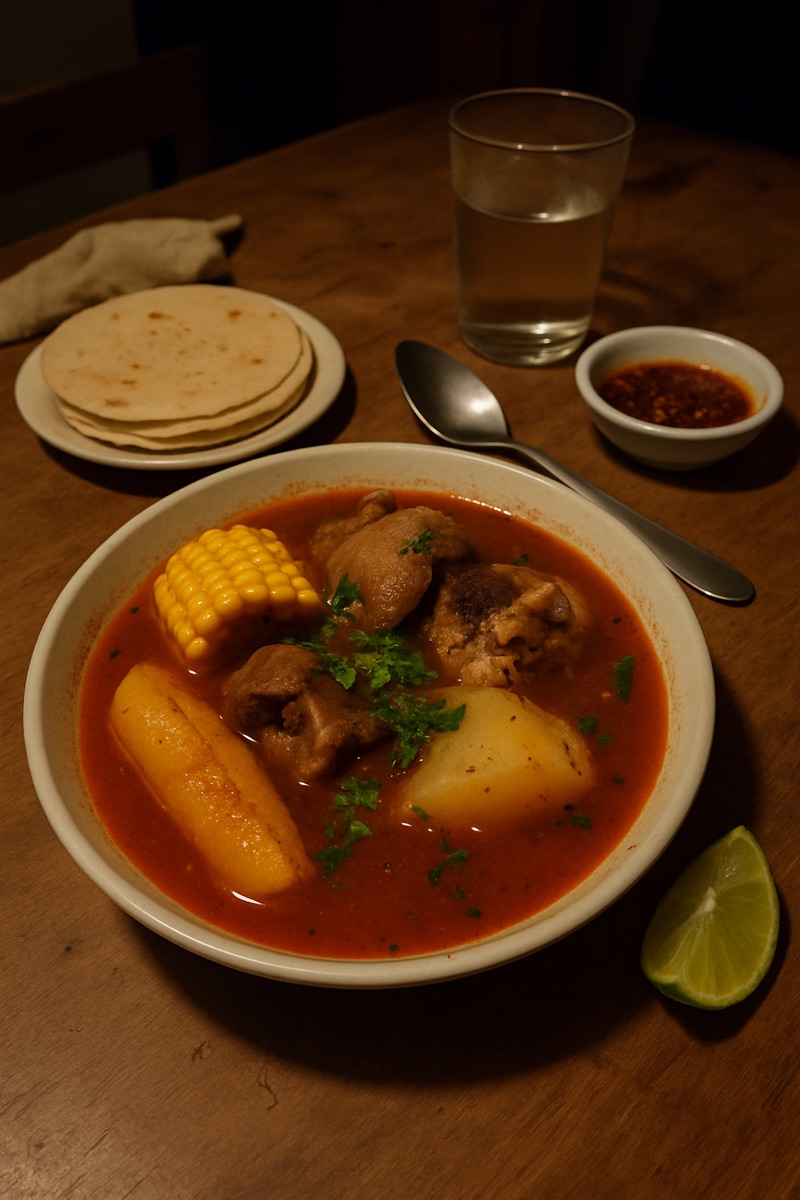
If the pupusa is the everyday dish, sopa de pata is the weekend one: cow feet and tripe simmered for hours until the tendons turn gelatinous, then loaded with yuca, chayote, corn, green plantain and cabbage. It is the kind of soup Salvadorans swear by the morning after a celebration. Its preparation starts the day before, when the feet are cooked, and in San Salvador it has been sold at the Tinetti market since the 1960s.
You will find all three dishes, with ingredients and step-by-step methods, on our page about the food of El Salvador.
For the neighbouring kitchens, see our guide to Central American food.
The recipes
- Pupusas🇸🇻 El Salvador · 4 hours
 Sopa de pata🇸🇻 El Salvador · 5 hours and 20 minutes
 Yuca frita🇸🇻 El Salvador · 5 hours and 30 minutes
Questions people ask
Is the pupusa from El Salvador or Honduras?
Both countries make it, but El Salvador created a National Pupusa Day by law in 2005 and the pupusa is far more central to everyday food there. Its origins are generally traced to the Pipil people of western El Salvador.
When is National Pupusa Day?
El Salvador celebrates National Pupusa Day on the second Sunday of November.
What is served with pupusas?
Pupusas are always served with curtido, a lightly fermented cabbage and carrot relish with oregano and vinegar, and a thin tomato salsa.
Can you make pupusas without masa harina?
Traditional pupusas use corn masa. Rice-flour pupusas also exist, especially in the town of Olocuilta, but corn is the standard.
Are pupusas fried?
No. Pupusas are cooked dry on a very hot griddle (comal) with no oil, which is what gives them their dark blisters.
Keep reading
- Traditional food of El Salvador: 12 dishes to know
- What is the national dish of Belize?
- What is the national dish of Costa Rica?
- What is the national dish of Guatemala?
- What is the national dish of Honduras?
- What is the national dish of Mexico?