 COPPER
What is the national dish of Honduras?
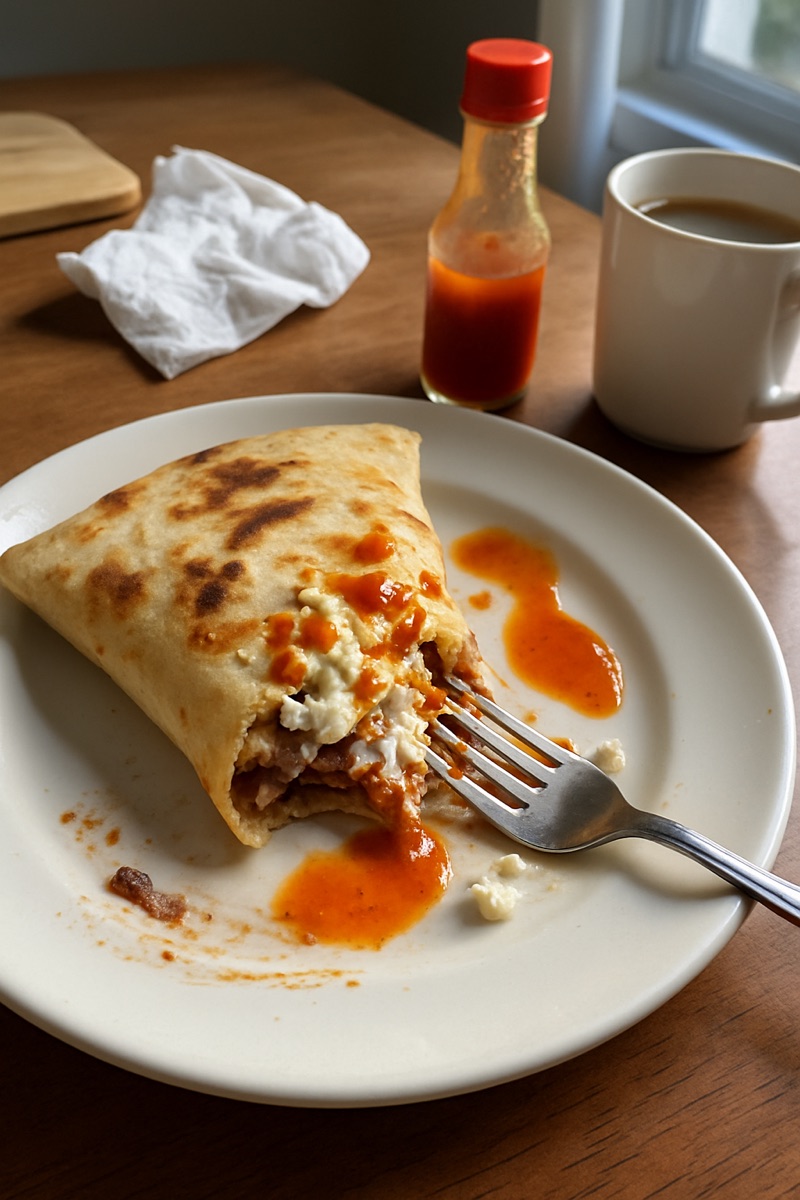
Honduras has no official national dish, and three dishes share the title. The baleada, a thick flour tortilla folded over refried red beans, crema and crumbled hard cheese, is the one most often named. Plato típico, grilled beef with chorizo, plantains and beans, is also called a national dish, and sopa de caracol, a conch and coconut soup, is among the most representative.
Why Honduras has three candidates
No Honduran law names a national dish. Instead, three dishes come up again and again. The baleada is the everyday one: it is listed as Honduras's national dish in lists of national dishes and is one of the most common street foods in the country. In 2018 the government's Marca País programme held the first National Baleada Day, with the aim of fixing it on the third Saturday of June.
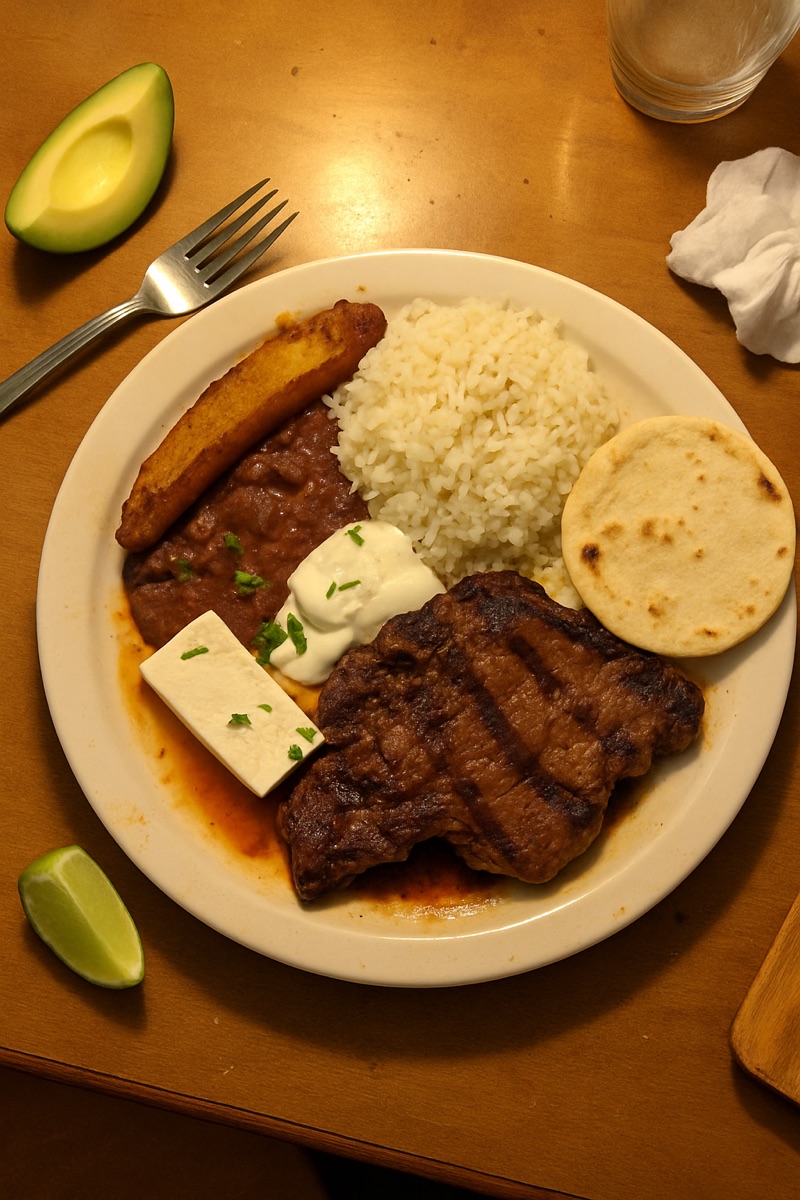
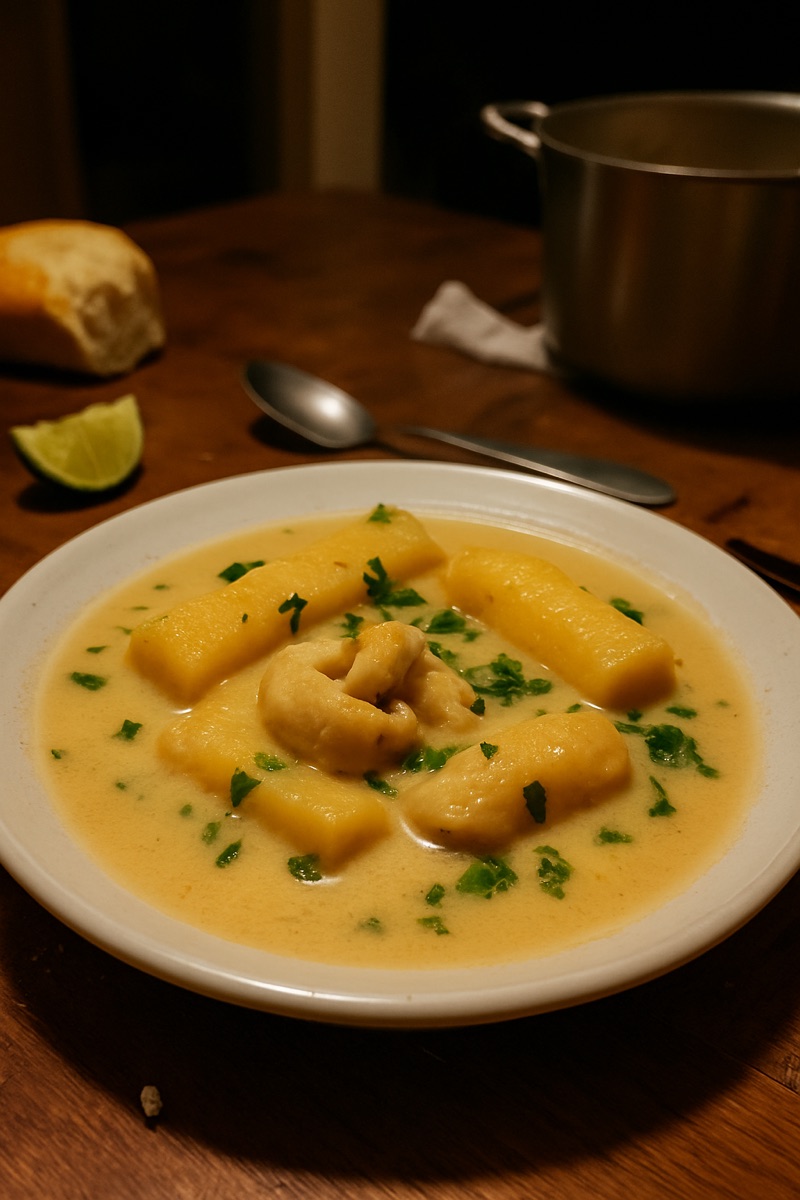
Carneada, the grilled beef feast served in restaurants as plato típico, is described as one of Honduras's national dishes. And sopa de caracol, conch soup from the Caribbean coast, is counted among the most representative dishes of Honduran cooking.
What is in a baleada?
The base is a thick, soft flour tortilla, roughly a hand across, folded in half over its filling. The simple version, the baleada sencilla, has only three fillings:
In stalls the fuller version goes by "baleada especial", "mixta" or simply "con todo". Honduran fast-food chains now sell their own versions too.
- Refried red beans, the bean Hondurans prefer, mashed smooth.
- Crema (also called mantequilla blanca), a runny, slightly salty Honduran cream.
- Queso duro, a salty hard cheese, crumbled over the top.
- Con todo adds scrambled or fried egg, avocado, grilled meat or ripe plantain.
How a baleada is made
The tortilla is what takes skill. In our baleada recipe, 500 g of flour is rubbed with 100 g of lard and a little baking powder, kneaded with warm water for 8 minutes, then divided into 8 oiled balls that rest at least 30 minutes. Without that rest the dough springs back and the tortilla turns hard.
Each ball is rolled to a 20 cm disc 3 to 4 mm thick, much thicker than a taco tortilla, and cooked for 1 minute per side on a dry comal. The cooked tortillas are stacked under a cloth so they steam each other soft. Then come the beans, a drizzle of crema and the cheese, and the baleada is folded and eaten straight away, usually at breakfast or dinner.
Street vendors sell baleadas all day, but they are above all a breakfast food, eaten alongside the classic Honduran morning plate of eggs, refried beans, crema, fresh cheese, avocado, sweet fried plantain and tortillas, with a cup of local coffee.
Where the baleada comes from
The baleada is young. It appeared on the north coast in the mid-20th century, in the banana-company towns, where wheat flour had replaced corn in much local cooking. Tela and La Ceiba are the likeliest birthplaces. The first recorded sale was in La Ceiba in 1964, at a stall beside the Standard Fruit Company railway run by Teresa de Jesús Montiño; it still trades as Baleadas Doña Tere.
Where the tortilla came from is debated. Historian Julio César Zepeda suggests the banana companies' foreign cooks, many from India and Pakistan, made naan and chapati, and that local cooks adapted these flatbreads. The dish is now a point of national pride: on 14 October 2017 a team from the Academia Centroamericana de Gastronomía in Tegucigalpa set a Guinness record with a baleada 5.5 metres across, shared among 2,000 people.
The name is usually linked to the beans, once called "balas" (bullets). From Honduras the dish crossed into eastern Guatemala, where it is sold as tortilla de harina izabalense; see the national dish of Guatemala. Honduras also makes pupusas, the national dish of El Salvador.
Other dishes to know from Honduras
Plato típico is built around skirt steak marinated in sour orange juice and grilled over charcoal, plated with grilled chorizo, fried plantain tajadas, refried beans, rice, fresh cheese, sour cream and raw chismol, a salsa of tomato, onion and cilantro. At home a carneada is as much a social event as a meal, with music and drinks around the grill.
Sopa de caracol comes from the Garifuna coast: pounded conch simmered with cassava and green plantain in coconut milk and fish stock, scented with culantro. The conch is pounded with a mallet first, or it stays rubbery, and the coconut milk is kept at a bare simmer so it does not split. Versions with crab, fish or shrimp are called sopa marinera. A song by the band Banda Blanca made it famous across Latin America.
All three recipes are on our page about the food of Honduras, and more from the isthmus in our Central American recipes.
The recipes
- Baleada🇭🇳 Honduras · 1 hour and 10 minutes
 Plato tipico🇭🇳 Honduras · 4 hours and 40 minutes
 Sopa de caracol🇭🇳 Honduras · 1 hour and 5 minutes
Questions people ask
How do you pronounce baleada?
Bah-leh-AH-dah. The name is usually linked to the beans, once nicknamed "balas", or bullets.
When is National Baleada Day in Honduras?
It was first celebrated on 16 June 2018, organised by the government's Marca País programme, with the aim of making the third Saturday of June the national baleada day.
What is a baleada con todo?
A baleada "with everything": the basic beans, crema and hard cheese, plus scrambled egg, avocado, grilled meat or ripe plantain.
Are baleadas made with corn or flour tortillas?
Flour. A baleada uses a thick, soft wheat tortilla, unlike most Honduran dishes, which are eaten with corn tortillas.
What is the most famous soup in Honduras?
Sopa de caracol, conch soup with coconut milk, cassava and green plantain, made famous across Latin America by Banda Blanca's song of the same name.
Keep reading
- Traditional food of Honduras: 13 dishes to know
- What is the national dish of Belize?
- What is the national dish of Costa Rica?
- What is the national dish of El Salvador?
- What is the national dish of Guatemala?
- What is the national dish of Mexico?