 COPPER
What is the national dish of Guatemala?
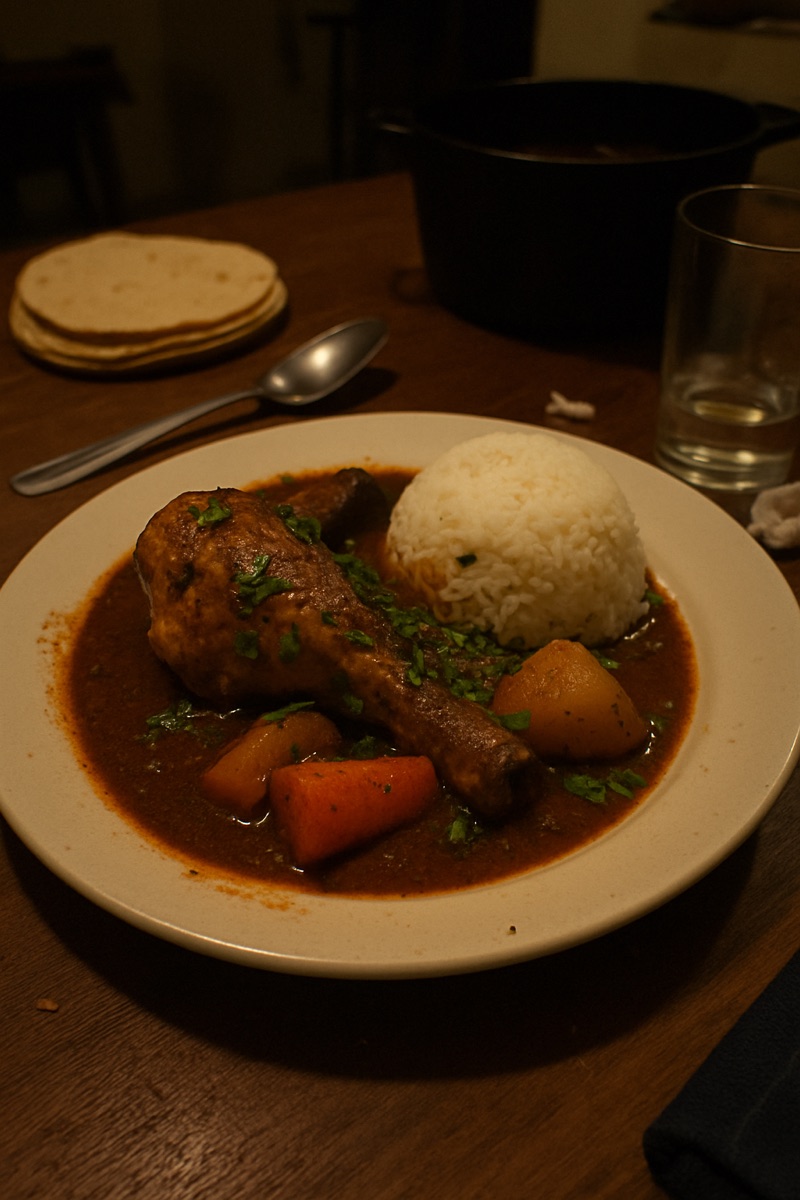
The dish most often cited as Guatemala's national dish is pepián, a thick stew of chicken or beef in a sauce of toasted pumpkin and sesame seeds, charred tomatoes, tomatillos and dried chiles. No law names a single national dish, but in 2007 Guatemala's Ministry of Culture declared pepián part of the nation's Intangible Cultural Heritage, together with three other traditional dishes.
Is pepián officially Guatemala's national dish?
Not by that title. Guatemala has never passed a law naming one national dish, but pepián is the one Guatemalans and food writers most often describe as such, and it is one of the oldest and most recognisable dishes of the country's cooking.
It does have official recognition. On 7 November 2007, through Ministerial Agreement 801-2007, the Ministry of Culture and Sports declared four traditional dishes Intangible Cultural Heritage of the Nation:
- Pepián, the seed-thickened meat stew.
- Kak'ik, a red, spicy turkey soup from the Verapaces.
- Jocón, a green chicken stew associated with Huehuetenango.
- Plátanos en mole, plantains in a sauce of chocolate, chiles and sesame.
What is in pepián?
Pepián is a *recado*, the Guatemalan name for a thick cooked sauce. Its body comes mainly from seeds, not flour or cream: pumpkin seeds (*pepitoria*) and sesame, dry-toasted until they pop and colour, then ground with vegetables charred almost to burning. That charring is what gives pepián its characteristic flavour.
- Pumpkin and sesame seeds, toasted in a dry pan.
- Dried chiles: guaque and pasa, toasted and soaked.
- Tomatoes and tomatillos, blackened on a dry comal with onion and garlic.
- A corn tortilla toasted almost black, which thickens the sauce.
- Cinnamon, a reminder of the Spanish side of the dish.
- Chicken or beef, often with potato and güisquil (chayote) in the pot.
How pepián is made
Chicken pieces simmer in salted water for about 30 minutes, and the broth is kept. Meanwhile the seeds are toasted, the chiles toasted for a few seconds per side and soaked 15 minutes, and the tomatoes, tomatillos, onion and garlic charred until the skins blacken in places.
Everything is blended with the toasted tortilla, a cinnamon stick and broth until smooth, then pushed through a sieve. The sauce cooks about 15 minutes until it darkens and thickens to the body of light cream, then the chicken goes back in for 20 minutes more. It is served with white rice and corn tortillas. All the quantities are in our pepián recipe.
A darker version, *pepián indio*, uses a burnt tortilla that gives the sauce a slight bitterness. It can be made with chicken or beef, and beef is the more common choice in the cities.
Where pepián comes from
Pepián mixes Maya and Spanish cooking. Its base of seeds, chiles and tomatoes is indigenous, and Spanish-language sources trace it to the Kaqchikel Maya. Sesame and cinnamon arrived with the Spanish, and Spanish-language sources describe pepián and two of the other heritage recados as 16th-century creations that fused pre-Columbian ingredients with Spanish and Arab ones.
Mexico cooks a similar dish, pipián, also thickened with seeds; compare it with the national dish of Mexico. Pepián is also a popular street food in Guatemalan cities.
For centuries it was the dish served after large religious and political ceremonies, which is why it is considered a traditional dish. Guatemalan restaurants abroad, especially in the United States, usually present it as a Maya dish.
Kak'ik and other dishes to know from Guatemala
Kak'ik is the dish most often named alongside pepián. Its name comes from the Q'eqchi' words *kak* (red) and *ik* (hot), and it is a pre-Hispanic turkey soup from the Verapaces, made with chompipe turkey, not chicken. Its red broth comes from a recado of toasted chiles, charred tomatoes and achiote, fried 10 minutes before the broth goes back in; a bundle of mint and coriander steeps in it for the last 5 minutes.
The other two heritage dishes are worth knowing too. Jocón, from Huehuetenango, is a green recado of chicken; its name is traced to the K'iche' *jok om*, "green recado" or "five greens", for its tomatillos, green tomato, spring onion, coriander and green pepper. Plátanos en mole date from the mid-16th century and bathe plantains in a sauce of Maya chocolate with sesame, chiles and cinnamon. Kak'ik itself is eaten with rice, small white tamales wrapped in mashán leaves, chilli and a cocoa drink.
Guatemalan tamales are wrapped in banana leaves rather than corn husks and boiled, not steamed, for about an hour and a half. The *tamal colorado* hides pork, a red recado, olives and capers inside cooked corn masa, and it is a classic of Christmas Eve.
Guatemala's cooking shares its corn, chiles and comal with the rest of the Central American kitchen; for a neighbour's answer, see the national dish of El Salvador. You will find all three dishes on our page about the food of Guatemala.
The recipes
- Pepian🇬🇹 Guatemala · 1 hour and 40 minutes
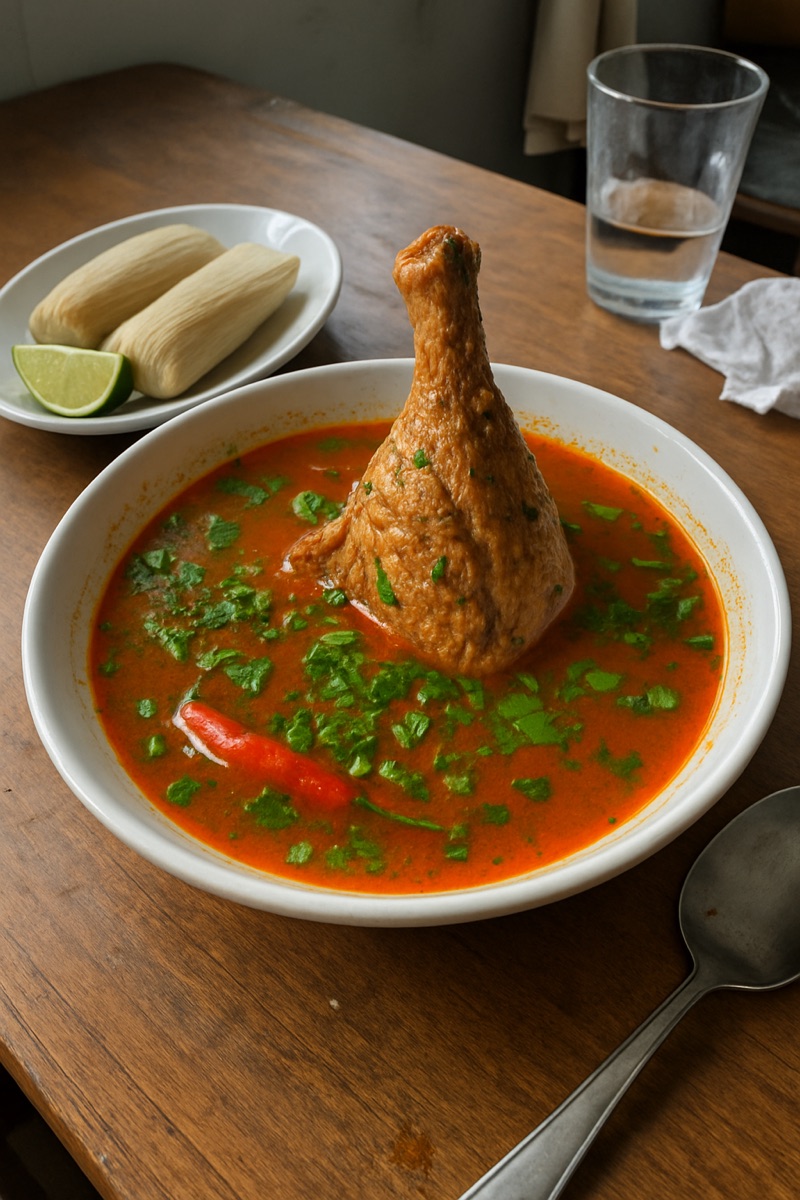 Kak-ik🇬🇹 Guatemala · 1 hour and 40 minutes
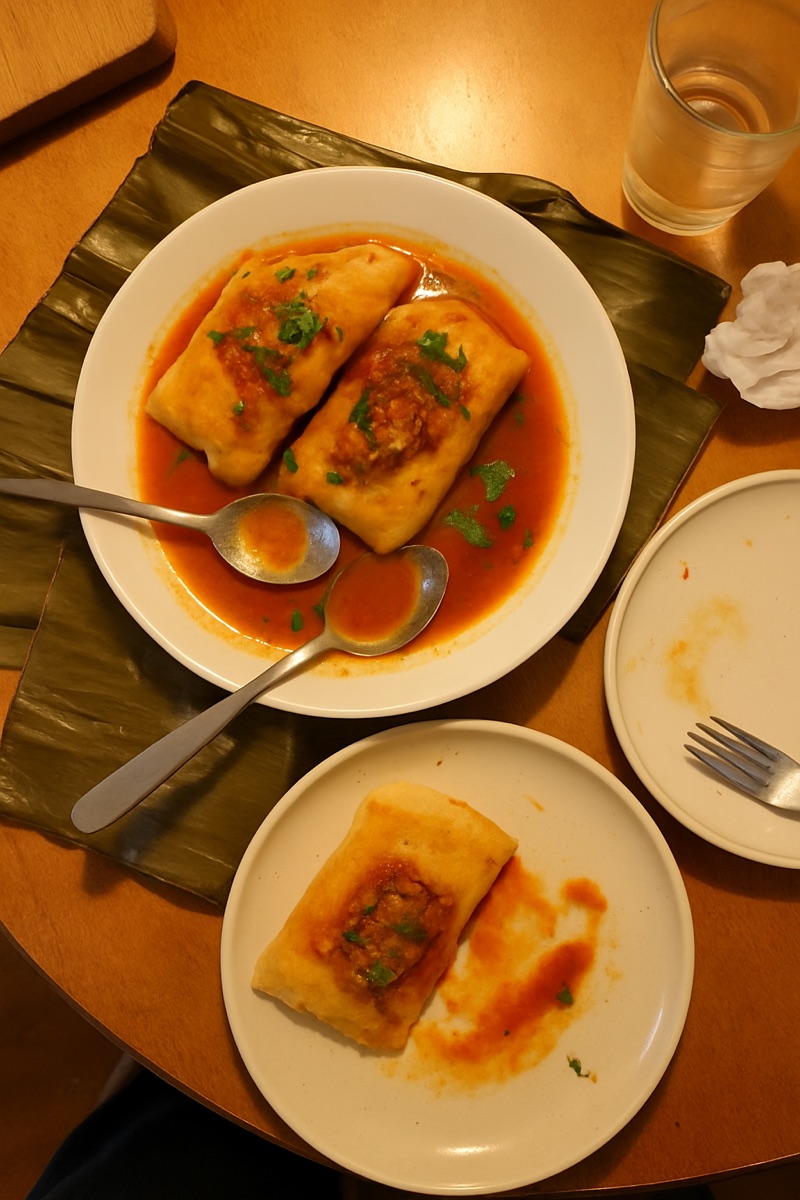 Tamales🇬🇹 Guatemala · 3 hours and 30 minutes
Questions people ask
Is pepián Mexican or Guatemalan?
Pepián is Guatemalan and is considered a national dish there. Mexico has a similar seed-thickened dish called pipián, but the two are distinct recipes.
What is the difference between pepián and kak'ik?
Pepián is a thick stew of chicken or beef in a sauce of toasted pumpkin and sesame seeds. Kak'ik is a red turkey soup from the Q'eqchi' Maya, coloured by chiles and achiote, with a thinner broth.
What is served with pepián?
Pepián is served with white rice and corn tortillas, and the pot often includes potato and güisquil (chayote).
When was pepián declared cultural heritage?
Guatemala's Ministry of Culture and Sports declared pepián Intangible Cultural Heritage of the Nation in 2007, under Ministerial Agreement 801-2007, together with kak'ik, jocón and plátanos en mole.
How do you pronounce pepián?
Peh-pee-AHN, with the stress on the last syllable.
Keep reading
- Traditional food of Guatemala: 12 dishes to know
- What is the national dish of Belize?
- What is the national dish of Costa Rica?
- What is the national dish of El Salvador?
- What is the national dish of Honduras?
- What is the national dish of Mexico?