 COPPER
What is the national dish of Venezuela?
The national dish of Venezuela is pabellón criollo: white rice, carne mechada (stewed shredded beef), black beans and fried slices of ripe plantain served side by side on one plate. No law names it the national dish, but it is called that throughout the country, and in 2019 the Venezuelan government recognised it as intangible cultural heritage.
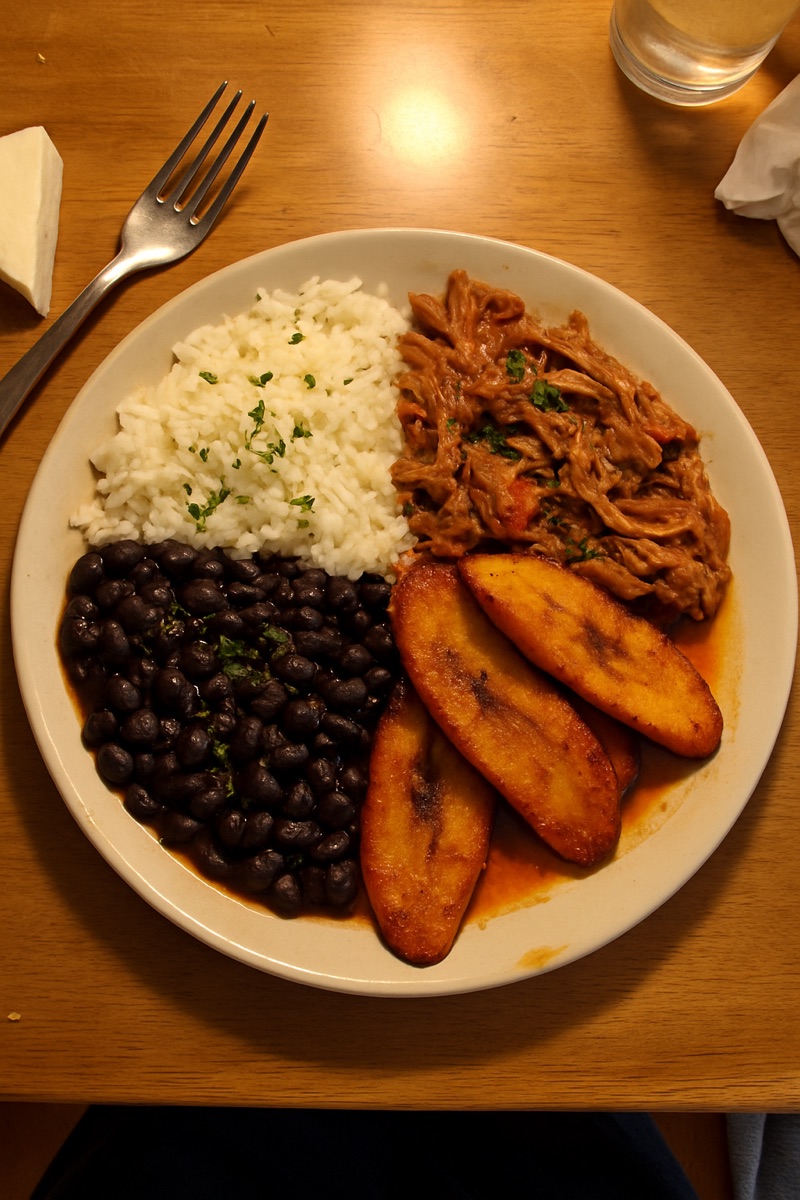
What is pabellón criollo?
Pabellón criollo is a plate of four separate preparations: white rice, carne mechada, caraotas negras (black beans) and tajadas, slices of very ripe plantain fried until golden. Nothing is mixed in the pot; each part is cooked on its own and laid next to the others.
The name says what it looks like. A pabellón is a flag or banner, and the plate is named for the way its colours sit side by side. A traditional pabellón has exactly those four parts; anything else on the plate turns it into one of the named variants below.
Is pabellón criollo officially the national dish?
Not by law. Venezuela has no decree that names a national dish. Pabellón criollo is simply the dish Venezuelans and reference works call "el plato nacional", and Venezuelan food sites describe it as the national dish "por excelencia".
What it does have is official heritage status: in 2019 the Venezuelan government declared pabellón criollo intangible cultural heritage, together with the arepa, casabe, dulce de lechosa, the hallaca and the cachapa. The arepa is the other dish often named as Venezuela's national food, and some sources list both.
How pabellón criollo is made
It takes time rather than skill. In our pabellón criollo recipe, 400 g of black beans are soaked overnight, then simmered about 1.5 hours with onion and garlic, seasoned with cumin and reduced until the broth thickens.
In parallel, 800 g of flank steak simmers about 2 hours until it pulls apart, is shredded by hand along the grain, then stewed 20 minutes in a sofrito of garlic, onion, red pepper and tomato coloured with annatto oil. The rice cooks covered for about 20 minutes, and two black-skinned plantains are sliced lengthwise and fried about 3 minutes a side.
The plantain has to be very ripe, with black skin, so the slices fry soft and golden and bring sweetness against the salty beef and the cumin-seasoned beans. In the Andes and parts of Zulia, cooks swap these tajadas for tostones, flattened and fried slices of green plantain.
- Pabellón con barandas: with the plantain slices laid along the edges, like guard rails keeping the food on the plate.
- Pabellón a caballo: with a fried egg "riding" on top.
- Pabellón con arepas (or pabellón mañanero): a breakfast version where arepas replace the rice.
- Regional meats: in Lara the beef becomes fried shredded goat, and in the Llanos it can be game such as venison or chigüire.
- Pabellón margariteño: on Margarita Island the beef is replaced by shredded, stewed fish such as cazón (young shark).
- During Lent: shredded capybara, caiman or freshwater fish, since the Church allows these when beef is not eaten.
Where pabellón criollo comes from
Its exact origin is unknown. A popular story says it began as enslaved workers' meal of leftovers from previous days on colonial haciendas, with only the plantain cooked fresh; Spanish-language Wikipedia flags this version as unsourced. What is documented is that the dish was already recognised in Caracas by the end of the 19th century.
It is often said to represent Venezuela's three founding cultures, European, indigenous and African, one for each component. Spanish-language sources call that reading "merely poetic". The same rice-beans-meat logic shows up across the Caribbean, most clearly in the national dish of the Dominican Republic, la bandera.
Other dishes to know from Venezuela
Arepas are the everyday bread: discs of precooked corn flour griddled until the crust sounds hollow when tapped, then split and stuffed, for example with reina pepiada (chicken and avocado) or dominó (black beans and white cheese). Precooked arepa flour was invented in the 1950s by the Venezuelan engineer Luis Caballero Mejías. The arepa is also central in Colombia, which is why it appears in the national dish of Colombia debate too.
The hallaca is the Christmas dish: annatto-coloured corn dough wrapped around a stew of beef, pork and chicken, topped with olives, capers and raisins, folded in plantain leaves, tied and boiled. It has also been described as a national dish of Venezuela, and the name appears in Venezuelan records as early as 1538.
These dishes sit within a wider South American food tradition. You will find all three, with ingredients and step-by-step methods, on our page about the food of Venezuela.
The recipes
- Pabellón criollo🇻🇪 Venezuela · 11 hours
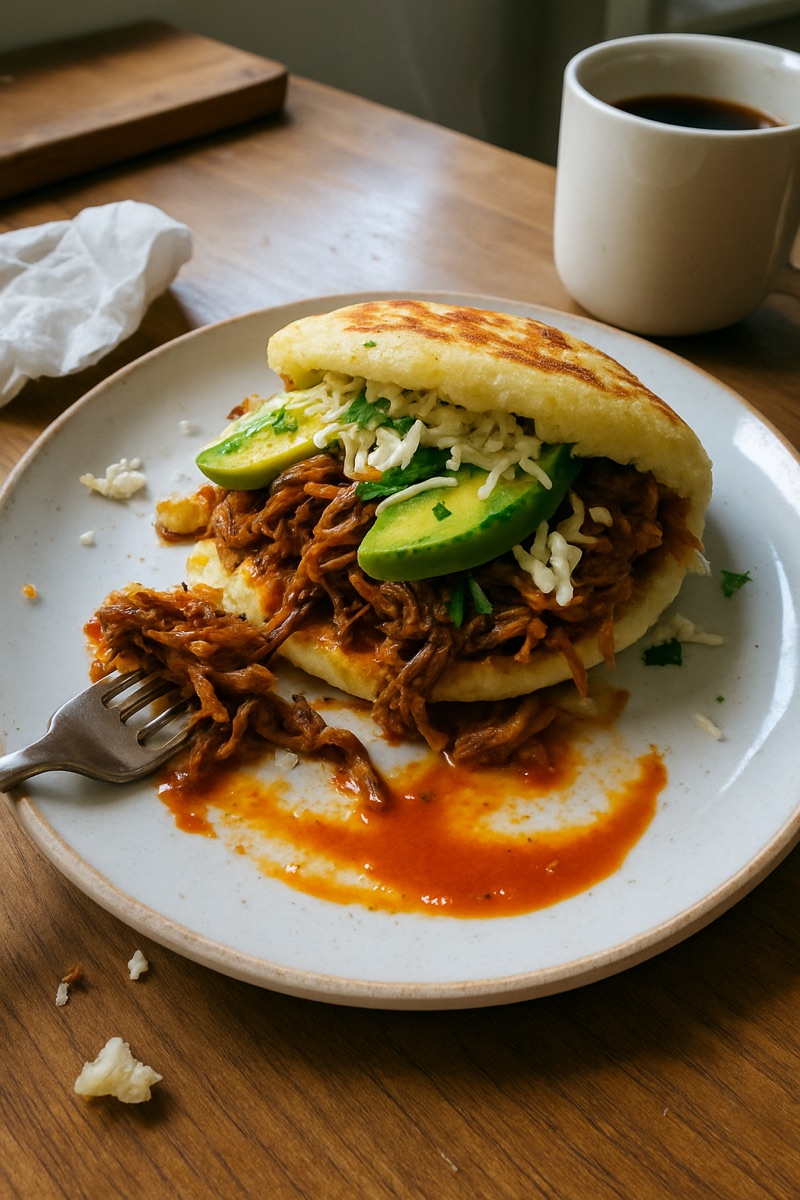 Arepas rellenas🇻🇪 Venezuela · 50 minutes
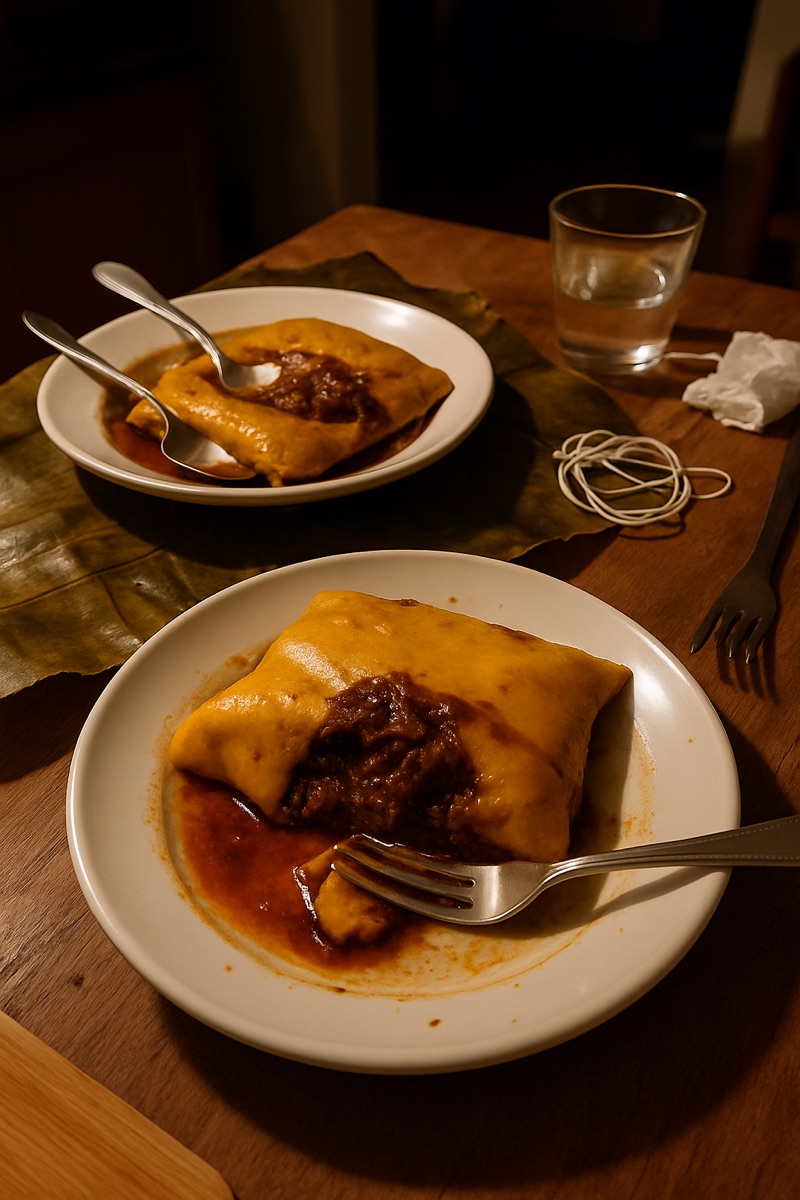 Hallaca🇻🇪 Venezuela · 16 hours
Questions people ask
Is pabellón criollo the same as the Dominican bandera?
They follow the same idea, rice, beans and meat side by side, but pabellón uses black beans, shredded beef and fried ripe plantain, while the Dominican plate uses red beans and stewed meat.
What does pabellón criollo mean?
Pabellón means flag or banner, and criollo means local or creole. The plate is named for the way its colours sit side by side like a flag.
Is the arepa the national dish of Venezuela?
The arepa is the other dish often named, and it shared the 2019 heritage declaration, but pabellón criollo is the plate most widely called Venezuela's national dish.
What is pabellón a caballo?
It is pabellón criollo with a fried egg on top; "a caballo" means on horseback.
What meat is used in pabellón criollo?
Beef flank steak, simmered until tender, shredded by hand and stewed with peppers and tomato. Regional versions use fish, goat or game.
Keep reading
- Traditional food of Venezuela: 14 dishes to know
- What is the national dish of Argentina?
- What is the national dish of Bolivia?
- What is the national dish of Brazil?
- What is the national dish of Chile?
- What is the national dish of Colombia?