 COPPER
Traditional food of Venezuela: 14 dishes to know
Venezuelan food is built on corn, rice, plantains, black beans, beef and fresh white cheese, with Indigenous, Spanish and African roots and later Italian influence. Corn dough is griddled, fried or wrapped in leaves, and sweet ají dulce and papelón cane sugar season many dishes. The most emblematic are arepas, pabellón criollo, the Christmas hallaca and the corn pancake cachapa.
What Venezuelan food is built on
Venezuelan cooking mixes Indigenous, European and African traditions. Its staples are corn, rice, plantains, yams, beans and several meats, and two seasonings turn up in most recipes: ají dulce, a small sweet pepper, and papelón, a block of unrefined cane sugar. White cheese, queso blanco, is made all over the country and usually named after its region, from queso de mano to queso llanero.
Corn is the base of the everyday table, eaten as arepas, cachapas, empanadas and hallacas. Cassava gives casabe, a flatbread of bitter cassava recognised by UNESCO in 2024. Italian immigrants added pasta, and Venezuelans still eat pasticho, their version of lasagne. In 2019 the government declared the arepa, pabellón criollo, the hallaca, the cachapa, casabe and dulce de lechosa, green papaya in syrup, cultural heritage.
Corn: arepas, cachapas and empanadas
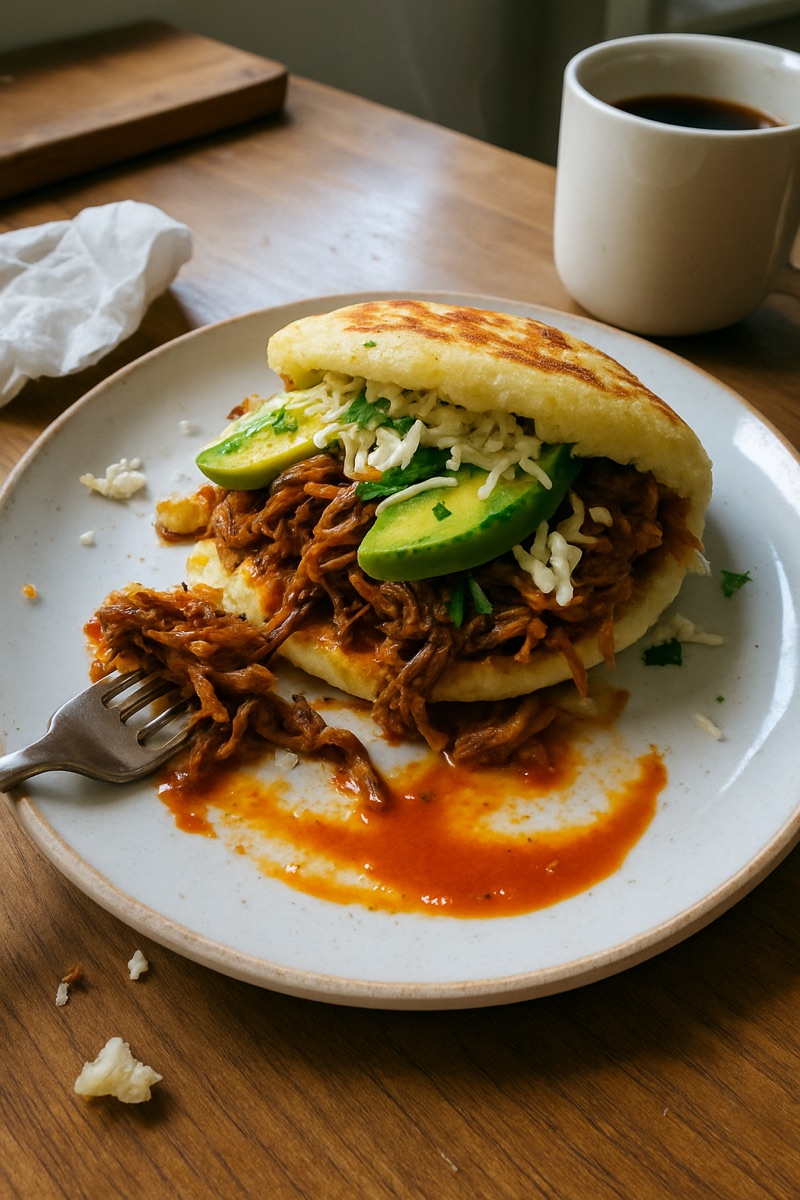
- Arepas — Thick discs of precooked corn dough, grilled on a griddle called a budare or fried, then split and filled like a sandwich. Classic fillings have their own names: reina pepiada is chicken, avocado and mayonnaise, dominó is black beans with white cheese. Large filled arepas are eaten as a snack at any hour, while small ones accompany meals. Precooked arepa flour was developed in the 1950s by the Venezuelan engineer Luis Caballero Mejías.
- Cachapa — A thick pancake of fresh ground corn, a little lumpy from the kernels, cooked on the budare and folded over queso de mano, a soft fresh cheese, sometimes with fried pork on the side. It is sold at roadside stands and in cachaperas, restaurants named after them, as a snack or a full breakfast. Anthropological evidence suggests Venezuelans have eaten cachapas for about 3,000 years.
- Empanadas — Half-moons of corn dough, made with the same flour as arepas, filled and deep-fried. Street vendors sell them as a snack or a meal, with fillings of cheese, black beans or shredded beef, and on Margarita Island with cazón, young shark.
Main dishes and soups
- Pabellón criollo — White rice, carne mechada (shredded stewed beef), black beans and fried slices of ripe plantain, each cooked separately and laid side by side on the plate. It is the dish Venezuelans call the national dish. With a fried egg on top it becomes pabellón a caballo.
- Asado negro — An eye of round, the cut Venezuelans call muchacho redondo, browned and slowly braised in a dark sauce of papelón, wine and ají dulce, which gives it its colour and its sweet edge. It dates back to colonial Caracas and is served in slices with white rice and fried ripe plantain. Some families make it instead of roast pork at Christmas.
- Pisca andina — A simple breakfast soup from the Venezuelan Andes: water or broth with potatoes, spring onion and coriander, finished with an egg poached in the pot and often a piece of fresh cheese and a little milk. It is eaten with an arepa made from wheat or corn.
- Hervido de gallina — A hen soup with chunks of corn on the cob, potatoes, carrots and local roots such as cassava, ñame, ocumo and auyama, a local squash, seasoned with onion, garlic and coriander. Beef and fish versions, hervido de res and hervido de pescado, are made too.
Street food and snacks
- Tequeños — Sticks of semi-hard white cheese wrapped in a spiral of wheat dough and fried, served at breakfast, as a snack and at every party and wedding. The usual story credits sisters from Los Teques with inventing them around 1912, hence the name. They were declared cultural heritage of Venezuela in 2023, and 21 October is International Tequeño Day.
- Patacón zuliano — A sandwich from Maracaibo in which two flattened slices of fried green plantain replace the bread, filled with meat or chicken, cheese, vegetables and sauces. A sweet version uses ripe plantain with grated hard white cheese. Zulia is also home to tequeyoyos, tequeños filled with ripe plantain and cheese.
The Christmas table, sweets and drinks
- Hallaca — Corn dough coloured with annatto, spread on a plantain leaf around a stew of beef, pork and chicken with olives, capers and raisins, folded, tied with string and boiled. It is the centre of the Christmas meal, on the same table as pan de jamón.
- Pan de jamón — A rolled Christmas bread filled with ham, green olives and raisins. The Venezuelan food writer Miro Popić traces it to a Caracas bakery in December 1905, where it was filled with ham alone; olives and raisins came later. It shares the Christmas table with hallacas, roast pork leg and chicken salad.
- Golfeado — A soft, anise-scented sweet roll coiled like a snail shell, filled with white cheese and glazed with papelón syrup. Oral tradition places its birth at a bakery in Petare, in eastern Caracas, run by a brother and sister from the Canary Islands.
- Quesillo — The Venezuelan caramel flan, made today with eggs, condensed milk and caramelised sugar; the 18th-century recipe used fresh milk and sugar. It is sweet and jelly-like, close to a French crème caramel but with a taste of its own.
- Papelón con limón — Papelón dissolved in water with lime juice and served very cold during the hottest hours of the day, usually with arepas, cachapas or a hervido.
Region by region, and where to cook them
The Andes eat wheat arepas, pisca andina, trout and fried pastelitos for breakfast. Zulia, in the north-west, is the home of the patacón, goat cooked in coconut and the cornmeal rings called mandocas. The Llanos, the cattle plains, roast beef on spits over the fire and make large quantities of cheese. On Margarita Island the emblematic dish is torta de cazón, a pie of young shark and plantain, and the local pabellón swaps the beef for stewed cazón.
Pabellón criollo has its own article, on the national dish of Venezuela. Arepas, pabellón criollo and hallacas have full recipes, with ingredients and step-by-step methods, on our page about the food of Venezuela, within our wider collection of South American recipes. The arepa and the hervido cross the border too: compare with the traditional food of Colombia.
The recipes
- Arepas rellenas🇻🇪 Venezuela · 50 minutes
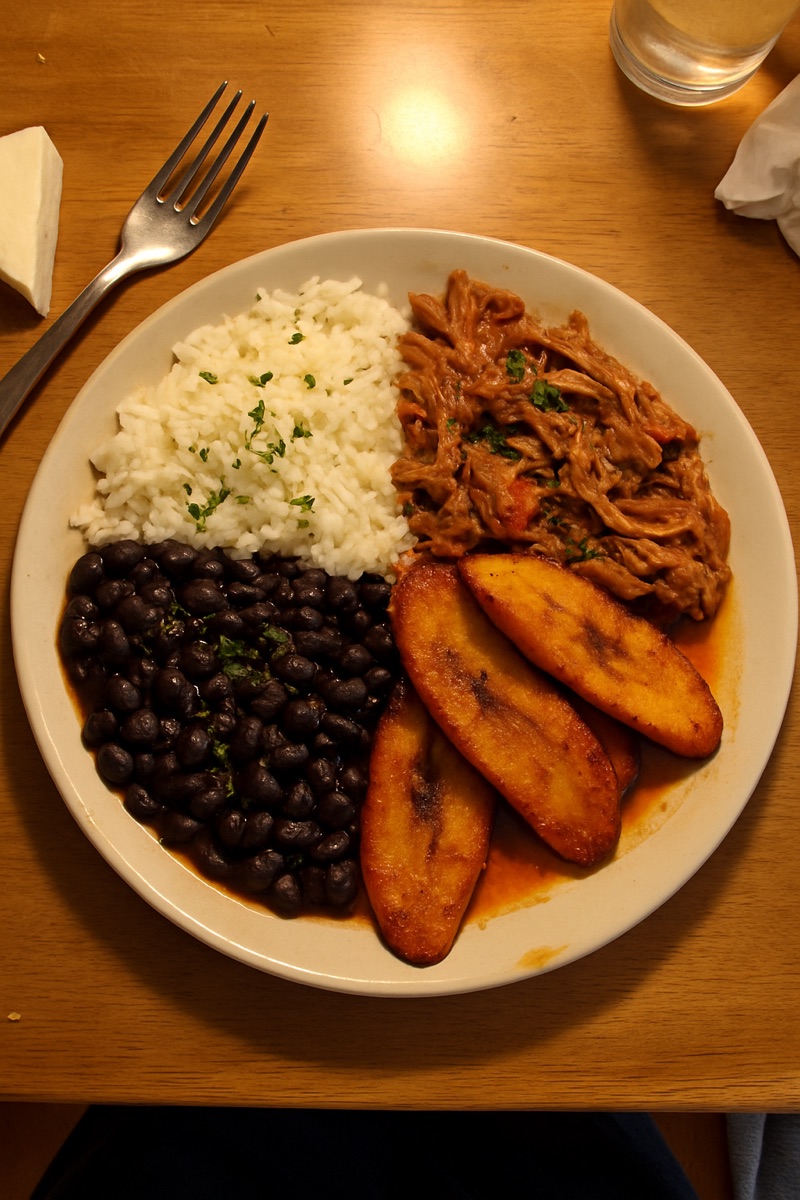 Pabellón criollo🇻🇪 Venezuela · 11 hours
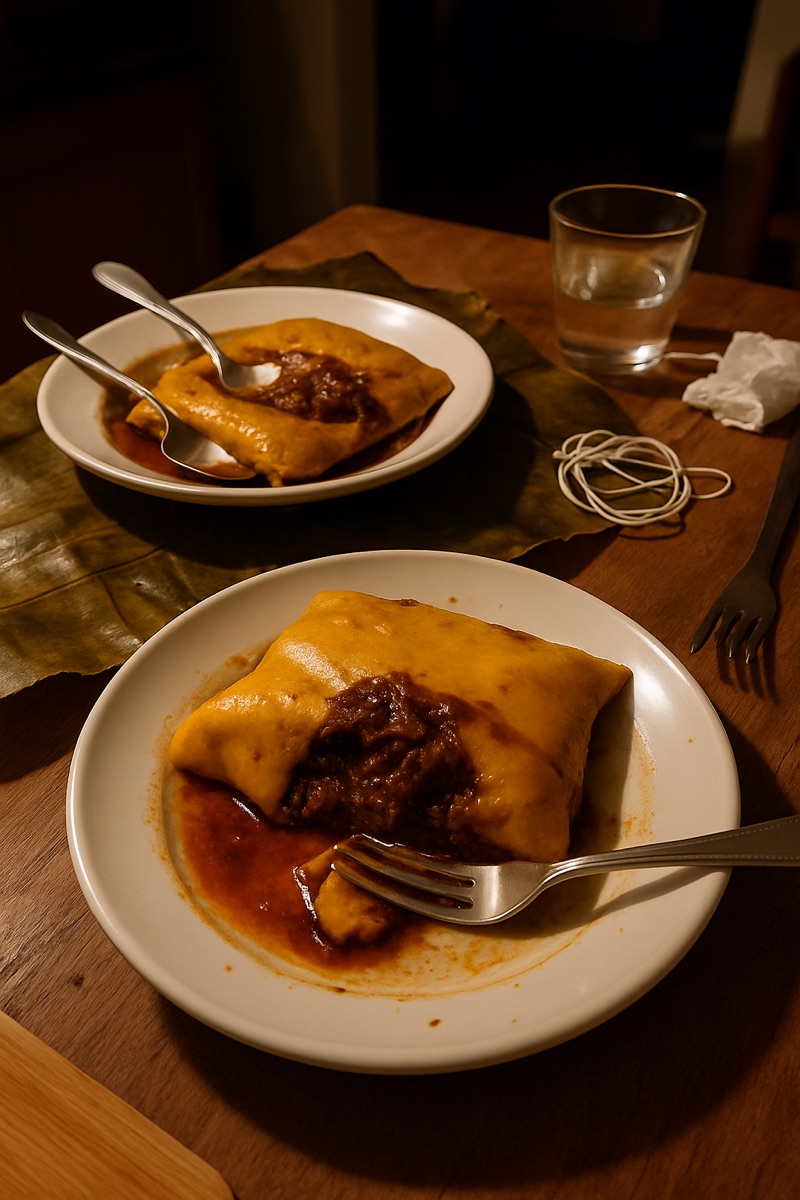 Hallaca🇻🇪 Venezuela · 16 hours
Questions people ask
What is the most popular food in Venezuela?
The arepa is the most eaten food: filled arepas are a snack at any hour and small ones accompany meals. Pabellón criollo is the dish Venezuelans call their national dish, and hallacas dominate at Christmas.
What do people in Venezuela eat for breakfast?
Breakfast is a large meal. Arepas filled with cheese, ham or scrambled eggs with tomato and onion are the most common, along with fried empanadas, cachapas with fresh cheese and tequeños. In the Andes, pisca andina, a potato and egg soup, is a breakfast classic.
Is Venezuelan food spicy?
Not usually. The most common pepper is ají dulce, which is sweet and aromatic rather than hot, and dishes often have a sweet note from papelón or ripe plantain.
Is the arepa Venezuelan or Colombian?
Both. The arepa is a pre-Columbian corn bread from the area that is now Colombia, Panama and Venezuela, and it is central to the food of both countries. In Venezuela it is usually split and stuffed with a filling, like a sandwich.
What do Venezuelans eat at Christmas?
Hallacas are the centre of the Christmas meal, with pan de jamón, roast pork leg, chicken salad and dulce de lechosa, green papaya cooked in syrup.
Keep reading
- What is the national dish of Venezuela?
- Traditional food of Argentina: 13 dishes to know
- Traditional food of Bolivia: 14 dishes to know
- Traditional food of Brazil: 14 dishes to know
- Traditional food of Chile: 14 dishes to know
- Traditional food of Colombia: 13 dishes to know