 COPPER
Traditional food of Peru: 14 dishes to know
Peruvian food combines Andean staples, potatoes, corn and the yellow chilli ají amarillo, with Spanish, African, Chinese and Japanese influences. Lime, chilli and fresh fish dominate on the coast, potatoes and slow-cooked meats in the Andes. The most emblematic dishes are ceviche, raw fish cured in lime, lomo saltado, ají de gallina and causa limeña.
What Peruvian food is built on
Peru is the homeland of the potato, and it still grows the widest range of varieties in the world. Potatoes, corn of many colours and other Andean tubers form the base, flavoured above all by ají amarillo, a fruity yellow chilli used in sauces, marinades and stews, along with the hotter rocoto. Lime, red onion and coriander are everywhere on the coast.
Waves of migration shaped what Peruvians cook. Spanish settlers brought beef, onions and rice; Chinese immigrants of the 19th century created chifa, from Mandarin words meaning to eat rice, the Chinese-Peruvian cooking behind stir-fries like lomo saltado; Japanese immigrants gave rise to Nikkei cuisine. The result is a kitchen where a wok and an Andean earth oven both have their place.
Coastal classics
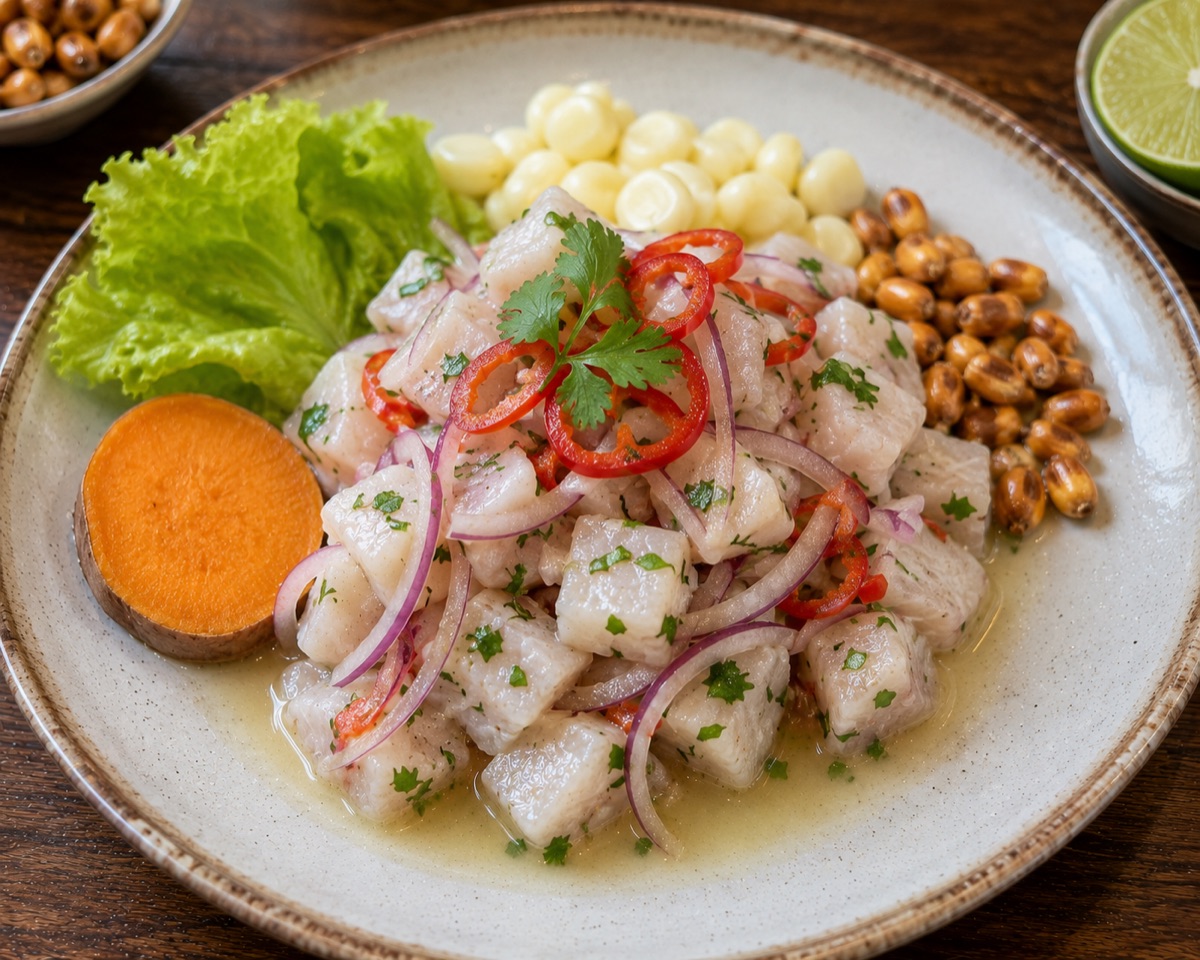
- Ceviche — Raw white fish cut into pieces and cured in lime juice with chilli and red onion for a few minutes, just until it turns opaque, served with sweet potato and corn. Cevicherías often serve the marinade, leche de tigre, in a small glass. Peru celebrates National Ceviche Day on 28 June, and UNESCO added the practices around ceviche to its intangible heritage list in 2023.
- Causa limeña — Cold mashed yellow potato seasoned with lime, ají amarillo and oil, layered or rolled around a filling such as chicken or tuna with mayonnaise and avocado. It is served as a starter, sliced like a terrine.
- Papa a la huancaína — Sliced boiled potatoes on lettuce, covered with a creamy, slightly spicy sauce of fresh cheese and ají amarillo, garnished with hard-boiled egg and black olives. Its name refers to Huancayo, in the central Andes.
- Pollo a la brasa — Chicken marinated with spices and roasted on a rotisserie over charcoal, served with French fries, salad and chilli sauces. It was created in Lima in the 1950s, and the pollerías that serve it are now found all over the country.
Stews and Chinese-Peruvian dishes
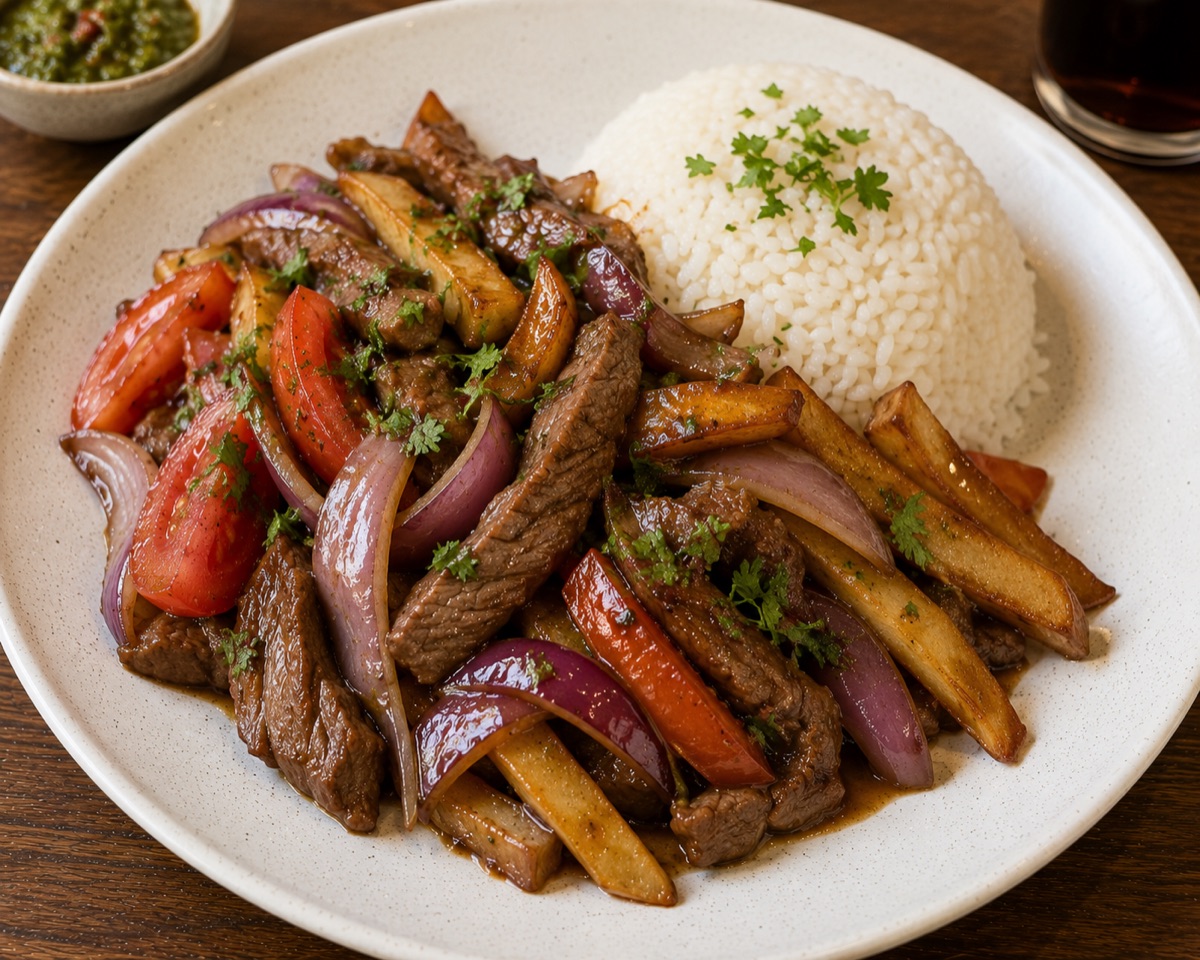
- Lomo saltado — Strips of beef stir-fried in a very hot wok with red onion, tomato, soy sauce and vinegar, tossed with French fries and served with rice. It is the best-known chifa dish and a fixture of everyday lunch menus. Some cooks toss the fries into the pan, others serve them on the side.
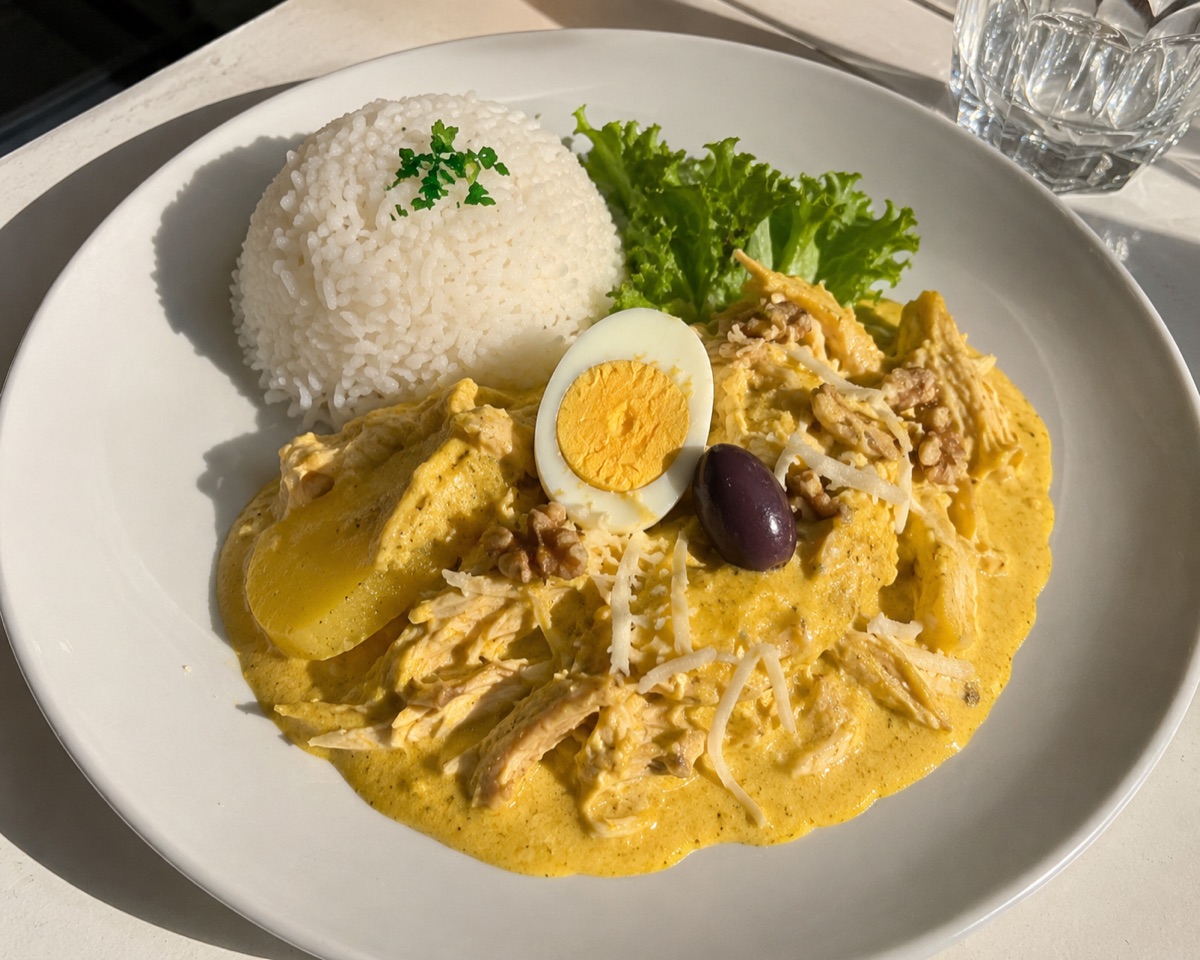
- Ají de gallina — Poached, shredded chicken in a creamy yellow sauce of ají amarillo thickened with milk-soaked bread, walnuts and cheese. It is served over rice with boiled potatoes, hard-boiled egg and an olive.
- Anticuchos — Skewers of beef heart marinated in vinegar, cumin, ají chilli and garlic, grilled over charcoal and basted with a sauce of ají panca, usually with a boiled potato at the end of the skewer. A pre-Columbian dish, they are cheap street food and are closely linked to the October procession of the Señor de los Milagros in Lima. Consumption peaks in July, around Independence Day.
Andean and Amazonian dishes
Away from the coast, cooking becomes slower and heartier, built on potatoes, corn and meat cooked over fire or in the ground, with river fish and leaf-wrapped rice in the Amazon.
- Rocoto relleno — A speciality of Arequipa: rocoto chillies, boiled in water and vinegar to tame their heat, stuffed with beef, pork, onion, garlic and hard-boiled egg, topped with cheese and baked. They are served whole.
- Pachamanca — An Andean feast in which meats marinated in herbs and spices, potatoes, sweet potatoes, corn and lima beans are cooked on a bed of heated stones, covered with grass and earth for about two hours. Its name comes from the Quechua words for earth and pot; it dates back to pre-Inca times and is prepared for celebrations, especially in the central Andes, often with music, chicha and beer.
- Cuy — Guinea pig, raised in Andean households for centuries and eaten on special occasions. It is usually roasted or fried and often served whole with potatoes.
- Juane — An Amazonian bundle of rice seasoned with turmeric, with chicken, egg and olive, wrapped in bijao leaves and boiled. It is the traditional dish of the San Juan festival in June.
Desserts and drinks
Peruvian sweets come largely from the colonial kitchen, where Spanish milk, sugar, eggs and spices met local sweet potato, squash and corn.
- Picarones — Ring-shaped fritters made from a dough of sweet potato and squash, fried to order and drizzled with a syrup of chancaca, unrefined cane sugar. They are a street dessert sold from stalls.
- Suspiro a la limeña — A Lima dessert of manjar blanco, a caramel-like milk custard, topped with a port-flavoured meringue and dusted with cinnamon. Its name means sigh of a Lima woman.
- Chicha morada — A non-alcoholic drink made by boiling purple corn with pineapple, cinnamon and cloves, then sweetened and finished with lime. It is drunk cold with meals across the country.
Coast, Andes and Amazon, and where to cook them
Peru's three regions eat very differently. The coast lives on fish and seafood, from ceviche to chifa stir-fries. The Andes cook with potatoes, corn, quinoa, alpaca and guinea pig, often slowly, as in pachamanca. The Amazon brings river fish such as paiche, plantains and fruits like camu camu, which holds about 40 times more vitamin C than kiwifruit. Together they place Peru at the heart of the South American kitchen.
Ceviche is so central that many Peruvians would name it without hesitation; we look at why in our article on the national dish of Peru. Ceviche, lomo saltado and ají de gallina are on Copper with step-by-step methods, on our food of Peru page. To continue along the Andes, read about the traditional food of Ecuador and the traditional food of Bolivia.
The recipes
 Lomo saltado
 Ají de gallina
Questions people ask
What is the most popular food in Peru?
Ceviche is the dish most associated with Peru, with its own national day on 28 June. Lomo saltado, ají de gallina and pollo a la brasa are among the most eaten dishes day to day.
What do people in Peru eat for breakfast?
In Lima, weekend breakfasts often mean tamales or a pan con chicharrón, a bread roll filled with fried pork and sweet potato, with coffee.
Is Peruvian food spicy?
It is built on chillies, especially ají amarillo, which is fruity and moderately hot. Most dishes are flavourful rather than fiery, and the hottest sauces, often made with rocoto, are served on the side.
What is chifa?
Chifa is Chinese-Peruvian cooking, created by Chinese immigrants who adapted their recipes to Peruvian ingredients. Lomo saltado and arroz chaufa, fried rice, are its best-known dishes.
What is the national drink of Peru?
Pisco, a grape brandy, is the national spirit, and the pisco sour, made with lime juice, egg white and syrup, is the best-known cocktail. Chicha morada, made from purple corn, is the most common non-alcoholic drink.
Keep reading
- What is the national dish of Peru?
- Traditional food of Argentina: 13 dishes to know
- Traditional food of Bolivia: 14 dishes to know
- Traditional food of Brazil: 14 dishes to know
- Traditional food of Chile: 14 dishes to know
- Traditional food of Colombia: 13 dishes to know