 COPPER
What is the national dish of Peru?
The national dish of Peru is ceviche: cubes of raw white fish turned opaque in a few minutes by lime juice, with chilli, red onion and salt, served with sweet potato and corn. Peru declared ceviche part of its National Cultural Heritage in 2004, made 28 June National Ceviche Day in 2008, and UNESCO inscribed it as intangible cultural heritage in 2023.
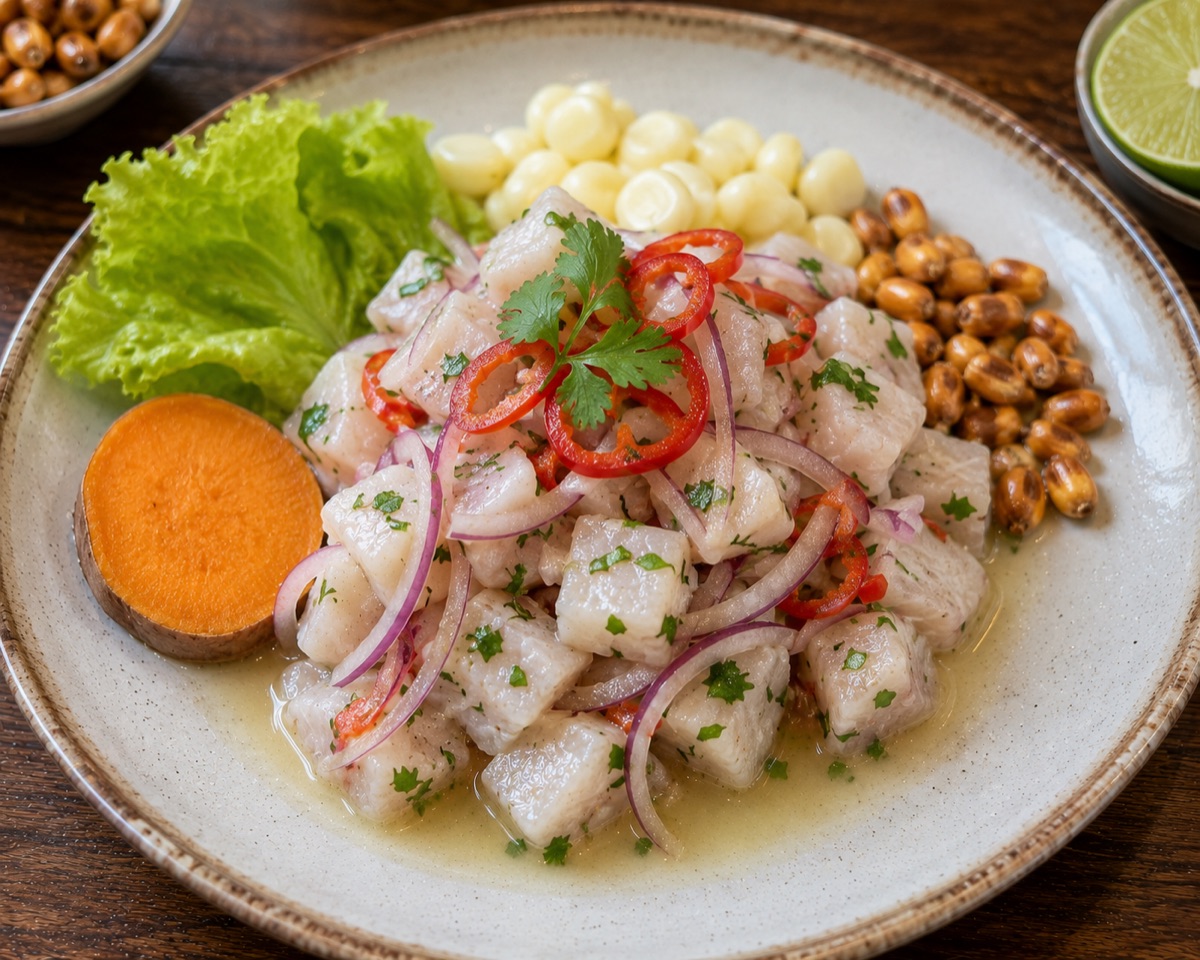
Is ceviche officially Peru's national dish?
No Peruvian law uses the words "national dish", but ceviche is the dish the state has formally recognised, three times over, and it is widely described as Peru's national dish:
- 2004: the National Institute of Culture declared ceviche Cultural Heritage of the Nation (Resolución Directoral Nacional 241/INC, 23 March 2004).
- 2008: the Ministry of Production made 28 June National Ceviche Day (Resolución Ministerial 708/2008).
- 2023: UNESCO inscribed the practices and meanings of preparing and eating ceviche, as an expression of Peruvian traditional cuisine, on its list of Intangible Cultural Heritage of Humanity.
What is in Peruvian ceviche?
Classic Peruvian ceviche has very few ingredients, and the Peruvian version leaves out the tomato used in Mexico and Ecuador. Opinion polls in Peru regularly name it the country's most representative dish, and Wikipedia's list of national dishes gives it for Peru alongside pollo a la brasa, the rotisserie chicken.
- White fish: corvina (sea bass) traditionally; sole (lenguado) is common in Lima.
- Lime juice, squeezed gently so the bitter pith stays out.
- Chilli: ají limo or rocoto, finely chopped.
- Red onion in thin half-moons, coriander, salt and sometimes garlic.
- On the side: boiled sweet potato and corn on the cob, sometimes toasted corn (cancha) or seaweed (yuyo).
How ceviche is made, and what leche de tigre is
The sides come first: sweet potato boils about 30 minutes, corn about 15, and both are served cool. Red onion is sliced thin and rinsed in iced water. The fish is cut into even 2 cm cubes and kept very cold.
Only at the last minute is the fish salted and tossed with lime juice, garlic and chilli. In 2 to 3 minutes it clouds and turns opaque; left longer, it goes rubbery. This short marinade is the modern Peruvian style, developed in the 1970s by Peruvian-Japanese chefs including Dario Matsufuji and Humberto Sato. Older recipes marinated the fish for hours.
The milky, sharp liquid left in the bowl is leche de tigre, tiger's milk. Many cevicherías serve a small glass of it as an appetiser. Our ceviche recipe gives the quantities.
The acid changes the texture of the fish but does not cook it: it does not kill bacteria or parasites the way heat does. That is why ceviche is always made with very fresh fish and eaten immediately.
Where ceviche comes from
Peruvian researchers place its roots before the Spanish conquest. The Moche of northern Peru are thought to have cured fish in the juice of tumbo, a local passion fruit, and chroniclers report raw fish eaten with salt and ají along the Inca coast. Limes and onions arrived with the Spanish in the 16th century and produced the dish as it is known today.
The word itself is first documented in 1820, in the patriotic song "La Chicha". Ecuador also claims ceviche and makes its own versions with tomato; see the national dish of Ecuador.
Regional ceviches across Peru
Ceviche changes along the coast, and that variety is part of what UNESCO recognised. In his 2015 book *Ceviche Power*, chef Gastón Acurio follows a ceviche route from Tumbes and Piura in the north to Arequipa, Moquegua and Tacna in the south.
- Lima: sole (lenguado) is a favourite fish.
- Trujillo: a ceviche made from shark, known as tollo or tojo.
- Piura and Tumbes: *ceviche de conchas negras*, made with black clams and served with toasted corn.
- Mixed ceviches that combine fish and shellfish, found all along the coast.
Other dishes to know from Peru
Lomo saltado comes from *chifa*, the Chinese-Peruvian cooking that grew after large numbers of Chinese workers arrived between 1849 and 1874. Strips of beef are seared in a very hot wok, then tossed with red onion, tomato, ají amarillo, soy sauce and vinegar, and folded with French fries at the end. It is served with rice, so the plate carries both Peru's potatoes and Asia's rice.
Ají de gallina is shredded poached chicken in a yellow sauce of ají amarillo thickened with bread soaked in evaporated milk, walnuts and parmesan. It comes with boiled potatoes, rice, black olives and hard-boiled egg, and is believed to descend from *manjar blanco*, a dish of ground almonds, milk and chicken brought to Spain by the Moors.
Peru's cooking is part of the wider South American kitchen. You will find all three dishes, with ingredients and step-by-step methods, on our page about the food of Peru.
The recipes
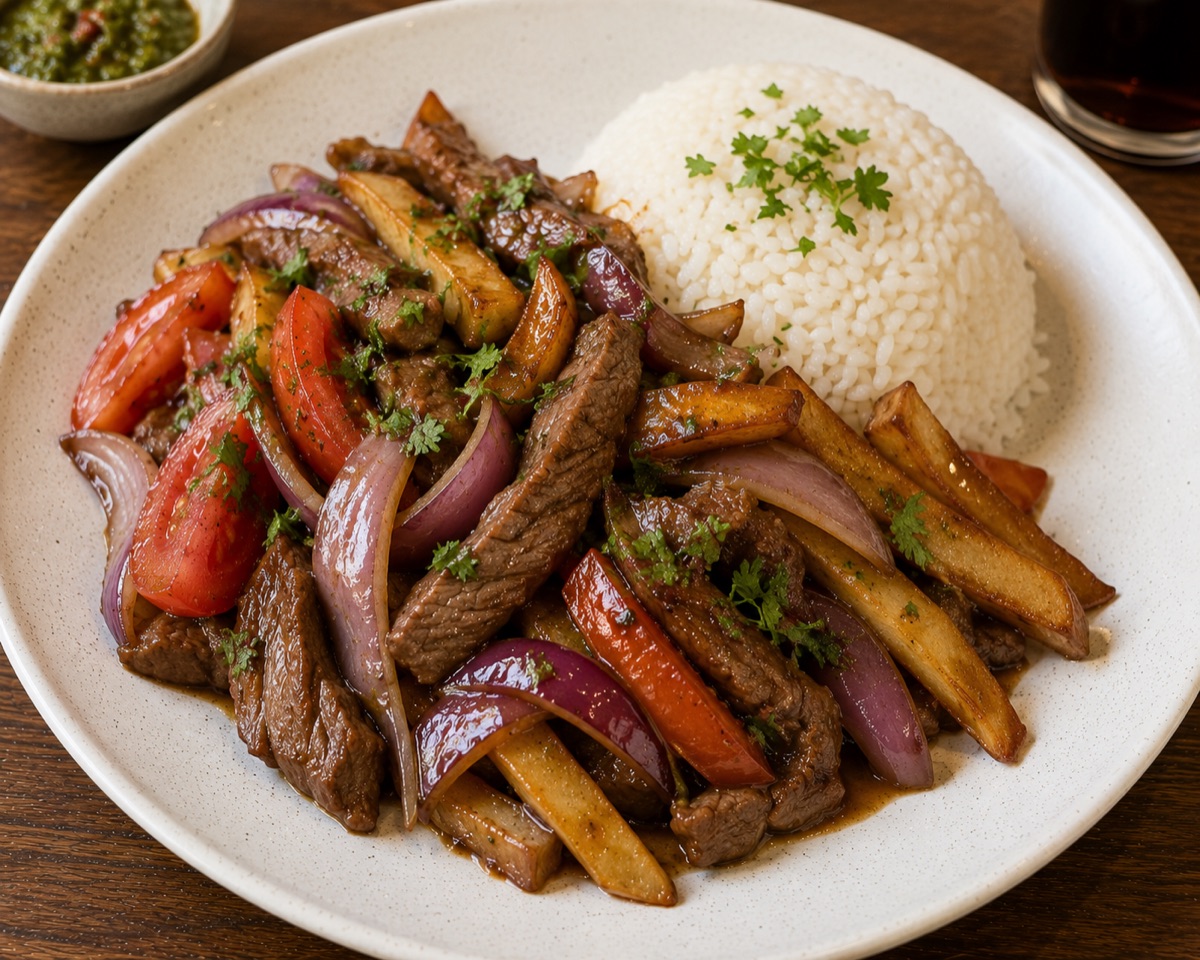 Lomo saltado
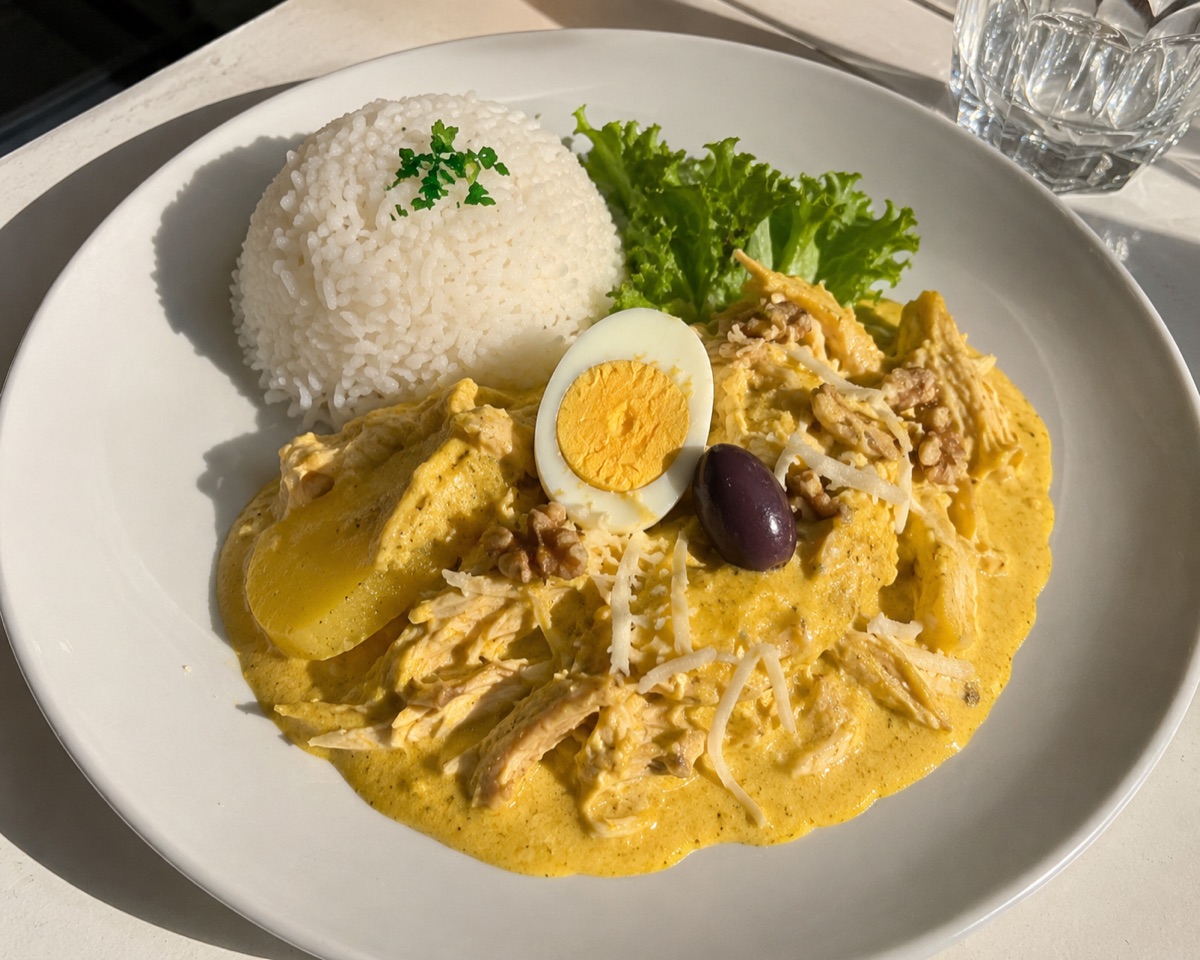 Ají de gallina
Questions people ask
Is ceviche from Peru or Ecuador?
Both countries make it and both claim it, but Peru declared ceviche part of its National Cultural Heritage in 2004 and UNESCO inscribed it in 2023 as an expression of Peruvian traditional cuisine. Ecuadorian versions usually include tomato, which the Peruvian one does not.
When is National Ceviche Day in Peru?
National Ceviche Day is 28 June, set by a ministerial resolution in 2008.
Is the fish in ceviche raw?
Yes. Lime juice turns the fish opaque and firm, but it does not cook it or kill pathogens, so ceviche must be made with very fresh fish and eaten right away.
What is leche de tigre?
Leche de tigre, tiger's milk, is the citrus marinade left after the fish has cured. Peruvian cevicherías often serve it in a small glass as an appetiser.
What is served with ceviche in Peru?
Boiled sweet potato and corn on the cob are the classic sides, sometimes with toasted corn (cancha), seaweed or lettuce.
Keep reading
- Traditional food of Peru: 14 dishes to know
- What is the national dish of Argentina?
- What is the national dish of Bolivia?
- What is the national dish of Brazil?
- What is the national dish of Chile?
- What is the national dish of Colombia?