 COPPER
Traditional food of Malta: 12 dishes to know
Traditional Maltese food is Mediterranean cooking with strong Sicilian roots and Arab, Spanish, French and British layers: rabbit and pork, tomatoes and garlic, broad beans, fish, sheep's cheeselets, sourdough bread and flaky pastries. The most emblematic dishes are stuffat tal-fenek (rabbit stew), pastizzi, ftira and timpana.
What Maltese food is built on
Malta sits on old trade routes and has always imported most of its food, so its cooking absorbed whatever passed through. Italian, and above all Sicilian, influence is the strongest; Arab rule left sweets such as imqaret; the Knights of St John, who came from France, Italy and Spain, brought their own dishes; and British rule added English mustard, Bovril, HP Sauce and Worcestershire sauce, still found in Maltese kitchens.
Pork has a special place. Malta sat at the edge of the Christian world, and pork is in its own sausages and is often added to dishes such as kawlata, a cabbage soup, and ross il-forn, baked rice. Rabbit is the other signature meat, and the island of Gozo has its own versions of cheese and bread.
Catholic fasting shaped the rest. During Lent, when meat and dairy were avoided, people ate lampuki and other fish, salted cod, stewed snails, stuffed artichokes and cheeselet fritters. Gozo, the second island, has its own habits: its sun-dried cheeselets, ġbejna t'Għawdex, even replace ricotta as a ravioli filling, and its ftira is eaten open like a pizza. The Maltese also have their own version of aioli, aljoli, made with herbs, olives, anchovies and olive oil rather than egg. The dish most often named as national is covered in our article on the national dish of Malta.
Meat and baked pasta
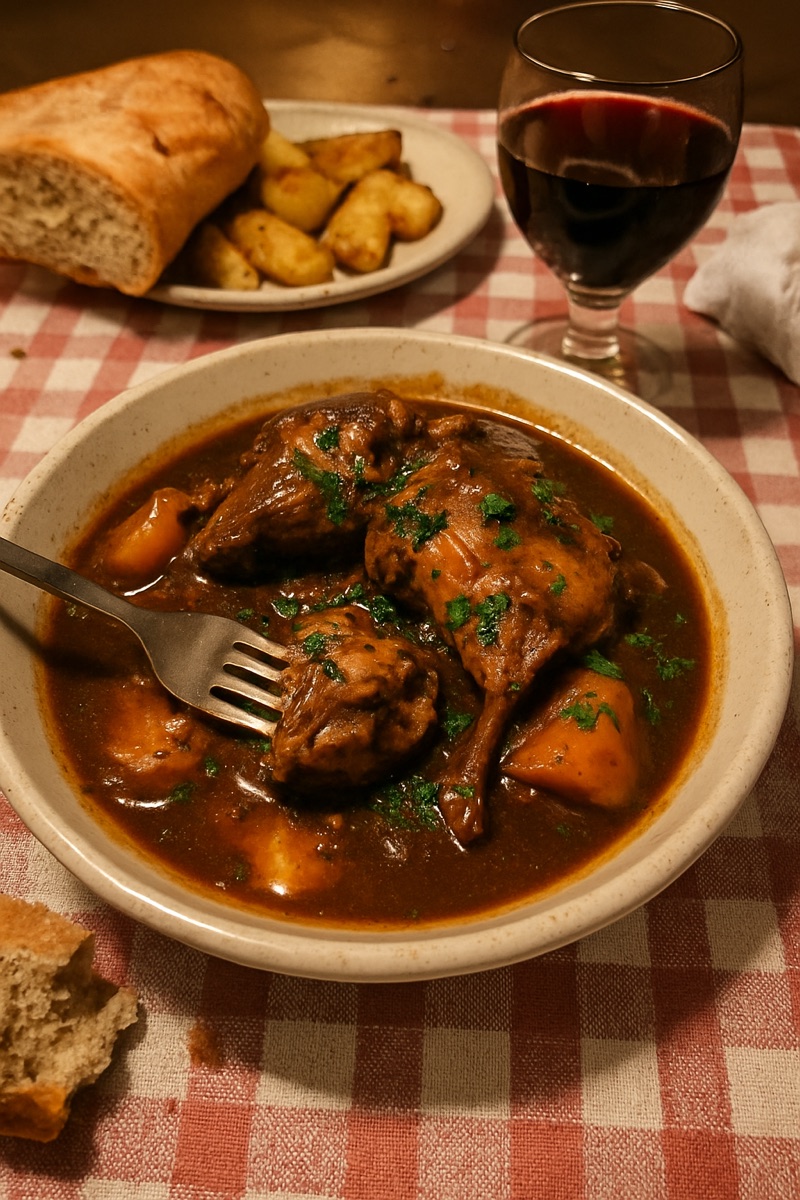
- Stuffat tal-fenek — Rabbit marinated in red wine, then slow-stewed with tomatoes, garlic and bay leaves. The sauce is often served over spaghetti as a first course and the rabbit with potatoes as the second. The tradition is commonly traced to resistance against the hunting rules of the Knights. Follow our stuffat tal-fenek recipe.
- Bragioli — Thin slices of beef rolled around a stuffing of minced meat, breadcrumbs, cheese and parsley, tied, browned and braised in a wine and tomato sauce. Many families tuck half a hard-boiled egg into the centre. Try our bragioli recipe.
- Timpana — Parboiled macaroni tossed in a tomato sauce with a little minced beef or corned beef, bound with raw egg and grated cheese, sometimes with hard-boiled eggs, then enclosed in pastry and baked. The name probably comes from the Italian timballo. Without the pastry, the same dish is imqarrun.
Bread and street food
- Pastizzi — A paper-thin, flaky pastry folded around ricotta or curried peas and baked. Ricotta ones are folded down the middle and pea ones down the side, so you can tell them apart. They are sold hot in small bakeries called pastizzeriji, in bars and by street vendors, and are a popular breakfast in the villages. Maltese communities bake them abroad too, in Australia, Canada, the UK and the US. Make them with our pastizzi recipe.
- Ftira — A ring-shaped sourdough bread, usually filled with tuna or sardines, potato, tomato, onion, capers and olives. In Gozo the ftira is served open, like a pizza, under thin slices of potato, or folded over. In 2020 the culinary art of the Maltese ftira was added to UNESCO's Intangible Cultural Heritage list.
- Ħobż biż-żejt — Maltese bread with tomato and olive oil, a simple everyday snack. Ġbejna cheeselets are a classic filling for it, as they are for the Gozitan ftira.
- Bigilla — A starter of mashed tic beans, which the Maltese call ful ta' Ġirba, "Djerba beans". It is one of the classic appetisers, next to stuffed olives, white beans with garlic and parsley, and galletti, the Maltese crackers.
Soups and cheese
- Aljotta — A fish broth with plenty of garlic, herbs and tomatoes. It is the Maltese adaptation of bouillabaisse, attributed to the Knights.
- Kusksu — A vegetable soup with small pasta beads called kusksu, with fresh broad beans added in season, around Lent and spring.
- Ġbejna — A small round cheese of sheep's milk, salt and rennet, the Maltese cheeselet. It is eaten fresh, kept in its whey like mozzarella, sun-dried, salt-cured or coated in crushed black pepper and stored in oil or vinegar. It goes into soppa tal-armla, the "widow's soup", into pasta and onto bread, and Ġbejna tan-nagħaġ is the first Maltese food registered with an EU geographical indication.
Sweets and drinks
Maltese sweets follow the calendar: prinjolata at Carnival, kwareżimal almond biscuits during Lent, figolla, an iced biscuit filled with almond paste, at Easter, and għadam tal-mejtin, "bones of the dead", marzipan between sweet pastry under white icing, in November. In Holy Week, bakers make qagħqa tal-appostli, the "apostles' bagel" studded with almonds. When Malta had to choose one representative pastry for the Café Europe event of the 2006 Austrian EU presidency, it picked the maqrut, the date pastry below.
The national soft drink is Kinnie, a bittersweet soda of bitter oranges and wormwood launched in 1952. Coffee is sometimes boiled with aniseed, cinnamon or cloves.
- Imqaret — Diamond-shaped pastries filled with dates, flavoured with aniseed and bay leaf and deep-fried. They are sold at street markets and village feasts, sometimes with ice cream. They date from the Arab period, and Tunisia has a close relative, makroudh.
- Qagħaq tal-għasel — Rings of light pastry filled with honey, treacle, semolina, citrus zest, aniseed, cinnamon and cloves, with slits so the dark filling oozes out. They were made for Christmas and are now eaten all year.
Cook Maltese food at home
Stuffat tal-fenek, pastizzi and bragioli have full step-by-step recipes in Copper, with ingredients and timings. Find them on our page about the food of Malta.
Malta's kitchen sits between Sicily and North Africa, so compare it with the traditional food of Italy and the traditional food of Tunisia, or browse our guide to Western European food.
The recipes
- Fenek🇲🇹 Malta · 14 hours
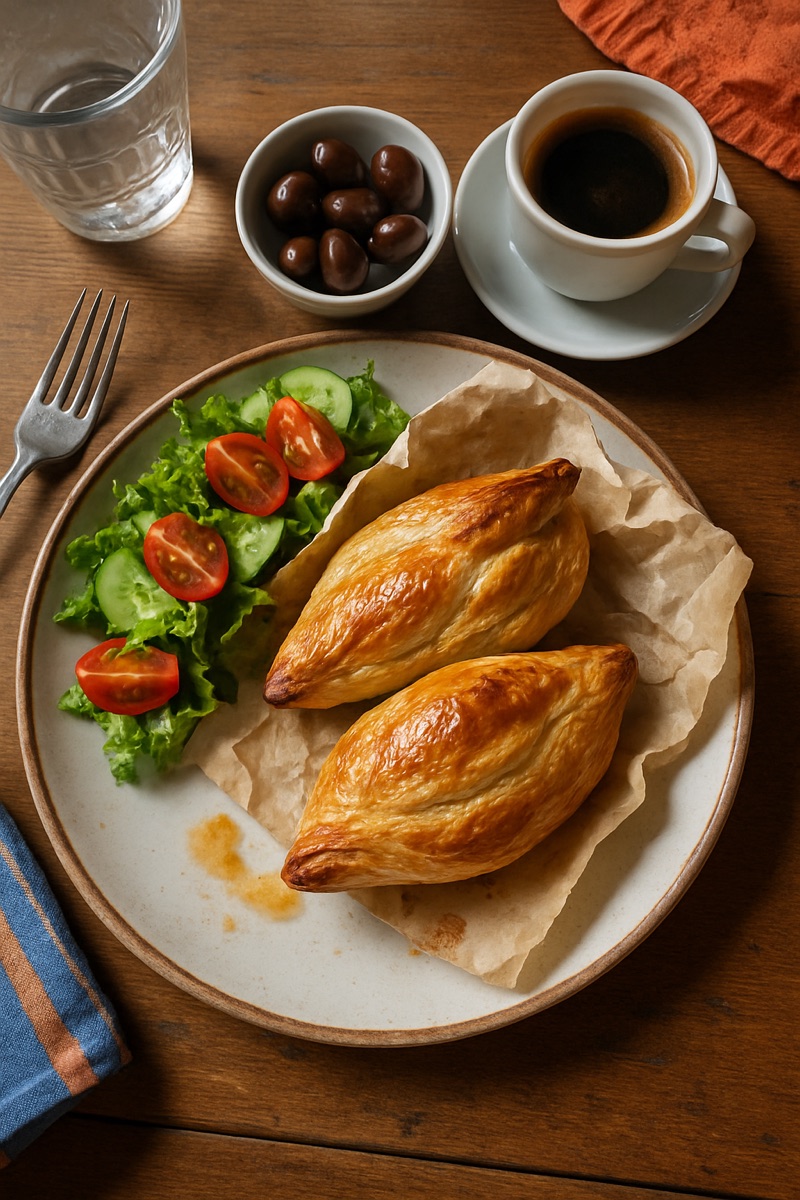 Pastizzi🇲🇹 Malta · 4 hours and 10 minutes
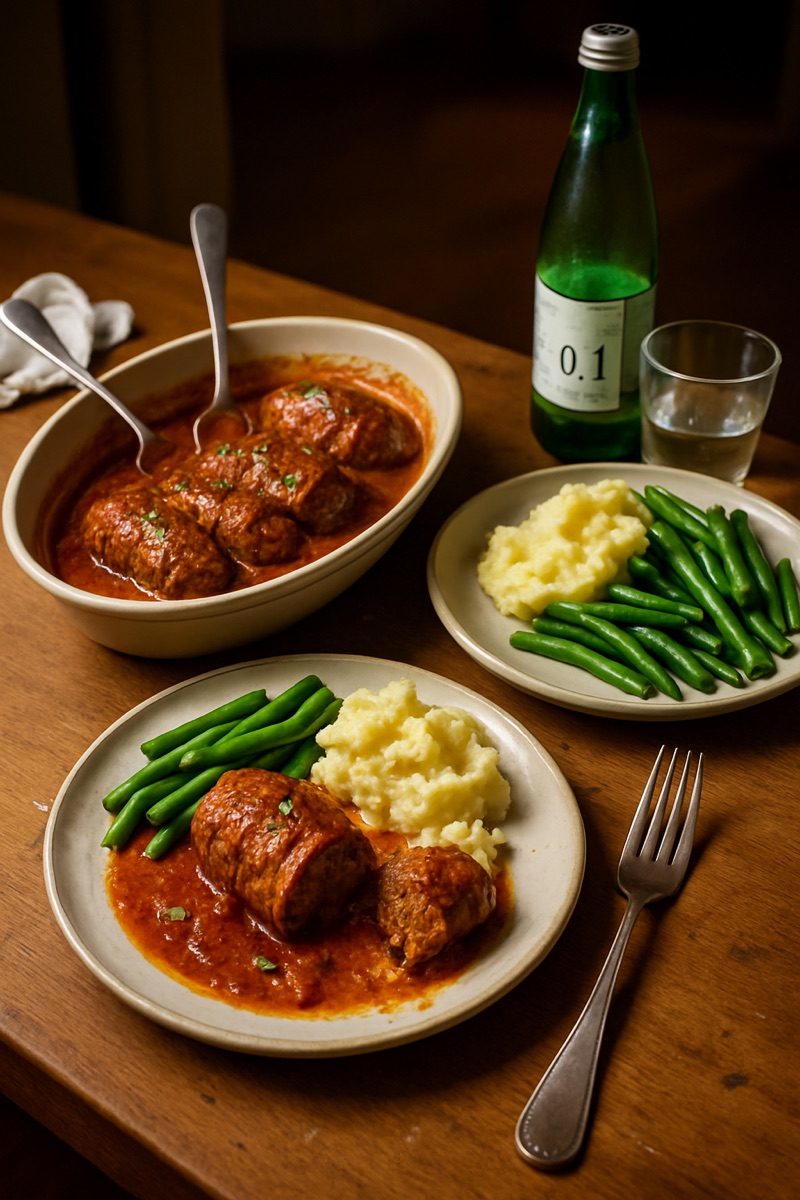 Bragioli🇲🇹 Malta · 2 hours and 5 minutes
Questions people ask
What is the most popular food in Malta?
Pastizzi are the everyday favourite, and stuffat tal-fenek, rabbit stew, is the dish most often named as national. Ftira, timpana and bragioli are close behind.
What do Maltese people eat for breakfast?
Pastizzi with ricotta or peas are a popular breakfast, especially in the villages.
Is Maltese food spicy?
Not usually. It relies on garlic, tomatoes, herbs, olive oil and wine rather than chilli.
What is the national dish of Malta?
Stuffat tal-fenek, rabbit marinated and stewed in red wine with tomatoes, garlic and bay leaves. It has no legal status but is the dish most often identified as national.
Is Maltese food Italian?
Partly. Sicilian influence is the strongest, but Arab, Spanish, French and British layers make it distinct, from date-filled imqaret to British sauces.
Keep reading
- What is the national dish of Malta?
- Traditional food of Andorra: 13 dishes to know
- Traditional food of Austria: 13 dishes to know
- Traditional food of Belgium: 13 dishes to know
- Traditional food of Cyprus: 12 dishes to know
- Traditional food of France: 13 dishes to know