 COPPER
What is the national dish of Malta?
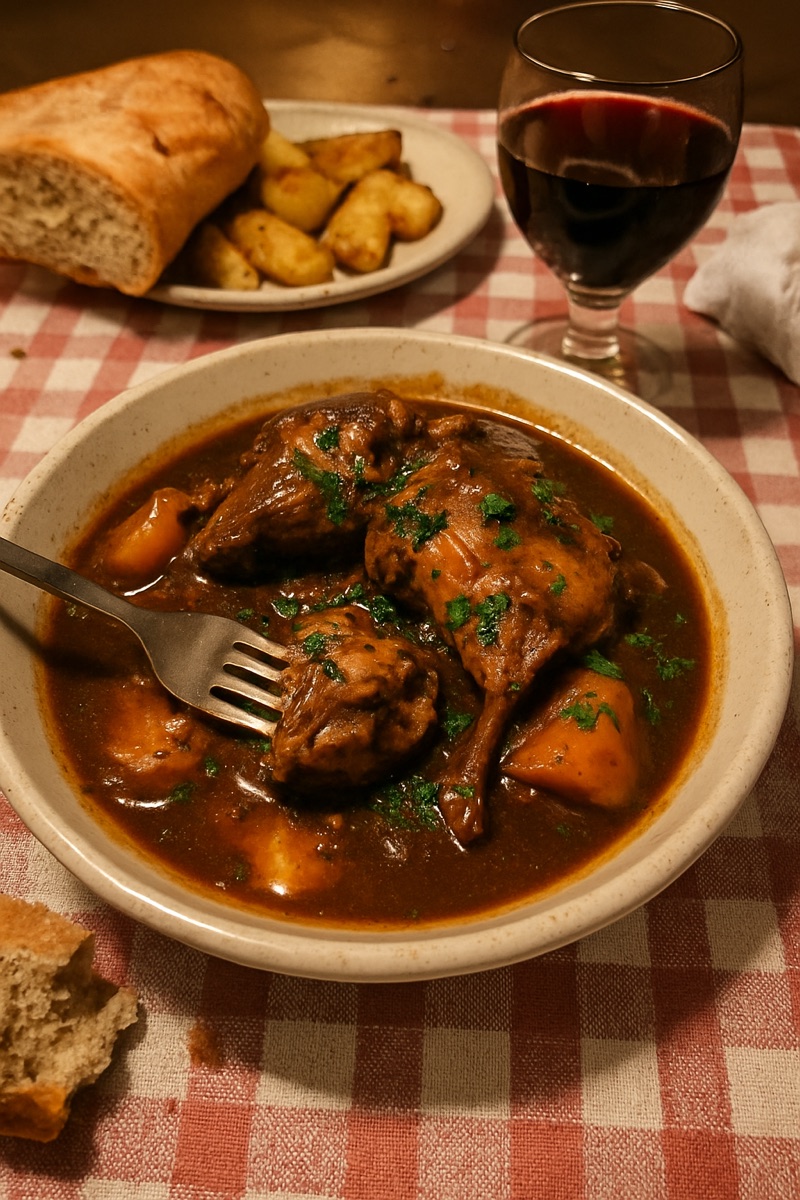
The national dish of Malta is stuffat tal-fenek: rabbit marinated in red wine, then slow-stewed with tomatoes, garlic and bay leaves. It is often eaten in two courses, the sauce over spaghetti first and the rabbit with potatoes second. Malta has no official national dish by law, but stuffat tal-fenek is the dish most often identified as one.
What is stuffat tal-fenek?
Stuffat tal-fenek simply means rabbit stew in Maltese. Rabbit pieces are braised slowly with wine, tomatoes, garlic and bay leaves, sometimes with cloves and vegetables, until the meat is tender enough to come away from the bone with a fork, and the sauce has reduced around it.
No law or decree makes it Malta's national dish. But reference works on Maltese cuisine consistently describe it as the dish most often identified as national, and Wikipedia's list of national dishes names it alone for Malta, where other countries get two or three candidates. That makes Malta a clear case, even without an official text.
How stuffat tal-fenek is made
The step that defines the dish happens the night before. In our stuffat tal-fenek recipe, 1.2 kg of jointed rabbit sits for 12 hours in 500 ml of red wine with 4 bay leaves and crushed garlic. Skip that marinade and you have an ordinary stew.
The next day:
- Dry the rabbit and brown it in olive oil for 8 to 10 minutes.
- Soften onion and garlic in the same pot, then add tomato paste and 400 g of peeled tomatoes.
- Pour in the marinade and boil it hard for 3 minutes to burn off the raw alcohol.
- Return the rabbit, cover and simmer on the lowest heat for 90 minutes.
- Add 600 g of potatoes in large chunks for the last 40 minutes.
Why it is served in two courses
A Maltese rabbit stew usually feeds a table twice. The fat is skimmed off and half the sauce is spooned over spaghetti as a first course. The rabbit and potatoes come next, with the rest of the sauce and bread to wipe the plate.
That is why the sauce matters as much as the meat: it has to be rich enough to dress pasta on its own, which is where the long wine marinade and the slow simmer earn their place.
Where the rabbit tradition comes from
The usual account links the dish to the Knights of St John, who ruled Malta from 1530 until Napoleon's fleet took the island in 1798, and who restricted hunting. Eating rabbit may have started as a quiet form of resistance to those rules. Once the restrictions were lifted in the late 18th century, the native Maltese rabbit, the tax-Xiber, had multiplied and prices fell, and rabbits were also being raised at home, a practice possibly brought by French Knights.
Maltese food carries many such layers. The Knights came from France, Italy and Spain; Sicilian and Arab cooking left a deep mark; British rule added mustard, Bovril and Worcestershire sauce to the pantry. For the closest neighbour's table, see our article on the national dish of Italy.
Other dishes to know from Malta
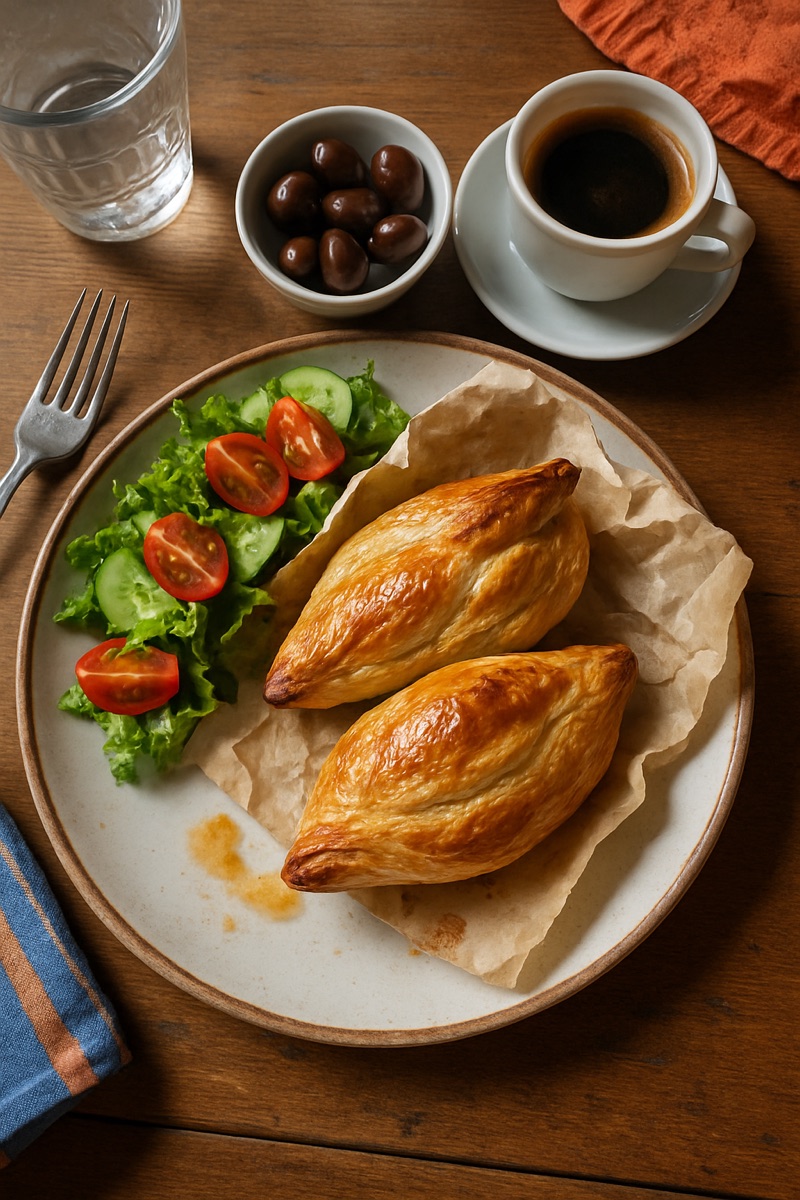
Pastizzi are the island's everyday snack: a lard-laminated dough stretched paper thin, coiled and folded around ricotta or curried peas, then baked at 200 °C for 30 minutes. They are sold hot from small bakeries called pastizzeriji, as well as in bars and cafés, and are a popular breakfast in the villages. The fold tells you the filling: ricotta pastizzi are folded down the middle, pea ones down the side. The Maltese even say a product is "selling like pastizzi" where English says "like hot cakes". Maltese communities abroad bake them too, in Australia, Canada, the UK and the US, and Scotland got its first pastizzeria in 2007.
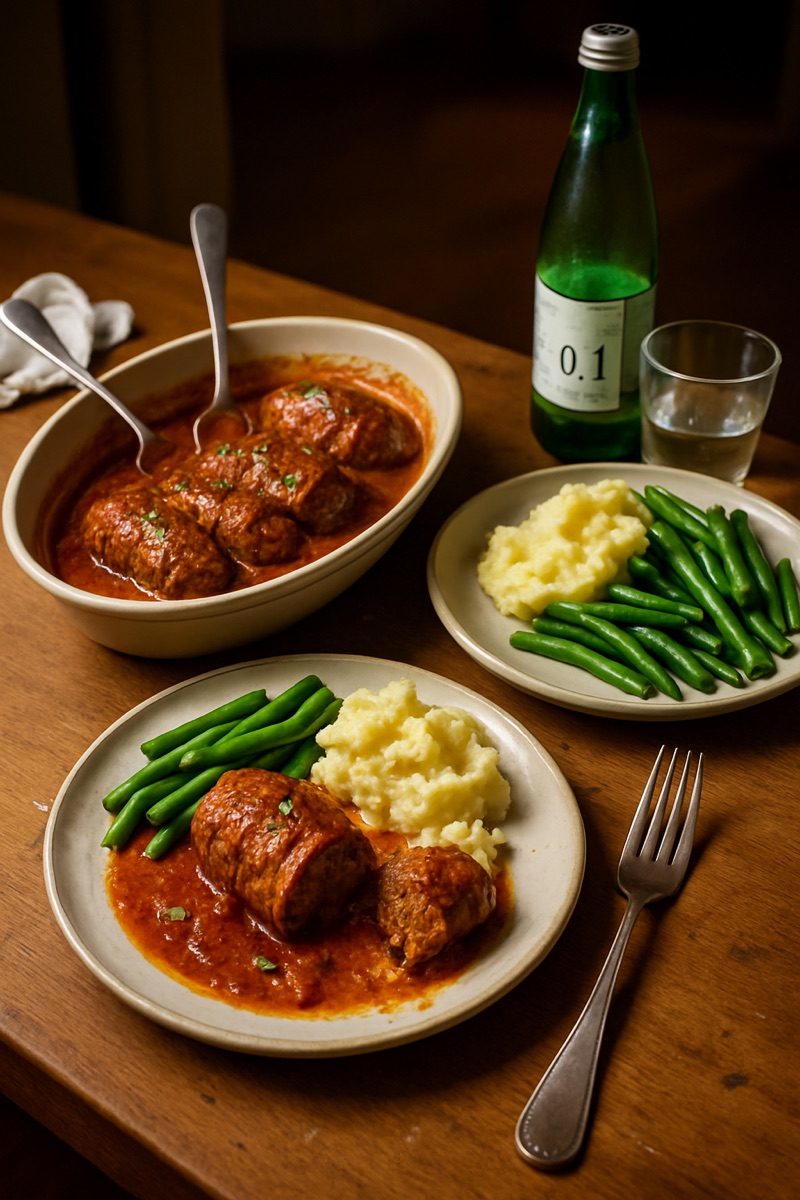
Bragioli are thin slices of beef topside rolled around minced pork and beef, smoked speck, breadcrumbs, parmesan and parsley, then braised for an hour in red wine and tomato. Many families tuck half a hard-boiled egg into the centre. The rolls are tied with string, browned, then simmered under a lid and turned halfway, and they are served sliced with roast potatoes.
Other names to know:
- Aljotta: a fish broth with garlic, herbs and tomato, the Maltese cousin of bouillabaisse.
- Ftira: a Gozitan flatbread topped with potatoes, cheeselets, anchovies or olives.
- Ġbejna: small cheeselets from Gozo.
- Qagħaq tal-għasel: rings of pastry filled with honey, treacle and spices, once made only for Christmas.
- Lent dishes: lampuki and salted cod, stewed snails (bebbux), stuffed artichokes (qaqoċċ mimli) and ġbejna fritters, from the weeks when Catholic fasting ruled out meat.
Find the recipes
All three Maltese dishes, with ingredients and step-by-step methods, are on our page about the food of Malta. For the other kitchens of southern and western Europe, see our guide to Western European food.
The recipes
- Fenek🇲🇹 Malta · 14 hours
 Pastizzi🇲🇹 Malta · 4 hours and 10 minutes
 Bragioli🇲🇹 Malta · 2 hours and 5 minutes
Questions people ask
What is the national dish of Malta?
Stuffat tal-fenek, a rabbit stew marinated and cooked in red wine with tomatoes, garlic and bay leaves. It has no legal status but is the dish most often identified as Malta's national dish.
What is served with stuffat tal-fenek?
Spaghetti dressed with the sauce as a first course, then the rabbit with potatoes and bread as the main course.
Why do Maltese people eat so much rabbit?
The tradition is often traced to resistance against the hunting restrictions of the Knights of St John. Rabbit became cheap and common after those rules were lifted in the late 18th century.
What are pastizzi filled with?
Traditionally ricotta or curried peas. Chicken versions are now common in Maltese pastizzeriji too.
Keep reading
- Traditional food of Malta: 12 dishes to know
- What is the national dish of Andorra?
- What is the national dish of Austria?
- What is the national dish of Belgium?
- What is the national dish of Cyprus?
- What is the national dish of France?