 COPPER
Traditional food of Liechtenstein: 8 dishes to know
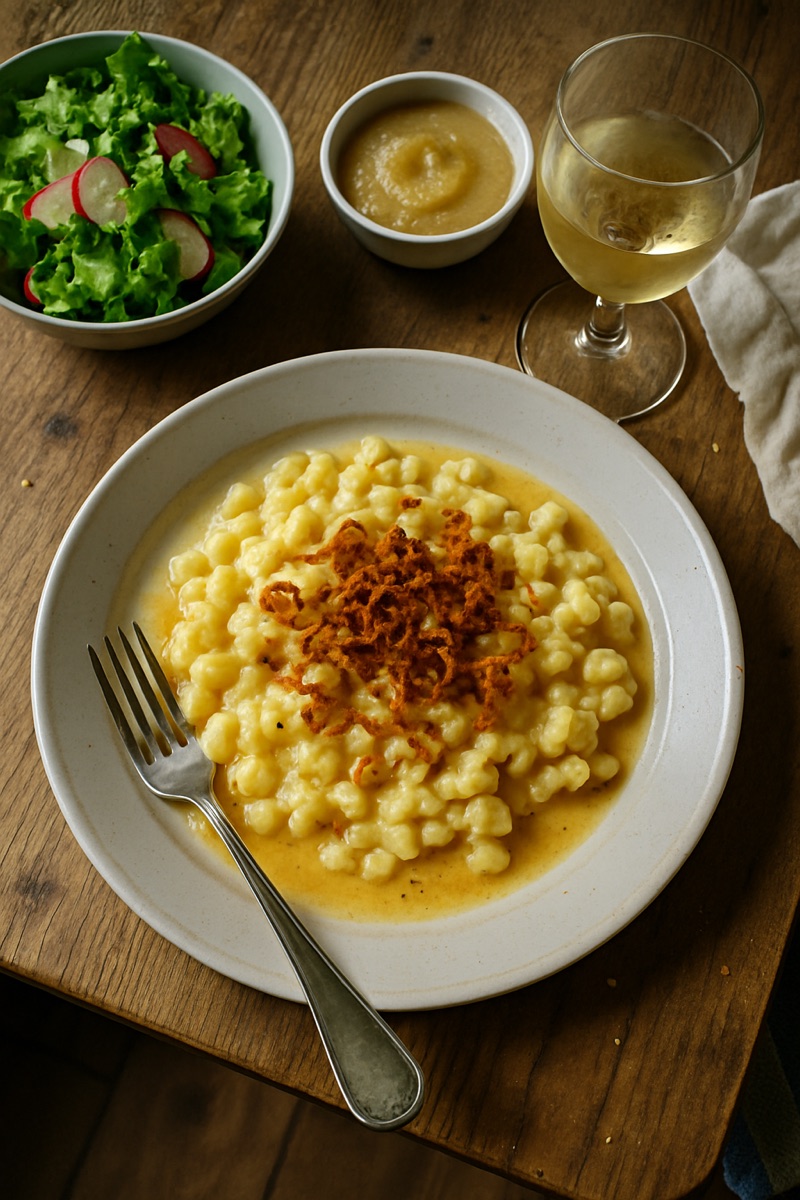
Traditional Liechtenstein food is Alpine farm cooking shared with eastern Switzerland and Vorarlberg: cheese and milk, cornmeal, potatoes, smoked meats and soups. Very little of it exists only in Liechtenstein. The most emblematic dishes are Käsknöpfle with apple sauce, Ribel, the fried cornmeal crumbs of the Rhine Valley, and Tatsch, eaten with stewed fruit.
What Liechtenstein food is built on
Liechtenstein's cooking has been shaped by its neighbours, above all Switzerland and Austria, and by the rest of Central Europe. Cheese and soups are central to it, milk products are everywhere thanks to a large dairy industry, and the usual vegetables are greens, potatoes and cabbage. Beef, chicken and pork are the common meats.
Its history explains the staples. Maize is first mentioned in Liechtenstein in 1713 and the potato in 1751; by the second quarter of the 19th century the two had pushed out millet, broad beans and lentils as the main foods. Until well into the 20th century most families lived from their own stable, garden, fields and forest, and meat was usually eaten only on Sundays. A weak milky coffee stood on the stove all day.
So say it plainly: Liechtenstein has a short list of dishes it calls its own, and each of them is also eaten across the border. The country's official portal singles out three, still popular today and recorded in the Liechtensteiner Kochbuch: Käsknöpfle with apple sauce, Ribel and Tatsch. The first is covered in depth in our article on the national dish of Liechtenstein.
The dishes Liechtenstein calls its own
- Käsknöpfle — Small egg-and-flour dumplings pressed straight into boiling water, then layered hot with grated alpine cheese and local sour cheese and topped with butter-fried onion rings. Serving them with apple sauce is a habit of Liechtenstein and the Vorarlberg Oberland, where elsewhere a green or potato salad is usual. The official portal suggests a local herb schnapps or fruit brandy after this heavy dish. Make it with our Käsknöpfle recipe.
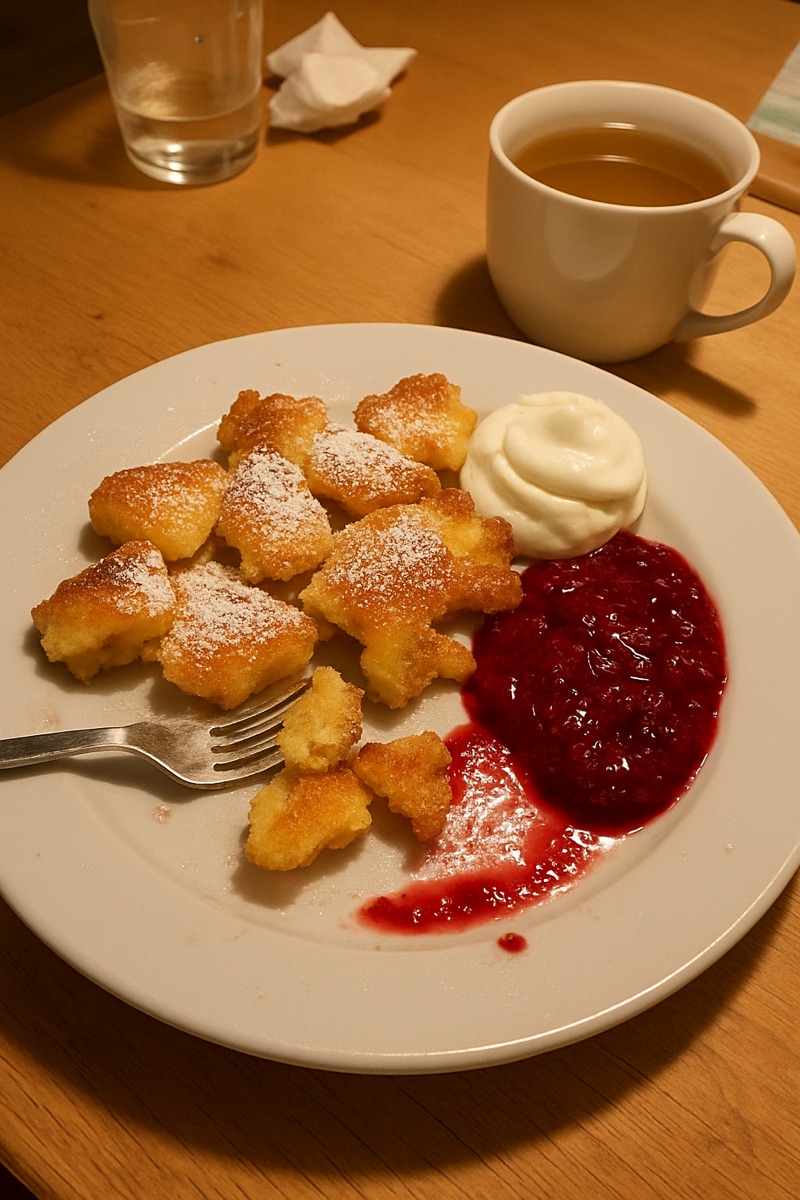
- Ribel — Corn and wheat semolina cooked into a firm porridge, traditionally rested overnight, then broken up in butter for up to an hour until it turns into small, irregular golden crumbs. Until about 1970 it was the breakfast of poor and farming families, eaten with milk or milky coffee, sugar, sour cheese, apple sauce or compote. The local historical lexicon calls it the typical dish of the Alpine Rhine Valley. Try our Ribel recipe.
- Tatsch (Kratzete) — The third dish on the official list, eaten with compote. In Swabia and Baden, Kratzete is pancake batter cooked in a pan and torn into pieces, a denser cousin of Austria's Kaiserschmarrn that can be eaten sweet or savoury.
- Hafalaab — A soup of ham or bacon with cornmeal dumplings, which brings together two staples of the old farm kitchen, smoked pork and maize.
Cheese, potatoes and everyday plates
- Sauerkäse (Saukerkas) — A sour cheese produced in Liechtenstein itself. It gives Käsknöpfle their sharp edge when mixed with a melting alpine cheese, and Ribel can be eaten with it too.
- Rösti — Coarsely grated potato fried into a flat cake, with regional versions that add other ingredients. It is listed among Liechtenstein's common dishes, as it is in Switzerland.
- Schnitzel — Boneless meat beaten thin with a mallet, breaded and fried. It is one of the everyday dishes Liechtenstein shares with Austria.
- Müesli — Uncooked rolled oats with fruit and nuts, soaked in water or juice. It is a common breakfast in Liechtenstein, as in the Swiss regions where it was created around 1900.
What Liechtenstein drinks
Wine is the drink most tied to the country. More than 100 winegrowers, four of them full-time professionals, work the south-facing slopes of the Rhine Valley, where the warm föhn wind ripens the grapes; Blauburgunder (Pinot Noir) and Müller-Thurgau are the main varieties.
Beer came back in 2007, when the Liechtensteiner Brauhaus began brewing after a 90-year gap, followed by Prinzenbräu in 2010. Many farmhouses distilled their own schnapps, and in 1880 consumption averaged 11.5 litres per person a year. Cider from apples and pears, berry syrups and herbal teas of lime blossom, chamomile and yarrow were part of the old self-sufficient household, and milk is still drunk widely.
Liechtenstein, Switzerland or Austria?
All three, honestly. Käsknöpfle are the Käsespätzle of Swabia, the Kasspatzln of Tyrol and the Chäschnöpfli of Switzerland under another name; what changes is the cheese, and Liechtenstein's habit of pairing an alpine cheese with a sour one. Ribel is shared with the St. Gallen and Vorarlberg Rhine Valley, and since 2000 Rheintaler Ribelmais, the corn it is made from, has had a protected designation of origin in Switzerland.
To see the two kitchens Liechtenstein sits between, read our guides to the traditional food of Switzerland and the traditional food of Austria.
Cook Liechtenstein food at home
Käsknöpfle and Ribel both have full step-by-step recipes in Copper. The rule for the first is to keep the dumplings boiling hot while you layer the cheese; for the second, never skip the overnight rest, or you get polenta. Find them on our page about the food of Liechtenstein.
For the kitchens around the Alps and beyond, see our guide to Western European food.
The recipes
 Ribel
RibelQuestions people ask
What is the most popular food in Liechtenstein?
Käsknöpfle, cheese dumplings with fried onions and apple sauce, are the best-known dish. Ribel and Tatsch are the other dishes Liechtenstein's official portal names as typical.
What do people in Liechtenstein eat for breakfast?
Müesli is a common breakfast today. Until about 1970, many farming families ate Ribel, fried cornmeal crumbs, with milk or milky coffee.
Is Liechtenstein food the same as Swiss food?
Very close. Liechtenstein shares most of its dishes with eastern Switzerland and Austria's Vorarlberg; its own touch is in details such as sour cheese in Käsknöpfle and apple sauce on the side.
Is Liechtenstein food spicy?
No. It is mild, cheese-rich mountain cooking seasoned with butter, onions and salt.
What is Sauerkäse?
A sour cheese made in Liechtenstein, called Saukerkas in dialect. It is mixed with alpine cheese in Käsknöpfle and eaten with Ribel.
Keep reading
- What is the national dish of Liechtenstein?
- Traditional food of Andorra: 13 dishes to know
- Traditional food of Austria: 13 dishes to know
- Traditional food of Belgium: 13 dishes to know
- Traditional food of Cyprus: 12 dishes to know
- Traditional food of France: 13 dishes to know