 COPPER
What is the national dish of Liechtenstein?
Liechtenstein has no official national dish, but the one most often cited is Käsknöpfle: small boiled egg-and-flour dumplings layered with grated alpine cheese and local sour cheese, topped with butter-fried onions and served with apple sauce. It is the same family of dish as the Käsespätzle of Swabia, Vorarlberg and Switzerland, and the Liechtenstein version is defined by its sour cheese and apple sauce.
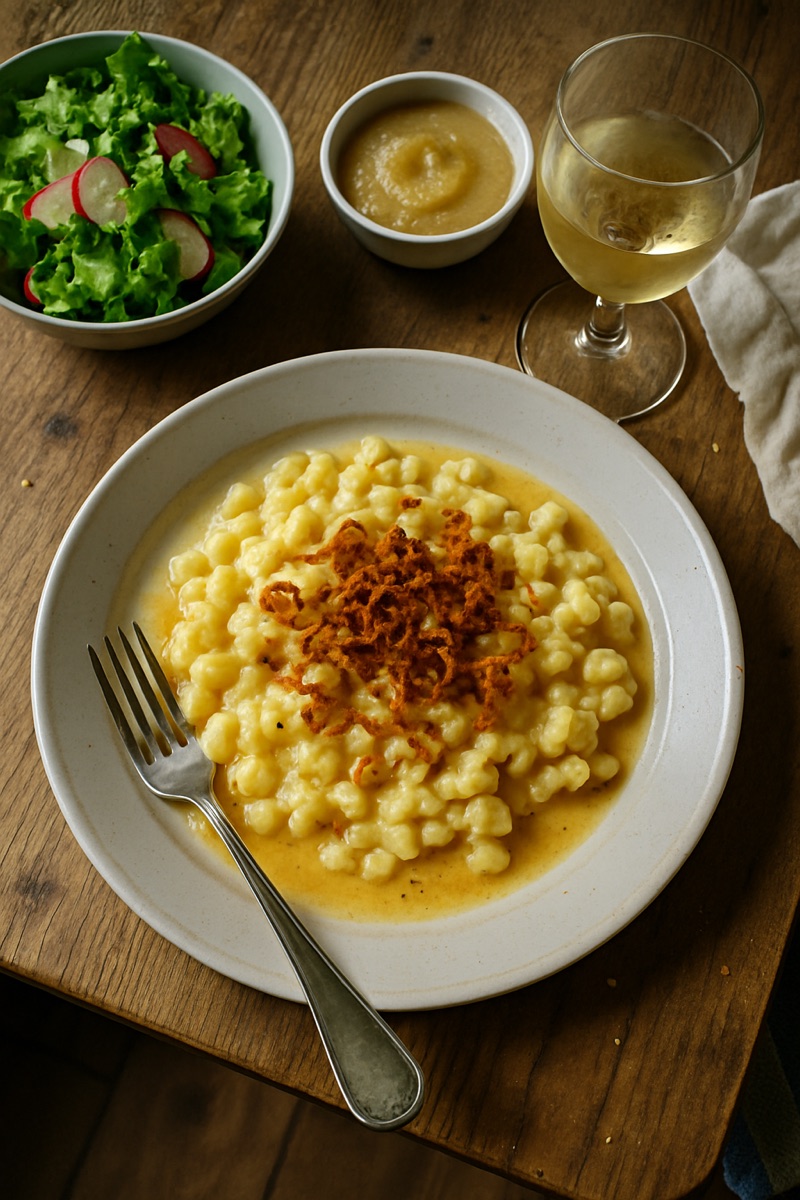
Is Käsknöpfle really Liechtenstein's own dish?
Partly, and it is worth being straight about it. Liechtenstein's cooking is shaped by its neighbours, above all Switzerland and Austria, and Käsknöpfle is one dish under several names across the region. In Swabia and Bavaria it is Käsespätzle, in Tyrol Kasspatzl, and in Vorarlberg and Liechtenstein Käsknöpfle.
No law names a national dish. But Liechtenstein's official country portal lists Käsknöpfle with apple sauce first among the typical dishes still popular today, ahead of Ribel and Tatsch, and it is the dish most often given as the national dish. The portal even singles out one cheese mix, used for decades by the Biedermann family at the Wirthschaft zum Löwen in Hinterschellenberg.
What is in Käsknöpfle?
Knöpfle are small, irregular dumplings, shorter and rounder than noodles. The name says it: Knopf is German for button, and Knöpfle are little buttons. The cheese is what gives the dish its local identity. Our Käsknöpfle recipe uses:
- a thick dough of flour, eggs, a little water and salt
- grated alpine cheese (Bergkäse)
- grated sour cheese (Sauerkäse, Saukerkas in dialect), a cheese produced in Liechtenstein itself
- onions sliced into rings and fried golden in butter
- apple sauce and a green salad on the side
How Käsknöpfle is made
The dough is beaten until it blisters, then rested 15 minutes. It is pressed through a Knöpfle grater straight into boiling salted water, and the dumplings are lifted out as soon as they float, after about 2 minutes.
The hot dumplings are layered in a warm buttered dish with the two cheeses, starting with Knöpfle and finishing with cheese, then left in a 180 °C oven for 5 to 10 minutes until the cheese pulls into strands. If they look dry, a splash of hot stock or cooking water goes in. The fried onions go on top at the very end.
Recipes vary from house to house. The Löwen inn in Schellenberg, whose version Liechtenstein's portal praises, makes its dough with 600 g of flour and 8 eggs for eight people, uses grated Appenzeller with the sour cheese, and simply mixes the hot Knöpfle with the cheese in a bowl instead of layering them, adding a little cooking water if they are too dry.
The apple sauce is not a modern twist. Serving Käsknöpfle with apple sauce is a habit of Liechtenstein and parts of Vorarlberg, where elsewhere a green or potato salad is more usual. The country portal recommends a local herb schnapps or fruit brandy after this rather heavy dish.
Liechtenstein, Austria or Switzerland?
The honest answer is: all three share it. The dish is traditional in Swabia, Baden and the Allgäu in Germany, in Vorarlberg and Tyrol in Austria, and in Switzerland. Liechtenstein, wedged between Vorarlberg and the Swiss Rhine Valley, sits right inside that zone.
What changes from valley to valley is the cheese. Tyrol uses Bergkäse or Emmental, the Montafon valley in Vorarlberg uses its own sour cheese, and the Bregenz Forest uses Bergkäse with a local hard cheese. Liechtenstein's own habit is to combine the two: an alpine cheese for melt and a sour cheese for bite. For the neighbours' own answers, see the national dish of Switzerland and the national dish of Austria.
Other dishes to know from Liechtenstein
Ribel is the other dish the country portal names. It is a porridge of corn and wheat semolina cooked in milk and water, left to rest overnight, then broken up in butter for 45 to 60 minutes until it turns into irregular golden crumbs. Until around 1970 it was the breakfast of poor and farming families, eaten with coffee or milk, apple sauce or stewed fruit. It belongs to the whole Alpine Rhine Valley, and since August 2000 Rheintaler Ribelmais, the corn it is made from, has had a protected designation of origin in Switzerland. The overnight rest is the whole point: skip it and you get polenta, not Ribel. With a little sugar it becomes a simple dessert, and in the Kriesi-Ribel variant fresh sour cherries are folded in while it fries.
The portal also names Tatsch, also called Kratzete, eaten with compote. Wikipedia's list of Liechtenstein foods adds Hafalaab, a soup of ham or bacon with cornmeal dumplings.
Both our recipes are on our page about the food of Liechtenstein, and the wider kitchen around it is in our guide to Western European food.
The recipes
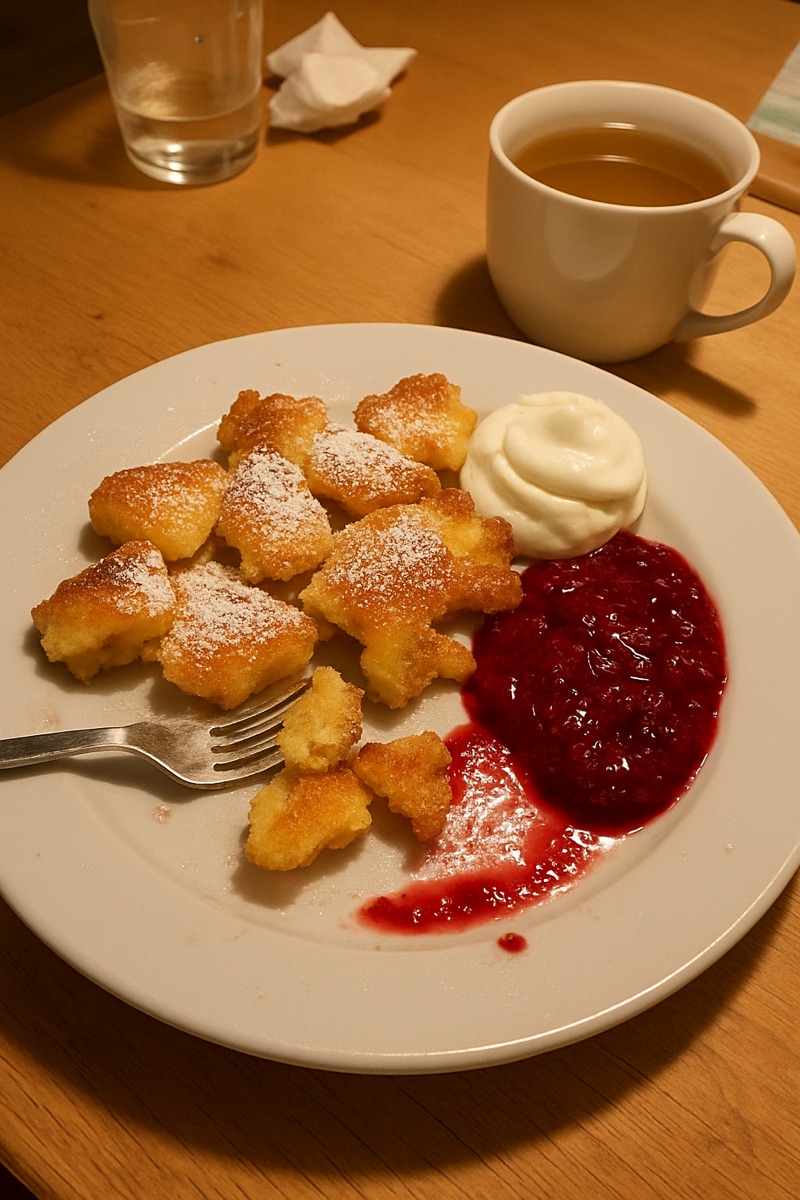 Ribel
RibelQuestions people ask
Is Käsknöpfle the same as Käsespätzle?
Yes, it is the same dish of small egg dumplings layered with cheese and fried onions. Käsknöpfle is the name used in Liechtenstein and Vorarlberg; Käsespätzle is the German and Swabian name.
What is served with Käsknöpfle?
In Liechtenstein, apple sauce, often with a green salad. Potato salad is another common side.
Does Liechtenstein have an official national dish?
No. Käsknöpfle is the dish most often named, and Liechtenstein's official portal lists it first among its typical dishes.
What cheese is used in Käsknöpfle?
A mix of grated alpine cheese (Bergkäse) and sour cheese (Sauerkäse). Some recipes, including the one from the Löwen inn in Schellenberg, use Appenzeller with the sour cheese.
What is Ribel?
Ribel is a Rhine Valley dish of corn and wheat semolina cooked into porridge, rested overnight and fried in butter into golden crumbs, eaten with milk, coffee or apple sauce.
Keep reading
- Traditional food of Liechtenstein: 8 dishes to know
- What is the national dish of Andorra?
- What is the national dish of Austria?
- What is the national dish of Belgium?
- What is the national dish of Cyprus?
- What is the national dish of France?