 COPPER
What is the national dish of Switzerland?
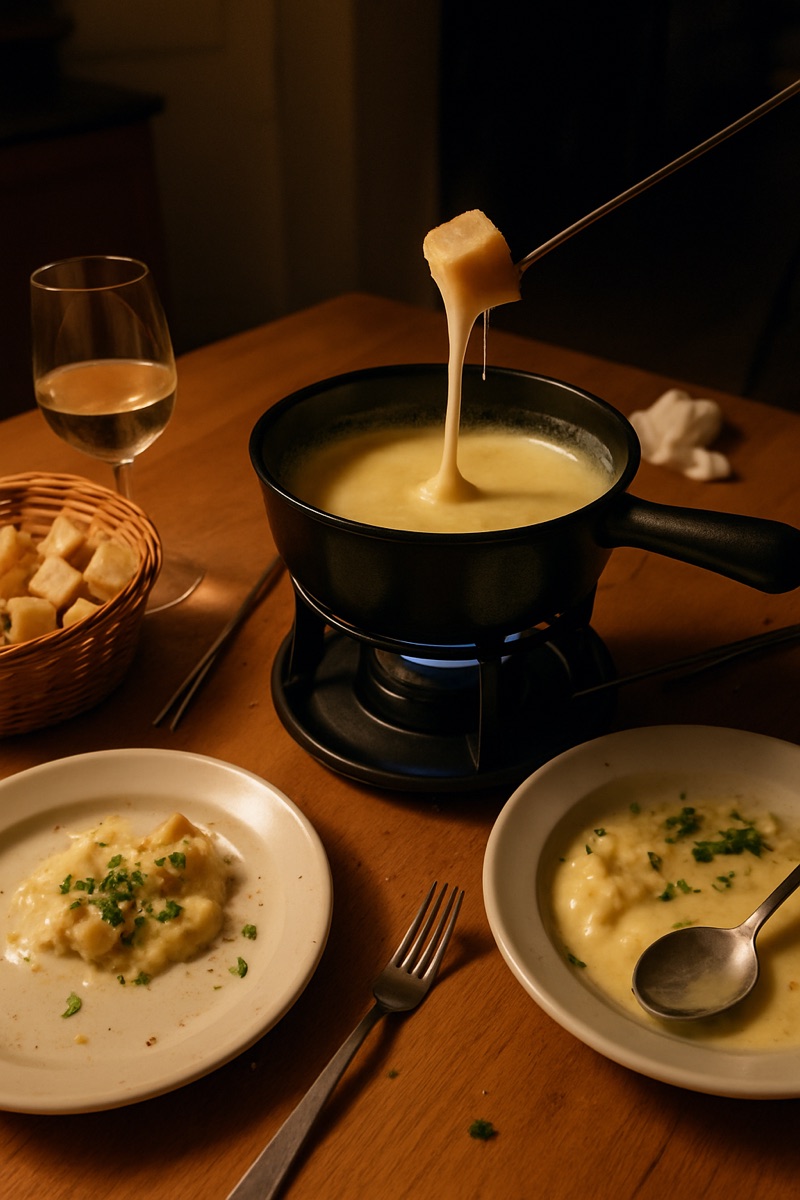
Switzerland has no official national dish, but cheese fondue is the one most often cited: Gruyère and other cheeses melted with white wine in a shared pot and eaten by dipping bread on long forks. The Swiss Cheese Union promoted it as the national dish from the 1930s. Rösti and raclette are the other two dishes usually named.
Why Switzerland has three answers
Swiss cuisine is a mix of national, regional and local dishes, and no law names a national dish. Reference lists give a handful of core dishes instead: fondue, raclette, rösti and muesli, with the cervelat sausage often called the national sausage.
Fondue is the one most often singled out. Its status was built deliberately: the Swiss Cheese Union, a cheese-industry body, promoted it as the national dish from the 1930s to sell more cheese. It is a national symbol by campaign and habit, not by decree.
Other dishes sometimes given the label include Zürcher Geschnetzeltes, thin strips of veal in a cream and white wine sauce from the canton of Zurich, first recorded in print in the 1940s.
What is in a Swiss cheese fondue?
Cheese, white wine, a starch to bind them, garlic and often kirsch. Our cheese fondue recipe is the Fribourg *moitié-moitié*: 400 g of Gruyère AOP and 400 g of Vacherin Fribourgeois AOP, or 200 g of cheese per person, melted into 300 ml of dry white wine such as Chasselas.
The pot, a *caquelon*, is rubbed with garlic first. The cheese goes in by handfuls while you stir in a figure of eight for about 10 minutes, without letting it boil, which would split it. Then 2 tablespoons of cornstarch slaked in kirsch thicken it. Cornstarch only reached Switzerland in 1905, and it made a smooth, stable fondue much easier.
Guests dip cubes of day-old bread, each with some crust, and keep stirring as they dip. The golden crust left at the bottom, *la religieuse*, is lifted out and shared at the end.
The classic ratio is about two parts cheese to one part wine by weight. Kept at around 65 °C, the fondue stays smooth without burning. A common table rule: whoever loses their bread in the pot pays for a round or has to sing a song.
How fondue became the national dish
Cheese melted with wine is old: a Zürich text from the end of the 17th century, titled *Käss mit Wein zu kochen* ("to cook cheese with wine"), already describes it. The first recipe for the modern fondue under that name, with cheese and wine but no eggs, was published in 1875 and was already presented as a Swiss national dish.
It was then a town dish of French-speaking western Switzerland, because good Gruyère was an export product peasants could rarely afford. The Swiss Cheese Union turned it into a national habit: it showed fondue at the 1939 New York World's Fair, sent fondue sets to army regiments after the Second World War, and ran the 1981 slogan *Fondue isch guet und git e gueti Luune* ("fondue is good and puts you in a good mood"). The union was dissolved in 1999, but fondue stayed a symbol of Swiss unity.
Rösti and raclette, the other two candidates
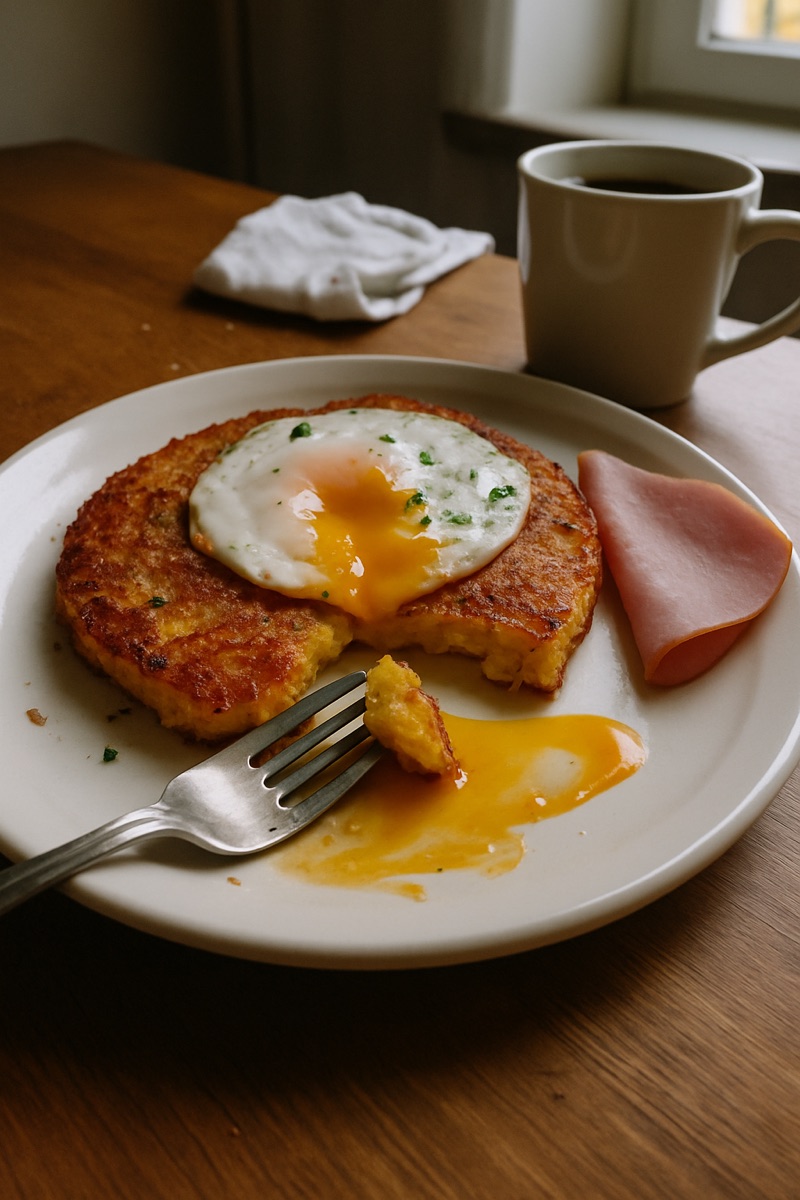
Rösti started as a farmers' breakfast in the canton of Bern and parts of Fribourg, and many Swiss consider it their national dish. It is so tied to German-speaking Switzerland that the cultural line with the French-speaking west is called the *Röstigraben*, the "rösti ditch". In our rösti recipe, waxy potatoes are boiled in their skins, chilled overnight, grated into long strips without rinsing, then fried in butter for about 15 minutes, flipped and fried 10 to 15 minutes more.
As a main course, rösti is often topped with a fried egg and spinach, or served with a cervelat sausage or Fleischkäse. It is also the usual side for Zürcher Geschnetzeltes.
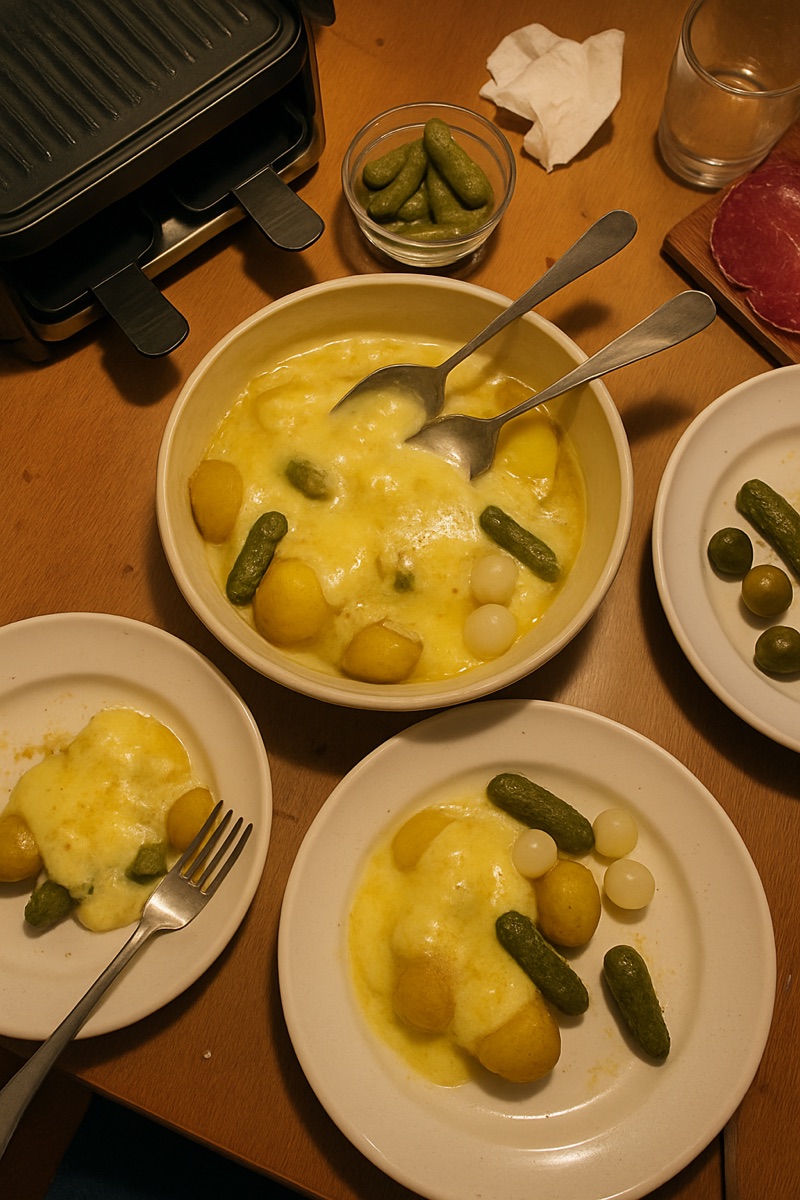
Raclette comes from Valais. A half wheel of cheese is heated on its cut face and the melted layer scraped onto a plate beside skin-on potatoes, with pickles and air-dried meat. It was promoted as the national dish of Valais at the 1909 cantonal exhibition in Sion and became popular across the country after the 1964 National Exhibition. Our raclette recipe covers both the half-wheel method and the table grill.
Melting cheese by a fire is old in the Alps: cow herders carried cheese up to the pastures, softened it by the campfire in the evening and scraped it onto bread. In Valais the practice is recorded as early as 1574, and the French name raclette, from *racler*, to scrape, has been in common use since 1875.
Unlike rösti, fondue and raclette are not everyday food but meals for gatherings, eaten mostly in cold weather.
Other dishes to know from Switzerland
Muesli is Swiss too. The nutritionist Max Bircher-Benner created it in the early 20th century as an evening meal for his sanatorium patients, and it spread through the country after the Second World War, helped by home cooking courses and army kitchens.
The full set of Swiss recipes, from mountain cheese dishes to everyday potato plates, is on our page about the food of Switzerland. For the wider region, see our guide to Western European food.
Fondue has a French rival: Savoy also claims it, as *fondue savoyarde*. And the Swiss *spätzli* tradition continues across the eastern border in Vorarlberg's cheese noodles, covered in our article on the national dish of Austria.
The recipes
- Cheese fondue🇨🇭 Switzerland · 30 minutes
 Rösti🇨🇭 Switzerland · 13 hours
 Raclette🇨🇭 Switzerland · 45 minutes
Questions people ask
Is fondue Swiss or French?
Both claim it: Switzerland and the French region of Savoy each say it started there. It is most strongly identified with Switzerland, where the earliest cheese-and-wine recipe comes from a late 17th-century Zürich text.
What is the difference between fondue and raclette?
In fondue, the cheese is melted with wine in a shared pot and you dip bread into it. In raclette, a block of cheese is heated and the melted surface is scraped onto your plate over boiled potatoes.
What wine is used in cheese fondue?
A dry white wine, such as Chasselas, goes into the pot with the cheese. What to drink alongside fondue is a long-running debate in Switzerland.
How do you pronounce rösti?
Roughly "RUR-shtee" in Swiss German, with a rounded "ö" sound.
What is the religieuse in fondue?
It is the thin layer of toasted cheese that forms at the bottom of the pot by the end of the meal. It has the texture of a cracker and is shared at the table.
Keep reading
- Traditional food of Switzerland: 13 dishes to know
- What is the national dish of Andorra?
- What is the national dish of Austria?
- What is the national dish of Belgium?
- What is the national dish of Cyprus?
- What is the national dish of France?