 COPPER
Traditional food of Cuba: 12 dishes to know
Traditional Cuban food is Spanish at its core, shaped by Taíno roots and African cooking: rice and black beans, pork, root vegetables such as yuca and malanga, and plantains, seasoned with a sofrito of onion, green pepper and garlic, cumin, oregano and sour citrus. The most emblematic dishes are ropa vieja, moros y cristianos, lechón asado and tostones.
What Cuban food is built on
Cuban cooking grew out of Spanish colonial cuisine, with ingredients and methods kept from the Taíno, the island's indigenous people, and brought by enslaved Africans. French colonists arriving from Haiti left their mark on the east of the island, and Chinese immigrants on Havana. Being a tropical island, Cuba also cooks with plenty of seafood, fruit and starchy roots.
Before the Spanish arrived, the Taíno were already growing yuca, sweet potato (boniato), maize, squash and peppers. The Spanish added rice, beans, citrus, cattle and pigs; Africans added yam (ñame). A typical Cuban plate today still reflects that: rice and black beans, a pork or beef dish, and something fried from a plantain or a root.
Two preparations hold most Cuban dishes together. Sofrito, onion, green pepper and garlic cooked slowly in oil or pork fat, is the base of ropa vieja, picadillo and the black beans. Mojo, a raw sauce of garlic, olive oil or lard and bitter orange juice, marinates roast pork and is spooned over yuca and fried plantains.
The Taíno legacy is still visible: they grated yuca on graters called guayos to make casabe bread and cooked in clay pots, and dishes such as casabe and ajiaco survive from that time. Cuban food is not hot. In Cuba the Taíno word ají covers every pepper, sweet or hot.
Main dishes
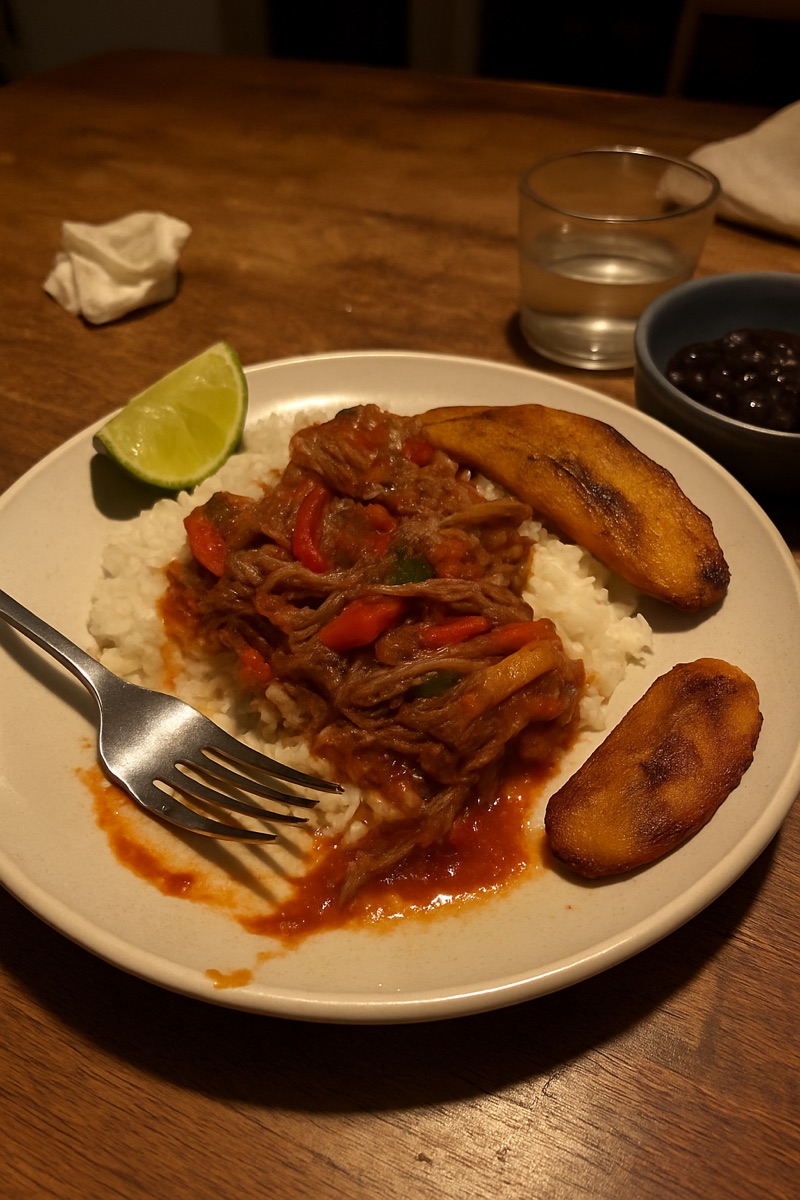
- Ropa vieja — Beef simmered until it pulls apart, shredded into long threads and finished in a tomato sofrito with onion, green pepper and garlic. The name means "old clothes", and it is the dish most often cited as the national dish of Cuba. Our ropa vieja recipe adds green olives, capers and dry cooking wine.
- Lechón asado — Roast pork, traditionally a whole pig, marinated in mojo, a sauce of garlic, olive oil or lard and bitter orange juice. It is the centerpiece of Nochebuena, the Christmas Eve dinner, and of large family gatherings.
- Picadillo a la criolla — Ground beef cooked with tomato, with raisins and green olives for a sweet-and-salty contrast. It is served over white rice and also used to fill pastries and croquettes.
- Vaca frita — Flank or skirt steak slow-cooked, shredded, then fried until the edges crisp and topped with sautéed onions and a squeeze of lime. It is served with rice and black beans.
Rice, beans and sides
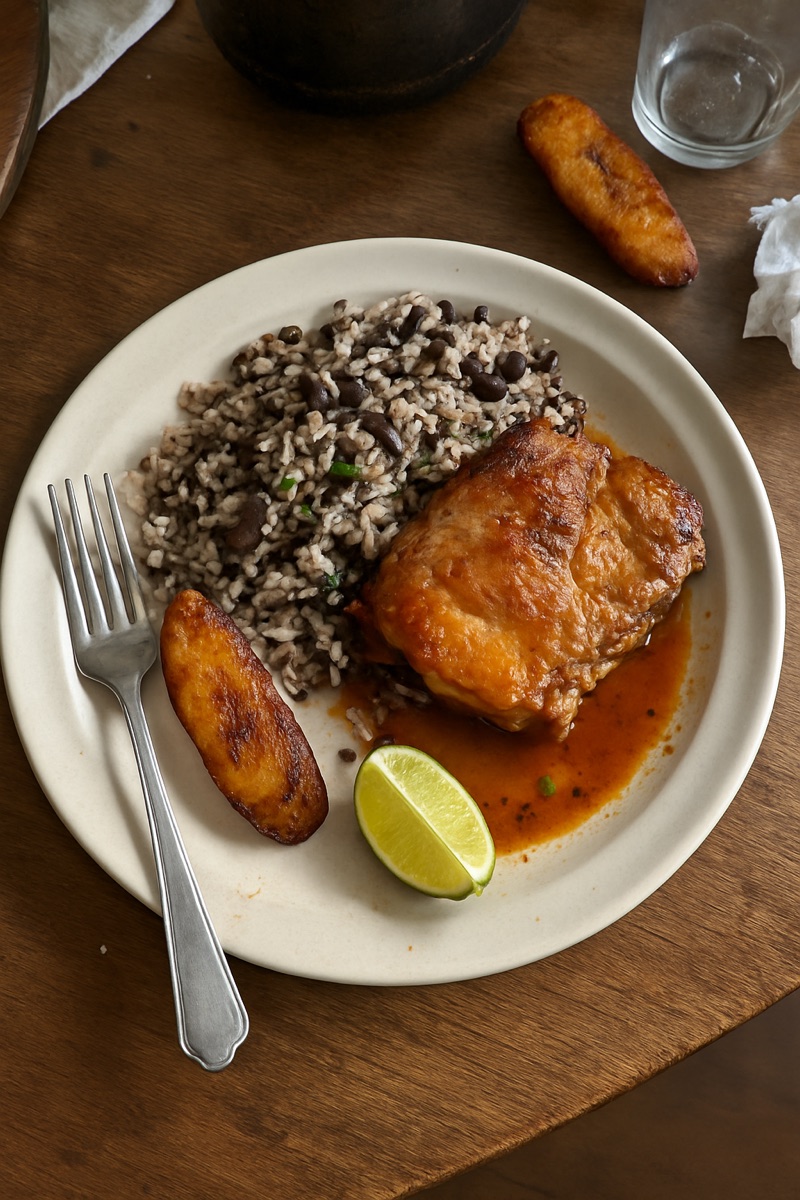
- Moros y cristianos — White rice and black beans cooked together in one pot, so the rice takes the color of the bean liquid. The name means "Moors and Christians"; it is also called congrí, and when rice and beans are served separately they are simply arroz con frijoles. See our moros y cristianos recipe.
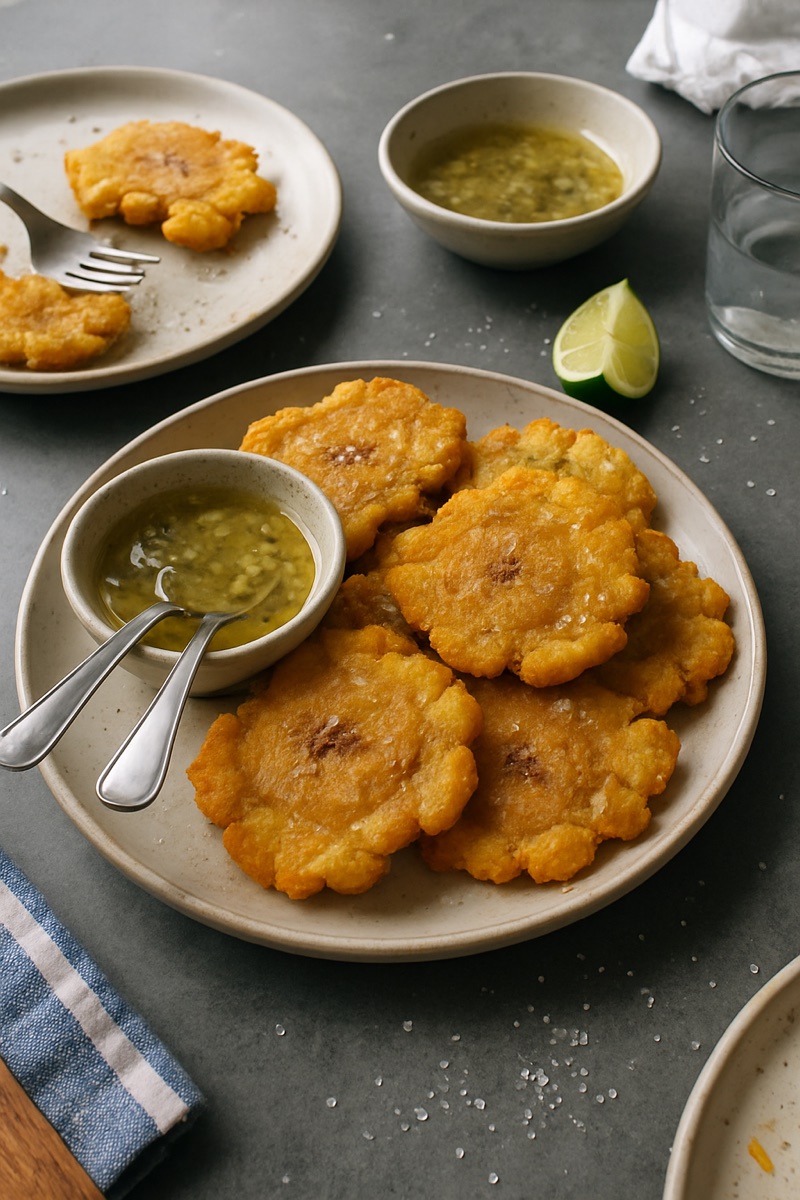
- Tostones — Green plantain rounds fried once until soft, flattened, then fried again until crisp. They are eaten as a side or a snack, often dipped in mojo; our tostones recipe dips them in garlic water between the two fries.
- Yuca con mojo — Boiled cassava served with a marinade of garlic, lime and olive oil, often with sliced onion. It is a traditional side dish, and mojo is also how Cubans season fried cassava.
- Casabe — A thin, crisp flatbread of grated bitter cassava, baked on a flat griddle. It dates back to the Taíno, keeps for months once dry, and was inscribed by UNESCO as intangible heritage in a joint nomination by Cuba, Haiti, Honduras, the Dominican Republic and Venezuela.
Soups and stews
- Ajiaco criollo — A thick soup-stew of beef, chicken, pork, tasajo (salted dried beef) and a ham bone, loaded with corn, squash, malanga, yam, green and ripe plantains, yuca and sweet potato, and seasoned with peppers, garlic, cumin and lime. Regional versions exist in Bayamo and Camagüey, and the anthropologist Fernando Ortiz used it as a metaphor for Cuban identity: "Cuba is an ajiaco."
Sandwiches, pastries and coffee
- Cuban sandwich — Roast pork, ham, Swiss cheese, pickles and yellow mustard on lightly buttered Cuban bread, pressed on a flat grill. It grew out of the cigar-worker communities of Key West and Tampa in Florida; in Cuba it is often called a mixto.
- Pastelitos — Puff-pastry turnovers filled with guava, guava and cream cheese, coconut or seasoned beef with raisins and olives. They are eaten as a snack at any time of day, usually with coffee.
- Café cubano — A short espresso sweetened by whipping sugar with the first, strongest drops of coffee into a light foam. Drinking it is a social habit, and it is also the base of café con leche and cortadito.
Cuban drinks and the Caribbean table
Cuba is also the home of several rum drinks that travelled the world: the mojito (white rum, mint, sugar, lime and soda), the daiquirí (rum, lime and sugar) and the Cuba libre (rum, cola and lime). Guarapo, fresh pressed sugar-cane juice, is the non-alcoholic counterpart, along with batidos, milkshakes made with tropical fruit such as guanábana, and Jupiña, a pineapple soda.
Much of this table is shared across the Caribbean kitchen: rice and beans, plantains, cassava bread and roast pork turn up on every island in a different form. Compare with the traditional food of the Dominican Republic and the traditional food of Puerto Rico.
Cook Cuban food at home
Ropa vieja, moros y cristianos and tostones together make a complete Cuban plate, and all three have full step-by-step recipes in Copper. You will find them, with ingredients and the technique that matters most for each, on our page about the food of Cuba.
The recipes
- Ropa vieja🇨🇺 Cuba · 3 hours and 10 minutes
 Moros y cristianos🇨🇺 Cuba · 14 hours and 10 minutes
 Tostones🇨🇺 Cuba · 30 minutes
Questions people ask
What is the most popular food in Cuba?
Rice and black beans, cooked together as moros y cristianos or served side by side, are on the table almost every day. Ropa vieja, lechón asado, picadillo and fried plantains are the dishes most associated with Cuban home cooking.
Is Cuban food spicy?
Generally not. Cuban food is seasoned with garlic, cumin, oregano, onion, sweet peppers and sour citrus rather than chili heat. In Cuba the word ají is used for peppers in general, sweet or hot.
What do Cubans eat for Christmas?
Nochebuena, Christmas Eve, centers on lechón asado, roast pork (traditionally a whole pig) marinated in mojo, the garlic and bitter orange sauce of Cuban cooking.
What is the difference between congrí and moros y cristianos?
Both names are used for rice and black beans cooked together in one pot. When the rice and beans are cooked separately, the dish is called arroz con frijoles.
Is the Cuban sandwich from Cuba?
It is a Cuban dish in its ingredients, but the pressed sandwich as it is known today developed in Cuban immigrant communities in Key West and Tampa, Florida, in the late 19th century.
Keep reading
- What is the national dish of Cuba?
- Traditional food of Antigua and Barbuda: 11 dishes to know
- Traditional food of the Bahamas: 12 dishes to know
- Traditional food of Barbados: 12 dishes to know
- Traditional food of Dominica: 12 dishes to know
- Traditional food of the Dominican Republic: 12 dishes to know