 COPPER
Traditional food of Antigua and Barbuda: 11 dishes to know
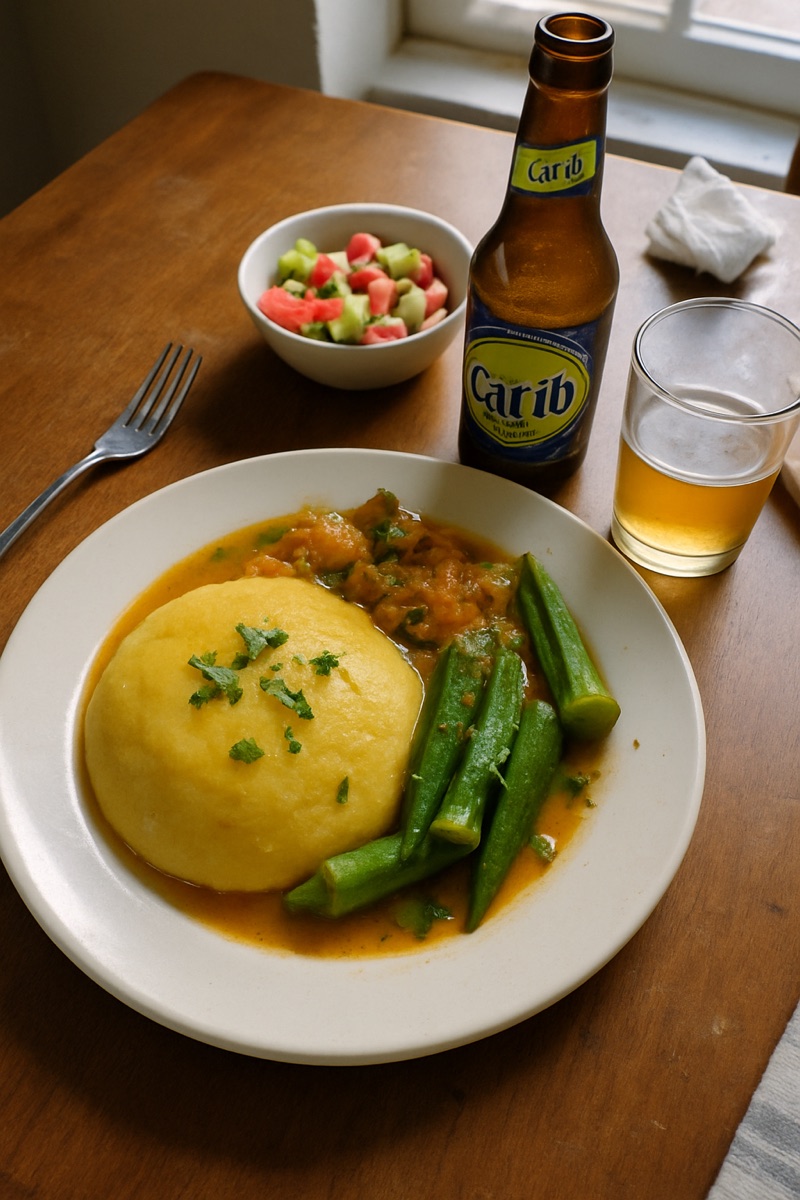
Antiguan and Barbudan food is built on cornmeal, okra, salted meat and fish, sweet potato, coconut and the root vegetables locals call provisions, cooked as one-pot stews and boiled dumplings. The most emblematic dishes are fungee and pepperpot, the national dish, ducana, a sweet potato and coconut dumpling boiled in a leaf, and saltfish, eaten from breakfast onwards.
What Antiguan and Barbudan food is built on
The food of Antigua and Barbuda belongs to the wider Caribbean family: African, European and Caribbean influences meet in a small set of local staples. Cornmeal and okra make fungee; sweet potato and coconut make ducana; salt cod and salted pork, once cheap imported food, flavour the stews. Most meals also include what islanders call provisions, a root or starch such as potatoes, yams, sweet potatoes or eddo.
A typical lunch is a starch such as rice, macaroni or pasta with vegetables or salad, a main of fish, chicken, pork or beef, and a side such as macaroni pie, scalloped potatoes or plantains. On Sundays, after church, dinner is eaten early, around 2 pm, and may include pork, baked chicken, stewed lamb or turkey with rice and macaroni pie.
The daily diet has also taken in dishes from neighbouring islands, such as jerk meats from Jamaica and roti from Trinidad.
Fungee is the clearest link to the region. It belongs to a family of cornmeal-and-okra dishes found across the eastern Caribbean: it is called fungee in the Leeward Islands and Dominica and cou-cou or coo-coo in the Windward Islands, and it is part of the national meals of Antigua and Barbuda, Barbados and the British and U.S. Virgin Islands.
Sunday dessert is usually simple: ice cream and cake, apple pie, mango or pineapple pie in season, or gelatin.
The national dish and the one-pot classics
Fungee and pepperpot is the pair consistently named as the national dish of Antigua and Barbuda, though no law makes it official.
- Fungee — Fine cornmeal cooked in the water okra was boiled in, stirred hard until it pulls away from the pot, then shaped into balls in a wet bowl. It is compared to Italian polenta, but the okra gives it a slippery texture of its own. Cooks traditionally stir it with a fungee stick, a flat wooden paddle, and the balls are never sliced like polenta.
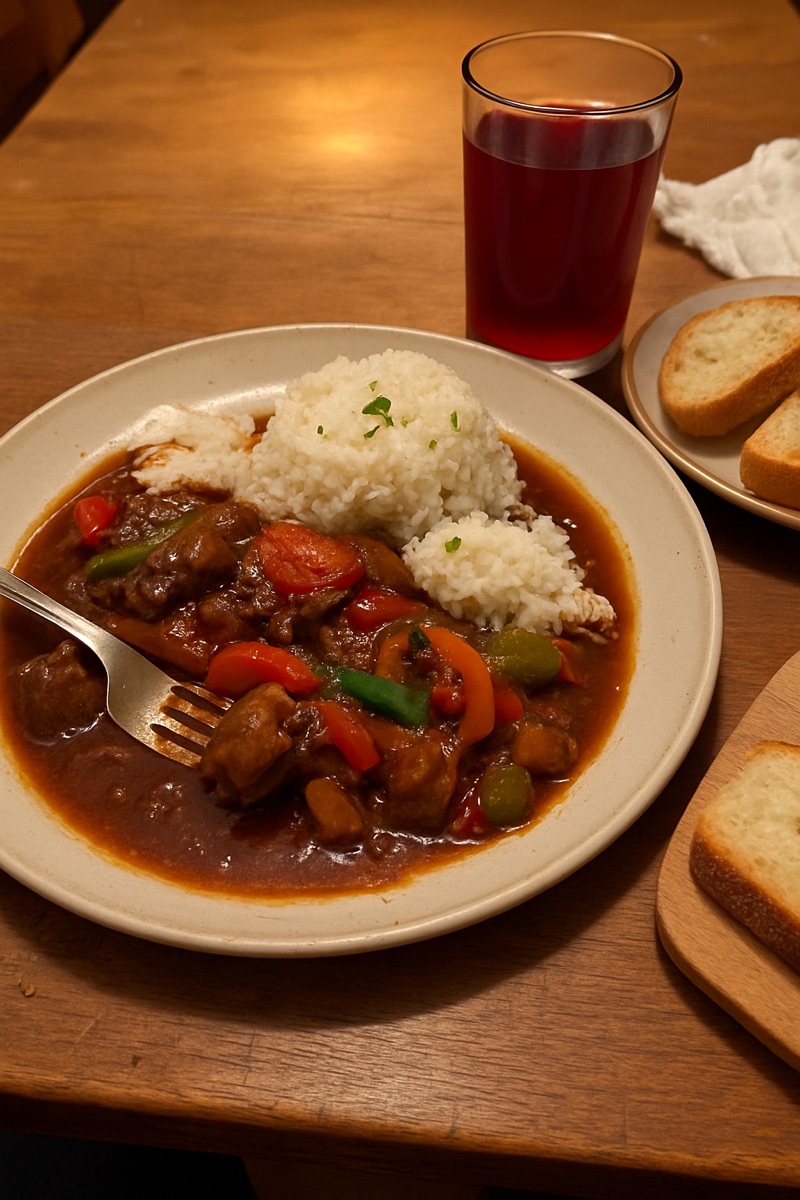
- Pepperpot — A thick stew of salted meat, spinach, eggplant, okra and squash, cooked down until it is sticky, often with small flour dumplings called spinners. The salted pigtail or salt beef is soaked overnight first, and family recipes vary: one widely shared version uses corned beef brisket and ham with yam, squash, tomatoes and black-eyed peas. It is served beside fungee: together they make the national dish.
- Saltfish — Dried, salted cod, desalted before cooking. It is a breakfast dish, served with eggplant (locally called troba), eggs and lettuce, and the tourism authority lists saltfish and fungi among the islands' signature plates.
Dumplings, breads and seafood
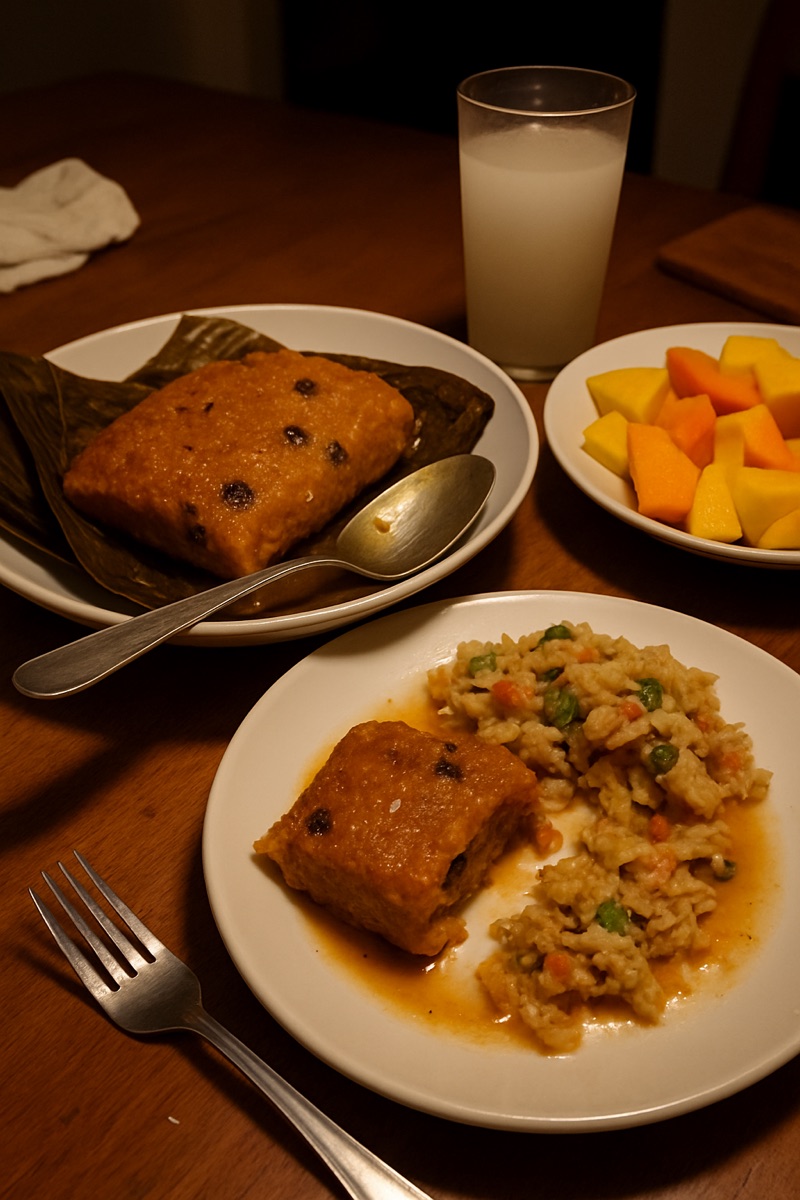
- Ducana — Grated sweet potato and grated coconut mixed with flour, sugar, raisins, nutmeg and vanilla, wrapped in banana or sea grape leaves and boiled until firm. It is often served with saltfish and chop-up, a mix of spinach, eggplant and okra, and is also eaten cold or sliced and lightly fried. How to wrap it is a matter of debate: some cooks use foil, others banana, sea grape or coccoloba leaves, and the parcels boil about 25 minutes in salted water.
- Antiguan butter bread — A soft, buttery loaf that needs no butter once baked. Small bakeries built onto homes sell it fresh across the island, and locals eat it with cheese for breakfast, or with sardines or a bright red sausage they call salami.
- Barbuda lobster — Barbuda is known for its lobster, and it is one of the local dishes named alongside ducana and saltfish. Seafood caught around both islands is central to the cooking.
- Black pudding — A well-seasoned blood sausage made with rice, meat and blood, popular with locals in Antigua. The rice filling sets it apart from the British and Irish versions.
- Roast corn — In the countryside, fresh-picked corn is roasted in its husk on makeshift grills and sold by the roadside.
Carnival snacks, sweets and drinks
Local drinks include mauby, sea moss, tamarind, soursop and guava juices, and ginger beer. Rum is made on the island, including English Harbour Rum, and Wadadli beer takes its name from the original name of Antigua. Many locals call bottled sodas simply soft drink, and punch is a popular flavour.
The food calendar is busy too. Carnival brings souse to the roadside, a National Food Fair is held in October, and the tourism authority's Culinary Month includes a Restaurant Week with set menus across the island.
- Souse — A very spicy soup of pigs' feet, knuckles and tails with plenty of onion. During Carnival it is a popular snack, sold by vendors at the side of the road.
- Sugar cake — A confection of grated coconut and sugar, often coloured, cooked on low heat and moulded straight away. It belongs to a set of local sweets that also includes fudge, raspberry and tamarind stew, and peanut brittle. Sugar cakes are a popular sweet among schoolchildren across the Caribbean.
- Antigua black pineapple — The national fruit: a small, very sweet pineapple grown only on the south-western coast of Antigua and used in local dishes and desserts.
Cook the food of Antigua and Barbuda at home
Copper has full recipes for fungee, pepperpot and ducana, with ingredients and step-by-step methods, on our page about the food of Antigua and Barbuda, part of our collection of Caribbean recipes.
If you cook only one dish, start with fungee: it needs just okra, cornmeal, water, butter and salt, and teaches the hard stirring behind the whole cou-cou family. Fungee, ducana and saltfish are shared with the other Leeward Islands. To compare, see the traditional food of Saint Kitts and Nevis, where ducana and saltfish are just as common.
The recipes
- Fungie🇦🇬 Antigua and Barbuda · 30 minutes
 Pepperpot🇦🇬 Antigua and Barbuda · 13 hours and 55 minutes
 Ducana🇦🇬 Antigua and Barbuda · 1 hour and 35 minutes
Questions people ask
What is the most popular food in Antigua and Barbuda?
Fungee and pepperpot, the national dish: a cornmeal and okra ball served with a thick stew of salted meat and greens. Ducana with saltfish is just as closely tied to the islands.
What do people in Antigua eat for breakfast?
Saltfish with eggplant, eggs and lettuce is a classic breakfast. Many people also buy fresh butter bread and eat it with cheese.
What is ducana?
A dumpling of grated sweet potato and coconut with flour, sugar, raisins and spices, wrapped in a leaf and boiled. It is usually served with saltfish.
Is Antiguan food spicy?
Mostly not. Pepperpot takes its name from the stew, not the heat, and a scotch bonnet is usually added whole for aroma. Souse, the Carnival snack, is the exception: it is made very spicy.
What is the national fruit of Antigua and Barbuda?
The Antigua black pineapple, a small and very sweet variety grown on the south-western coast of Antigua.
Keep reading
- What is the national dish of Antigua and Barbuda?
- Traditional food of the Bahamas: 12 dishes to know
- Traditional food of Barbados: 12 dishes to know
- Traditional food of Cuba: 12 dishes to know
- Traditional food of Dominica: 12 dishes to know
- Traditional food of the Dominican Republic: 12 dishes to know