 COPPER
Traditional food of the Dominican Republic: 12 dishes to know
Traditional Dominican food blends Taíno, Spanish and African cooking with Middle Eastern touches: long-grain rice, beans, plantain, yuca and stewed meat seasoned with sazón, a mild base of onion, garlic, peppers, cilantro and oregano. The dishes to know first are la bandera, rice, beans and stewed meat, mangú, mashed green plantain, sancocho, a meat and root stew, and moro de guandules.
What Dominican food is built on
Dominican cuisine is made of Spanish, Taíno, African and Middle Eastern influences, with later touches from the English-speaking Caribbean and China. The Taíno left roots such as yuca, yautía and sweet potato, and casabe, a crisp cassava flatbread still served with soups and stews. Spain brought dishes such as flan, rice pudding, codfish fritters and longaniza sausage; Africa brought the habit of boiling and mashing plantains; Lebanese immigrants brought bulgur dishes.
Long-grain rice comes with almost every meal, and the green plantain is the national ingredient, fried, mashed or baked. Pork is the most common meat, and meat is usually stewed until very tender. Compared with the rest of the West Indies, the spicing is mild: red onion, garlic, cilantro, culantro, cubanelle pepper and Dominican oregano, cooked into the base Dominicans call sazón.
The midday table: rice, beans and stews
Lunch is the main meal of the day, and it is built around rice: white, cooked with beans, or fried as chofán, a fried rice of Chinese origin seasoned with Dominican oregano.
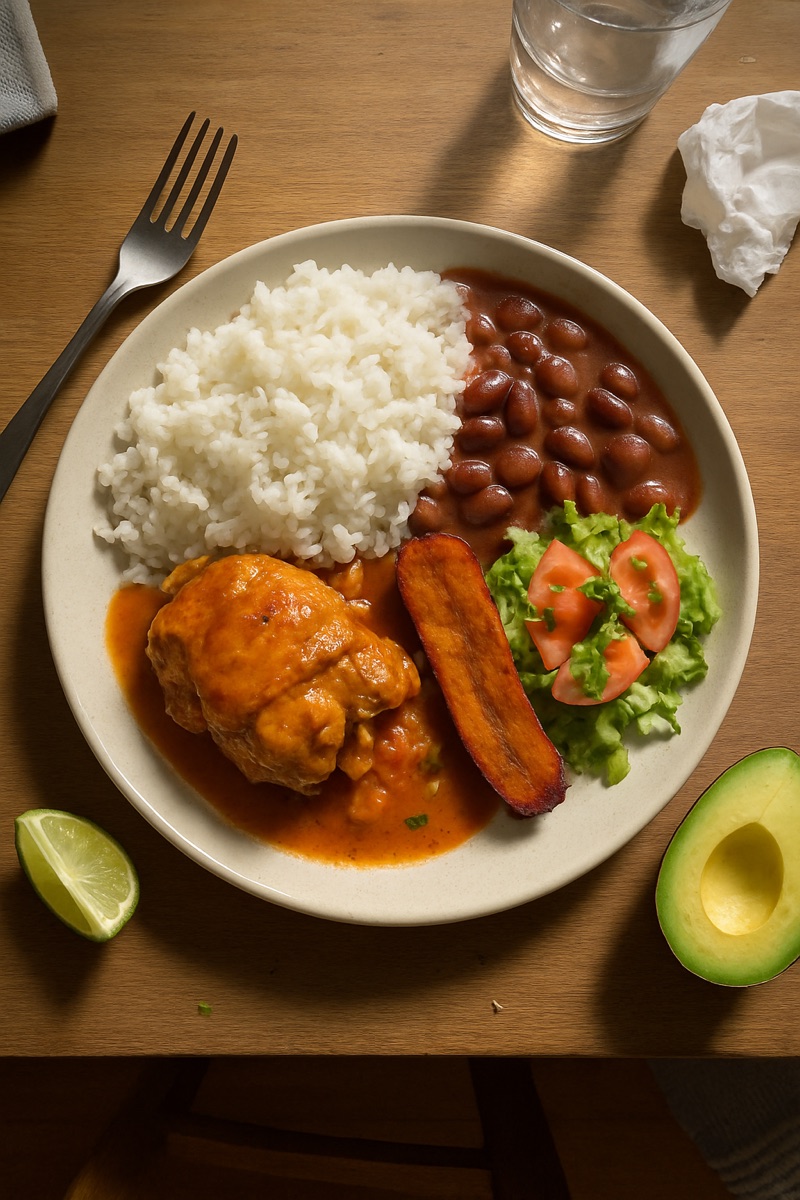
- La bandera — "The flag": white rice, red beans stewed with squash and sofrito, and stewed chicken or beef, cooked separately and served side by side with a green salad. It is the daily lunch and the national dish of the Dominican Republic. The crisp rice crust left in the pot, the concón, is always welcome.
- Sancocho — A thick stew of meats with yuca, yautía, yam, squash and green plantain added in stages, served with white rice and avocado. The squash melts into the broth and thickens it. The grand version, sancocho de siete carnes, uses seven meats, from chicken and guinea fowl to pork, beef and smoked ribs, and many Dominicans see out the old year with a sancocho.
- Moro de guandules — Rice and pigeon peas cooked together in one pot with sofrito, cubanelle pepper, celery, oregano and cilantro. Made with coconut milk it becomes moro de guandules con coco, a holiday and Christmas dish.
- Locrio — Seasoned rice cooked with meat, close to a pilaf or a paella, from which it may descend. Chicken is the classic, but it is also made with Dominican salami, pork chops, smoked herring, shellfish or sardines.
Plantain dishes
- Mangú — Boiled green plantains mashed smooth with some of their cooking water and topped with red onions softened in vinegar. It is the national breakfast; with fried cheese, fried Dominican salami and fried eggs it becomes los tres golpes, "the three hits". Its roots are traced to West African fufu.
- Tostones — Slices of green plantain fried, flattened and fried again until crisp. They go with pica pollo and are a usual side to the bandera plate.
- Pastelón de plátano maduro — A baked casserole of mashed ripe plantain layered with picadillo, seasoned ground beef, and cheddar cheese, then covered and baked for 35 to 45 minutes. It is the best known of several pastelones, also made with yuca, rice, eggplant or potato.
Street food
Food trucks also sell yaroa: mashed plantain or yuca layered with meat and melted cheese, finished with ketchup and mayonnaise.
- Pica pollo — Chicken marinated in lime juice, coated in flour with garlic and oregano and deep-fried, served with tostones and lime. Fried-food stalls sell it alongside fried chicken feet, salted meat and gizzards.
- Chimi — The Dominican burger: a ground pork or beef patty grilled, sliced and served on pan de agua with shredded cabbage and salsa golf. Many credit it to Juan Abrales, an Argentine cook who settled in the country in the 1970s, and it is sold from street stands and food trucks.
- Quipe — A deep-fried roll of bulgur wheat filled with picadillo, brought by Lebanese immigrants. The Dominican version uses beef instead of lamb and fewer spices than the original kibbeh.
Sweets and drinks
Coconut fudge, dulce de leche and majarete, a pudding of blended corn and milk, are other everyday sweets. Mamajuana is rum, red wine and honey left to steep in a bottle with tree bark and herbs.
- Habichuelas con dulce — A sweet cream of red beans boiled with cinnamon and cloves, blended, then cooked with coconut milk, evaporated milk, sugar, sweet potato and raisins. It is the dessert of Holy Week and Easter, served cool with milk biscuits or casabe.
- Morir soñando — "To die dreaming": orange juice, milk, cane sugar and crushed ice, sometimes with vanilla or evaporated milk. Born in the Dominican Republic, it has spread to other Caribbean and Latin American countries.
Regional cooking and neighbours
What Dominicans eat depends on where they live. Fishing villages along the coast cook shrimp, dorado and lobster, and stew cheaper fish with rice. In San Pedro de Macorís, descendants of workers from the Lesser Antilles, known as cocolos, brought boiled dumplings, guavaberry liqueur and yaniqueques, fried johnnycakes. San Francisco de Macorís is known for stewed guinea fowl, San Juan de la Maguana for oregano cheese, and Santiago for puerco a la puya, pork roasted over a wood fire.
Dominican food shares its rice, beans and plantains with the rest of the Caribbean. Compare it with the traditional food of Puerto Rico, where mofongo comes from, and the traditional food of Cuba.
Cook Dominican food at home
Three of these dishes are on Copper with full ingredient lists and step-by-step methods: la bandera, mangú and sancocho. Make the sazón of onion, garlic, pepper and herbs first: it seasons all three. You will find them, with every other Dominican recipe we have, on our page about the food of the Dominican Republic.
The recipes
- La bandera dominicana🇩🇴 Dominican Republic · 14 hours and 30 minutes
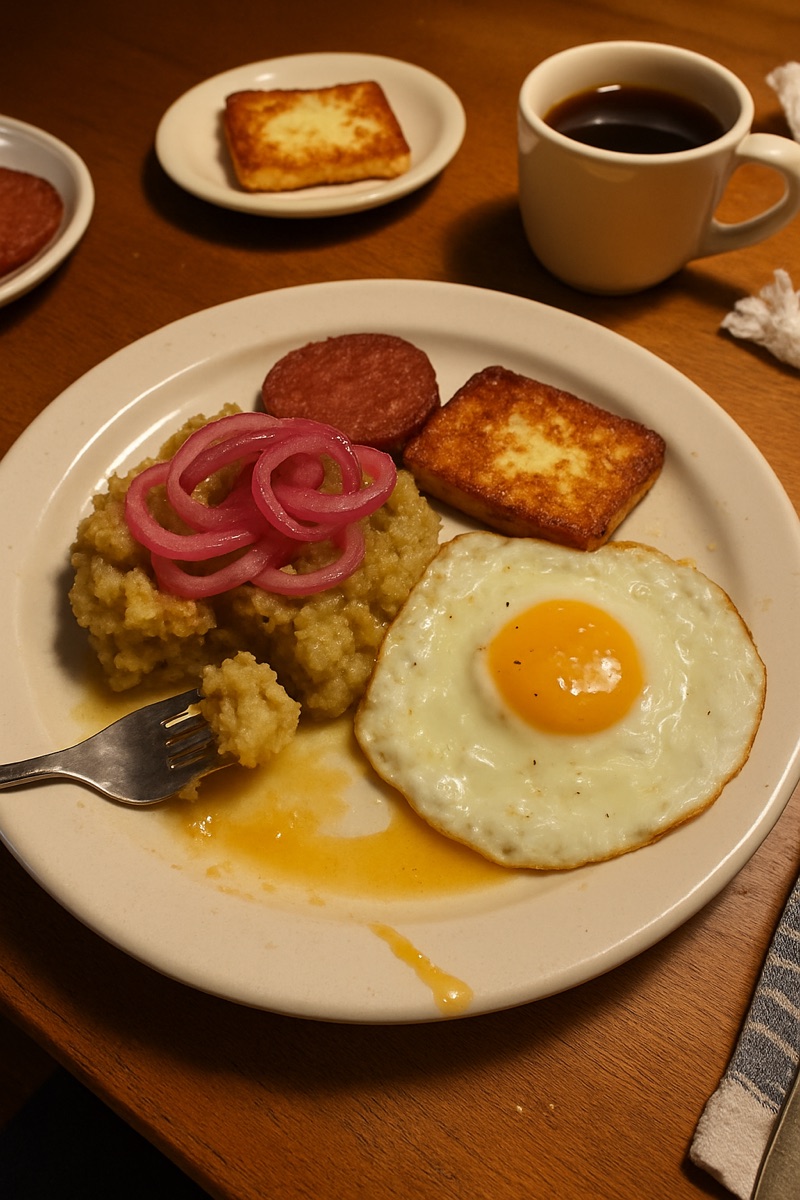 Mangú🇩🇴 Dominican Republic · 35 minutes
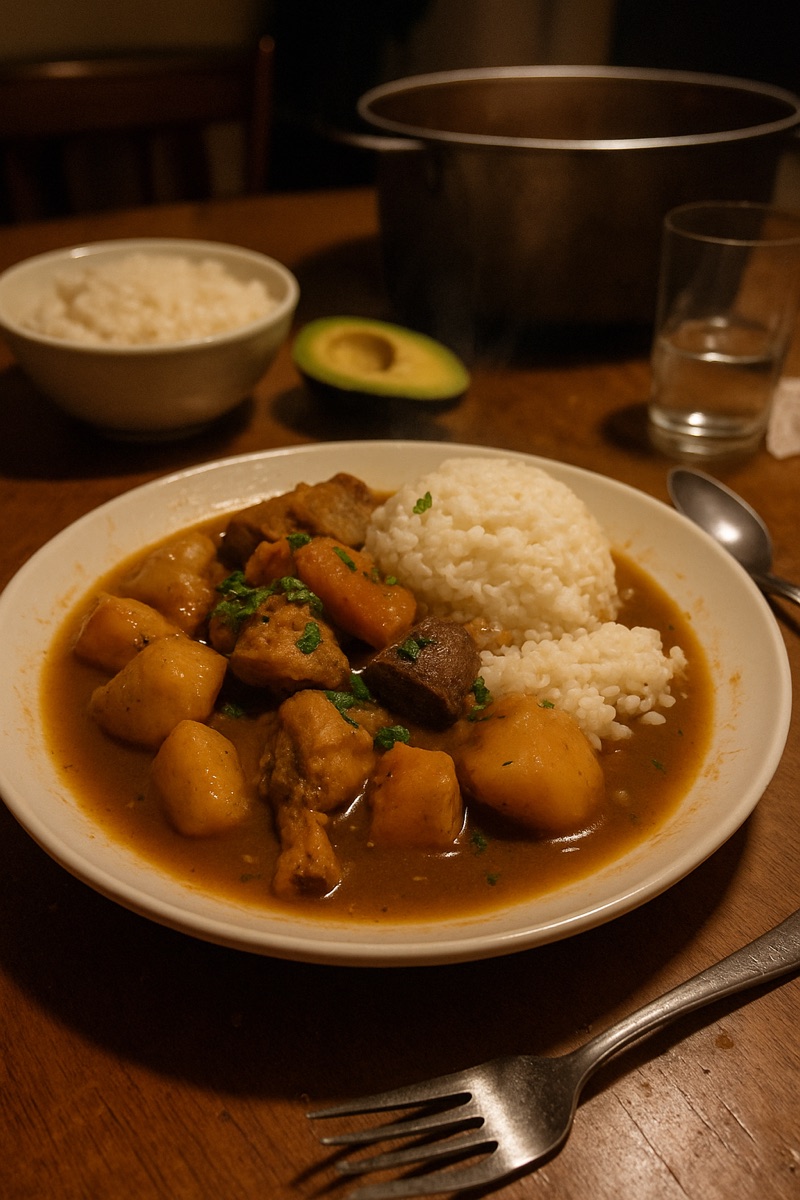 Sancocho🇩🇴 Dominican Republic · 3 hours and 20 minutes
Questions people ask
What is the most popular food in the Dominican Republic?
La bandera, white rice with stewed red beans and stewed meat, is eaten at lunch almost every day and is called the national dish. Mangú, sancocho, moro de guandules and pica pollo are also everywhere.
What do Dominicans eat for breakfast?
Mangú, mashed green plantains with pickled red onions, usually served with fried cheese, fried salami and fried eggs, a plate called los tres golpes.
Is Dominican food spicy?
No. Dominican cooking is milder than most West Indian cooking. It relies on red onion, garlic, cilantro, culantro, cubanelle pepper and oregano rather than hot chillies.
What is the national soup of the Dominican Republic?
Sancocho, especially sancocho de siete carnes, a stew of seven meats with yuca, yautía, plantain and squash, served with rice and avocado.
What do Dominicans eat at Easter?
Habichuelas con dulce, a sweet cream of red beans with coconut milk and sweet potato, along with fish and pigeon peas.
Keep reading
- What is the national dish of the Dominican Republic?
- Traditional food of Antigua and Barbuda: 11 dishes to know
- Traditional food of the Bahamas: 12 dishes to know
- Traditional food of Barbados: 12 dishes to know
- Traditional food of Cuba: 12 dishes to know
- Traditional food of Dominica: 12 dishes to know