 COPPER
What is the national dish of Cuba?
The national dish of Cuba is ropa vieja: beef simmered until tender, shredded into long threads and stewed in a tomato sofrito with onion, green pepper and garlic. Its name means "old clothes". It has no official legal status, but it is the dish most often cited as Cuba's national dish, and it is served with rice, black beans and fried plantains.
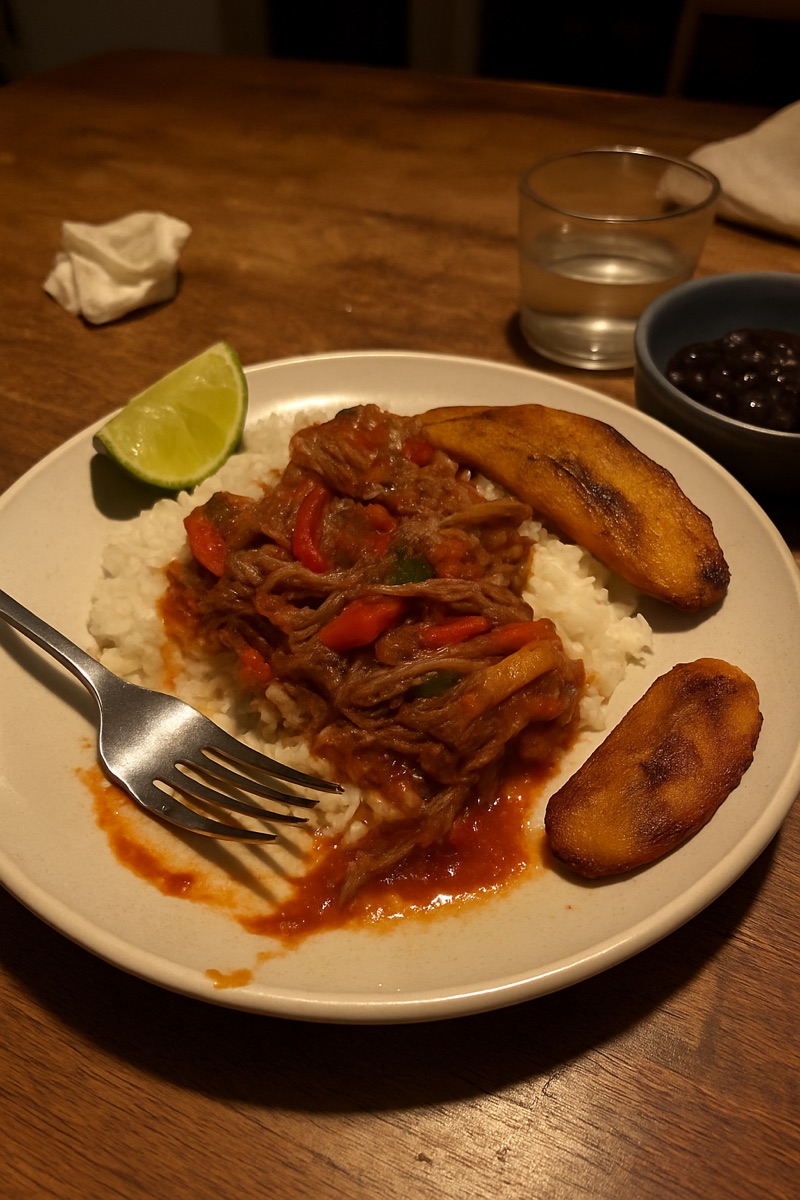
What is ropa vieja?
Ropa vieja is a stew of shredded beef and tomato built on a sofrito base. Ropa vieja literally means "old clothes": the name probably comes from the dish being made with leftovers, though some say it describes the tattered look of the meat.
The cut matters because the strands are the dish. Flank steak, brisket or skirt steak are used, cuts whose long fibres pull apart into threads after slow cooking. The sauce is sharpened with things Cubans keep in the pantry:
- Sofrito: onion, green bell pepper and garlic cooked slowly in olive oil.
- Tomato sauce, with ground cumin, dried oregano and bay leaf.
- Dry white cooking wine, which gives the sauce its acidity.
- Green olives and capers, added at the very end for a briny bite.
How ropa vieja is made
In our ropa vieja recipe, 800 g of flank steak is simmered whole in 1.5 litres of water with half an onion and a bay leaf for 2 hours, until a fork pulls it apart. Keep 500 ml of the broth.
The beef is then shredded along the grain into long threads. Meanwhile the sofrito cooks for 8 minutes, the garlic goes in for 1 more, then 400 g of tomato sauce, cumin, oregano, a bay leaf and 120 ml of cooking wine bubble together for 5 minutes.
The meat goes back in with the reserved broth and simmers uncovered for 30 minutes, until the sauce clings to the threads instead of pooling. Add the sliced olives and capers only in the last 5 minutes so they stay firm, and taste before salting: the olives already carry plenty.
Where ropa vieja comes from
Ropa vieja is not Cuban by birth. Its origins are traced to the Sephardic Jews of the Iberian Peninsula, who made a slow-cooked stew to be eaten over the Sabbath. The dish spread to North Africa and the Canary Islands, where it is still made with chickpeas and potatoes; our article on the national dish of Spain covers that side of the family.
Canary Islanders are believed to have brought it to the Americas, and it was first reported in Cuba in 1857. During the Special Period that followed the fall of the Soviet Union, it disappeared from the table of many ordinary Cubans; some substituted lamb or pork for the beef. It became widely available again from 2010, when independent private restaurants, the paladares, were legalised, and it remains especially popular among Cuba's Jewish community. Other countries have close relatives: in Venezuela, shredded beef called carne mechada is part of pabellón criollo, compared in our article on the national dish of Venezuela.
What is served with ropa vieja?
In Cuba, ropa vieja comes with rice, black beans and fried plantains. Often the rice and beans are one dish: moros y cristianos, where moros are the black beans and cristianos the white rice. What sets it apart from plain rice with beans is that both cook in the same pot. In our recipe, 400 g of rice is fried in bacon fat and sofrito, then cooked 20 minutes in 700 ml of the black bean cooking liquid, lid closed. Cooked with red beans, the dish is usually called congrí, especially in the east of the island.
The plantains are often tostones: rounds of green plantain fried pale at 165°C for 7 to 8 minutes, flattened to about 1 cm, dipped in salted garlic water and fried again at 185°C until they blister. In Cuba they are also called chatinos or tachinos.
Other dishes to know from Cuba
Cuban cooking blends Spanish, African and Taíno influences, and much of it is shared with its neighbours in the Caribbean. Beyond ropa vieja, the everyday table includes lechón asado (roast pork), yuca con mojo (cassava with a garlic and citrus sauce), picadillo a la criolla and ajiaco, a soup that has survived from the early colonial period.
The Cuban sandwich, or mixto, belongs to the same family: Cuban bread layered with roast pork, ham, Swiss cheese, pickles and yellow mustard, then pressed on a plancha. It grew out of the movement of cigar workers between Cuba and Florida in the late 19th century, which is why it is just as rooted in Key West and Tampa.
You will find all three Cuban dishes from this article, with full step-by-step methods, on our page about the food of Cuba.
The recipes
- Ropa vieja🇨🇺 Cuba · 3 hours and 10 minutes
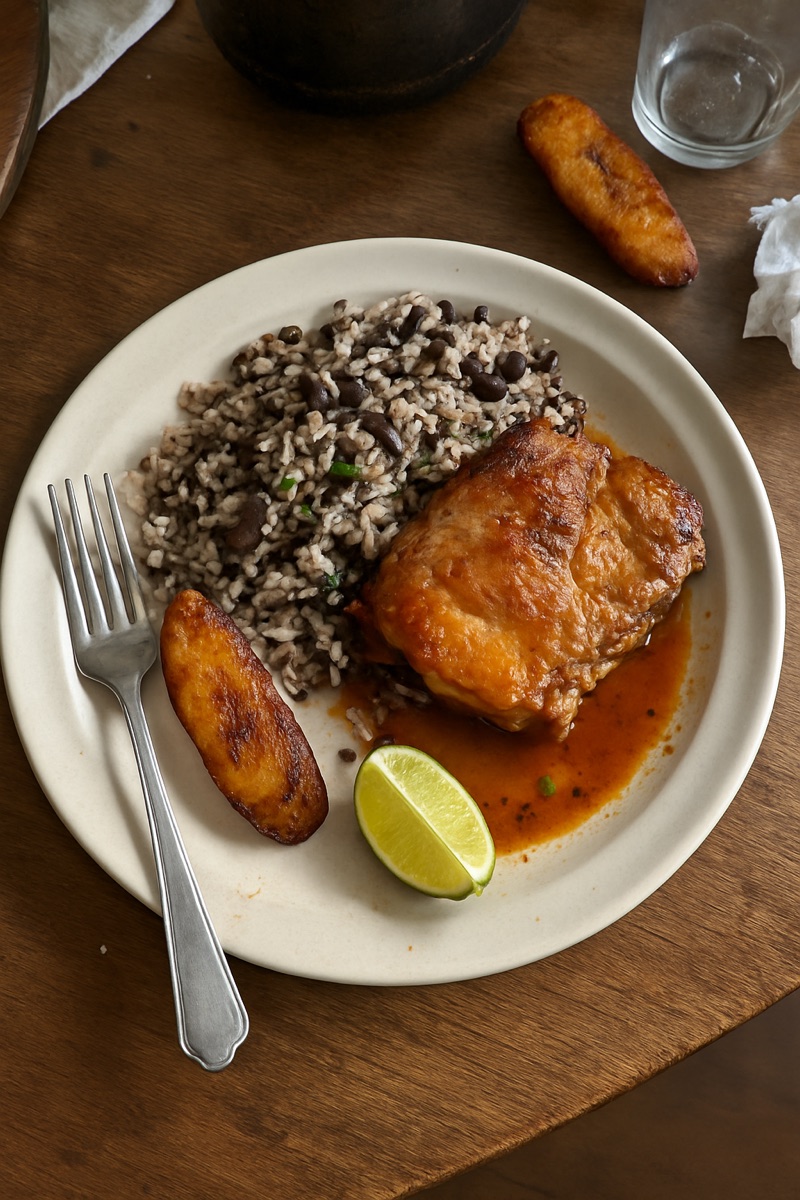 Moros y cristianos🇨🇺 Cuba · 14 hours and 10 minutes
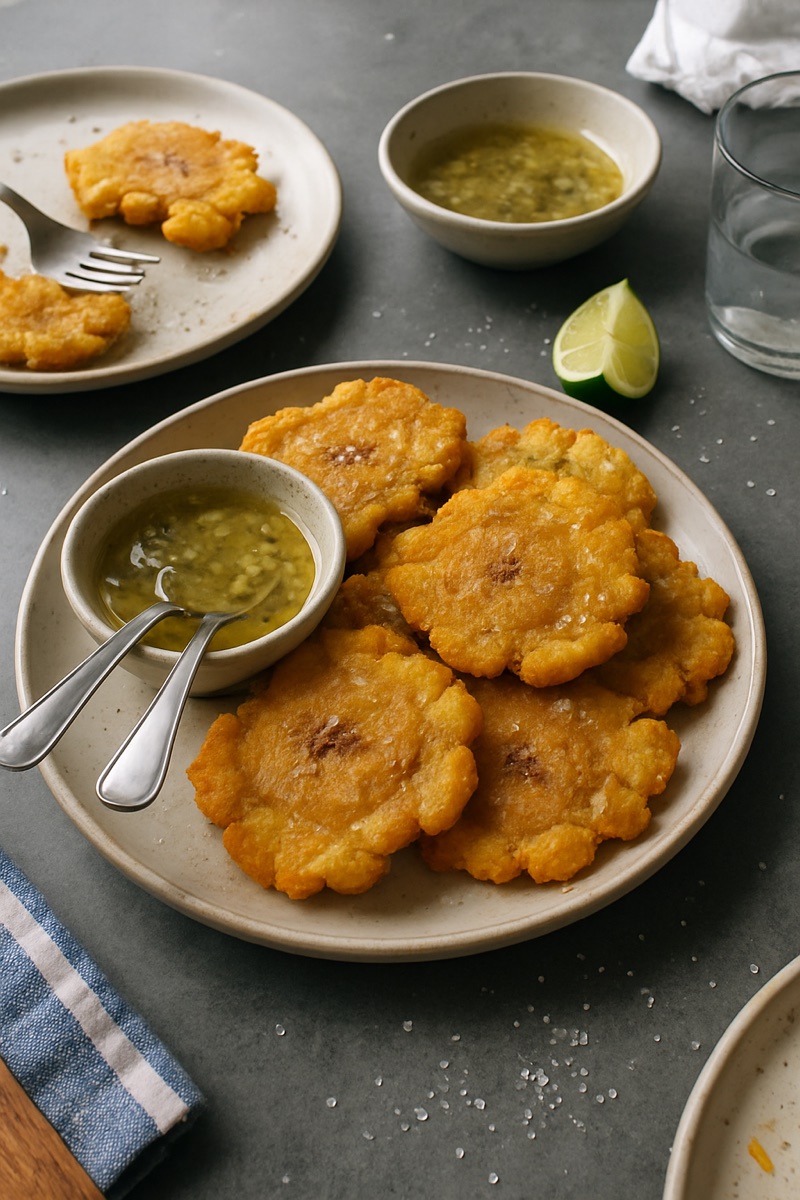 Tostones🇨🇺 Cuba · 30 minutes
Questions people ask
Is ropa vieja Cuban or Spanish?
Both. The dish originated in Spain, among the Sephardic Jews and later in the Canary Islands, and was brought to Cuba by Canary Islanders. It is first recorded in Cuba in 1857 and is now best known as Cuba's national dish.
What does ropa vieja mean?
Ropa vieja means "old clothes" in Spanish. The name probably refers to the dish being made from leftovers, or to the ragged look of the shredded beef.
What is served with ropa vieja?
White rice and black beans, often cooked together as moros y cristianos, and fried plantains such as tostones.
What cut of beef is used for ropa vieja?
Flank steak, brisket or skirt steak. These cuts have long fibres that shred into threads after slow simmering.
What is the difference between moros y cristianos and congrí?
Both are rice and beans cooked in the same pot. Moros y cristianos uses black beans; congrí usually refers to the red-bean version eaten in eastern Cuba.
Keep reading
- Traditional food of Cuba: 12 dishes to know
- What is the national dish of Antigua and Barbuda?
- What is the national dish of the Bahamas?
- What is the national dish of Barbados?
- What is the national dish of Dominica?
- What is the national dish of the Dominican Republic?