 COPPER
What is the national dish of Barbados?
The national dish of Barbados is cou-cou and flying fish: cornmeal cooked with okra and stirred with a flat wooden stick until firm and smooth, served with flying fish steamed or fried in a spicy tomato gravy. No law makes it official, but Barbadian sources, Wikipedia and National Geographic all name it, and cou-cou is traditionally eaten on Fridays.
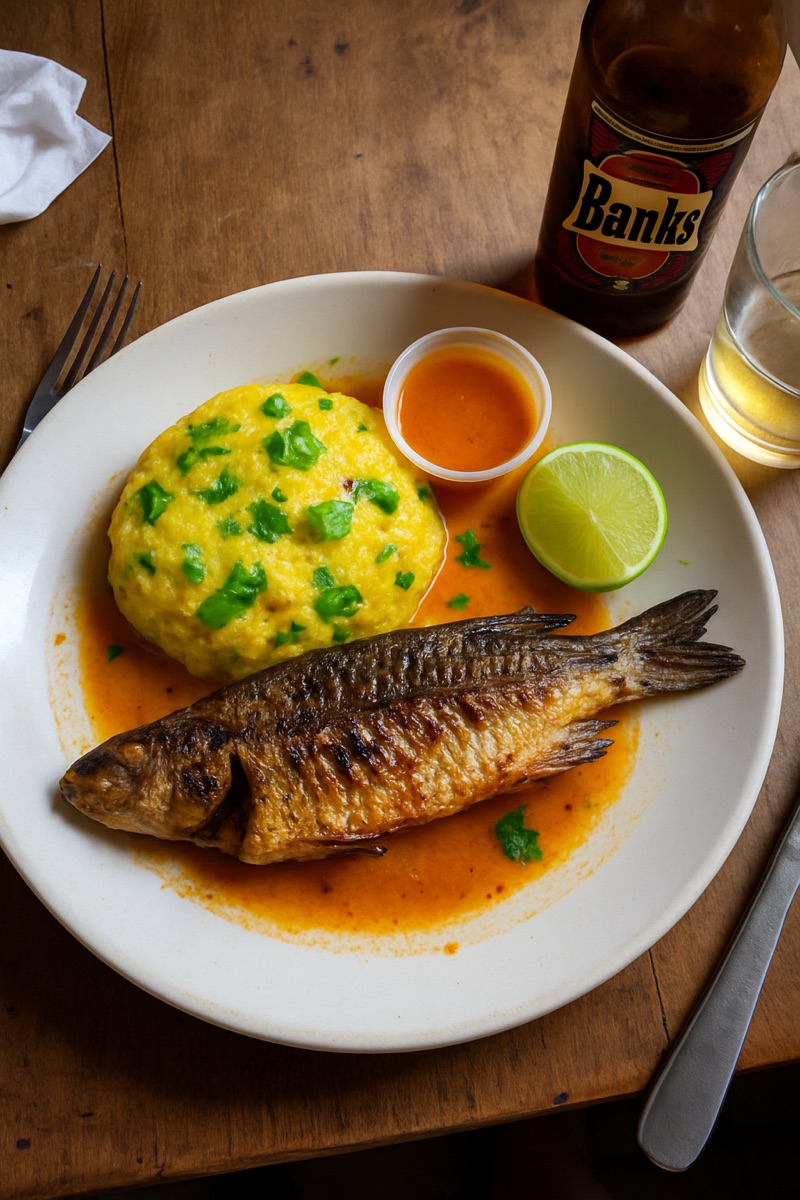
What is cou-cou and flying fish?
The dish has two halves on one plate. Cou-cou is a firm mash of cornmeal and okra, close to polenta or grits, turned out of a bowl as a smooth dome. Flying fish goes on top, cooked in a gravy of tomato, onion, thyme and green Bajan seasoning. Its taste is close to sardine.
Both parts were cheap. Cornmeal and okra cost very little, which is why cou-cou became an everyday food early in Barbados' colonial history. Traditionally it is the Friday meal, at home and in local eateries across the island.
It reflects the island's mixed kitchen, which draws on African, Portuguese, Indian, Irish, Creole, Indigenous and British cooking. A typical Bajan meal follows the same pattern as this plate: a main of fish or meat marinated in herbs and spices, a hot side, and a sauce.
Barbados has no law or decree naming a national dish. Cou-cou and flying fish holds the title by consensus: Barbadian sites, Bajan chefs and the main references all give the same answer.
What is in cou-cou and flying fish?
The ingredient list is short and cheap, which is part of why the dish became an everyday one. Our verified recipe uses:
- For the cou-cou: 250 g of cornmeal, 250 g of okra, its cooking water, 50 g of butter and salt.
- For the fish: 8 flying fish fillets and the juice of 1 lime.
- For the Bajan seasoning: 1 onion, 3 spring onions, 4 garlic cloves, half a bunch of thyme and half a scotch bonnet.
- For the gravy: 1 onion, 3 tomatoes, a few thyme sprigs and 200 ml of water.
How cou-cou is made
The secret is the okra water. In our cou-cou and flying fish recipe, 250 g of sliced okra boils for 10 minutes in a litre of salted water, and the slippery liquid is kept. The cornmeal soaks for 20 minutes, then gets whisked into about 700 ml of that okra water. Plain water will not give the same smooth result.
Then comes the stirring: 15 to 20 minutes of hard work, adding okra water as the mass thickens, until it pulls away from the pan. Barbadians do this with a cou-cou stick, a flat wooden paddle about 30 cm long, shaped like a miniature cricket bat. A knob of butter goes in last, and the cou-cou is pressed into a wet bowl to take its dome shape.
How the flying fish is cooked
The fillets are rubbed with lime and salt, rinsed and patted dry, then spread with Bajan seasoning, rolled up and pinned with a cocktail stick. Meanwhile the gravy is built: a chopped onion softened in oil, three chopped tomatoes, the rest of the seasoning, thyme and 200 ml of water, simmered for 10 minutes. The rolls are laid in it and steam for 12 to 15 minutes, covered, over low heat. In this version the fish is never fried or grilled and takes all its flavour from the gravy, but many Barbadians fry it instead; both are served with cou-cou.
Bajan seasoning is a wet green paste blended from:
- onion and spring onions
- garlic
- fresh thyme
- scotch bonnet pepper
- salt and black pepper
Cou-cou beyond Barbados
The same cornmeal and okra base runs through the Eastern Caribbean. It is called fungee in the Leeward Islands and Dominica, and coo-coo in the Windward Islands. Fungee is half of the national dish of Antigua and Barbuda, where it is served with pepperpot. In Trinidad and Tobago, coo-coo comes with callaloo and stewed or fried fish.
Barbados also has a version made with breadfruit instead of cornmeal. Further afield, Angola makes a similar cornmeal dish called funge, and Ghana eats banku, a fermented corn dough, with okra stew and fish.
Other dishes to know from Barbados
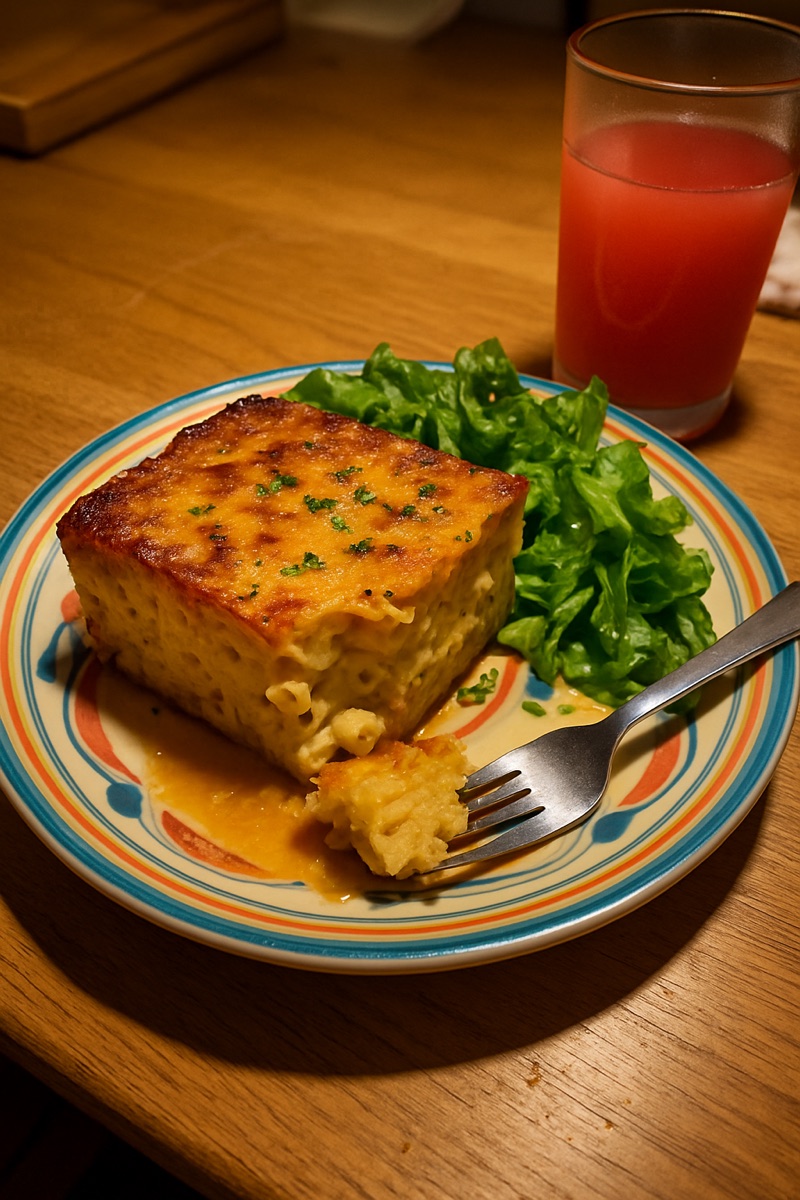
Macaroni pie is Barbados' baked macaroni: pasta bound with evaporated milk and egg, seasoned with yellow mustard, ketchup and Bajan pepper sauce, which turn it pale orange. It bakes at 180 °C for 35 to 40 minutes and rests 15 minutes so it cuts into clean squares.
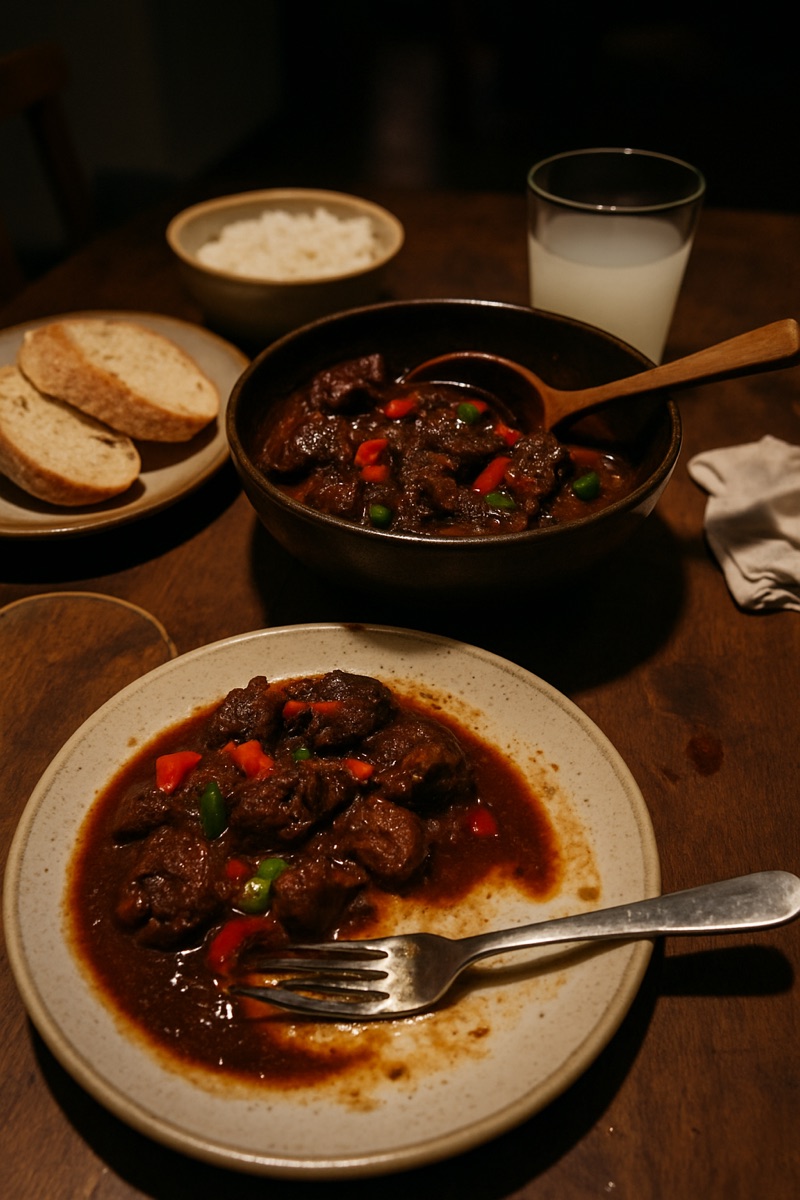
Barbadian pepperpot is a dark stew of beef, oxtail and pig trotters cooked for three to four hours in cassareep, the boiled-down juice of bitter cassava. The pot is brought back to a full boil once a day and keeps for days. It is the same family as the pepperpot that is Guyana's national dish. Pudding and souse, pickled pork with spiced sweet potato, is the Saturday dish.
You will find these recipes with full ingredients and steps on our page about the food of Barbados, and the island's neighbours in our guide to Caribbean food.
The recipes
- Flying fish and cou-cou🇧🇧 Barbados · 1 hour and 40 minutes
 Macaroni pie🇧🇧 Barbados · 1 hour and 15 minutes
 Pepperpot🇧🇧 Barbados · 5 hours
Questions people ask
Is cou-cou and flying fish officially the national dish of Barbados?
There is no law or decree, but it is the dish named by Barbadian sources, Wikipedia and National Geographic, so it is the national dish by consensus.
What day do Barbadians eat cou-cou?
Traditionally on Fridays, both at home and in local eateries across Barbados.
Is cou-cou the same as polenta?
Both are cornmeal, but cou-cou is cooked with okra and its slippery cooking water, which makes it smoother, and it is shaped into a firm dome rather than served soft.
Is the flying fish fried or steamed?
Both are traditional. The fish is either fried or steamed in a tomato and Bajan seasoning gravy, then spooned over the cou-cou.
What can replace flying fish outside the Caribbean?
Flying fish is hard to find abroad. Bajan chef Jason Howard uses sea bass fillets in his version for Great British Chefs.
How do you pronounce cou-cou?
Say it "koo-koo". In the Windward Islands it is even spelled coo-coo.
Keep reading
- Traditional food of Barbados: 12 dishes to know
- What is the national dish of Antigua and Barbuda?
- What is the national dish of the Bahamas?
- What is the national dish of Cuba?
- What is the national dish of Dominica?
- What is the national dish of the Dominican Republic?