 COPPER
What is the national dish of Haiti?
Haiti has no national dish set by law, and three dishes share the title. Griot, pork marinated in sour orange, braised and then fried, served with diri kole (rice cooked with red beans, known as the 'riz national') is the plate most often named. Soup joumou, the squash soup eaten every 1 January to mark independence, has been on UNESCO's heritage list since 2021.
Why Haiti has more than one national dish
No Haitian law names a national dish. The Wikipedia list of national dishes gives both griot and soup joumou, and Caribbean food writers name griot with rice and beans. Diri kole ak pwa, rice cooked with red beans, is often called the 'riz national', the national rice of Haiti.
Soup joumou is in a different category. It is not an everyday plate but a dish with a date: it is eaten on 1 January, Independence Day, and it was Haiti's first entry on UNESCO's heritage list. Depending on whether you mean what Haitians eat most or what the country celebrates with, the answer changes. Haitian food is often lumped together with the rest of the Caribbean, but its heavy use of herbs and peppers, through epis, sets it apart.
What is griot?
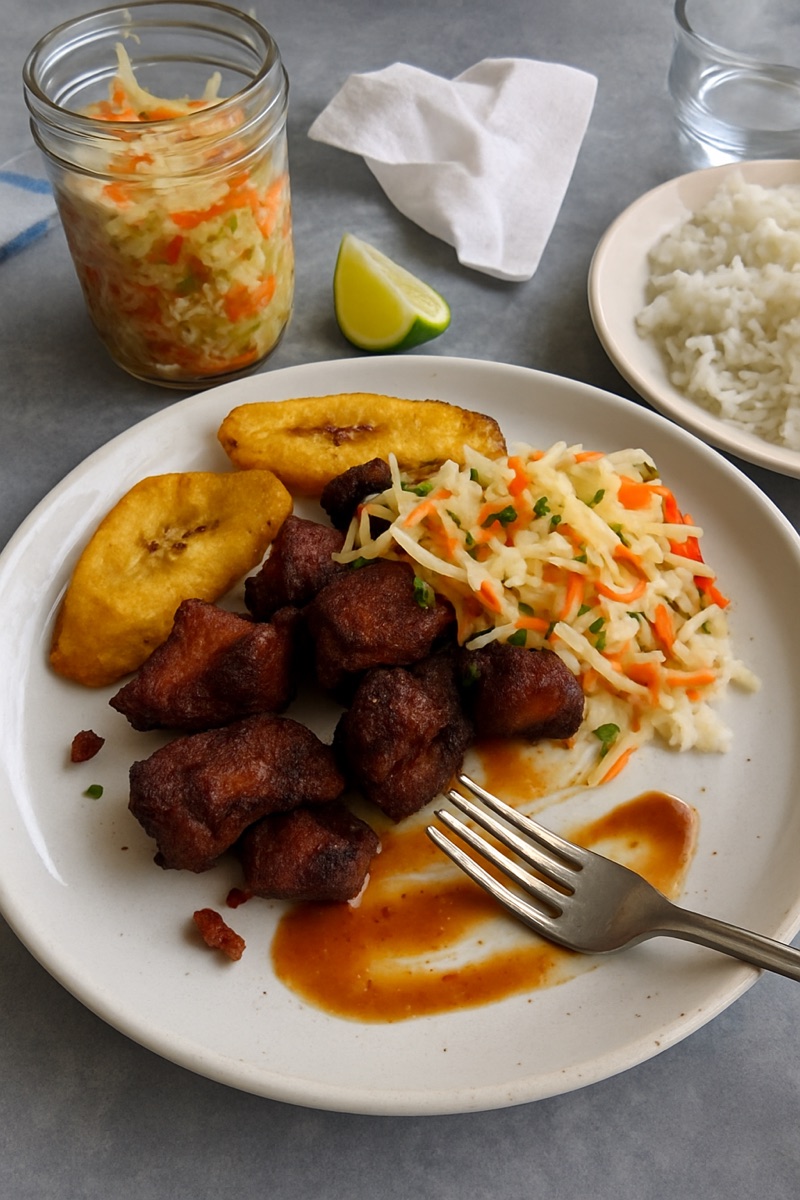
Griot (griyo in Haitian Creole, sometimes written grillots) is pork shoulder cut into cubes, washed in sour orange juice and marinated overnight in epis, the Haitian base of peppers, garlic and herbs, with thyme, cloves and a whole scotch bonnet.
The pork is then braised in its marinade for about an hour until tender and almost dry, patted dry on paper, and deep-fried at 180 °C for 5 to 7 minutes until the edges are dark and crisp. The braising juices become sòs ti-malis, the sauce poured over the meat. Griot is a party dish, and our griot recipe walks through each stage. It is almost always served with:
- Pikliz, a spicy pickle of cabbage, carrot, onion, scotch bonnet and vinegar.
- Rice, usually diri kole.
- Bannann peze, flattened and fried green plantains.
Diri kole, Haiti's 'national rice'
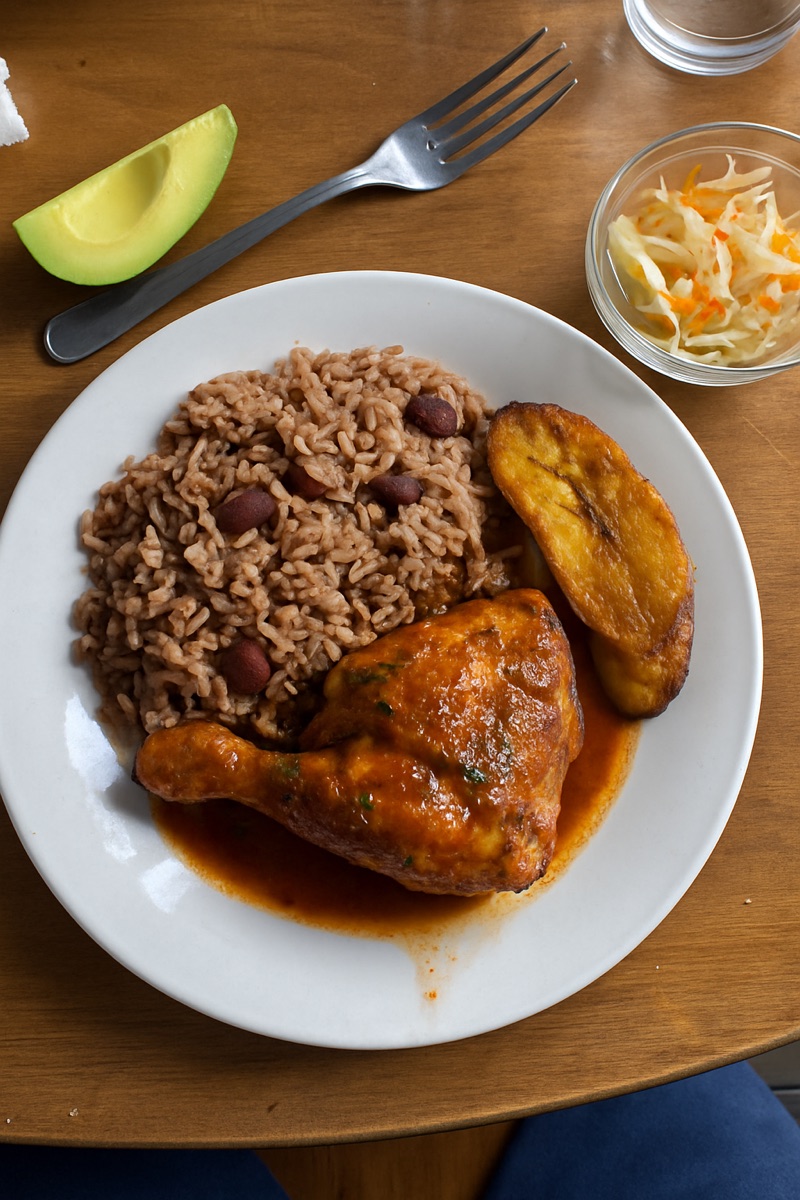
Diri kole ak pwa means rice stuck together with beans. Red kidney beans are boiled hard for 10 minutes, then simmered for an hour with cloves, and their dark cooking water is kept: the rice cooks in it, which is what colours every grain.
The beans are fried with onion, garlic and epis, the broth goes back in with thyme and a whole unpierced scotch bonnet, then the rice is added and steamed for 25 minutes under a tight lid. Our diri kole recipe gives the quantities. As a full meal, the rice is often topped with red snapper, tomatoes and onions. Diri kole is only one of many Haitian rice dishes; diri ak djon djon, rice cooked with black mushrooms, is another. Next door, rice and beans also anchor la bandera, the rice, beans and meat plate named as the national dish of the Dominican Republic; see the national dish of the Dominican Republic.
Soup joumou and 1 January 1804
Under French colonial rule, enslaved Africans grew the squash for this soup but were forbidden to eat it. When the Haitian Revolution ended with independence on 1 January 1804, Haitians celebrated by eating soup joumou. They still eat it every New Year's Day, at home and in the diaspora, and into 2 January, Ancestry Day.
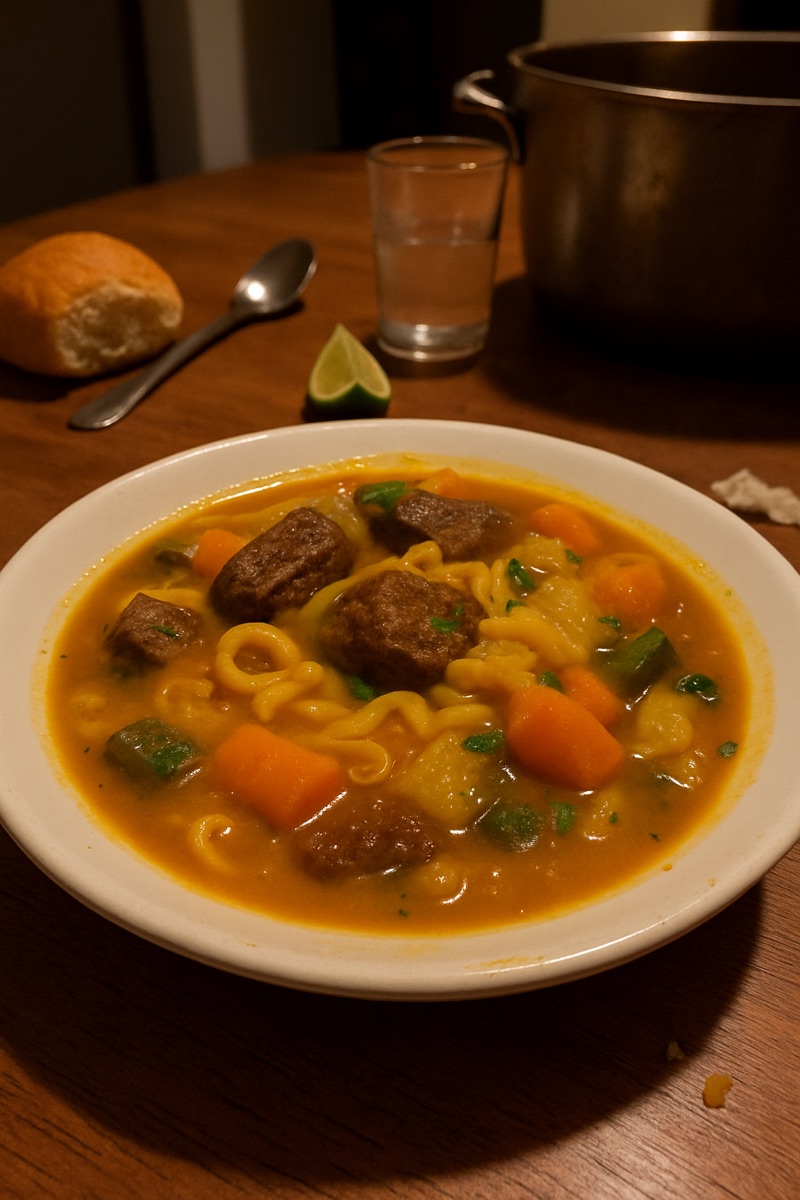
The soup is beef simmered until tender, with giraumon squash boiled and blended into the broth, then malanga, potatoes, carrots, turnip, cabbage and vermicelli. Only the squash is blended, never the whole soup. Some cooks also add leeks, celery, macaroni or a little butter, and a whole hot pepper goes in near the end. In December 2021 UNESCO added it to the Representative List of the Intangible Cultural Heritage of Humanity, Haiti's first inscription. Our soup joumou recipe follows the traditional method.
UNESCO describes its preparation as a shared effort: women lead the cooking, children help with the ingredients, artisans make the pots and farmers grow the vegetables. Outside of New Year, it is also a traditional Sunday breakfast. It is always served very hot, with slices of bread for dipping.
Other things to know about Haitian food
Almost every savoury Haitian dish starts with epis, a blend of cooked peppers, garlic, green onions, thyme and parsley. Fried street food, called fritay, is sold widely on the streets: akra (spicy malanga fritters), bannann peze and fried meats such as griot and tassot kabrit (fried goat), with pikliz alongside. The Haitian patty, or pâté, is filled with beef, chicken, salt cod or smoked herring. For something slower, tchaka is a stew of hominy, beans, squash and usually pork.
Haitian cooking is often grouped with the rest of Caribbean food, though its flavours are its own. You will find griot, diri kole and soup joumou, with ingredients and step-by-step methods, on our page about the food of Haiti.
The recipes
- Griot🇭🇹 Haiti · 13 hours and 45 minutes
 Diri kole🇭🇹 Haiti · 13 hours and 50 minutes
 Soup joumou🇭🇹 Haiti · 2 hours and 50 minutes
Questions people ask
Is the national dish of Haiti griot or soup joumou?
Neither has official status. Griot with rice and beans is the plate most often called the national dish; soup joumou is the national celebration dish, eaten every 1 January and listed by UNESCO in 2021.
Why do Haitians eat soup joumou on New Year's Day?
Enslaved Africans in colonial Haiti were forbidden to eat this squash soup. Haitians ate it to celebrate independence on 1 January 1804 and have done so every New Year's Day since.
What is served with griot?
Griot is almost always served with pikliz, a spicy cabbage pickle, and rice or bannann peze (fried green plantains).
What is epis?
Epis is the seasoning base of Haitian cooking, a blend of peppers, garlic and herbs such as green onions, thyme and parsley. It is used in marinades, rice and beans, stews and soups.
How do you pronounce griot?
In Haitian Creole it is spelled griyo and said roughly gree-YO.
Keep reading
- Traditional food of Haiti: 14 dishes to know
- What is the national dish of Antigua and Barbuda?
- What is the national dish of the Bahamas?
- What is the national dish of Barbados?
- What is the national dish of Cuba?
- What is the national dish of Dominica?