 COPPER
Traditional food of Haiti: 14 dishes to know
Traditional Haitian food is a Creole cuisine of African, French, Taíno, Spanish and Levantine roots, built on rice and beans, pork, goat, plantain and root vegetables. Almost every savoury dish starts with epis, a blend of peppers, garlic and herbs, and is served with pikliz, a spicy pickled slaw. The most emblematic dishes are griot, diri kole, soup joumou and diri djon djon.
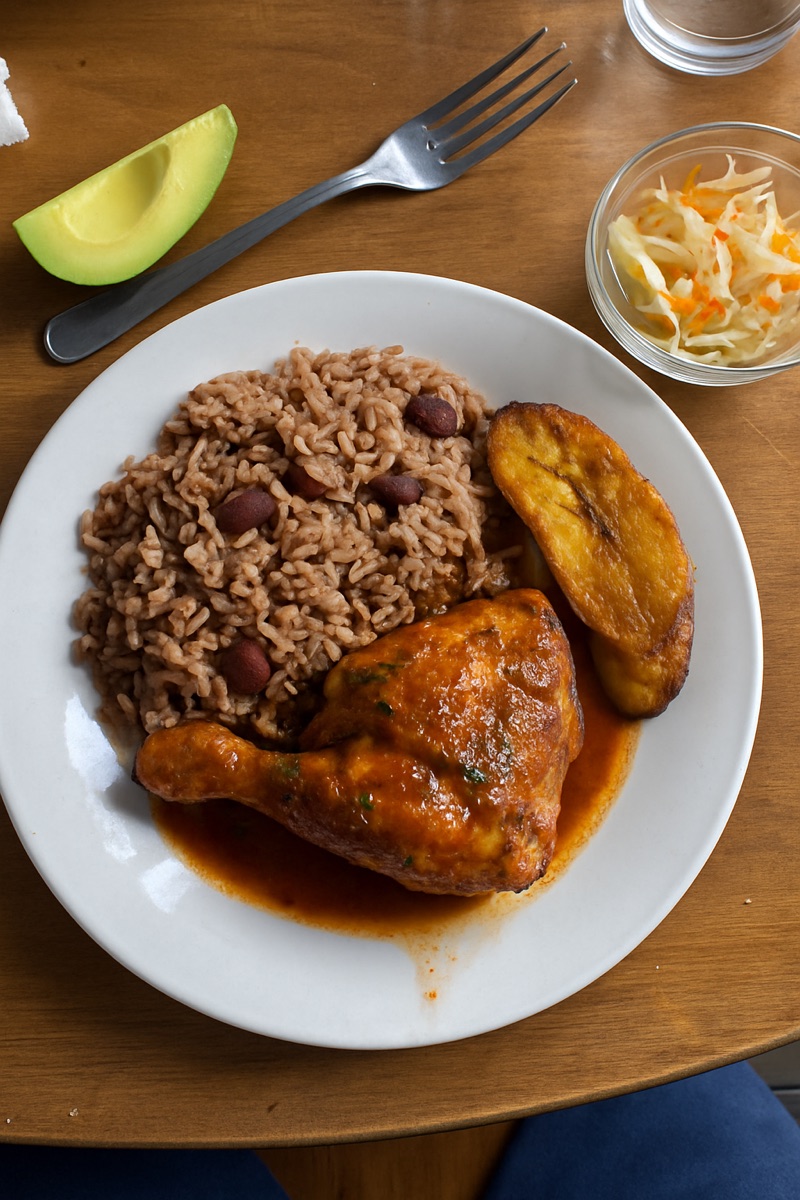
What Haitian food is built on
Haitian cooking is a Creole cuisine born on the western third of Hispaniola from African, French, Indigenous and Spanish traditions, later joined by Levantine dishes such as kibbeh brought by Lebanese and Syrian immigrants. It is often grouped with the rest of Caribbean food, but it uses far more herbs and peppers, and flavours are bold.
The base of most dishes is epis, a blend of peppers, garlic, green onions, thyme and parsley, used in rice and beans, stews and soups. Sour orange, lime and scotch bonnet season the meat, and pikliz, a slaw of cabbage, carrot and scotch bonnet pickled in vinegar, sits on the table to cut through fried food.
The Taíno who lived on the island before 1492 left a word the whole world uses: barbecue comes from barabicu, their word for the wooden frame used to roast meat over a fire. Rice and beans, the national staple, is eaten almost every day, usually with meat, fish or a bean sauce.
Rice and beans
Rice is sometimes eaten with beans alone, but more often meat completes the plate: chicken boiled in a marinade of lime, sour orange, scotch bonnet and garlic and then fried until crisp, goat (kabrit) or beef. Yam, sweet potato and breadfruit are the other common starches, served with a thin sauce of tomato, onion and dried fish.
- Diri kole — Rice cooked in the dark broth of red kidney beans with the beans themselves and epis, so every grain takes their colour. Called the riz national, it is often topped with red snapper, tomatoes and onions. Our diri kole recipe keeps the bean water for the rice.
- Diri djon djon — Rice cooked with djon djon, small black mushrooms that release a grey-black colour when boiled, which dyes the rice and gives it its flavour. It is a specialty of the north and is often mixed with shrimp, fish or chicken.
- Diri ak sos pwa — White rice with sos pwa, a smooth bean purée or sauce poured over the top, made most often with black beans, then red or white beans. It is thinner than Cuban black bean soup.
Meat dishes and fritay
Fried foods, known together as fritay, are sold at markets, festivals and street stalls, always with pikliz on the side. The meat dishes and snacks to know:
- Griot — Pork shoulder marinated in sour orange and epis, braised until tender, then fried until crisp, and served with pikliz, rice and fried plantain. It is the party dish and, with rice and beans, the plate most often named as the national dish of Haiti. Our griot recipe walks through each stage.
- Tassot — Goat meat (tassot kabrit), seasoned, cooked and then fried until the edges crisp. It is eaten with bannann peze and pikliz, as a full plate of fritay.
- Akra — Fritters of grated malanga, a starchy root, seasoned with herbs and hot pepper and deep-fried until crisp. They are among the most common street snacks in Haiti.
- Bannann peze — Green plantain slices fried, flattened and fried again until crisp, the Haitian version of tostones. They go with almost every fried dish, from griot to tassot.
- Haitian patty — A puff pastry pâté filled with ground beef, chicken, salt cod or smoked herring seasoned with epis. It is one of the country's best-known snacks and is sold wherever Haitians live, from Port-au-Prince to Brooklyn and Miami.
Soups, stews and breakfast
- Soup joumou — A squash soup with beef, malanga, potatoes, carrots, cabbage and pasta, eaten every 1 January to mark independence in 1804, because enslaved Haitians had been forbidden to eat it. UNESCO added it to its intangible heritage list in 2021. Our soup joumou recipe follows the traditional method.
- Légume — A thick stew of mashed vegetables such as eggplant, cabbage, chayote, spinach and watercress, cooked with epis, garlic and tomato paste, usually with beef or crab. It is served with rice or with mayi moulen, a savoury cornmeal porridge.
- Tchaka — A hearty stew of hominy, beans, squash (joumou) and meat, usually pork. It is associated with festivities and family gatherings.
- Haitian spaghetti — Spaghetti cooked with hot dogs, dried herring and spices in a ketchup and epis sauce, sometimes topped with raw watercress. It is a breakfast dish, not a dinner pasta.
Sweets and drinks
Haiti also makes rhum from fresh cane juice rather than molasses, Barbancourt being the best-known producer, and clairin, a less refined cane spirit from hundreds of village micro-distilleries. Kremas, a creamy drink of coconut cream, condensed milk and rum, is poured at Christmas. Two sweet classics:
- Pain patate — A soft, sweet bread of sweet potato with evaporated milk and cinnamon. It is usually served cold from the refrigerator, though it can be eaten at room temperature.
- Akasan — A thick, sweet corn drink made with corn, star anise, vanilla, cinnamon and evaporated milk. It is drunk warm or cold, often at breakfast.
Regional dishes and neighbours
Each part of the country has its own plate. Around Jérémie in the Grand'Anse, people eat tonmtonm, breadfruit pounded in a mortar and swallowed with an okra sauce, close to West African fufu. The north, around Cap-Haïtien, is known for chicken with cashew nuts and djon djon rice, and the Artibonite for lalo stew with white rice.
Haiti shares rice and beans, cassava bread and fried plantain with the rest of the Caribbean, but epis and pikliz make its versions distinct. Compare with the traditional food of Jamaica and the traditional food of Cuba. Griot, diri kole and soup joumou all have tested, step-by-step recipes in Copper, on our page about the food of Haiti.
The recipes
- Diri kole🇭🇹 Haiti · 13 hours and 50 minutes
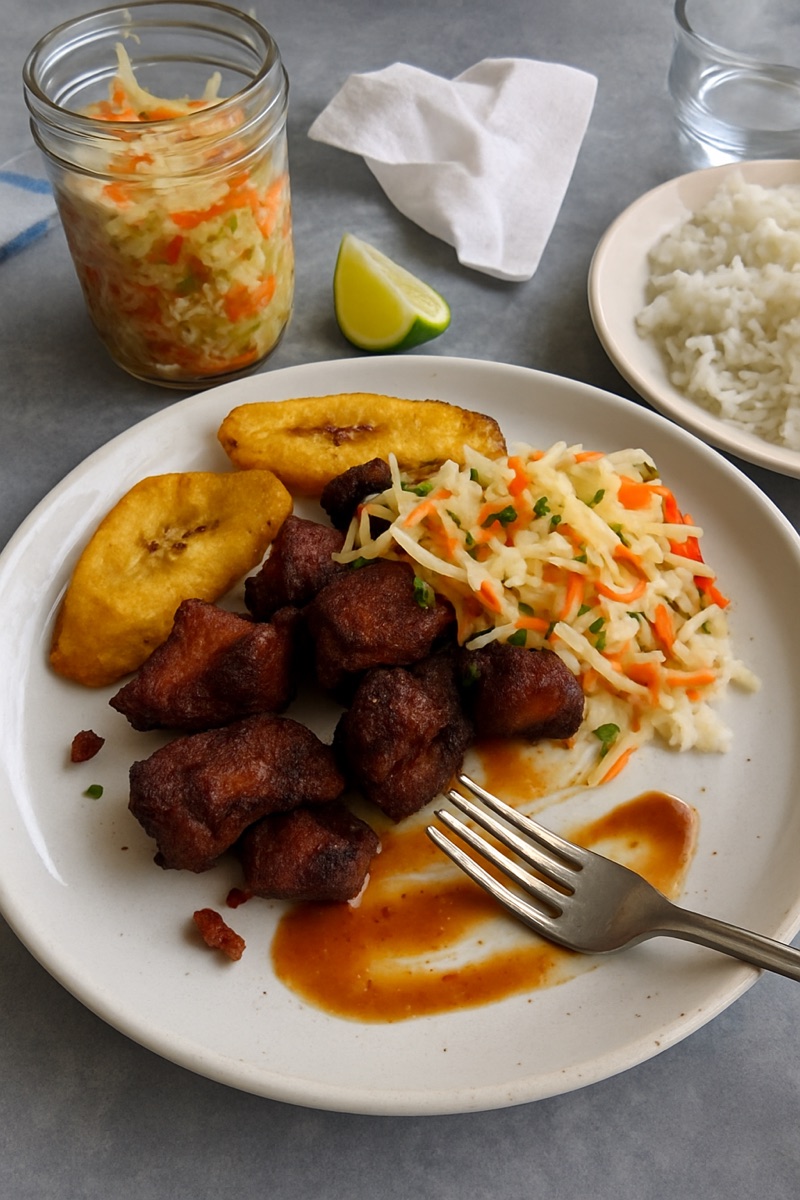 Griot🇭🇹 Haiti · 13 hours and 45 minutes
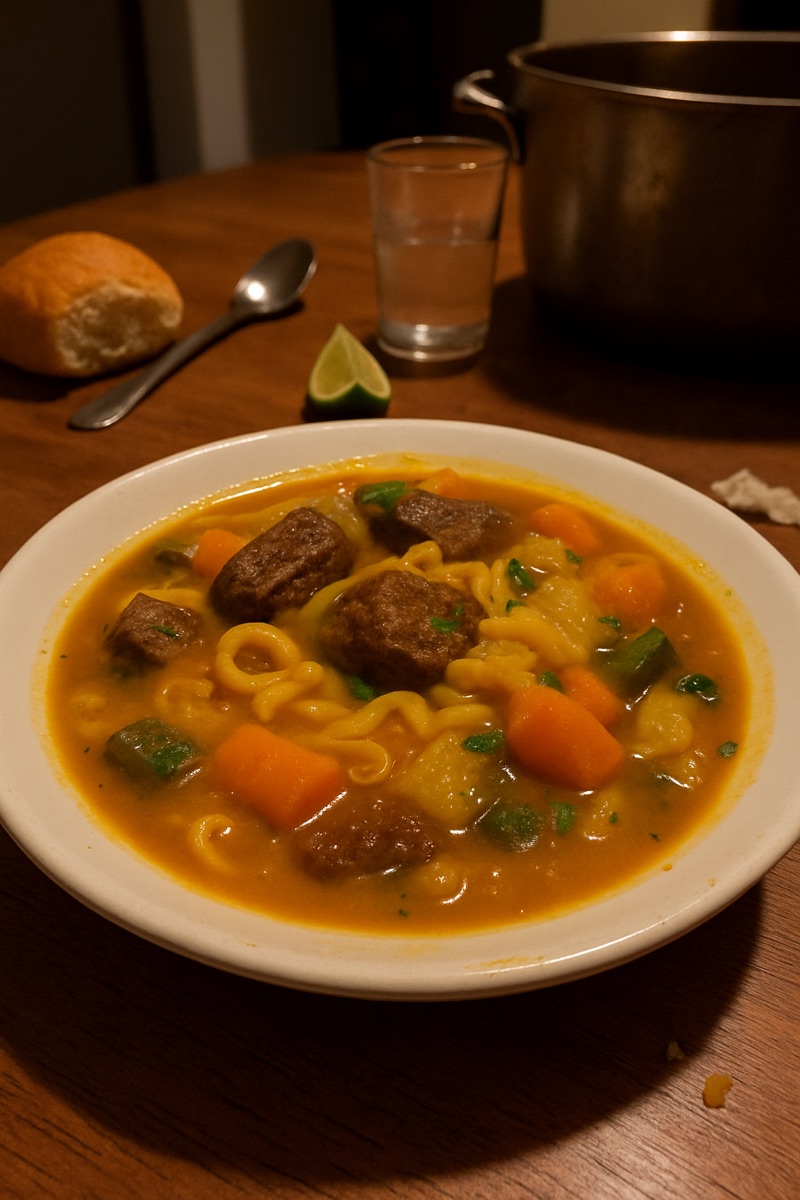 Soup joumou🇭🇹 Haiti · 2 hours and 50 minutes
Questions people ask
What is the most popular food in Haiti?
Rice and beans (diri kole) with griot, fried pork, is the most popular plate, served with pikliz and fried plantain. Soup joumou is the most symbolic dish, eaten every 1 January.
What do Haitians eat for breakfast?
Haitian spaghetti with hot dogs and herring is the classic, often with akasan, a thick corn drink. Soup joumou is also a traditional Sunday breakfast.
Is Haitian food spicy?
Yes, often. Scotch bonnet goes into epis, marinades and pikliz, and Haitian food uses more pepper and herbs than most Caribbean cooking.
What is epis?
Epis is Haiti's flavour base: a blend of peppers, garlic, green onions, thyme and parsley, used in rice and beans, stews, soups and marinades.
Why do Haitians eat soup joumou on New Year's Day?
Enslaved Haitians grew the squash but were forbidden to eat the soup. After independence on 1 January 1804, they ate it to celebrate, and the tradition continues every New Year's Day.
Keep reading
- What is the national dish of Haiti?
- Traditional food of Antigua and Barbuda: 11 dishes to know
- Traditional food of the Bahamas: 12 dishes to know
- Traditional food of Barbados: 12 dishes to know
- Traditional food of Cuba: 12 dishes to know
- Traditional food of Dominica: 12 dishes to know