 COPPER
Traditional food of Jamaica: 14 dishes to know
Traditional Jamaican food blends Taíno, West African, Spanish, British, Indian and Chinese cooking around a few key ingredients: allspice (pimento), scotch bonnet pepper, thyme, scallion, coconut milk, salt fish and starchy sides such as dumplings, yam and green banana. The most emblematic dishes are ackee and saltfish, jerk chicken, curry goat and rice and peas.
What Jamaican food is built on
Jamaican cooking is a mix of techniques and ingredients brought by everyone who has lived on the island: the Taíno, West Africans, the Spanish, Portuguese Jews, the British and Irish, and, after the end of slavery, indentured workers from India and China. Many dishes are Creole: created locally from that mix.
The Taíno left jerk, roasted fish, bammy, callaloo and pepperpot soup, and the habit of cooking over pimento wood. Allspice and scotch bonnet pepper, the two pillars of jerk seasoning, are native to the island. The Spanish brought vinegar-pickled escoveitch fish, stews and rice-and-bean dishes. Salted cod became a staple because it was a cheap, long-keeping protein given to enslaved Africans. Indians brought curry and roti, and Chinese Jamaicans gave the island hard dough bread and soy sauce and ginger in brown stews.
A plate is usually a meat or fish dish with "food": boiled green banana, yam, dumplings, breadfruit or rice and peas. The heavy cast-iron Dutch pot, brought by Dutch traders, is still the island's main cooking pot.
Main dishes
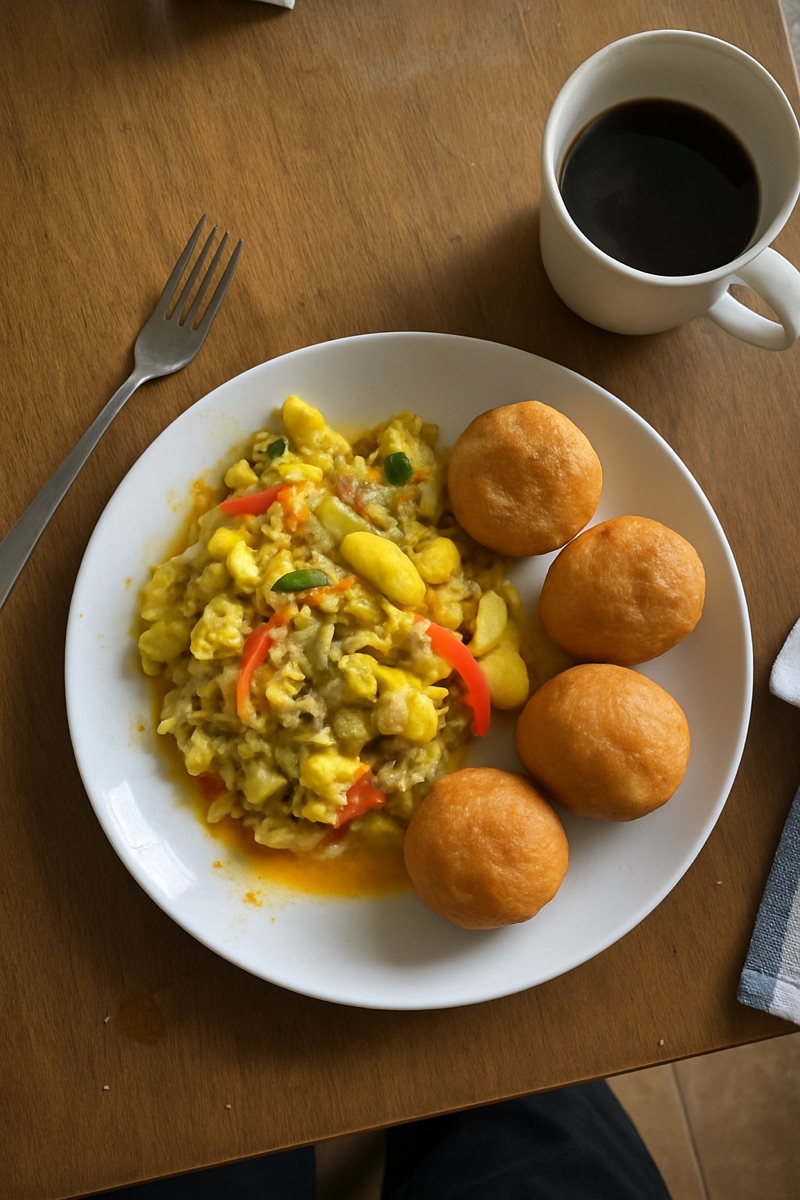
- Ackee and saltfish — Soaked, flaked salt cod sautéed with onion, tomato, thyme and scotch bonnet, then folded with the soft yellow arils of the ackee fruit. It is the national dish of Jamaica and a breakfast dish, eaten with fried dumplings, boiled green banana or roast breadfruit. See our ackee and saltfish recipe.
- Jerk chicken — Chicken rubbed or marinated with a hot paste built on allspice and scotch bonnet, then cooked slowly over wood for a smoky taste. The technique goes back to the Taíno and was kept alive by the Maroons. Pork, fish, shrimp and sausage are jerked too; our jerk chicken recipe smokes the meat over pimento wood.
- Curry goat — Goat (or mutton) cooked in Jamaican curry powder, a blend adapted from the curry and turmeric brought by Indian indentured workers after the end of slavery. It is the dish of parties and special occasions, served with white rice or rice and peas.
- Brown stew — Chicken, fish, pork or oxtail browned hard, then simmered slowly with spices, carrots and ketchup until the sauce is dark. Brown stew chicken is a classic Sunday dinner with rice and peas, and oxtail cooked the same way is one of the island's most popular dishes.
- Escovitch fish — Whole fried fish covered with a sharp sauce of vinegar, onions, carrots, chayote, pimento and scotch bonnet. It descends from Spanish escabeche, has long been a Lent and holy-day dish, and festival is its usual partner.
- Run down — Fish, often mackerel or salted mackerel, cooked in coconut milk reduced until it thickens, with plantain, yam, tomato and onion. It is a traditional breakfast, served with dumplings or baked breadfruit.
Rice, soups and sides
- Rice and peas — Rice cooked in coconut milk with red kidney beans, which Jamaicans call peas, plus thyme, scallion and a whole scotch bonnet. It is the standard side for Sunday dinner and for jerk, curry and brown stew. Our rice and peas recipe starts from dried beans so the rice takes their colour.
- Red peas soup — A thick soup of kidney beans with cured meats, coconut milk, root vegetables, dumplings, scotch bonnet, pimento and scallion. It is the soup version of stew peas, another everyday bean dish, and is served as a starter or a main course.
- Mannish water — A goat soup made from various goat parts, cooked with herbs and spices, yam, green banana and dumplings. It has been part of Maroon celebrations for over 300 years and is still served at parties, stage shows and "dead yard" wakes.
- Festival — An elongated deep-fried dumpling of slightly sweet dough. Despite the sweetness, it is served as a side with escovitch fish, seafood and jerk, and sold as breakfast and street food.
- Bammy — A thick cassava flatbread descended from casabe, the bread of the Taíno. It is still produced in rural communities, sold in shops and by street vendors, and eaten fried or steamed.
Patties, breads and sweets
Bakeries and sweet shops are as much a part of Jamaican food as the Dutch pot, and Christmas has its own table: sorrel, a deep red drink of hibiscus sepals steeped with ginger and spices and sometimes spiked with rum, and black cake made with fruit soaked in wine or rum. Jamaica Blue Mountain coffee, Ting grapefruit soda and Red Stripe beer are the other drinks you will see everywhere.
- Jamaican patty — A half-moon of flaky pastry tinted yellow with turmeric or annatto, filled most often with spiced ground beef, and also with chicken, vegetables or ackee. Chinese Jamaican bakers commercialised it in the 1960s and 1970s; it is often eaten as a full meal inside a split coco bread.
- Bun and cheese — A dark, loaf-shaped spiced bun sliced and eaten with cheese. It is the Easter tradition known as Easter bun and cheese, but the bun is sold all year and also eaten with butter.
- Gizzada — A small, crisp tart shell with a pinched edge filled with sweet, spiced grated coconut. Also called pinch-me-round, it resembles the Portuguese queijada, a reminder of the Portuguese Jewish families who settled the island.
Jamaican food and its neighbours
Jamaica shares much of its table with the rest of the Caribbean: rice cooked with beans, salt cod, plantains and cassava bread appear on every island under different names. Cuba cooks its rice with black beans rather than kidney beans, and Haiti seasons everything with epis instead of jerk spice. Compare with the traditional food of Cuba and the traditional food of Haiti.
Cook Jamaican food at home
Ackee and saltfish for breakfast, then jerk chicken with rice and peas for dinner, makes a complete Jamaican day. All three have tested, step-by-step recipes in Copper, with the ingredients and timings that matter most, on our page about the food of Jamaica.
The recipes
- Ackee and saltfish🇯🇲 Jamaica · 12 hours and 35 minutes
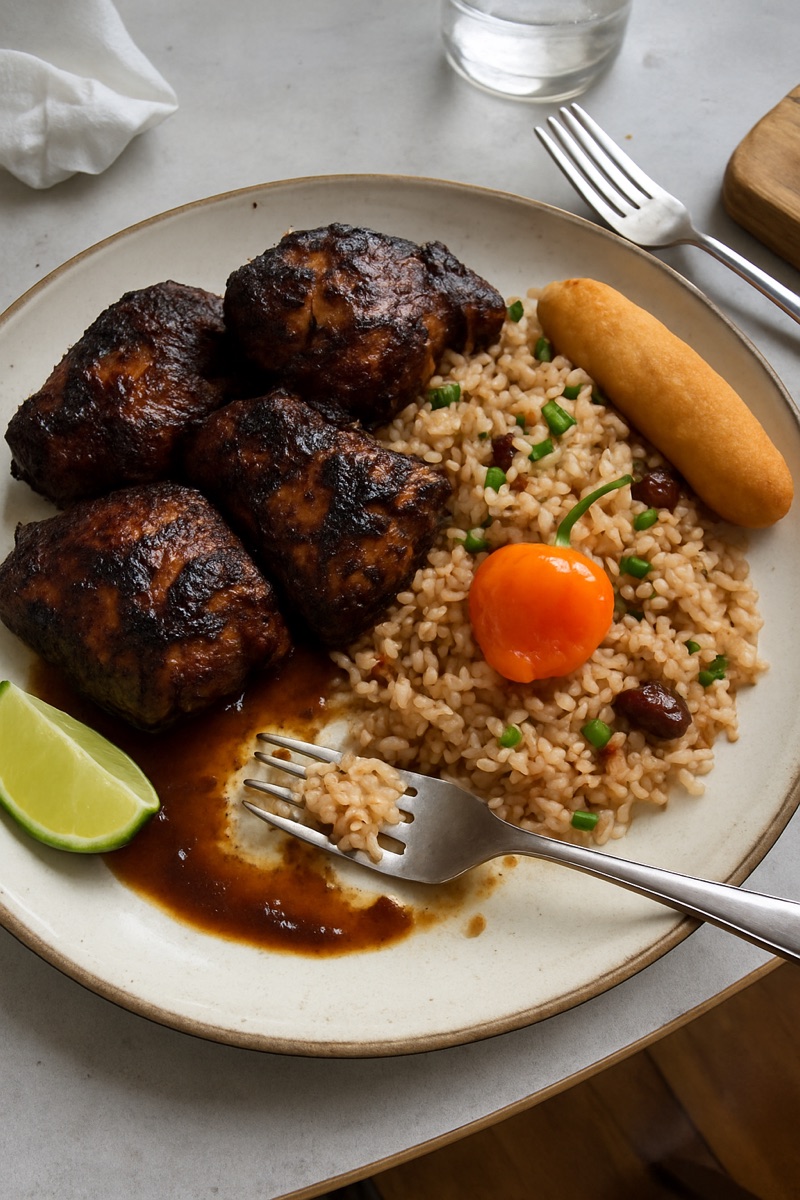 Jerk chicken🇯🇲 Jamaica · 1 day and 2 hours
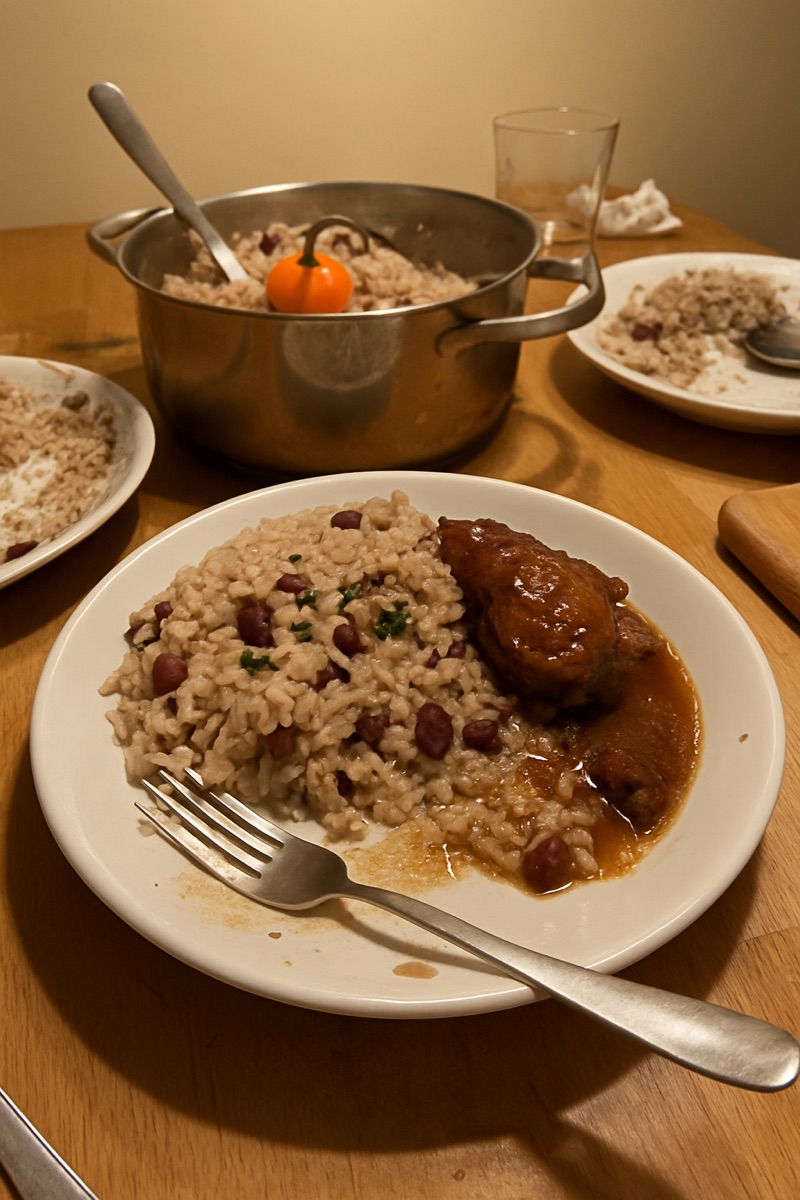 Rice and peas🇯🇲 Jamaica · 13 hours and 30 minutes
Questions people ask
What is the most popular food in Jamaica?
Ackee and saltfish, the national dish, jerk chicken and pork, curry goat, brown stew oxtail and rice and peas are the dishes most associated with Jamaica. The Jamaican patty is the most common snack.
What do Jamaicans eat for breakfast?
A typical Jamaican breakfast is ackee and saltfish with seasoned callaloo, boiled green bananas and fried dumplings. Run down, mackerel cooked in coconut milk, and bammy are other traditional breakfast dishes.
Is Jamaican food spicy?
It can be. Scotch bonnet, one of the hottest peppers, goes into jerk paste, escovitch sauce and many stews. In rice and peas and ackee and saltfish, though, the pepper is usually added whole and removed, so it gives aroma rather than strong heat.
What is jerk?
Jerk is a cooking style native to Jamaica: meat is dry-rubbed or marinated with a hot mix of allspice, scotch bonnet, scallion and thyme, then cooked slowly over wood or charcoal for a smoky flavour. It comes from the Taíno and the Maroons.
What is the difference between rice and peas and peas and rice?
In Jamaica, rice and peas is cooked with red kidney beans and coconut milk. The Bahamian peas n' rice uses pigeon peas, salt pork and tomato paste instead, with no coconut milk.
Keep reading
- What is the national dish of Jamaica?
- Traditional food of Antigua and Barbuda: 11 dishes to know
- Traditional food of the Bahamas: 12 dishes to know
- Traditional food of Barbados: 12 dishes to know
- Traditional food of Cuba: 12 dishes to know
- Traditional food of Dominica: 12 dishes to know