 COPPER
Traditional food of Timor-Leste: 12 dishes to know
Traditional food in Timor-Leste is built on rice, maize, cassava, taro and sweet potato, eaten with beans, vegetables and fish. Tamarind, basil, lime and aimanas, a pounded chilli pickle, give it flavour, and Portuguese rule left feijoada and egg tarts. The dishes to know first are batar da'an, ikan sabuko, grilled fish with katupa and caril.
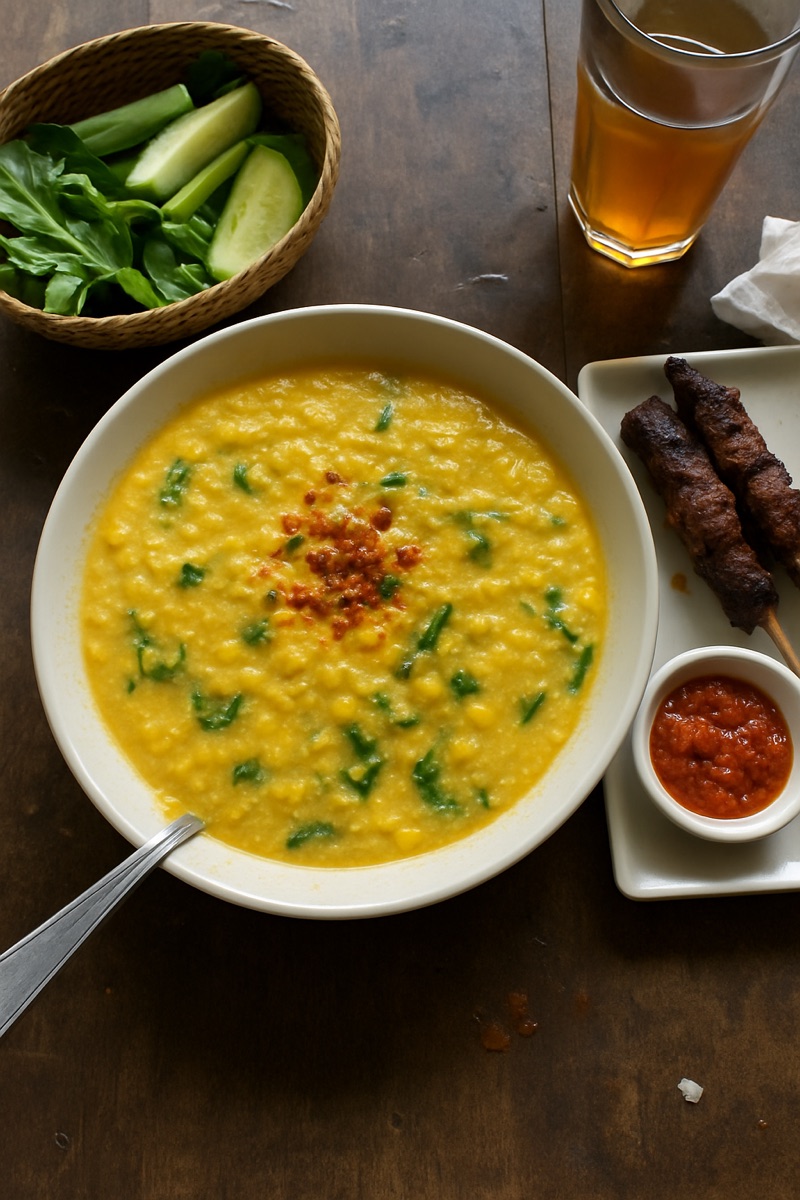
What Timorese food is built on
Agriculture is the main occupation in Timor-Leste, and rice is the staple. Sweet potatoes, maize, cassava and taro are grown alongside it, supplemented with beans, cowpeas, cabbage, spinach and onions. Most households raise their own poultry, pigs and goats, and fishing is the second most important occupation after farming, so fish is the main source of protein on the coast. Pork, fish, basil, tamarind, legumes and tropical fruit run through the cooking.
The cuisine mixes Malay and Portuguese influences from the colonial period, with flavours from other former Portuguese colonies brought by soldiers stationed in Timor. Cooking is often done with a generous dose of spice, and almost every meal comes with something sour and hot: a chilli pickle, a fresh tomato salsa or a squeeze of lime.
Food is not always secure. Crops depend on the rains, and from November to February many families go through a hungry season. Some then rely on akar, the dried bark of a palm beaten to a powder, mixed with water into a jelly and cooked over a fire.
Everyday stews and curries
- Batar da'an — A stew of corn, mung beans and pumpkin cooked with onion and garlic and seasoned only with salt and pepper. The name means boiled corn in Tetum. It contains no meat and no coconut milk, is eaten as a main course with rice, and is the dish most often chosen as the national dish of Timor-Leste.
- Caril — A mild chicken curry made with a paste of roasted capsicum and coconut. Curries are a standard dish in Timor-Leste, and chicken curry tops the list of favourites.
- Feijoada — A bean and pork stew shared by Portugal's former colonies, made in Timor with pork, white cannellini beans and chorizo, and served with rice. It is one of the clearest marks of the Portuguese period on the Timorese table.
Fish from the coast
Most fish is sold fresh at markets and roadsides, piled on tables or threaded through the gills on palm-leaf rings; some is grilled (ikan tunu) or baked in palm leaves (ikan saboko) before sale, and the surplus is dried.
- Ikan sabuko — Mackerel marinated in tamarind and grilled with chilli and basil, as Wikipedia and Travel Food Atlas describe it, served with budu. In the ACIAR fish cookbook, saboko means fish wrapped in palm leaves: in Viqueque, small mullet or sardines are seasoned, tied five to a sago palm leaf and baked over red-hot coals for about an hour.
- Ikan tunu with katupa — Barbecued fish with katupa, rice cooked in small woven parcels of young coconut leaf, is the most common meal for sale along Timor's coastal roads. In the Viqueque method, the rice is soaked in coconut and turmeric liquid with garlic and onion, packed half-full into the parcels and boiled for 40 minutes to an hour.
- Ikan pepes — A whole fish, or pieces of fish, coated in a paste of turmeric, tomato, palm sugar, shrimp paste, candlenuts, lemon basil, lemongrass, tamarind and chilli, wrapped in banana leaves, then steamed or grilled. It is eaten in the leaf with lime, and the method is shared with Indonesia.
- Tukir — Fish, rice or meat cooked in short lengths of bamboo over a fire. The method goes back to hunters and buffalo herders who carried no pots; in Viqueque it is still part of ceremonies such as foko karbau, when buffaloes are blessed before the rice fields are prepared.
Sauces and relishes
- Aimanas — A chilli pickle, in its simplest form chillies crushed with salt in a stone mortar. Garlic, red onion, ginger, lime or bilimbi fruit are added depending on what grows in the garden; the women of the Fish House in Ililai, Lautém, use bilimbi and leave it at least a day before eating.
- Budu — A fresh, sharp sauce served with fish. Wikipedia describes it as tomato, mint, lime and red onion; Travel Food Atlas describes a version based on fermented anchovy sauce with calamansi, onion and chillies. A related salsa in Manatuto is made with ipu, tiny river fish pickled in salt.
Sweets, fermented rice and coffee
Coffee is the country's main cash crop: it accounts for 90 per cent of non-oil exports, and 46 per cent of households rely solely on coffee for their income. It has been grown for centuries, much of it without pesticides or fertiliser, and Timorese coffee is high in caffeine.
- Tapai — Fermented rice, sweet, sour and slightly alcoholic. It is found across much of Southeast Asia and can also be made from cassava or other starches.
- Bibingka — A layered coconut cake of glutinous rice and coconut milk, baked in a terracotta oven lined with banana leaves. It is eaten at breakfast or as an afternoon snack and is shared with Indonesia and the Philippines.
- Pastel de nata — The Portuguese egg custard tart, kept on as a pastry in Timor-Leste after the colonial period.
Regional cooking in Timor-Leste
The clearest regional differences are along the coast, where each municipality has its own fish habits. Viqueque, on the south coast, keeps tukir and makes ikan saboko, called dotuwai hamudara in the Nauoti language. Lautém in the east has its aimanas and a fresh seaweed salad, defariti; Manatuto is known for ipu from the Laclo River; and in Behau, roadside stalls sell barbecued fish and katupa to travellers. Dili, the capital, has the widest choice of restaurants, many serving Portuguese and Italian food.
Cook Timorese food at home
Copper has batar da'an and ikan sabuko with ingredient lists and step-by-step methods. The techniques that matter: crush a few cubes of pumpkin against the side of the pot to thicken the stew instead of adding flour; rub the tamarind marinade into slashes cut in the fish and let it rest before grilling; and finish with raw lemon basil off the heat. Both are on our page about the food of Timor-Leste.
Timor-Leste shares rice, tamarind and banana-leaf cooking with the rest of Southeast Asian food. For the cooking of its large neighbour, see the traditional food of Indonesia.
The recipes
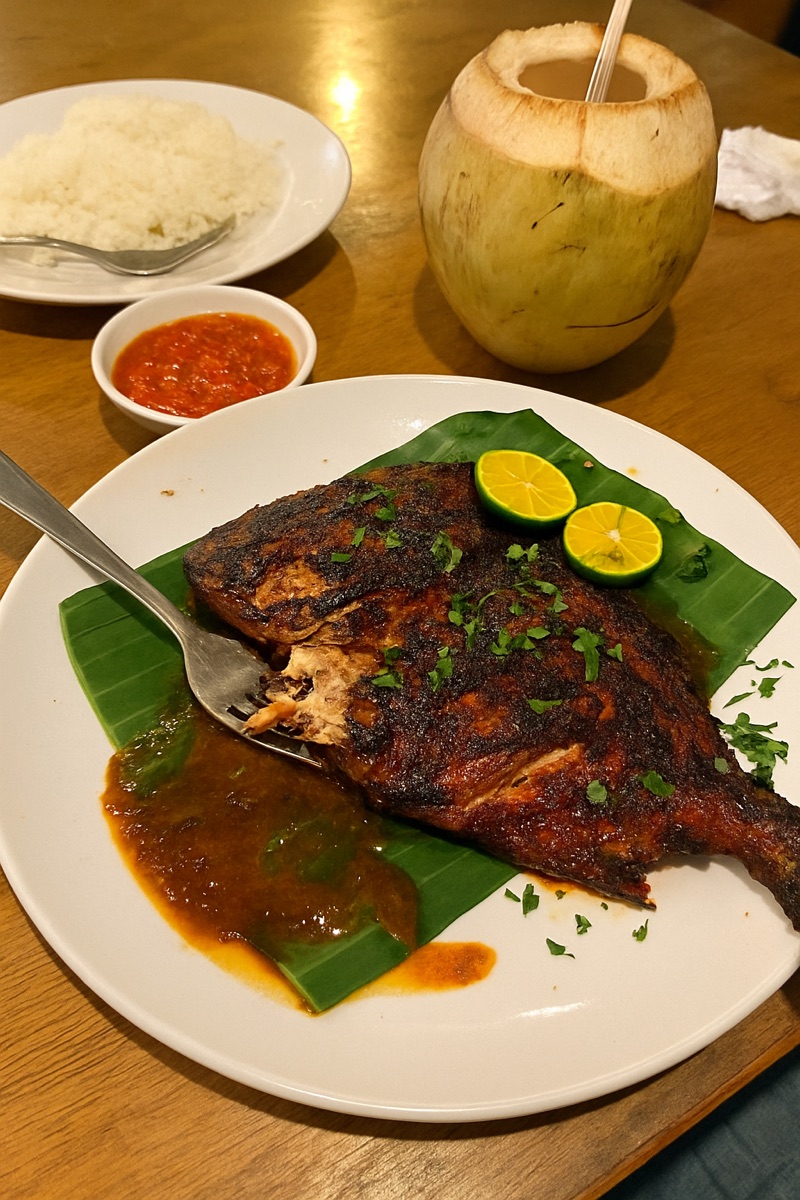 Ikan bakar
Questions people ask
What is the national dish of Timor-Leste?
There is no official one. Batar da'an, a stew of corn, mung beans and pumpkin eaten with rice, is the dish most often chosen; grilled fish with tamarind (ikan sabuko) and ikan pepes are also named.
What do people in Timor-Leste eat every day?
Rice with vegetables, beans or fish, and maize, cassava, taro or sweet potato. On the coast, barbecued fish with katupa rice parcels and chilli pickle is the most common meal sold at roadside stalls.
Is Timorese food spicy?
It can be. Aimanas, a pickle of chillies and salt, is served with fish and rice, and some recipes call for small, hot chillies. Main dishes such as batar da'an contain no chilli at all; the heat comes from the pickle served alongside.
What did the Portuguese leave in Timorese food?
Feijoada, the bean and pork stew made with chorizo, the egg tart pastel de nata, and a taste for coffee, which was half of the colony's trade in the late 1800s and is still its main export after oil.
What is Timor-Leste coffee like?
Grown organically and high in caffeine. Many plantations were neglected during the Indonesian occupation, so the trees received little pesticide or fertiliser, which made the coffee popular with organic buyers.
Keep reading
- What is the national dish of Timor-Leste?
- Traditional food of Brunei: 12 dishes to know
- Traditional food of Cambodia: 12 dishes to know
- Traditional food of Indonesia: 13 dishes to know
- Traditional food of Laos: 14 dishes to know
- Traditional food of Malaysia: 13 dishes to know