 COPPER
What is the national dish of Timor-Leste?
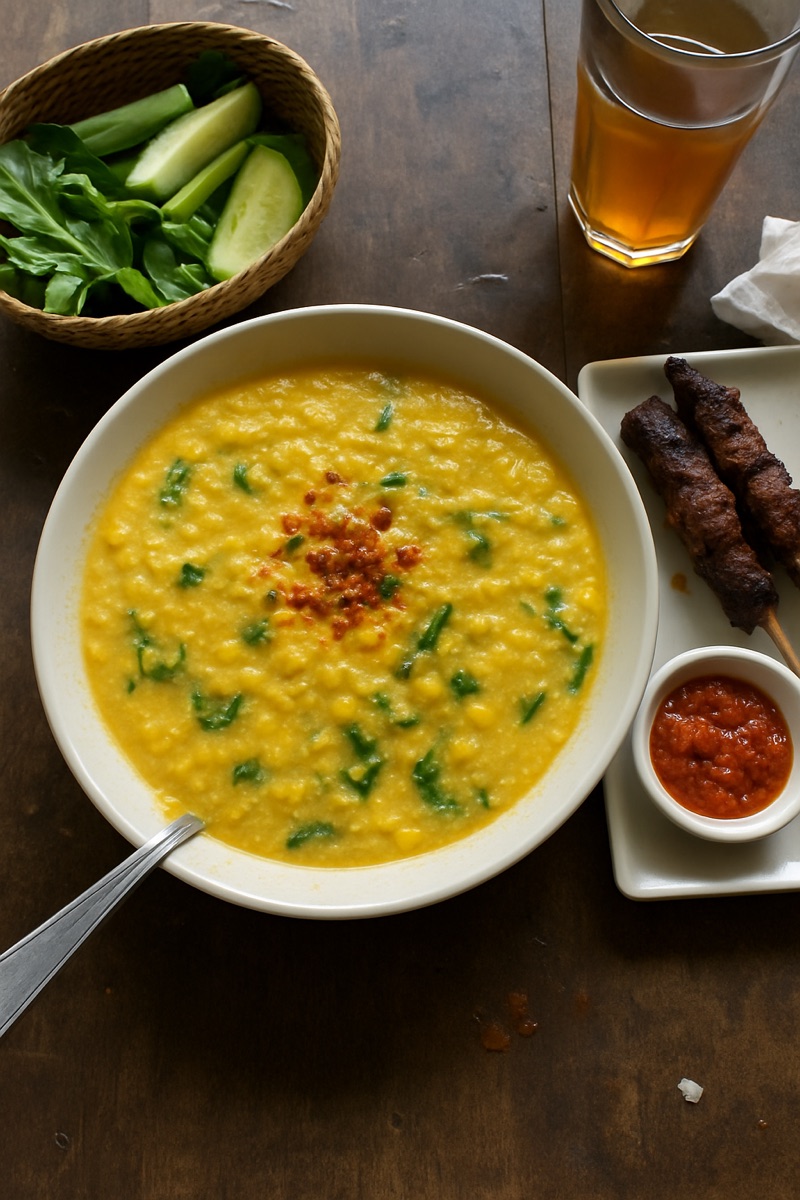
Timor-Leste has no official national dish, and sources do not agree on one. The dish most often chosen to represent the country is batar da'an, Tetum for "boiled corn": a stew of corn, pumpkin and mung beans eaten with rice, made without meat or coconut milk. Ikan sabuko, mackerel grilled in tamarind, and ikan pepes are also named.
Does Timor-Leste have a national dish?
Not officially. No law names one, and Timor-Leste has no entry on Wikipedia's list of national dishes. Three dishes come up when people try to name one:
Batar da'an is the pick used in this article because it is the dish most food references reach for, and because it is built on maize and beans, staples grown on Timorese farms. It is a choice, not an official answer.
- Batar da'an, the corn, pumpkin and mung bean stew. Wikipedia lists it as a popular dish, and recipe sites such as 196 flavors and CRS Rice Bowl chose it to represent the country.
- Ikan sabuko, mackerel in a tamarind marinade with basil. Wikipedia's article on Timorese food illustrates it served with batar da'an, rice and budu.
- Ikan pepes, fish steamed in banana leaves then grilled, which the site National Foods calls the national dish.
What is in batar da'an?
Batar da'an means "boiled corn" in Tetum, one of Timor-Leste's two official languages with Portuguese. The batar da'an recipe uses only a few ingredients:
- 300 g dried mung beans, soaked at least 10 hours, then boiled 10 to 15 minutes
- 900 g pumpkin in 3 cm cubes
- 450 g corn kernels cut off the cob
- 2 onions and 8 garlic cloves softened in oil
- 1 litre of water, salt and pepper
How batar da'an is cooked
The onion and garlic cook in three tablespoons of oil for 6 to 8 minutes until golden. The pumpkin, beans, corn and water go in together, come to a boil, then simmer uncovered for 15 to 20 minutes until the pumpkin is tender and the liquid has reduced.
The one technique worth knowing: a few cubes of pumpkin are crushed against the side of the pot to thicken the stew. No meat and no coconut milk go in, which makes it a vegan dish. It is always eaten with plain rice.
Ikan sabuko: mackerel, tamarind and lemon basil
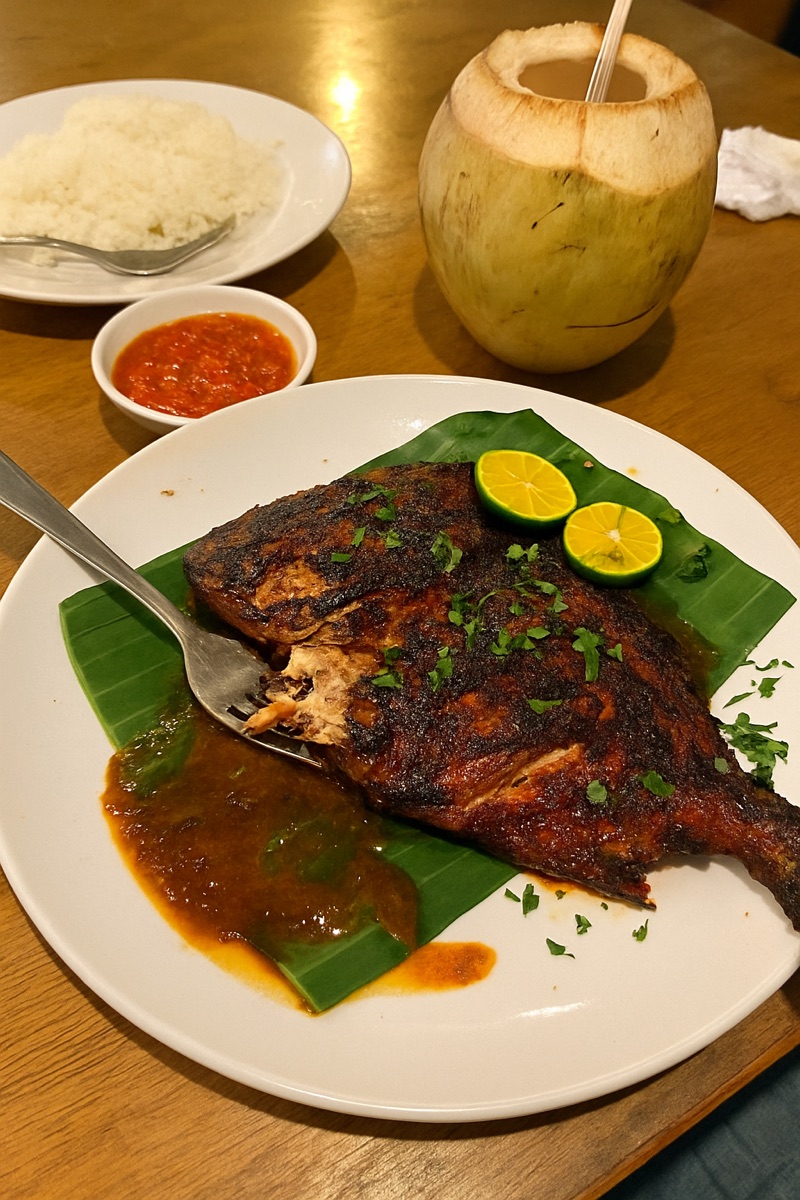
Fish is the other half of the Timorese table. Ikan sabuko, the grilled fish Timorese call ikan bakar, gets its sourness from tamarind, not chilli. Tamarind paste is mixed with lime or calamansi juice, garlic and salt and rubbed into slashes cut in two whole mackerel, which rest 45 minutes.
The fish then grills over charcoal for 6 to 8 minutes a side, basted with the leftover marinade; cooks in Dili throw coconut husk on the embers for smoke. A big handful of raw lemon basil goes on at the very end. It is served with rice and ai manas, a pounded relish of red chilli, red onion, ginger and garlic.
Ikan pepes, the third candidate
Ikan means fish, and pepes is the technique: a whole fish is wrapped in banana leaves, steamed, then finished on the grill. The National Foods recipe scores a whole red snapper, rubs it with salt and lime, coats it inside and out with a paste of tamarind, chillies, candlenuts, lemongrass, basil, palm sugar and shrimp paste, steams the parcel 20 minutes and grills it about 6 minutes.
It is served with white rice. The method is shared with Indonesia, which is one reason Timorese and Indonesian fish dishes are often confused.
Other dishes to know from Timor-Leste
Rice is the staple, alongside sweet potato, maize, cassava and taro. Timorese food mixes Malay and Portuguese influences: feijoada and pastel de nata sit next to tapai, a sweet-sour fermented rice, and bibingka, a layered coconut cake. Budu, a sauce of tomato, mint, lime and onion, goes with fish.
Two more dishes show up on Timorese tables: caril, a mild chicken curry with a roasted capsicum and coconut paste, and fuuntaul tong and gailong, a soup of red beans, beef, lettuce and egg eaten with rice. Food is not always secure: crops depend on the rains, and from November to February many families go through a "hungry season". Some then live on akar, dried palm bark beaten to a powder, mixed with water into a jelly and cooked over a fire.
Both recipes are on our page about the food of Timor-Leste, and the neighbouring kitchens are in our guide to Southeast Asian food. For grilled fish and banana-leaf cooking next door, see the national dish of Indonesia.
The recipes
 Ikan bakar
Questions people ask
What does batar da'an mean?
It means "boiled corn" in Tetum. The dish is a stew of corn, pumpkin and mung beans served with rice.
Is batar da'an vegetarian?
Yes. Traditional batar da'an contains no meat and no coconut milk, only corn, pumpkin, mung beans, onion, garlic, oil and seasoning.
What is eaten with batar da'an?
Plain rice, and often grilled fish such as ikan sabuko with budu, a tomato, mint and lime sauce.
Is Timorese food the same as Indonesian food?
No. It shares Malay roots with Indonesian food but also carries Portuguese dishes such as feijoada, from centuries of Portuguese rule.
What is the staple food of Timor-Leste?
Rice. Sweet potato, maize, cassava and taro are the other main staples.
Keep reading
- Traditional food of Timor-Leste: 12 dishes to know
- What is the national dish of Brunei?
- What is the national dish of Cambodia?
- What is the national dish of Indonesia?
- What is the national dish of Laos?
- What is the national dish of Malaysia?