 COPPER
Traditional food of Singapore: 13 dishes to know
Singaporean food blends Chinese, Malay, Indian and Peranakan cooking, with Eurasian and Western touches, and most of it is eaten at hawker centres. Rice and noodles are the base, with sambal, coconut milk, soy sauce and curry spices. The dishes to know first are Hainanese chicken rice, chilli crab, laksa and kaya toast, with kopi to drink.
What Singaporean food is built on
Singapore's cooking comes from the communities that settled the port after it was established as a British trading post in 1819: Chinese immigrants from Hokkien, Teochew, Cantonese, Hakka and Hainanese areas, Malays and Indonesians, South and North Indians, the Peranakan or Straits Chinese, and the Portuguese-descended Eurasians, whose cooking is called Kristang. Dishes that started as home cooking were adapted to local ingredients, which is how fish head curry, kaya toast and chicken rice were born. Food is treated as part of the national identity, and "Have you eaten?" is a common greeting.
Most of it is eaten out, at hawker centres, coffee shops and food courts rather than restaurants. Street hawkers with pushcarts appeared in the mid-19th century, and from the 1960s the government moved them into permanent hawker centres; there are now over 110 of them. In 2020 UNESCO inscribed Singapore's hawker culture on its list of intangible cultural heritage. Religious rules shape the menus: Muslims do not eat pork, and Hindus and many Buddhists do not eat beef. The dish most often called the national one has its own article: the national dish of Singapore.
Rice, seafood and grilled dishes
The best-known Singaporean plates are built on rice, crab and charcoal-grilled meat.
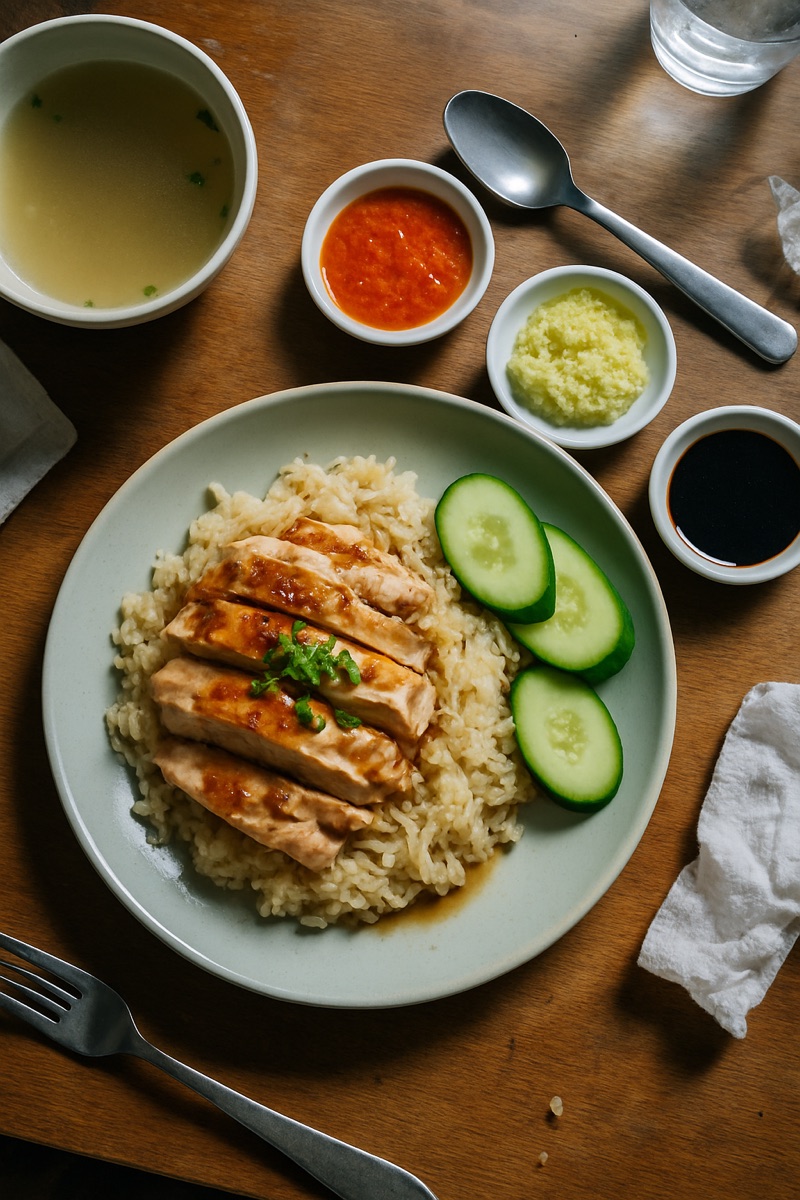
- Hainanese chicken rice — Chicken poached below a simmer, then cooled in ice water, served with rice cooked in chicken fat and stock, chilli sauce and cucumber. It is based on Wenchang chicken from Hainan and is the dish most often named as Singapore's national one.
- Chilli crab — Mud crab stir-fried in a sweet, savoury sauce of tomato and chilli thickened with egg, eaten with mantou buns to mop up the sauce. It goes back to a pushcart by the Kallang River in 1956, and the modern sauce with sambal and vinegar was developed in the 1960s. Black pepper crab is the other classic crab dish.
- Fish head curry — The head of a red snapper stewed in a Kerala-style curry with okra and aubergine, often soured with tamarind. It is credited to M.J. Gomez, a chef from Kerala, who first sold it in 1949 because Chinese customers prized fish heads. It usually comes in a clay pot to share.
- Satay — Skewers of marinated meat grilled over charcoal and served with a spicy peanut sauce, ketupat rice cakes, cucumber and onion. In Singapore it became an evening hawker food, long associated with the Satay Club, and it is named in the UNESCO hawker culture inscription.
Noodles and soups
Noodle stalls are the backbone of any hawker centre, and most of their dishes came with Chinese and Peranakan cooks.
- Laksa — Rice noodles in a spicy coconut curry broth with prawns, fish cake and egg, a dish of Peranakan origin. Singapore's best-known style is Katong laksa, from the Katong neighbourhood, whose noodles are cut short so it can be eaten with a spoon alone, and whose gravy is thickened with ground dried shrimp.
- Hokkien mee — Egg noodles and rice noodles stir-fried with egg, prawns, squid and slices of pork, then braised in a rich stock of prawns and pork bones. Sambal and calamansi lime come on the side. The Singapore version was created after the Second World War by sailors from Fujian who worked in noodle factories and fried the surplus on Rochor Road.
- Char kway teow — Flat rice noodles stir-fried over high heat in dark soy sauce with prawns, cockles, egg, bean sprouts, Chinese sausage and cubes of fried lard. It was developed as cheap food for labourers and is one of the three noodle dishes most associated with Singapore.
- Bak kut teh — Pork ribs simmered in broth; the name means "meat bone tea". Singapore favours the Teochew style, light in colour and sharply peppery with garlic, unlike the dark, herbal Hokkien style of Malaysia. It is eaten with rice, fried dough sticks and strong Chinese tea.
Breakfast, snacks and sweets
A Singaporean breakfast is as likely to come from a coffee shop as from a Malay or Indian stall.
- Kaya toast — Toast spread with butter and kaya, a sweet jam of coconut and egg, served with two soft-boiled eggs seasoned with dark soy sauce and white pepper, and a cup of coffee. It is believed to have been created by Hainanese immigrants who had worked on British ships, and it is sold in kopitiams across the island.
- Roti prata — A flaky fried flatbread, the local evolution of the Indian paratha, flipped to stretch the dough and served with curry or sugar. It is eaten for breakfast and supper, and modern stalls offer egg, cheese, onion and many other fillings.
- Rojak — A salad of fruit and vegetables of Indian origin with Malay and Indonesian influences. It is one of the hawker foods named by Singapore's National Heritage Board as iconic.
- Ice kacang — A mound of shaved ice over red beans, jelly, corn and attap seeds, topped with coloured syrups, palm sugar and evaporated milk. Hawker dessert stalls sell it next to chendol, pandan jelly with coconut milk and gula melaka.
- Kopi — The local coffee, ordered in a jargon of its own: kopi comes with sugar and condensed milk, kopi-O with sugar only, kopi-C with evaporated milk, and kopi-peng iced. Teh tarik, pulled milk tea, is the tea equivalent.
Chinese, Malay, Indian and Peranakan kitchens
Each community has its own stalls. Chinese dishes include duck rice, yong tau foo, popiah and Teochew porridge. Malay cooking, influenced by the Malay Peninsula, Sumatra and Java and especially by Minang food, gives nasi padang, mee rebus, otak-otak and sambal stingray, and never uses pork. Indian Singaporean cooking covers both north and south, with dosa, murtabak and soup tulang. Peranakan cooking adds ayam buah keluak and kueh, and the Eurasians cook devil's curry.
Many dishes are shared with the neighbours, sometimes under the same name: compare with the traditional food of Malaysia and the traditional food of Indonesia, or explore the wider Southeast Asian kitchen.
Cook Singaporean food at home
Hainanese chicken rice, chilli crab and bak kut teh each have a full recipe with quantities and step-by-step methods in the Copper app. You will find all three on our page dedicated to Singaporean recipes.
The recipes
- Hainanese chicken rice🇸🇬 Singapore · 2 hours
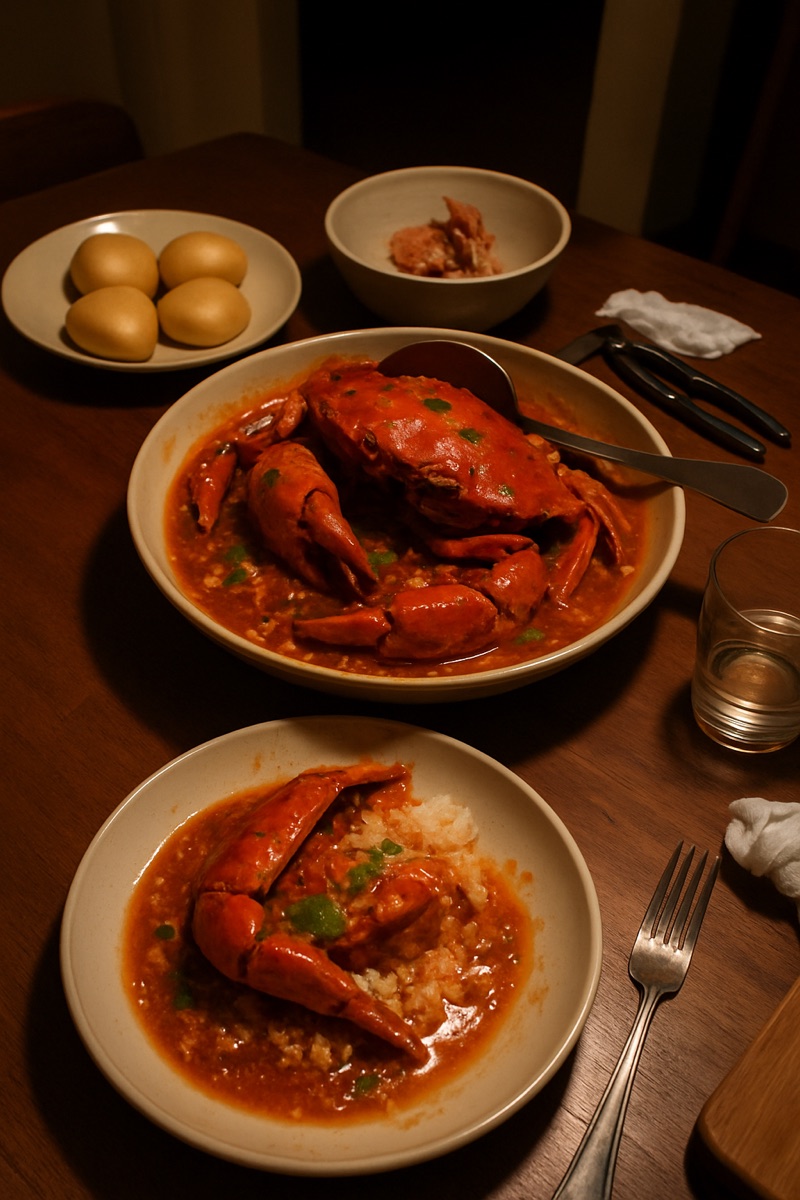 Chilli crab🇸🇬 Singapore · 1 hour and 50 minutes
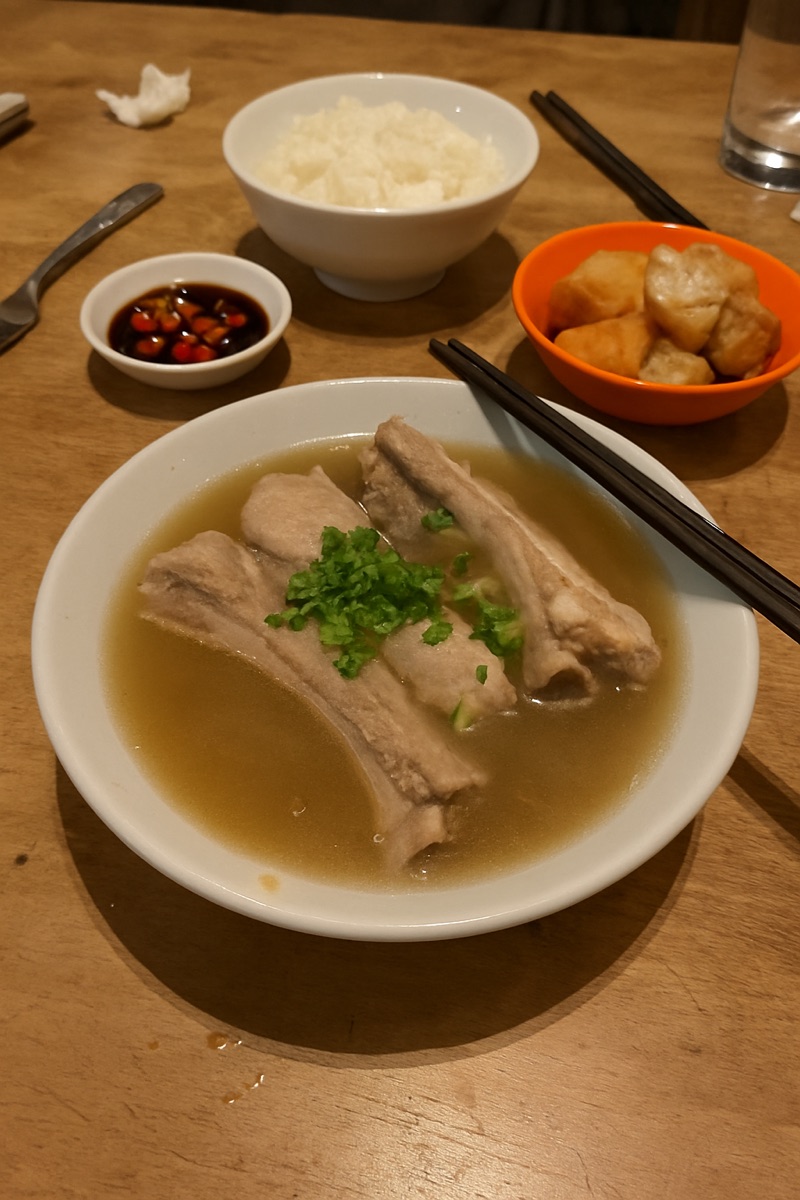 Bak kut teh🇸🇬 Singapore · 2 hours and 10 minutes
Questions people ask
What is the most popular food in Singapore?
Hainanese chicken rice is the dish most often named, followed by chilli crab, laksa, satay and roti prata. Most of them are eaten at hawker centres.
What do Singaporeans eat for breakfast?
Kaya toast with soft-boiled eggs and kopi is the classic coffee-shop breakfast. Roti prata and putu mayam, string hoppers of rice flour eaten with sugar and coconut, are common too.
Is Singaporean food spicy?
Its spiciness is medium overall. Sambal and chilli sauce come with many dishes, and laksa and fish head curry have real heat, but chicken rice, bak kut teh and kaya toast are mild.
What is a hawker centre?
A complex of dozens of food stalls with shared seating, each stall specialising in a few dishes. Singapore has over 110, and its hawker culture is on UNESCO's intangible heritage list since 2020.
What is the difference between Singaporean and Malaysian food?
They share many dishes, such as laksa, satay and chicken rice, but the versions differ: Singapore's bak kut teh, for example, is the peppery Teochew style rather than the herbal Hokkien style common in Malaysia.
Keep reading
- What is the national dish of Singapore?
- Traditional food of Brunei: 12 dishes to know
- Traditional food of Cambodia: 12 dishes to know
- Traditional food of Indonesia: 13 dishes to know
- Traditional food of Laos: 14 dishes to know
- Traditional food of Malaysia: 13 dishes to know