 COPPER
What is the national dish of Uruguay?
Uruguay has no official national dish, but the chivito is the one most often cited: a sandwich of thin seared beef fillet layered with ham, melted mozzarella, bacon, a fried or hard-boiled egg, tomato, lettuce and mayonnaise, usually served with French fries. It was created in Punta del Este in 1946. Asado, the Uruguayan barbecue, is its only serious rival for the title.
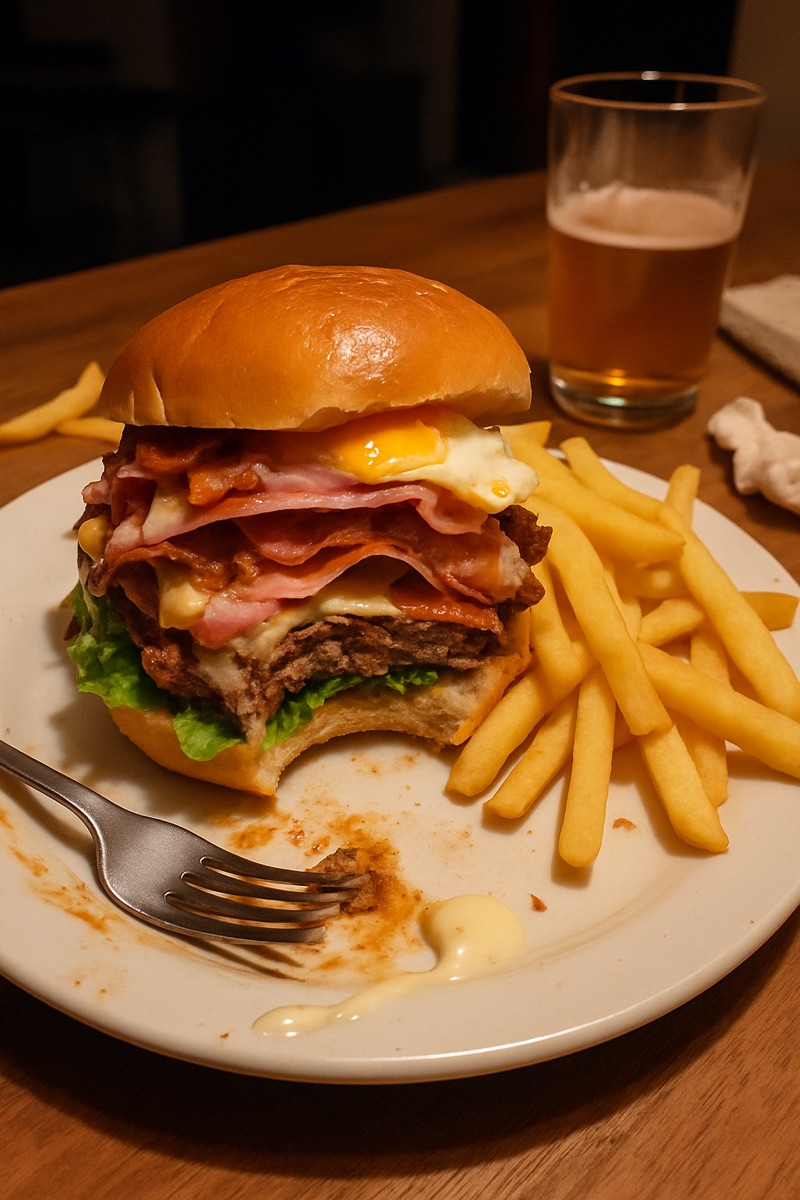
Chivito or asado?
No Uruguayan law names a national dish. The chivito is the one reference sources give: English Wikipedia calls it the national dish of Uruguay, and the Spanish-language article on Uruguayan cuisine calls it "el clásico plato nacional".
Asado is the other answer you will hear, and with reason. It is both a way of cooking and a social event: beef, sausages and offal grilled slowly over embers, in Uruguay without charcoal. Grilled meats are still the preferred food of more than half the population. Uruguay shares the asado with Argentina, while the chivito is Uruguay's own.
A Uruguayan asado follows a rhythm. It opens with a picada of Colonia cheese, olives, salami and bread, then chorizo, morcilla and offal come off the grill while the larger cuts finish. The meat is not marinated, only salted, and cooks slowly for around two hours. Chimichurri and salsa criolla, a tomato and onion relish, go alongside, with a simple tomato, lettuce and onion salad.
What is in a chivito?
A chivito is built in layers inside a soft bun. The core is churrasco, a thin slice of beef fillet seared fast on a griddle. Around it:
- Ham and mozzarella, melted onto the hot steak.
- Bacon, fried crisp.
- Egg, fried or hard-boiled.
- Lettuce, tomato and mayonnaise, plus green or black olives.
- Optional extras: grilled red peppers, onions, mushrooms or arugula, depending on the bar.
How a chivito is made
Everything happens on a hot griddle, in a set order. Two beef tenderloin steaks of 150 g are pounded to about 5 mm and salted. Bacon is fried crisp first, then the eggs are fried in its fat with the yolks kept soft.
The griddle is brought to very high heat and the steaks are seared just 1 to 2 minutes per side, so they stay tender. Ham and mozzarella go on top, covered for a minute to melt. The buns are split, toasted and spread with mayonnaise, then stacked: lettuce, tomato, steak with ham and cheese, bacon, egg and sliced olives. Fries go on the side. The quantities are in our chivito recipe.
Served without the bread, on a plate with the same toppings, it becomes a chivito al plato.
Where the chivito comes from
The name is a puzzle: chivito means kid, a young goat, and there is no goat in it. The usual account places its birth in 1946 at El Mejillón Bar in Punta del Este, the beach resort on Uruguay's Atlantic coast. A woman from northern Argentina, where barbecued kid is an asado classic, asked for a chivito sandwich.
The owner, Antonio Carbonaro, had no goat. He put a beef fillet steak in a bun instead, and the name stayed with the beef. Today it is standard fare across Uruguay, and the La Pasiva restaurant chain is especially known for it.
In Uruguay the chivito belongs to the minutas, the regional name for quick dishes cooked to order, the same family as panchos, the local hot dogs. Whether in a bun or al plato, it is almost always served with a portion of French fries, and sometimes with ensalada rusa, a potato salad.
Other dishes to know from Uruguay
Uruguayan cooking owes more to immigration than to native traditions: waves of mostly Italian immigrants in the late 19th and early 20th centuries, along with Spanish, Portuguese and French cooks, built a cuisine centred on beef, in which yerba mate is almost the only native ingredient.
Modern Uruguayan cooking made frying popular, and the milanesa is its other great example. The milanesa a caballo is a beef cutlet dipped in egg and breadcrumbs, fried golden in about 4 to 5 minutes a side, then topped with a fried egg, the "rider" of its name.
Torta frita is the rainy-day snack: a thin disc of wheat dough made with beef fat, cut in the centre so it does not puff, fried 1 to 2 minutes a side and eaten warm with mate.
For dessert, Uruguay turns to dulce de leche, milk and sugar cooked down to a thick caramel, the country's most representative dairy product. Uruguayans eat an estimated 3.2 kg each a year, spread on breakfast bread or used in pastry, and celebrate it on 11 October.
Uruguay's food has a lot in common with its neighbours; see our guide to South American cuisine. All three dishes, with ingredients and step-by-step methods, are on our page about the food of Uruguay.
The recipes
- Chivito🇺🇾 Uruguay · 30 minutes
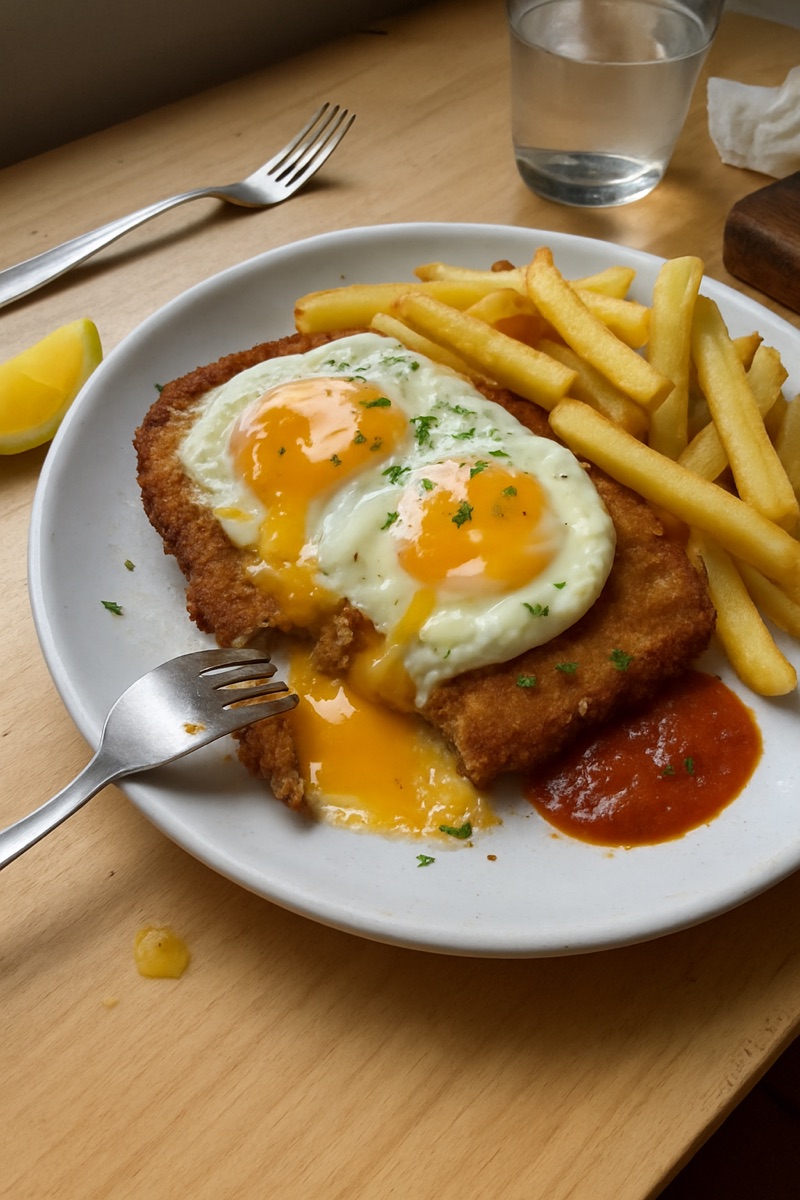 Milanesa a caballo🇺🇾 Uruguay · 35 minutes
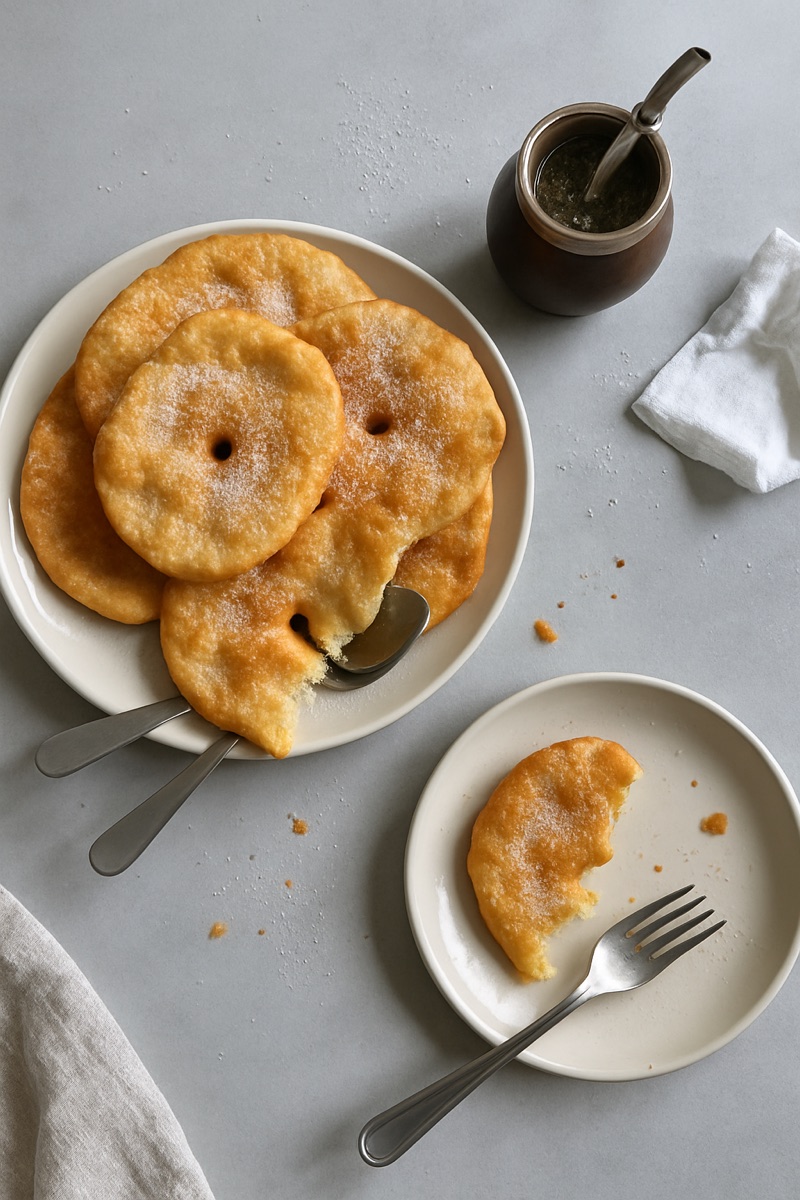 Torta frita🇺🇾 Uruguay · 55 minutes
Questions people ask
Why is it called chivito if there is no goat?
Chivito means kid (young goat). According to the usual story, a customer at El Mejillón Bar in Punta del Este asked for a kid sandwich in 1946; the owner had no goat and used beef fillet, and the name stuck.
Who invented the chivito?
It is credited to Antonio Carbonaro, owner of El Mejillón Bar in Punta del Este, in 1946.
What is served with a chivito?
French fries, almost always. Ensalada rusa (potato salad) is another common side.
Is asado Uruguay's national dish?
Asado is the other common answer and the country's central food ritual, but the chivito is the dish reference sources name as Uruguay's national dish. Neither has official status.
What is a chivito al plato?
The same fillings served on a plate without the bun, usually with fries.
Keep reading
- Traditional food of Uruguay: 14 dishes to know
- What is the national dish of Argentina?
- What is the national dish of Bolivia?
- What is the national dish of Brazil?
- What is the national dish of Chile?
- What is the national dish of Colombia?