 COPPER
Traditional food of Uruguay: 14 dishes to know
Uruguayan food is built on beef and on the cooking of Spanish and, above all, Italian immigrants. Meat is grilled slowly over wood embers, cutlets and steaks are fried or seared to order, and pasta, pizza and stews fill the rest of the week. The most emblematic dishes are asado, the chivito steak sandwich, milanesa and dulce de leche, with mate always at hand.
What Uruguayan food is built on
Uruguayan cooking owes more to immigration than to native traditions. Waves of mostly Italian immigrants in the late 19th and early 20th centuries, along with Spanish, Portuguese, French and German cooks, built a cuisine in which yerba mate is almost the only native ingredient. Its base is meat, primarily beef, but also chicken, lamb, pork and sometimes fish.
Boiling and roasting remain the preferred ways to cook meat and vegetables, while frying became popular with modern cooking, through milanesas and chivitos. The quick dishes cooked to order in bars and grills are called minutas. Italian pasta is everyday food, often eaten with bread, and German bakers left the pastries Uruguayans call bizcochos, starting with medialunas, small croissants.
Asado and the grill
- Asado — Beef ribs, skirt steak, chorizo, morcilla (blood sausage) and offal such as intestines and kidneys, grilled slowly over the embers of a wood fire, not charcoal, for one to two hours. It is both a meal and a social event, cooked by the asador on a brick and iron grill that most homes have on the patio. It opens with a picada of Colonia cheese, olives, salami and bread, and comes with chimichurri, salsa criolla and a simple salad.
- Choripán — A grilled chorizo split and laid in crusty bread, with mayonnaise, ketchup, tomato, lettuce or onion. It is a staple of street grills and often eaten while the rest of the asado cooks. A version with blood sausage is called morcipán.
Minutas: chivitos and milanesas
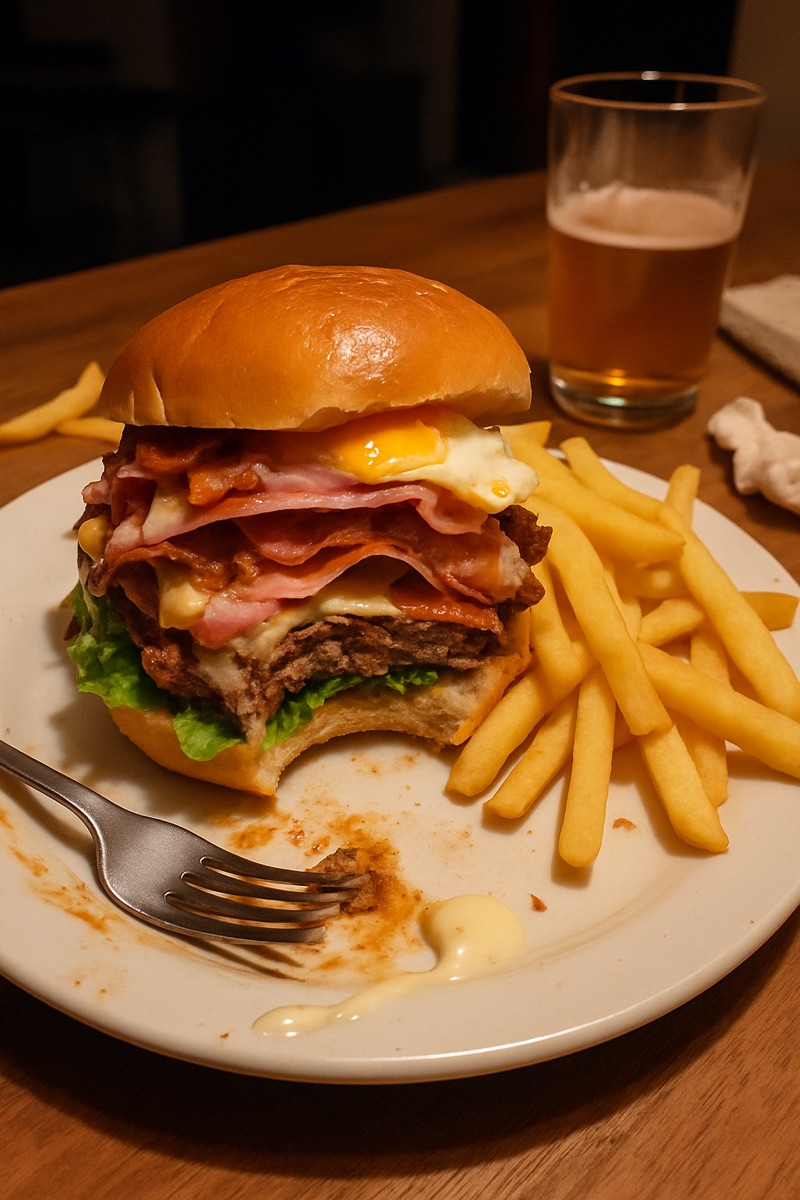
- Chivito — A soft bun stacked with a thin, fast-seared slice of beef fillet, ham, melted mozzarella, bacon, a fried or hard-boiled egg, lettuce, tomato, olives and mayonnaise, almost always served with French fries. The usual account dates it to 1946, at a bar in Punta del Este. Served on a plate without the bread, it becomes a chivito al plato.
- Milanesa a caballo — A thin beef cutlet dipped in egg and breadcrumbs and fried golden, topped with fried eggs, the riders of its name. The milanesa came with Italian immigrants and is also made with chicken or fish. A la napolitana it is covered with tomato sauce, ham and mozzarella; al pan it becomes a sandwich, and butcher shops sell cutlets already breaded and ready to fry.
Pizza, pasta, pies and stews
- Pizza and fainá — Uruguayan pizza is usually rectangular, with a thick crust, and cut into squares. It is ordered with fainá, a thin round of chickpea batter baked like pizza, brought by Ligurian immigrants around 1915; a slice of fainá laid on top of a slice of pizza is a pizza a caballo. Uruguay marks Fainá Day on 27 August.
- Capeletis a la Caruso — Cappelletti in salsa Caruso, a sauce of cream, ham, mushrooms, onion and meat created in Uruguay and named after the opera singer Enrico Caruso. It is also served with sorrentinos and agnolotti.
- Ñoquis del 29 — Gnocchi eaten on the 29th of every month, usually with tuco, a tomato and meat sauce. The custom came with Italian immigrants and is linked to Saint Pantaleon.
- Torta pascualina — A savoury pie from Liguria made with very thin sheets of olive oil dough around a filling of chard or spinach, cheese and egg, with whole eggs set into the filling so they cook hard in the oven. Italian immigrants brought it at the end of the 19th century, and it has become a standard of Río de la Plata home cooking.
- Puchero — A Spanish-style boiled dinner of meat on the bone, ossobuco, bacon, cabbage, corn, carrots, sweet potato, squash and potatoes. The broth is served first as a soup, then the meat and vegetables are eaten with bread and mustard. It is a cold-weather meal.
- Buseca — A thick stew of finely cut beef tripe, potatoes, beans or lentils, chorizo and tomato, from the Lombard tradition, boiled until the broth is very thick. It is eaten on cold days, usually with red wine.
Sweets, snacks and mate
- Torta frita — A thin disc of wheat dough made with beef fat, cut in the centre and fried, eaten warm with sugar, salt or dulce de leche. Uruguayans make them on rainy afternoons to go with mate; the Uruguayan version is thinner and crisper than the Argentine one.
- Dulce de leche — Milk and sugar cooked down into a thick caramel, the country's most representative dairy product. Uruguayans eat an estimated 3.2 kg each a year, on bread, in alfajores and in pastries, and celebrate it on 11 October.
- Chajá — A cake of sponge, meringue, whipped cream and peaches or strawberries, created on 27 April 1927 by Orlando Castellano at the Confitería Las Familias in Paysandú. It is named after the chajá, a bird common in the area.
- Mate — An infusion of dried yerba mate leaves, sipped hot from a gourd through a metal straw called a bombilla and refilled from a thermos carried everywhere. Uruguay is the world's largest consumer, at about 6.8 kg of yerba per person a year, and sharing a mate is a ritual of friendship, often with tortas fritas or bizcochos.
From Montevideo to the Brazilian border, and where to cook them
Uruguay is small, but its food changes with the setting. In Montevideo and other large cities, markets often have grill stations where customers order asado at the bar, served with offal and sausages and usually a cold lager at lunch. In towns, street vendors grill on the medio tanque, half a steel drum, and sell asado as a snack. Along the border with Brazil, the bauru sandwich is common, and some Brazilian dishes such as feijoada have joined Uruguayan stews. Paysandú, on the Uruguay River, claims the chajá, and Punta del Este the chivito.
The chivito, and why asado competes with it, is the subject of our article on the national dish of Uruguay. The chivito, milanesa a caballo and torta frita have full recipes, with ingredients and step-by-step methods, on our page about the food of Uruguay, alongside the rest of our South American recipes. Uruguay shares the asado, the milanesa and mate with its larger neighbour: compare with the traditional food of Argentina and the traditional food of Brazil.
The recipes
- Chivito🇺🇾 Uruguay · 30 minutes
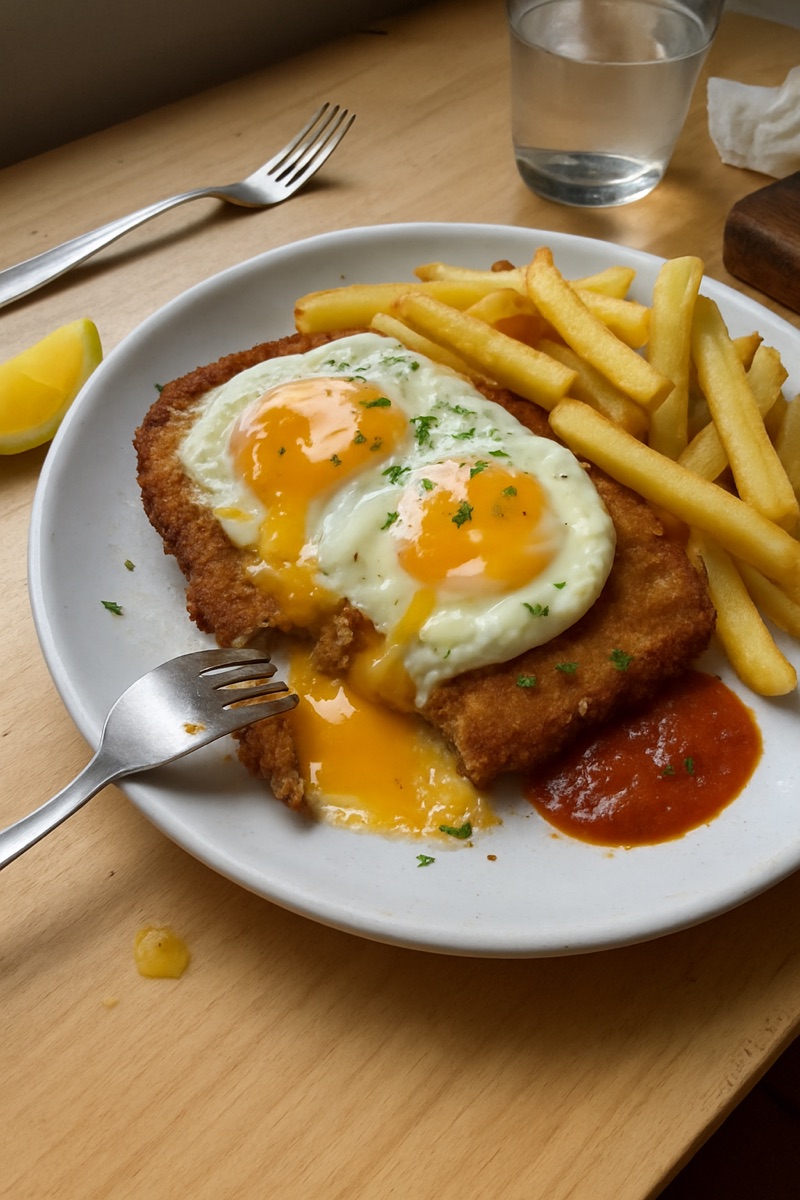 Milanesa a caballo🇺🇾 Uruguay · 35 minutes
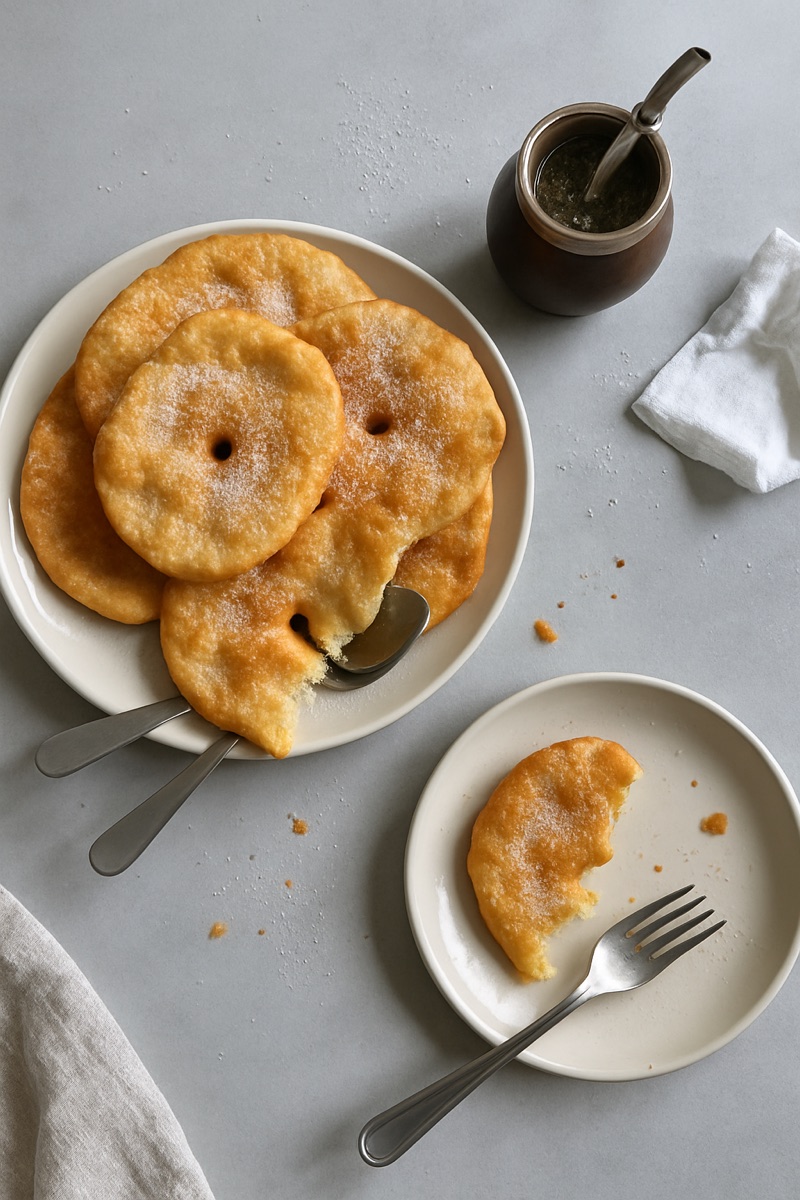 Torta frita🇺🇾 Uruguay · 55 minutes
Questions people ask
What is the most popular food in Uruguay?
Asado, beef and sausages grilled slowly over wood embers, is the central meal, and the chivito steak sandwich is the dish most often named as Uruguay's own. Milanesas, pizza with fainá and pasta are everyday food.
What do people in Uruguay eat for breakfast?
Bread spread with dulce de leche is a breakfast classic. Mate, drunk at any hour, often comes with bizcochos, the pastries of German origin such as medialunas, or with tortas fritas on rainy days.
Is Uruguayan food spicy?
No. Uruguayan cooking is mild and relies on salt, garlic, herbs and sauces such as chimichurri and salsa criolla. The main exception is picantina, a hot sauce for hot dogs and choripanes.
What is the national drink of Uruguay?
Mate, an infusion of yerba mate drunk hot from a gourd through a metal straw. Uruguayans drink more of it per person than anyone else, about 6.8 kg of yerba a year.
What is a chivito?
A Uruguayan steak sandwich of thin beef fillet with ham, mozzarella, bacon, egg, lettuce, tomato and mayonnaise, usually served with fries. It was created in Punta del Este in 1946.
Keep reading
- What is the national dish of Uruguay?
- Traditional food of Argentina: 13 dishes to know
- Traditional food of Bolivia: 14 dishes to know
- Traditional food of Brazil: 14 dishes to know
- Traditional food of Chile: 14 dishes to know
- Traditional food of Colombia: 13 dishes to know