 COPPER
What is the national dish of Puerto Rico?
Puerto Rico has no official national dish, but the one most often cited is arroz con gandules: medium-grain rice cooked in one pot with pigeon peas, pork and sofrito, coloured orange by annatto oil and traditionally served with roast pork. Mofongo, green plantains fried and pounded with garlic and pork cracklings in a wooden pilón, is its main rival for the title.
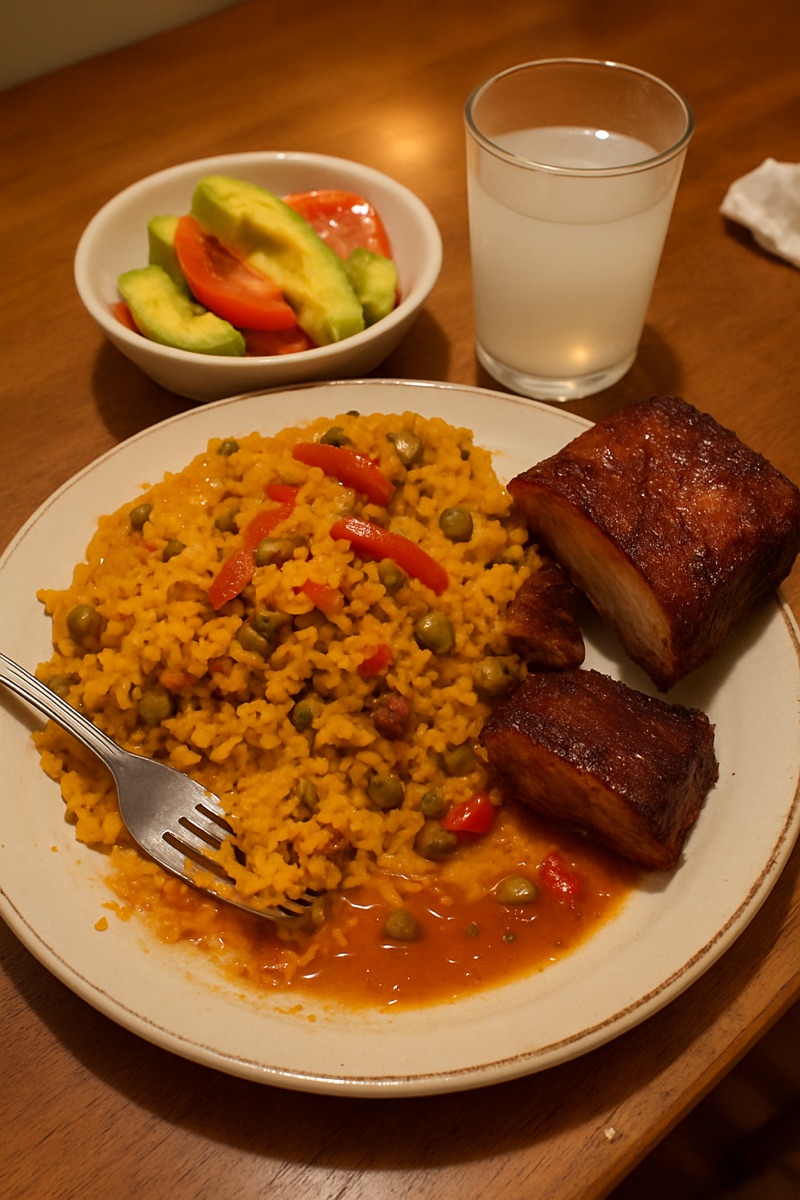
Arroz con gandules or mofongo: which is the national dish?
No law or decree names a national dish for Puerto Rico, so the answer depends on who you ask. English-language references describe arroz con gandules as Puerto Rico's national dish "along with roasted pork", and the Spanish-language encyclopedia calls it the *plato insignia*, the flagship dish, of Puerto Rican cooking.
The other serious candidate is mofongo. The Spanish-language article on Puerto Rican gastronomy calls it the *plato nacional*, because it brings together the Taíno pilón, the African technique of mashing starch and Spanish garlic. Wikipedia's list of national dishes simply gives all three for Puerto Rico: lechón (roast pork), mofongo and arroz con gandules.
The two also sit at different moments of the table. Arroz con gandules is served mainly during the Christmas season and on special occasions; mofongo is traditionally eaten with fried meat and a chicken broth.
What is in arroz con gandules?
Gandules are pigeon peas. Everything else in the pot is there to season the rice, and almost all of the seasoning comes from sofrito, a blended paste of recao, cilantro, onion, garlic, ají dulce peppers and cubanelle peppers. There is no cumin in the sofrito itself.
- Medium-grain rice and gandules (pigeon peas), cooked together in the same pot.
- Salt pork, ham or bacon, rendered first so the rice cooks in its fat.
- Annatto oil, oil heated with achiote seeds, which turns the rice yellow-orange.
- Alcaparrado, a mix of manzanilla olives, piquillo peppers and capers, added with its brine.
- Tomato sauce, a bay leaf and chicken broth.
How arroz con gandules is made
It is cooked in a caldero, a heavy pot. Diced salt pork renders for about 5 minutes, then annatto oil and sofrito fry for 3 to 4 minutes until the raw smell goes. Tomato sauce, alcaparrado and the bay leaf follow, then the drained gandules and broth.
The rinsed rice boils uncovered until the liquid sinks to its surface, 5 to 8 minutes. Then the pot is covered tightly, traditionally with a banana or plantain leaf tucked under the lid, and left on the lowest heat for 20 to 25 minutes without lifting the lid or stirring.
That undisturbed cooking produces the pegao, the crisp browned layer stuck to the bottom of the caldero. It is scraped up and served with the rice as the best part, not thrown away as a mistake. Quantities and timings are in our arroz con gandules recipe.
Mofongo, the other contender
Mofongo is made from green plantains, fried and then mashed with garlic, pork cracklings (chicharrón), olive oil or lard and a little broth in a wooden pilón, a mortar and pestle. The goal is a tight ball dense enough to soak up the broth or meat juices served with it.
Its roots are African: the word is traced to the Kikongo *mfwenge-mfwenge*, and the dish is distantly related to West African fufu, though much denser and stiffer. The earliest known written recipe, *mofongo criollo*, appears in Puerto Rico's first cookbook, *El Cocinero Puerto-Riqueño*, in 1859.
The modern version fries the plantains twice: 6 minutes at 150 °C to soften, then 2 minutes at 190 °C to crisp the edges. They are pounded hot, never stirred, with only about 60 ml of broth so the mash does not turn to purée. Our mofongo recipe walks through each step. Neighbouring islands have their own plantain mashes; see the national dish of the Dominican Republic.
What is served with arroz con gandules?
At Christmas, arroz con gandules shares the table with roast pork and pasteles, the island's quintessential holiday parcel: a soft dough of plantain, green banana and tropical roots, filled with chopped meat, raisins, capers, olives and chickpeas, wrapped in a banana leaf and boiled. Many families make a pork broth for the pasteles and reuse what is left to cook the rice.
Other dishes on the same table:
- Potato salad with apples and chorizo.
- Escabeche of green banana and chicken gizzards.
- Coquito, a spiced coconut drink served in shot glasses, close to eggnog.
- Arroz con gandules apastelado, a variant of the rice itself with mashed green plantain or pasteles dough stirred in.
Other dishes to know from Puerto Rico
Pastelón is often described as Puerto Rico's answer to lasagne: strips of black-ripe sweet plantain, fried soft rather than crisp, replace the pasta around a picadillo of beef stewed with sofrito, tomato sauce and olives. Beaten eggs poured over the top hold the layers together, and the dish bakes about 45 minutes at 180 °C, then rests 15 minutes before slicing.
Puerto Rico's food belongs to the wider Caribbean kitchen, built on plantains, rice, pork and sofrito. You will find all three dishes, with ingredients and step-by-step methods, on our page about the food of Puerto Rico.
The recipes
- Arroz con gandules🇵🇷 Puerto Rico · 55 minutes
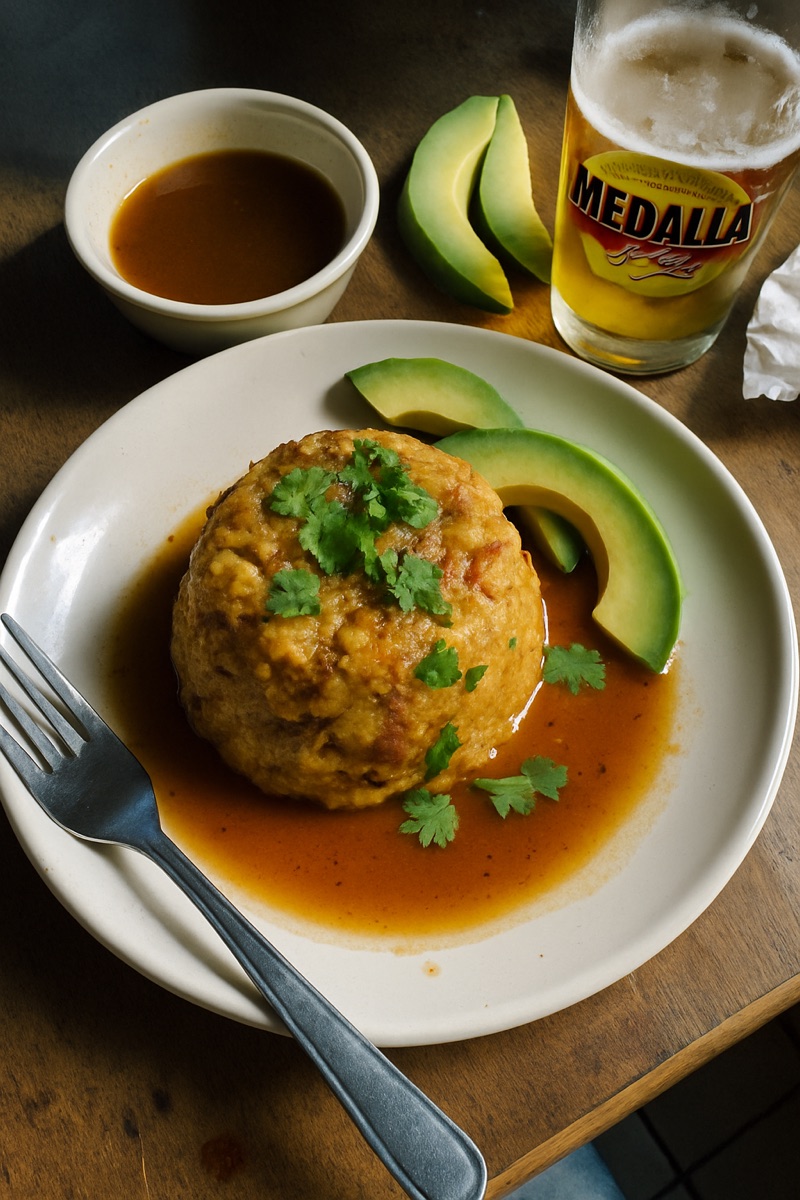 Mofongo🇵🇷 Puerto Rico · 45 minutes
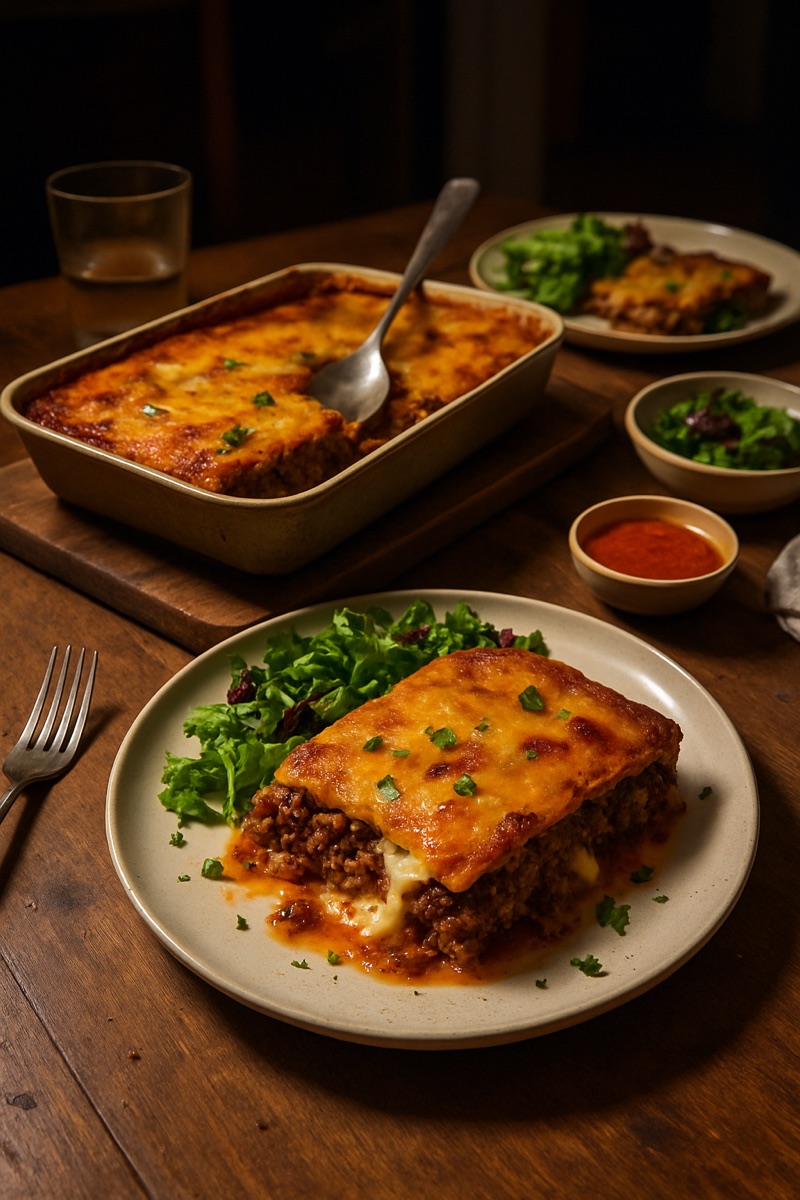 Pastellón🇵🇷 Puerto Rico · 1 hour and 55 minutes
Questions people ask
Is arroz con gandules Puerto Rican or Dominican?
Arroz con gandules is the Puerto Rican version; the Dominican Republic cooks its own equivalent, moro de guandules. Similar rice-and-legume dishes exist across the Caribbean, such as Cuba's moros y cristianos and Jamaica's rice and peas.
Is mofongo the national dish of Puerto Rico?
Some sources call it that, including the Spanish-language Wikipedia article on Puerto Rican gastronomy. There is no official national dish, and arroz con gandules with roast pork is the more often cited answer.
What are gandules?
Gandules are pigeon peas, a small round legume. Canned and frozen gandules are widely sold, and they go into the pot drained, together with the broth and the rice.
What is pegao?
Pegao is the crisp, browned layer of rice that sticks to the bottom of the pot when the rice cooks covered and undisturbed. In Puerto Rico it is scraped up and served as the best part of the dish.
When is arroz con gandules eaten?
It is served mainly during the Christmas season and on special occasions, alongside roast pork and pasteles.
Is mofongo the same as fufu?
No. Mofongo descends from the African technique behind fufu, but it is made from fried plantains pounded with garlic and pork cracklings, and it is much denser and stiffer than fufu.
Keep reading
- Traditional food of Puerto Rico: 13 dishes to know
- What is the national dish of Antigua and Barbuda?
- What is the national dish of the Bahamas?
- What is the national dish of Barbados?
- What is the national dish of Cuba?
- What is the national dish of Dominica?