 COPPER
Traditional food of Suriname: 14 dishes to know
Traditional Surinamese food is a fusion of Hindustani, Creole, Javanese, Chinese, Jewish, Dutch and Indigenous cooking, built on rice, roti, cassava and tayer root, chicken, salted meat and salt fish, spiced with Madame Jeanette peppers. The most emblematic dishes are pom, roti with curried chicken, bami and moksi-alesi.
What Surinamese food is built on
Suriname's population came from almost every continent, and so did its food: Indian (Hindustani), West African and Creole, Javanese, Chinese, Dutch, Jewish, Portuguese, British and Indigenous cooking all meet in it. The communities have borrowed each other's dishes and ingredients for generations, and that fusion produced new dishes found nowhere else.
The staples are rice, root crops such as tayer and cassava, and roti. Chicken is the most common meat, partly because, unlike pork or beef, no community's religious rules forbid it. Zoutvlees (salted meat) and bakkeljauw (salt fish) are the usual flavourings, and Madame Jeanette, a fragrant hot pepper, gives the heat.
Vegetables reflect the same mix: yardlong beans (kousenband), okra, antruwa, tayer leaves, eggplant (boulanger) and bitter melon (sopropo). The country's rivers and swamps also supply fish such as kwikwi, eaten in a dish of the same name, and koebi, caught in the big rivers by Indigenous, Creole and Hindustani fishermen. Smoked fish from the river mouths and small creek fish such as anjoemara and piranha complete the list. Bread is Dutch in style: the white puntje roll is filled with Surinamese fillings, and in the interior cassava is baked into flatbreads.
Main dishes
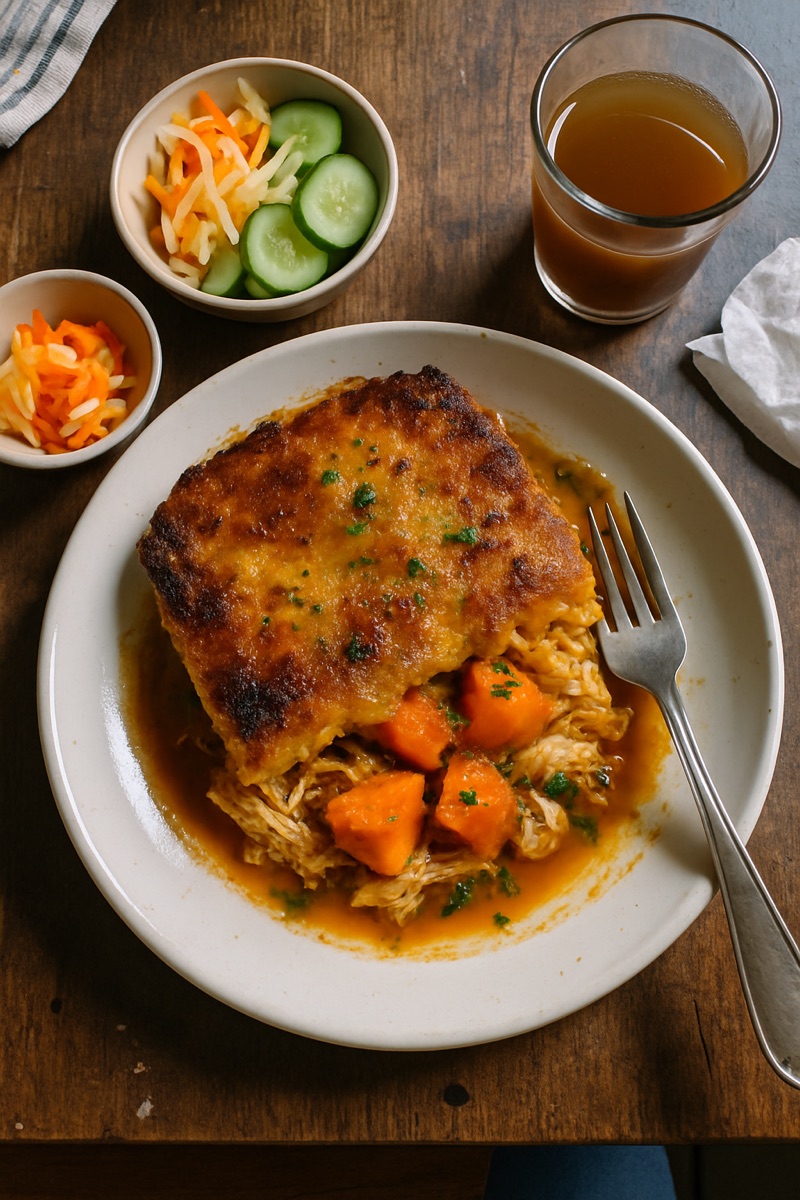
- Pom — Grated pomtajer root, soured with citrus juice, baked in two layers around stewed chicken and salted meat until golden. Of Portuguese-Jewish and Creole origin, it is the most popular festive dish and the most often named national dish of Suriname. Our pom recipe uses orange and lemon juice.
- Roti — A thin dhalpuri flatbread filled with ground split peas, served with curried chicken, potatoes, yardlong beans and often a boiled egg. A Hindustani dish, it is as present at big parties as pom; see our Surinamese roti recipe.
- Bami — Egg noodles fried with ketjap manis (sweet soy sauce) and trassi (shrimp paste), served with chicken, sambal and pickles. It comes from Suriname's Javanese community; our bami recipe follows the Javanese-Surinamese method.
- Nasi — Javanese fried rice, which in Suriname is often just called nasi. Unlike in Indonesia, the meat is cooked separately and served on top, often moksi meti, a mix of roasted meats, with omelette strips, atjar and bakabana. Soy sauce colours the rice, though some cooks use tomato paste instead.
- Moksi-alesi — Rice boiled together with salted meat, shrimp or salt fish and vegetables, a Creole one-pot dish.
- BB met R — Brown beans served with rice, a dish of Jewish-Creole origin. It became famous in the Netherlands through a song by the Surinamese singer Max Woiski Sr.
- Tjauw min — Chinese-Surinamese stir-fried noodles with meat and vegetables. Served as tjauw min moksi meti, topped with mixed roasted meats, it is one of the best-known Chinese-Surinamese plates.
Soups and one-pot dishes
- Herheri — A one-pot dish of root crops such as cassava and sweet potato with egg, plantain and salt fish. It comes from the cooking of Afro-Surinamese people under slavery and is eaten on Keti Koti, 1 July, the day that marks the abolition of slavery. Since 2020, free herheri has been handed out on Keti Koti in several Dutch towns.
- Peanut soup — A soup of ground peanuts, usually with chicken, served with rice or tom tom, balls of cassava. It draws on Javanese, West African and Afro-Surinamese cooking and is one of the dishes most associated with Suriname in the Netherlands.
- Saoto — A spiced Javanese soup of broth, chicken and vegetables. It is the Surinamese spelling of the Indonesian soto, brought by Javanese migrants and now counted as part of the national cuisine.
Snacks and sweets
The drinks tell the same story. Dawet, a pink Javanese drink of lemongrass and coconut milk with small starch balls, orgeade, an almond syrup brought by Jewish immigrants, and gemberbier (ginger beer) are the classic sweet drinks. Parbo is the biggest beer brand, and schaafijs, ice shaved from a block and covered with syrup, is the popular snack of the hot afternoons. The snacks and sweets to know:
- Bara — A Hindustani fritter of urdi flour mixed with tayer leaves or spinach, spiced with cumin, garlic, turmeric and Madame Jeanette pepper, then deep-fried. It is sold in Surinamese eateries and roti shops.
- Bakabana — Plantain dipped in batter and fried, eaten as a snack or as a side with nasi. It is of Javanese origin, a cousin of the Indonesian pisang goreng.
- Bojo — A cake of grated cassava, grated coconut or coconut milk, sugar and spices. It comes from Indigenous and Afro-Caribbean traditions and is also called cassava pone.
- Fiadu — A cake-like tart of Portuguese-Jewish origin filled with raisins, currants, almonds and candied peel, often with rum. It is one of the festive sweets, along with maizena koekjes, cornstarch cookies decorated with coloured sprinkles.
Suriname and its neighbours
Suriname shares roti, pholourie and pepperpot with Guyana, and cassava bread with the Indigenous peoples of the South American interior. Its Javanese and Dutch layers set it apart from both the Caribbean and the rest of the continent. Compare with the traditional food of Guyana and the traditional food of Brazil.
The food also travelled north: after the large emigration of the 1970s, roti shops and Surinamese eateries spread across the Netherlands, where broodje pom and broodje bakkeljauw, sandwiches of pom or salt fish, are now everyday food. Pom, roti and bami all have tested, step-by-step recipes in Copper, on our page about the food of Suriname.
The recipes
- Pom🇸🇷 Suriname · 15 hours and 50 minutes
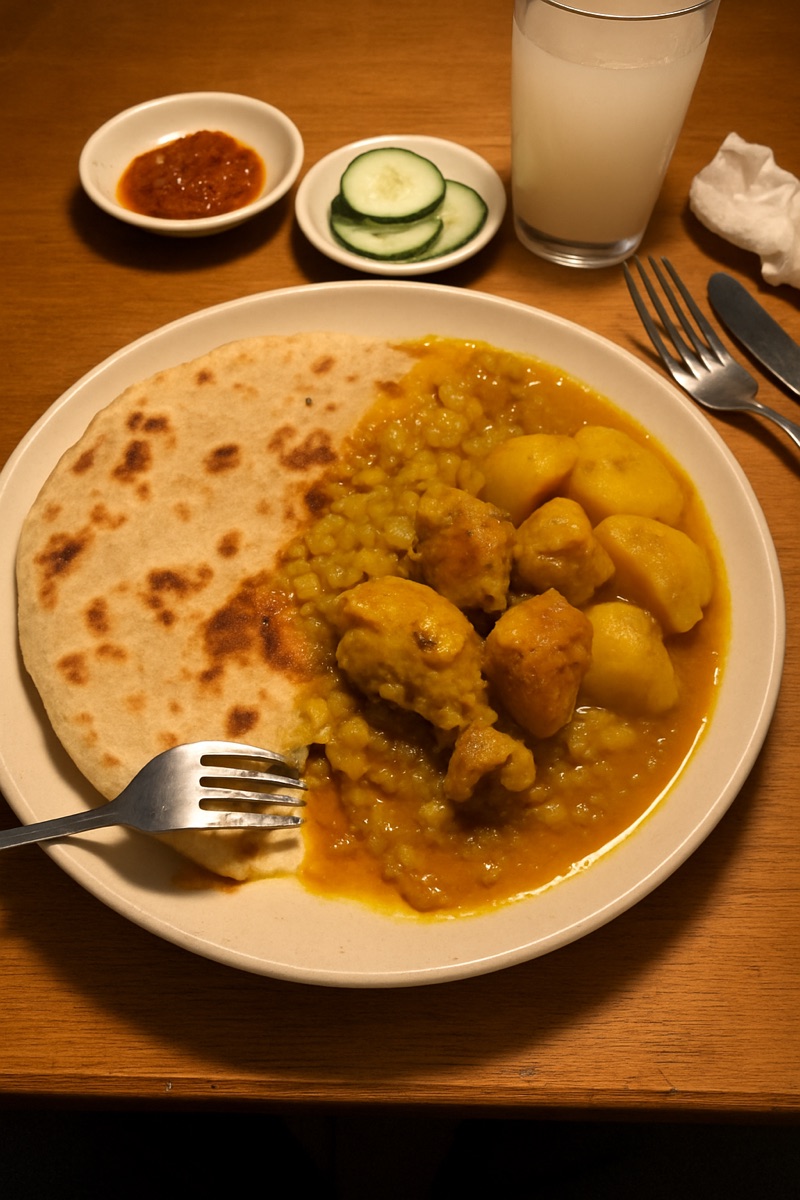 Roti🇸🇷 Suriname · 1 hour and 50 minutes
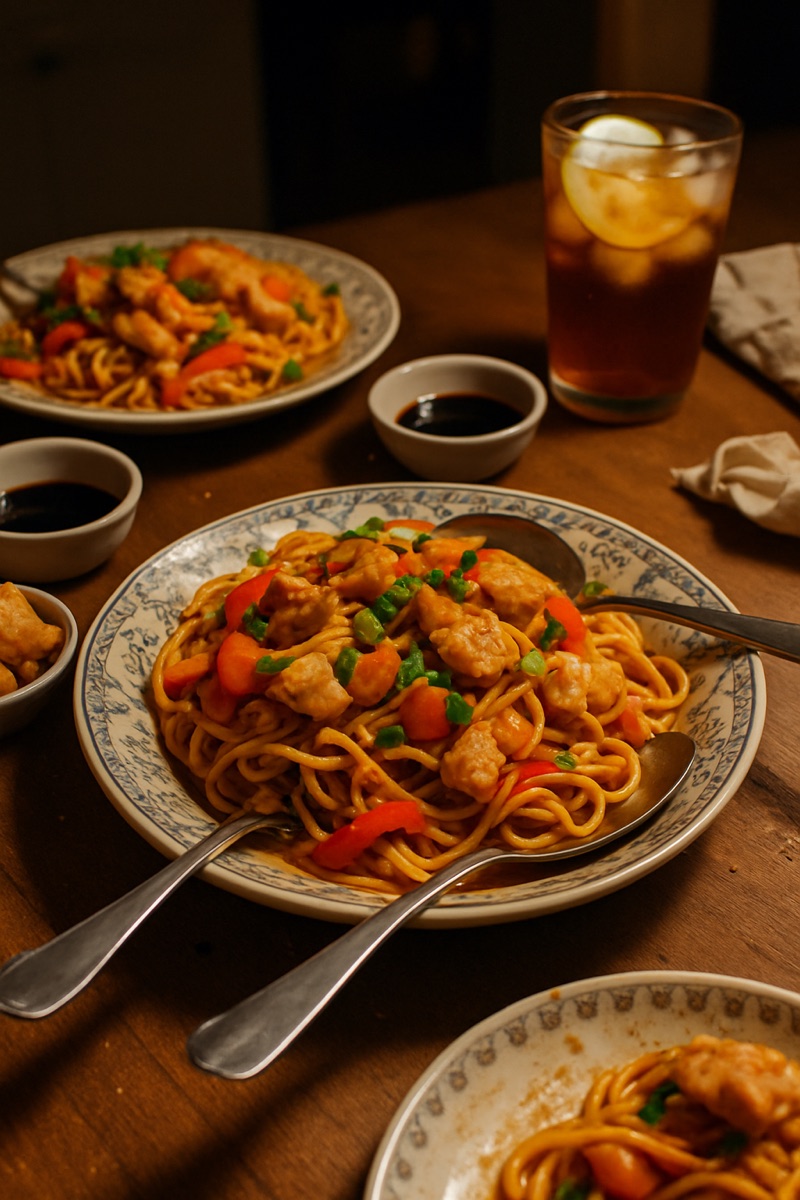 Bami🇸🇷 Suriname · 30 minutes
Questions people ask
What is the most popular food in Suriname?
Pom, the oven dish of tayer root and chicken, is the most popular festive dish. Roti with curried chicken, bami, nasi and moksi-alesi are the dishes eaten most often.
What is the national dish of Suriname?
No law names one, but pom is the dish most often given, with roti as its main rival.
Is Surinamese food spicy?
The heat comes from Madame Jeanette and adjuma peppers, both hot. Most dishes are moderately spiced, and sambal or a pepper sauce is served on the side so everyone can add their own.
What language are Surinamese dish names in?
A mix, like the food: Sranan Tongo (moksi-alesi, herheri), Dutch (pindasoep, zoutvlees), Javanese and Indonesian (bami, nasi, saoto) and Hindi (roti).
Where can you eat Surinamese food outside Suriname?
In the Netherlands above all, where Amsterdam alone has more than 120 places serving Surinamese food, and most sell pom and broodje pom.
Keep reading
- What is the national dish of Suriname?
- Traditional food of Argentina: 13 dishes to know
- Traditional food of Bolivia: 14 dishes to know
- Traditional food of Brazil: 14 dishes to know
- Traditional food of Chile: 14 dishes to know
- Traditional food of Colombia: 13 dishes to know