 COPPER
What is the national dish of Suriname?
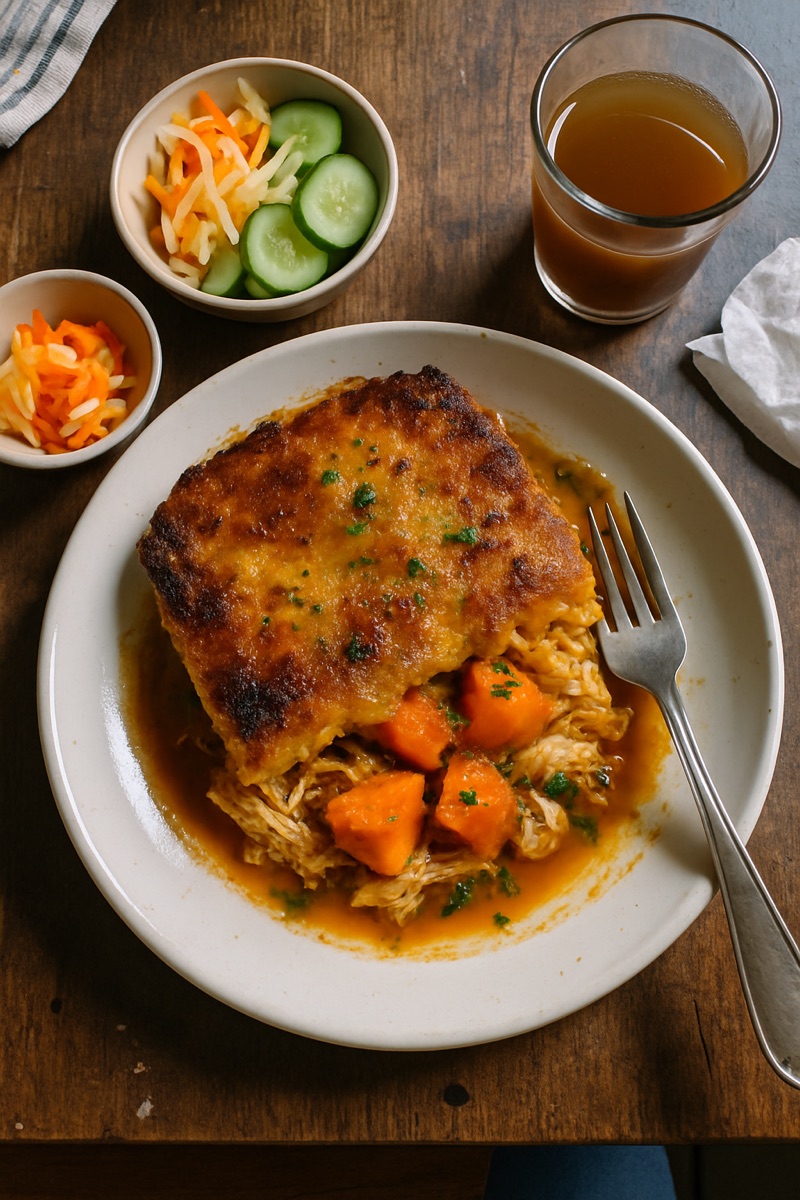
The national dish of Suriname is pom: grated pomtajer root, soured with citrus juice and baked in two layers around stewed chicken until the top turns golden. It came from Suriname's Portuguese-Jewish community and was adapted by Creole cooks, and it is made for birthdays, family gatherings, Easter and Christmas. No law makes it official, but it is the dish most often named, with roti as its main rival.
What is pom?
Pom is an oven dish built from three things: chicken, citrus juice and pomtajer, the root of *Xanthosoma sagittifolium*, a plant also known as tayer, new cocoyam or malanga. Only the root is native to the region. The grated root forms a top and bottom layer, with seasoned chicken in the middle.
The classic method is always the same: sautéed chicken in a sauce of oil or margarine, onions, tomatoes, salt, pepper and nutmeg, set between two layers of raw grated root mixed with citrus juice, then baked until golden brown.
In Suriname and in the Surinamese community of the Netherlands, pom is the most popular and best-known festive dish. It is eaten with white rice and vegetables, or as a snack in a bread roll, the broodje pom.
Suriname has no law naming a national dish. Pom holds the title by consensus, though roti is just as present at big parties and is loved by every community in the country.
What is in pom?
The filling is simple; the work is in the grated root. Our verified recipe uses:
- 1.5 kg of pomtajer, peeled and finely grated
- 1 kg of chicken thighs, seasoned with salt and 1 teaspoon of nutmeg
- 300 g of salted beef
- 2 onions, 4 tomatoes and 3 garlic cloves
- 100 ml of orange juice and 60 ml of lemon juice
- butter and 2 chicken stock cubes
How pom is made
In our pom recipe, 300 g of salted beef is soaked for 12 hours, simmered and diced. 1 kg of chicken thighs, seasoned with salt and nutmeg, is browned in butter, then stewed for 30 minutes with onions, tomatoes, garlic and the beef. Every drop of that cooking liquid is kept.
1.5 kg of pomtajer is peeled and finely grated, then mixed with the cooking liquid, 100 ml of orange juice and 60 ml of lemon juice. The acidity stops the root from greying and gives pom its tang. Potato is no substitute: it collapses instead of setting.
Half the root goes into a buttered dish, then the meat, then the rest of the root. It bakes covered at 220 °C for an hour, then uncovered at 175 °C for another hour, and rests 15 minutes before being cut into squares.
Where pom comes from
Pom is usually described as a dish of Jewish and Creole origin. It was introduced by Portuguese-Jewish plantation owners as an oven dish of potato. Potatoes did not grow in Suriname and had to be imported, so the local tayer root soon replaced them. Until then, the root had been eaten only boiled, by the Indigenous peoples of South America. Creole cooks later adapted the kosher original.
The first published description dates from the *Encyclopedie van Nederlandsch West-Indië* (1914–1917): the big tayer "is grated and treated with the juice of bitter oranges, afterwards with chicken or fish, made into a pie, which dish is known as pom."
Pom in the Netherlands
Pom travelled with the Surinamese community to the Netherlands. Amsterdam alone has more than 120 places serving Surinamese food, and most of them sell pom and broodje pom. Grated, frozen pomtayer is sold ready to use in Dutch shops.
In 2007, Imagine IC, an Amsterdam centre for migrant cultures, held an exhibition about the dish.
Other dishes to know from Suriname
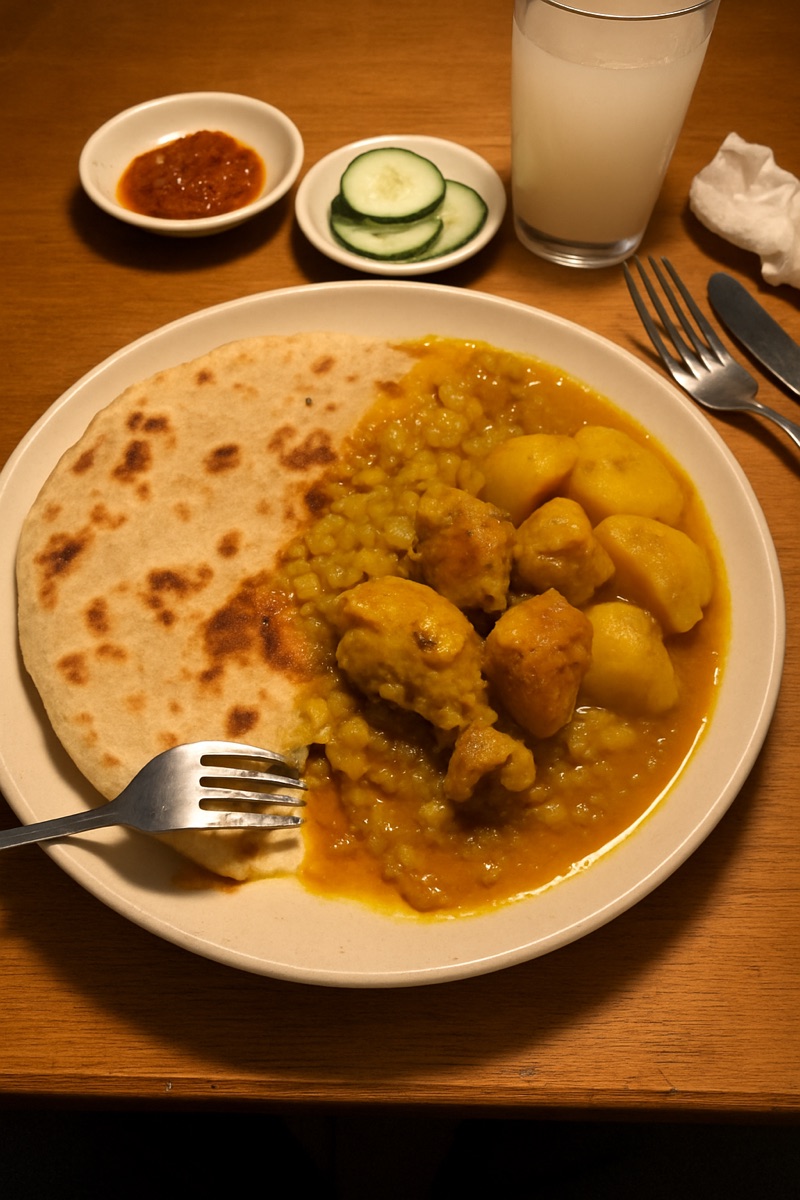
Surinamese roti is a thin flatbread sealed around a dry powder of yellow split peas ground with cumin, cooked on a hot griddle and brushed with oil. It is served with curried chicken and potato, the Hindustani contribution to the national table.
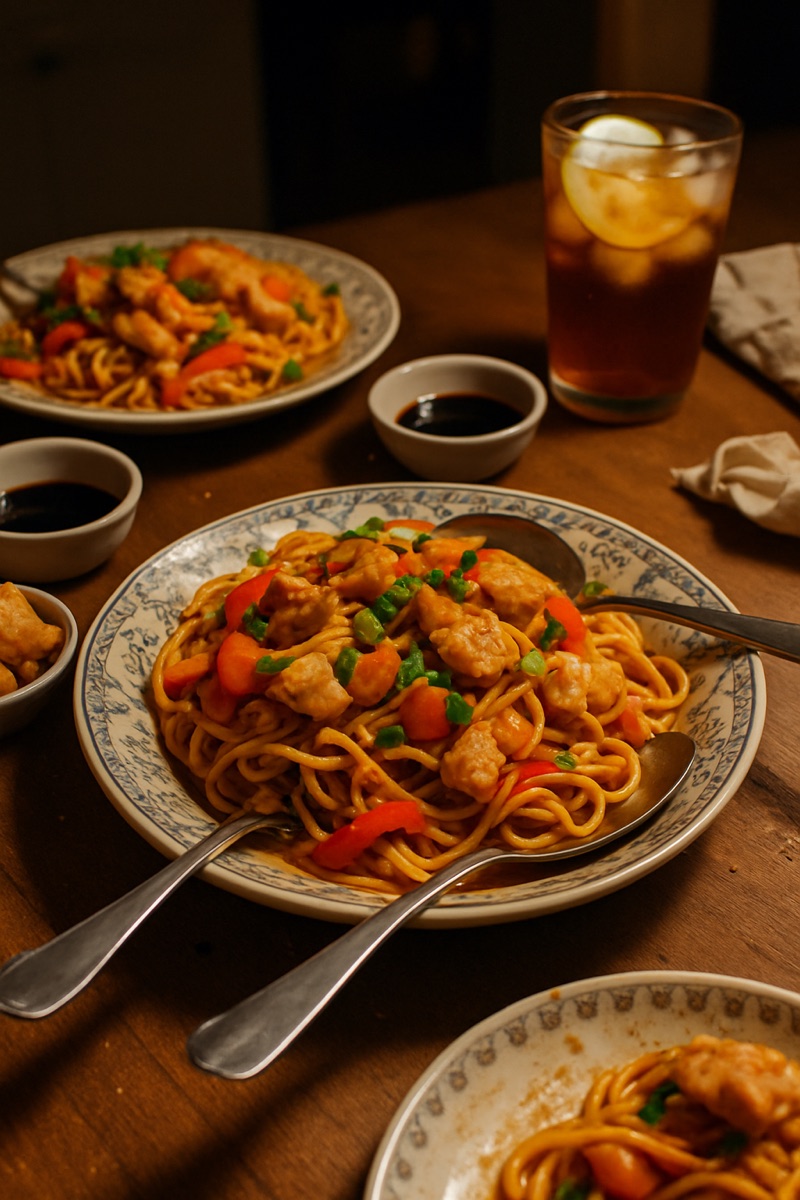
Bami comes from Suriname's Javanese community: egg noodles fried with trassi (shrimp paste), darkened with ketjap manis and served with chicken, Madame Jeanette sambal and pickles.
Suriname's table is a mix of Hindustani, Creole, Javanese, Chinese, Dutch, Jewish, Portuguese and Indigenous cooking, and the communities borrow freely from each other. Other dishes you will meet are moksi-alesi, rice boiled with salted meat, shrimp or fish; peanut soup; battered fried plantain; and nasi goreng.
For the neighbouring kitchen, see Guyana's national dish. Every recipe is on our page about the food of Suriname, and the rest of the continent in our guide to South American food.
The recipes
- Pom🇸🇷 Suriname · 15 hours and 50 minutes
 Roti🇸🇷 Suriname · 1 hour and 50 minutes
 Bami🇸🇷 Suriname · 30 minutes
Questions people ask
Is pom officially the national dish of Suriname?
No law makes it official. Pom is the dish most often called Suriname's national dish, with roti as its main rival.
Is pom Surinamese or Jewish?
Both. It was introduced by Suriname's Portuguese-Jewish plantation owners and adapted by Creole cooks, using the local pomtajer root instead of potato.
What can I use instead of pomtajer?
Look for it as pomtayer, tayer, yautía or malanga in Caribbean or Latin American shops; taro is the closest stand-in. Potato does not work, as it collapses instead of setting.
What is served with pom?
White rice and vegetables, or a soft bread roll for broodje pom.
When do Surinamese people eat pom?
At birthday parties, family gatherings and holidays such as Easter and Christmas.
Keep reading
- Traditional food of Suriname: 14 dishes to know
- What is the national dish of Argentina?
- What is the national dish of Bolivia?
- What is the national dish of Brazil?
- What is the national dish of Chile?
- What is the national dish of Colombia?