 COPPER
What is the national dish of Nicaragua?
Nicaragua has no national dish set by law, but gallo pinto is the one most often cited: day-old white rice fried with small red beans and some of their dark cooking broth until dry and toasted at the edges. It is eaten at any meal, often with eggs, fresh cheese and tortillas. The nacatamal, a large pork-filled corn parcel boiled in plantain leaves, is also called a national dish.
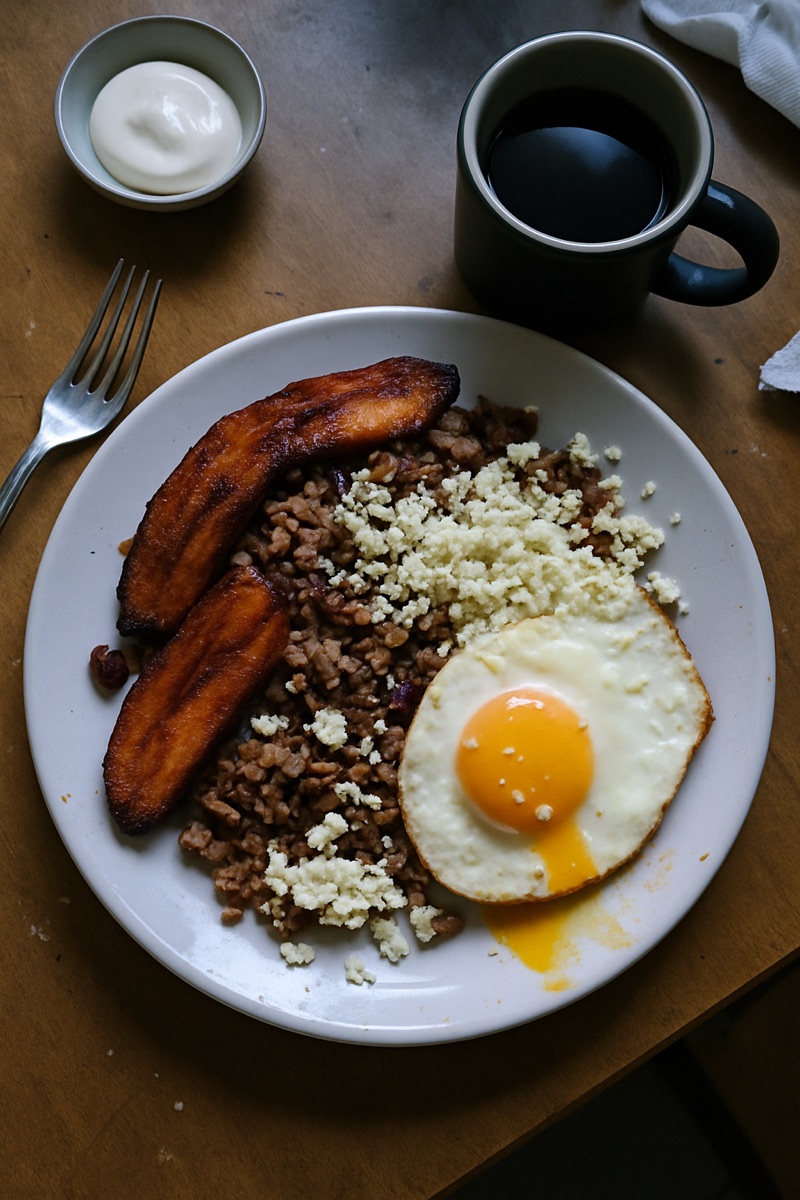
What is gallo pinto?
Gallo pinto means 'spotted rooster' in Spanish, a name usually explained by the speckled look of rice cooked with beans. In Nicaragua it is made with small red silk beans (frijoles rojos de seda), never black ones, plus onion and vegetable oil or, less often, lard.
It belongs to the cooking of western Nicaragua, built on the corn, beans and rice of the Pacific side; the Caribbean east cooks mostly with seafood and coconut. Nicaraguan recipes use fewer ingredients than Costa Rican ones. The flavour comes from the beans' cooking broth and from frying the mix long enough to toast it. On the Caribbean coast the dish is called rice and beans and is cooked with coconut milk.
It is eaten at any time of day, and in some homes at every meal. It is also the standard side at fritangas, the street grills that sell fried and grilled food, where it goes with almost every plate. The dish carries political weight too: in 2019 President Daniel Ortega called for a 'gallo pinto economy'.
How Nicaraguan gallo pinto is made
It is a two-day dish. The day before, the beans cook for about 2 hours with garlic and salt and stay in their broth, and the rice is cooked and refrigerated so the grains dry out and separate.
On the day, an onion is fried golden in oil, then the drained beans go in with about 120 ml of their broth, and a third of them are crushed with the spoon. The cold rice is added and fried over medium-high heat for 10 to 12 minutes, scraping often, until every grain is coloured and the edges are toasted. Our gallo pinto recipe gives the quantities.
- Fried eggs
- Fresh cheese
- Corn tortillas
- Sour cream
- Chilero, a pickle of fermented onions, carrots and chilli peppers
Is gallo pinto from Nicaragua or Costa Rica?
Both countries consider gallo pinto a national dish, and the origin is disputed. Costa Rica dates it to 1930s San José; Nicaragua traces it to a dish brought much earlier by enslaved Africans. Historians generally agree the dish has Afro-Caribbean roots.
The rivalry has its own name, the 'Gallo Pinto War'. In 2003 Costa Rica cooked nearly 1,000 pounds of gallo pinto for a Guinness record; Nicaragua answered with 1,200 pounds, and the contest became an annual Gallo Pinto Day. Read how the other side tells it in our article on the national dish of Costa Rica.
The nacatamal, Nicaragua's other national dish
Some writers give the title to the nacatamal instead. Its name comes from Nawat and means 'meat tamale', and it goes back to the Nicarao people of western Nicaragua, who made it with deer, turkey or iguana before pork and chicken arrived with the Spanish.
Corn masa is worked with lard, sour orange and achiote, cooked until it pulls away from the pot, then wrapped in plantain leaves around marinated pork, raw rice, potato, tomato, sweet pepper and a sprig of mint. The tied parcels boil for 4 to 5 hours and are turned halfway. Some cooks add olives, prunes, raisins or capers, and the small egg-shaped chile congo; today many wrap the parcels in foil as well as leaves. Making them often takes two days and the whole family, and neighbours are often invited to share them. Nicaraguans eat them typically on weekends, for breakfast or dinner, with white bread and black coffee. See our nacatamal recipe.
Other dishes to know from Nicaragua
Vigorón is the street dish of Granada. According to the historian Alejandro Barberena Pérez, María Luisa Cisneros Lacayo created it there in 1914 and named it after a poster for a tonic called Vigoron. It is boiled cassava topped with a vinegar cabbage salad and crisp pork chicharrón, served on a banana leaf and eaten with the fingers. Because it is quick to put together, it is often served to visiting family and guests, and it is common in Costa Rica too. Its vinegar cabbage salad is a curtido, the same family of relish served with El Salvador's pupusas.
Vaho is a close relative: brisket pressure-cooked with green and ripe plantains, which vigorón does not include. Corn runs through the rest of the cuisine, from indio viejo, a thick corn and meat stew, to pinolillo, the toasted corn and cacao drink that gives Nicaraguans their nickname, pinoleros.
For more of the region, see our guide to Central American food, and find all three dishes on our page about the food of Nicaragua.
The recipes
- Gallo pinto🇳🇮 Nicaragua · 14 hours and 20 minutes
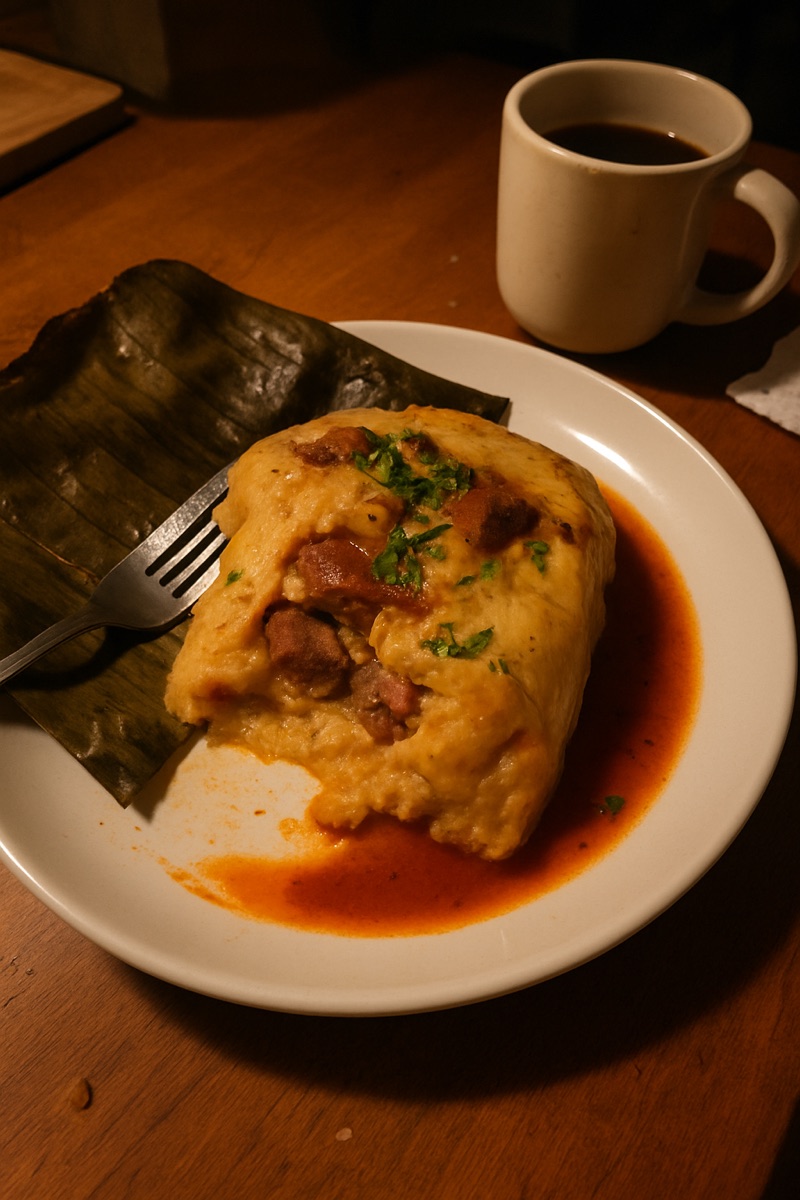 Nacatamal🇳🇮 Nicaragua · 18 hours and 50 minutes
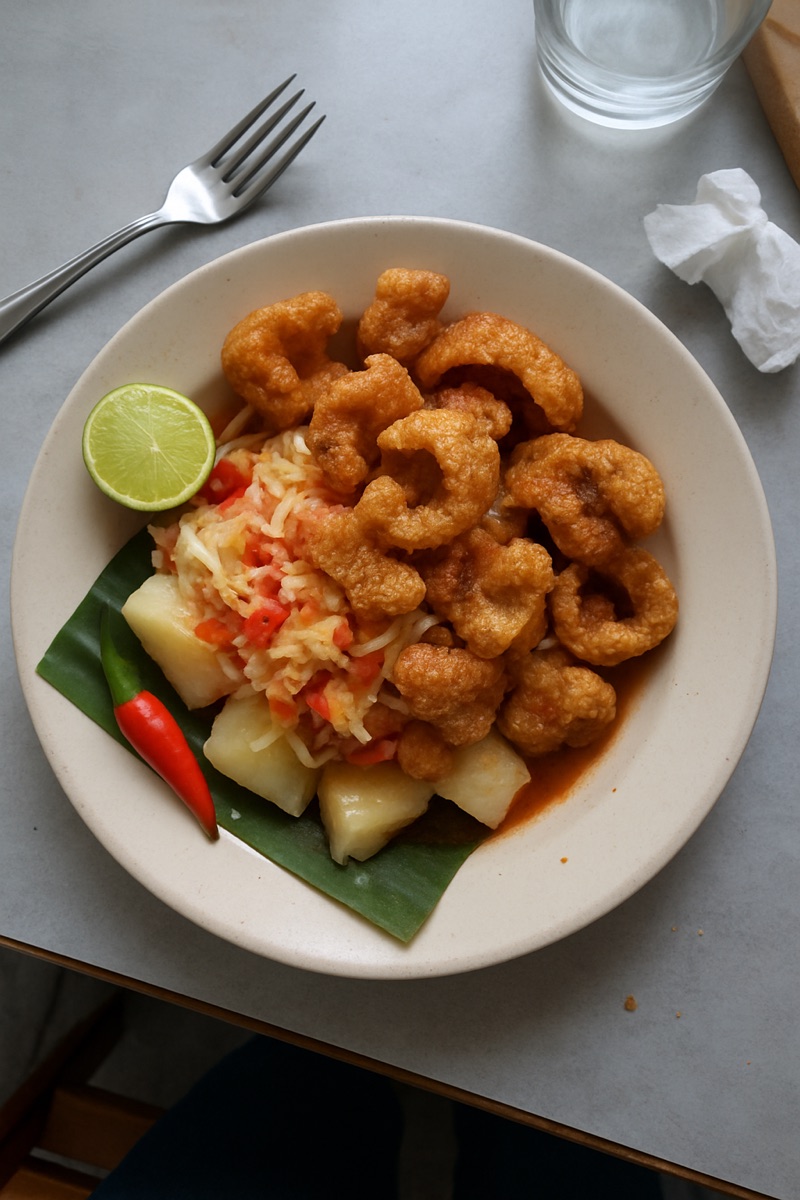 Vigoron🇳🇮 Nicaragua · 2 hours and 20 minutes
Questions people ask
Is gallo pinto from Nicaragua or Costa Rica?
Both countries claim it and both call it a national dish. Costa Rica dates it to 1930s San José, Nicaragua to a much older dish brought by enslaved Africans; most accounts agree its roots are Afro-Caribbean.
What does gallo pinto mean?
Gallo pinto means 'spotted rooster' in Spanish, a reference to the speckled look of rice cooked with beans.
What beans are used in Nicaraguan gallo pinto?
Small red silk beans (frijoles rojos de seda). In Costa Rica's Central Valley the dish is usually made with black beans.
What is served with gallo pinto?
In Nicaragua it comes with eggs, cheese, tortillas, sour cream and chilero, a pickle of fermented onions, carrots and chilli peppers.
When do Nicaraguans eat nacatamales?
Typically on weekends, for breakfast or dinner, with white bread and black coffee. They are also made for family celebrations.
Keep reading
- Traditional food of Nicaragua: 12 dishes to know
- What is the national dish of Belize?
- What is the national dish of Costa Rica?
- What is the national dish of El Salvador?
- What is the national dish of Guatemala?
- What is the national dish of Honduras?