 COPPER
Traditional food of Nicaragua: 12 dishes to know
Traditional Nicaraguan food rests on white corn, small red beans and rice, with plantain, yuca, fresh cheese and pork. The Pacific west cooks Mesoamerican corn dishes; the Caribbean east cooks seafood in coconut milk. The dishes to know first are gallo pinto, rice fried with red beans, the pork-filled nacatamal, vigorón from Granada and indio viejo, a thick corn and meat stew.
What Nicaraguan food is built on
Nicaraguan cooking mixes the Mesoamerican diet of the Chorotega and Nicarao peoples, Spanish ingredients and Afro-Caribbean cooking. In the west, the base is what the Indigenous peoples grew: maize, beans, squash, tomatoes, avocados, chilli and cacao, with pork and chicken added after the conquest. The east, along the Caribbean, cooks mostly with seafood and coconut.
The national staples are white corn, small red beans and rice. Corn becomes thick tortillas, tamales, stews and drinks; beans are the everyday protein, often eaten with rice at breakfast. Meals come with ensalada, shredded cabbage in vinegar, sometimes with carrot and beet, and with fresh cheese, cuajada and cream. Culantro, oregano and achiote are the usual seasonings. In the streets, fritangas sell fried plantains, grilled meat, fried cheese and tacos, eaten with cabbage salad and chilli.
Everyday plates and corn dishes
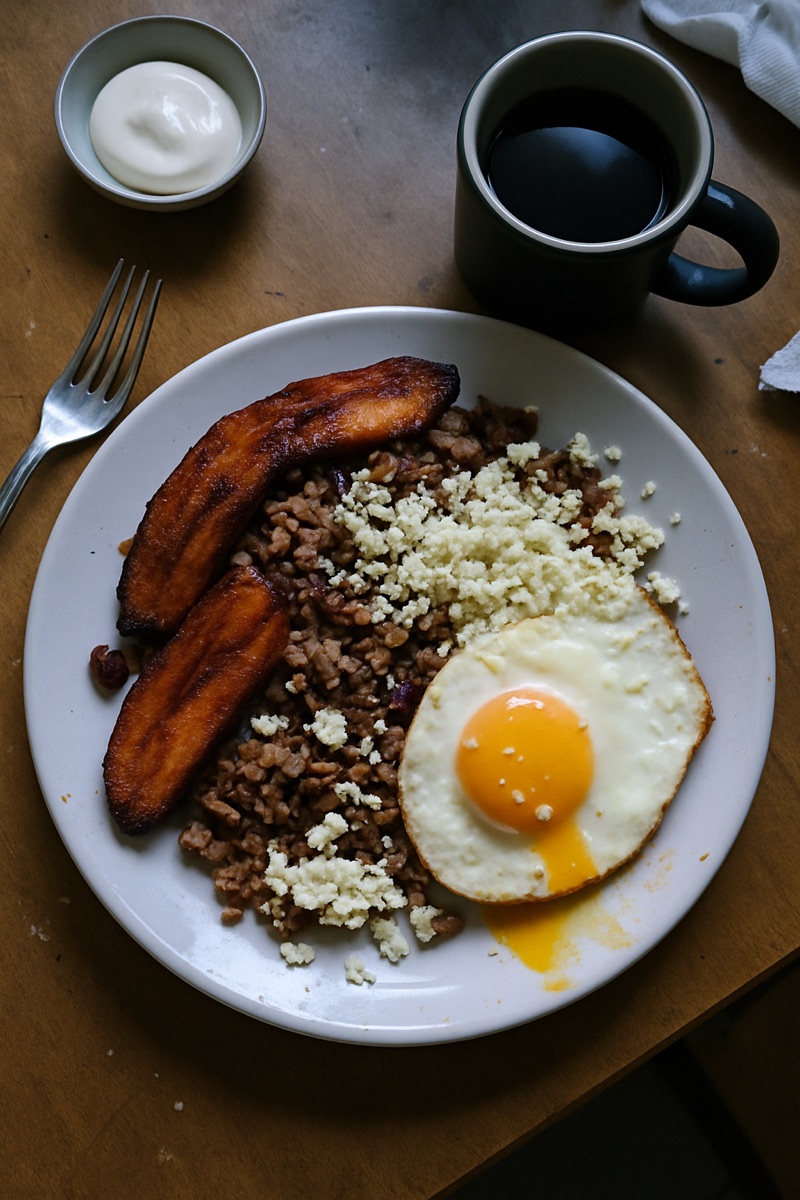
- Gallo pinto — Day-old white rice fried with small red beans and some of their dark broth until dry and toasted at the edges. It is eaten at any meal, often with eggs, fresh cheese and tortillas, and it is the dish most often given as the national dish of Nicaragua.
- Nacatamal — A large parcel of corn masa worked with lard, sour orange and achiote, wrapped in plantain leaves around marinated pork, rice, potato, tomato, sweet pepper and mint, then boiled for hours. Its name comes from Nawat, meaning meat tamale. Families make them from Friday to Sunday and at Christmas, eaten with bread and black coffee.
- Indio viejo — "Old Indian", a thick stew of corn dough with tomato, achiote, onion, garlic, herbs and shredded meat, close to a porridge. It goes back to the Nicarao of Ometepe Island, who made it with deer, turkey or iguana, and it is one of the oldest dishes in the country. It was eaten widely in colonial times, when the dough was still pounded in a mortar.
- Carne desmenuzada — Shredded beef cooked with green pepper, onion, garlic, Worcestershire sauce and mustard, the Nicaraguan form of ropa vieja. It is served with white rice or gallo pinto, fried cheese and plantain.
- Güirila — A thick, slightly sweet tortilla of fresh, unnixtamalized young corn, grated and ground, patted out on a banana leaf and cooked on a comal. It is eaten with a piece of cheese or cuajada and sour or sweet cream.
- Quesillo — A soft white string cheese folded into a warm tortilla with onions pickled in vinegar and cream. Because it is runny, it is sold in a plastic bag and eaten by biting off a corner.
Street food, soups and the Caribbean coast
- Vigorón — Boiled yuca topped with a vinegar cabbage salad and crisp pork chicharrón, served on a banana leaf and eaten with the fingers. A 1971 history of Granada credits María Luisa Cisneros Lacayo with creating it there in 1914, naming it after a poster for a tonic called Vigoron.
- Vaho — A close relative of vigorón, made with beef brisket and both green and ripe plantains. The difference is the cooking: vaho is pressure-cooked, vigorón is not.
- Sopa de queso — A cheese soup eaten during Holy Week, when it comes with small fried cakes of corn dough in the broth. Soups are a weekly habit: hen, beef or seafood soups are cooked and sold on Sundays and Mondays.
- Rondón — The Caribbean coast's soup-stew of fish, beef or pork simmered in coconut milk with peppers, onion, plantain and yuca. It is part of a coastal kitchen of coconut oil, seafood, crab and pan de coco, coconut bread.
Drinks and sweets
Fruit is mostly drunk: frescos of melon, tamarind, papaya, guava, soursop, pineapple or pitahaya are sold everywhere, alongside drinks of grains and seeds such as rice, barley, chia and linseed. Nicaragua is also a rum country: Flor de Caña is drunk at home and exported, and the macuá, orange, guava and lime juice with rum, won a 2006 contest for a national cocktail.
- Pinolillo — A thick drink of toasted ground corn with a little cacao and spices such as cinnamon, allspice and cloves, mixed with water or milk and served in a gourd cup called a jícara. It is so central that Nicaraguans call themselves pinoleros.
- Tres leches — Sponge cake soaked in evaporated milk, condensed milk and whole milk. Canned milk became common in Nicaragua in the first half of the 20th century, and Nicaraguan immigrants made the cake popular in Miami in the 1980s, from where it spread across the United States.
Regional cooking in Nicaragua
The Pacific side eats corn, rice and beans fried separately or together as gallo pinto, with beef, pork, chicken and plenty of dairy. Granada is the home of vigorón, Masatepe is known for its tripe soup and Rivas for the crisp sweets called orejas de perro. The Caribbean coast, with its Afro-Caribbean heritage, cooks with coconut milk and coconut oil, chillies, fish, conch and crab, and bakes coconut bread, patí and pan bon. Corn drinks run through the centre and north: tiste, pozol, pinol and chicha.
Nicaraguan food shares its corn and beans with the rest of Central American cooking. Compare it with the traditional food of Costa Rica, which also claims gallo pinto, and the traditional food of Honduras.
Cook Nicaraguan food at home
Three of these dishes are on Copper with full ingredient lists and step-by-step methods: gallo pinto, nacatamal and vigorón. Gallo pinto needs rice cooked the day before; nacatamales need a full day and, ideally, extra hands, which is why families often make them together and share them with the neighbours. You will find them, with every other Nicaraguan recipe we have, on our page about the food of Nicaragua.
The recipes
- Gallo pinto🇳🇮 Nicaragua · 14 hours and 20 minutes
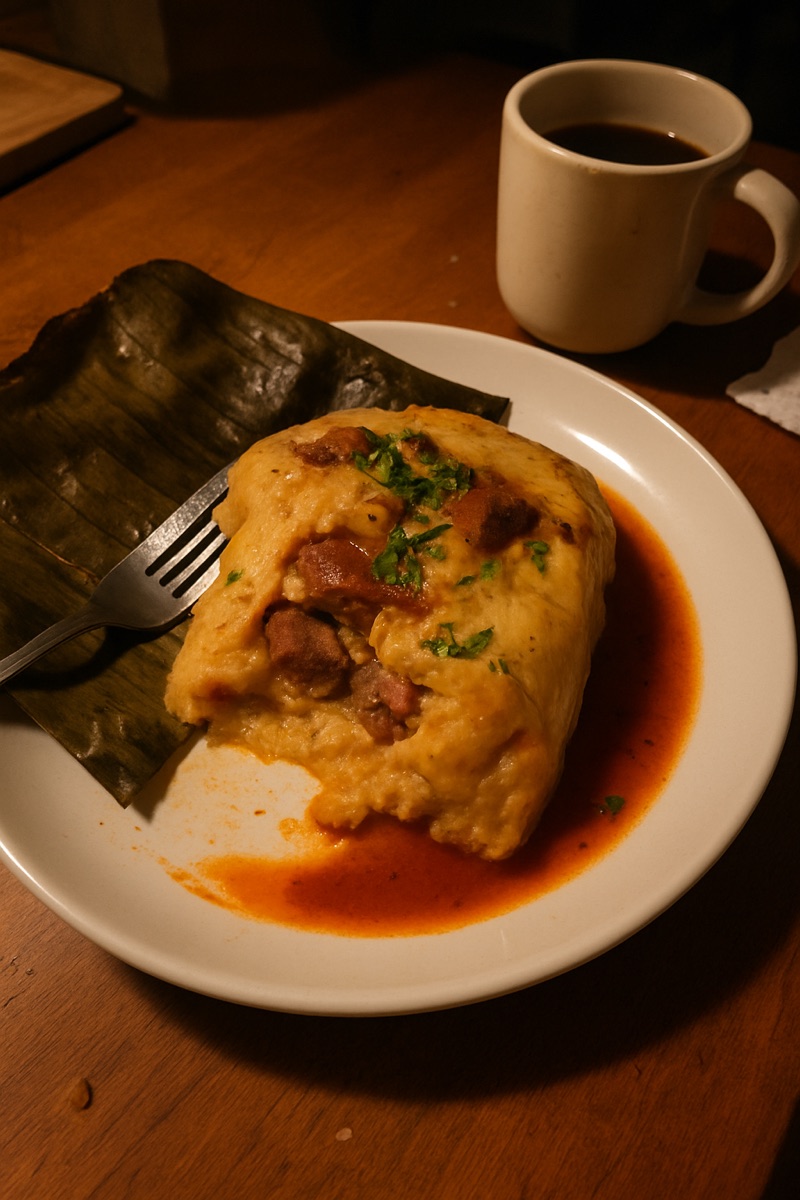 Nacatamal🇳🇮 Nicaragua · 18 hours and 50 minutes
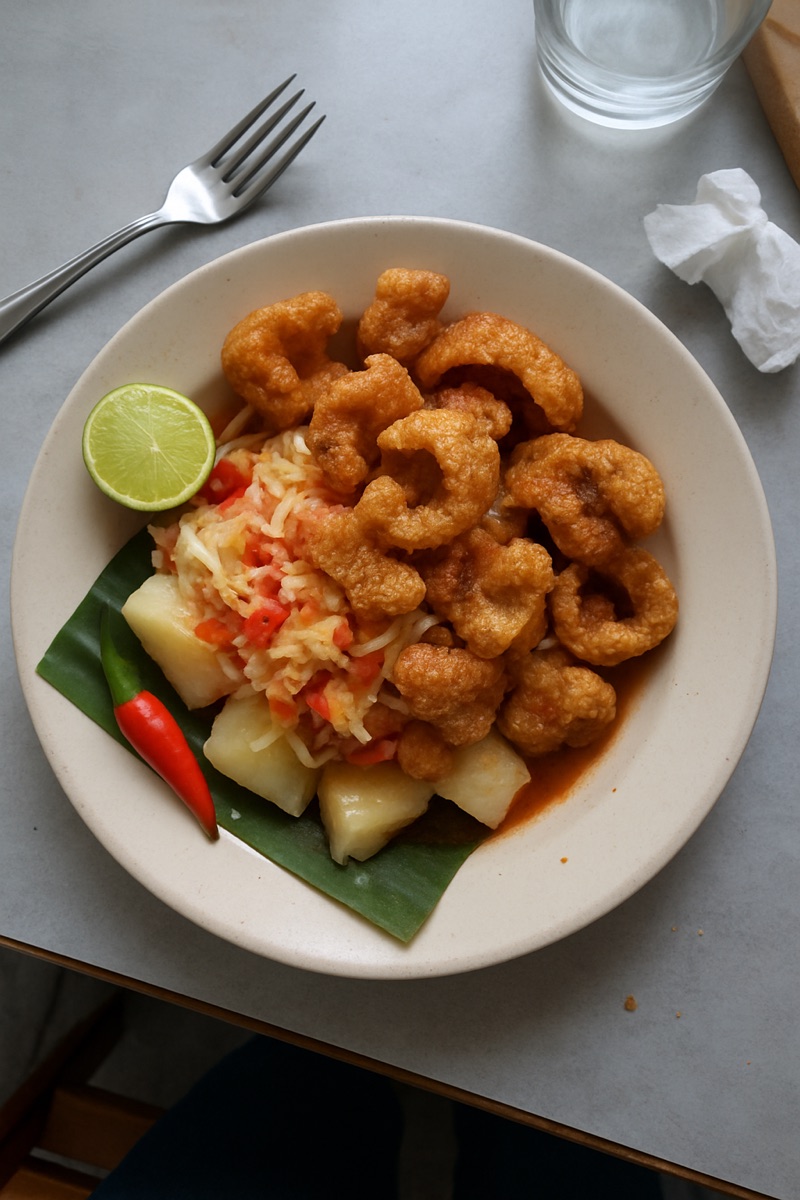 Vigoron🇳🇮 Nicaragua · 2 hours and 20 minutes
Questions people ask
What is the most popular food in Nicaragua?
Gallo pinto, rice fried with small red beans, is eaten daily and is usually called the national dish. The nacatamal, vigorón, quesillo and fritanga street food are close behind.
What do Nicaraguans eat for breakfast?
Gallo pinto with eggs, fresh cheese or cuajada, sour cream and corn tortillas, often with coffee or tibio, a thick drink of toasted corn. On weekends many families have nacatamales with bread and coffee.
Is Nicaraguan food spicy?
Generally not. Dishes are seasoned with onion, culantro, achiote and sour orange. Heat is added at the table with chilli or chilero, a pickle of onions, carrots and chilli peppers.
What is the difference between Nicaraguan and Costa Rican gallo pinto?
Nicaraguan gallo pinto uses small red beans and fewer ingredients, fried until toasted. In Costa Rica's Central Valley it is usually made with black beans and seasoned with Lizano sauce. Both countries claim the dish.
What do Nicaraguans eat during Holy Week?
Sopa de queso, a cheese soup with fried corn cakes, and fish soup with fish cakes are the classic Holy Week dishes.
Keep reading
- What is the national dish of Nicaragua?
- Traditional food of Belize: 12 dishes to know
- Traditional food of Costa Rica: 14 dishes to know
- Traditional food of El Salvador: 12 dishes to know
- Traditional food of Guatemala: 12 dishes to know
- Traditional food of Honduras: 13 dishes to know