 COPPER
What is the national dish of Armenia?
Armenia has no single official national dish. The two most often cited are harissa, a thick porridge of shelled wheat and chicken or lamb cooked for hours and beaten smooth, traditionally served at Easter, and khorovats, Armenian grilled meat on skewers. Tolma, meat-stuffed grape leaves, is on Armenia's national list of intangible cultural heritage.
Why Armenia has several candidates
Lists of national dishes give Armenia two answers at once: khorovats and harisa. The writer Ardashes Hagop Keoleian called harissa the "national dish" of Armenians, while khorovats is the grilled meat reserved for festive occasions. A third dish, tolma, carries official weight: the culture of tolma preparation and consumption is on Armenia's list of intangible cultural heritage.
We found no source showing any of them named national dish by law, so all three belong in the answer.
What is harissa?
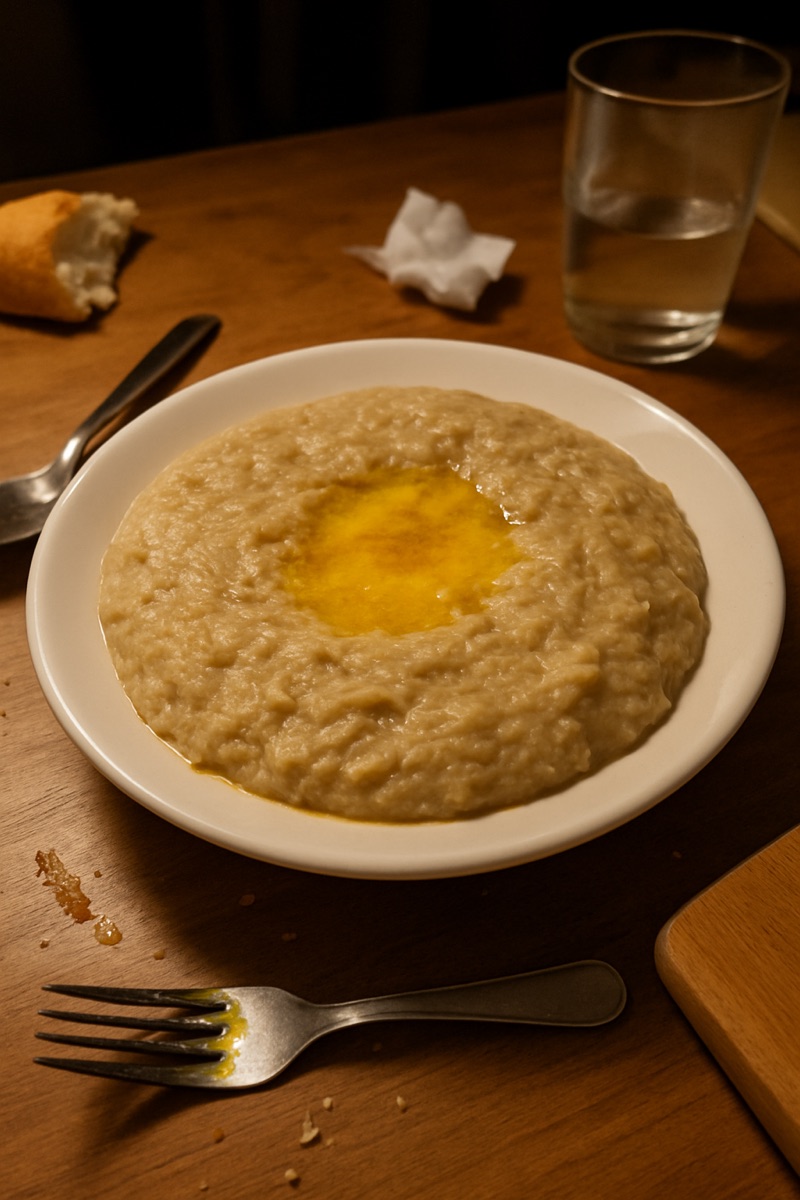
Harissa (harisa in Armenian) has nothing to do with the North African chilli paste. It is a porridge of shelled wheat and fatty meat, usually chicken or lamb, cooked so long that the grain and meat become one mass. It was first cooked in the tonir, the clay oven, and now on the stove, often in communal pots on feast days.
Its name is explained by a legend about Saint Gregory the Illuminator, patron saint of Armenia. Feeding the poor with too little meat, he had wheat added to the cauldrons and, when it stuck, told the cooks "Harekh!", "stir it!". Harissa has been given as a charity meal ever since and is traditionally eaten on Easter day. It is also remembered as the food that helped the Armenians of Musa Ler survive their resistance of 1915.
Our harissa recipe soaks 500 g of korkot overnight, simmers a whole chicken for 1 hour 30, then cooks the wheat in the broth on the lowest heat for 3 to 4 hours. The meat goes back in for another hour, and the mixture is beaten by hand for 15 to 20 minutes until it pulls like thick cream. Melted butter goes over the top. On fasting days, when religious rules forbade meat, herbs replaced it, and the long cooking itself is considered part of the tradition.
Khorovats, the Armenian barbecue
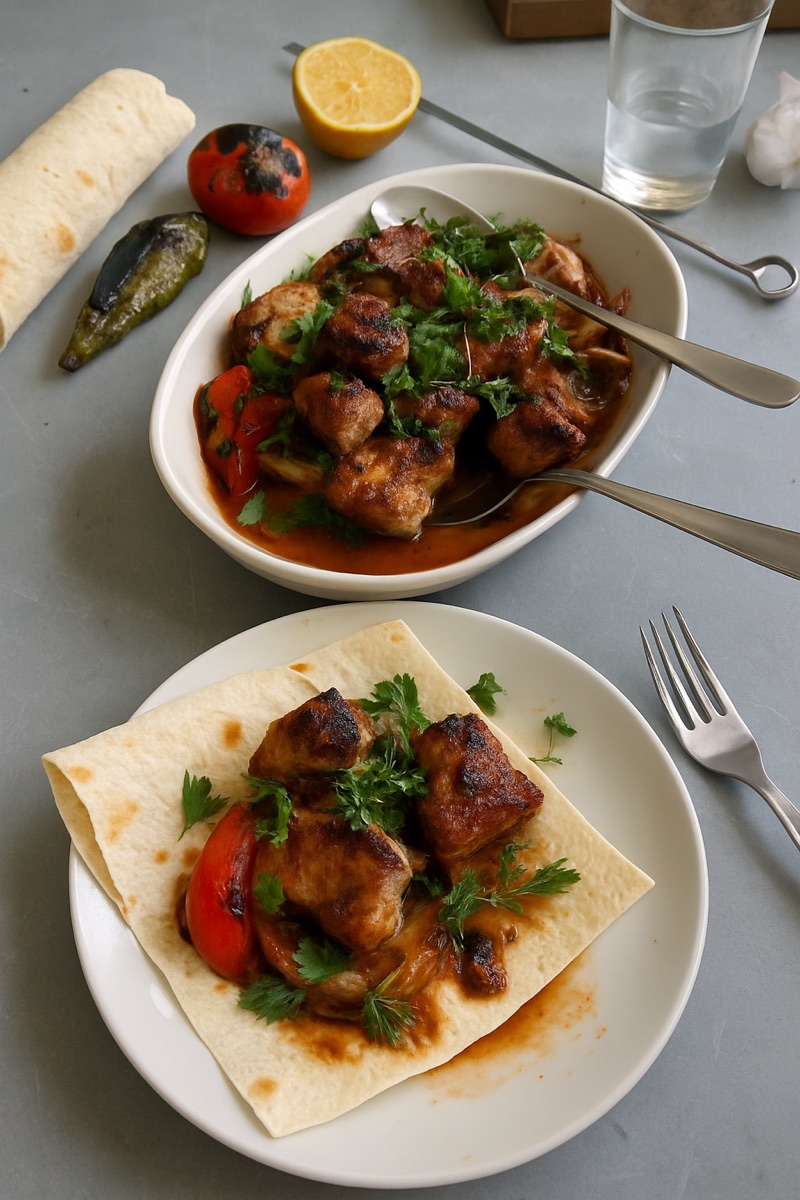
Khorovats simply means "grilled", from the verb khorovel, to grill. It can be lamb, pork, beef, chicken or fish, but in Armenia it is usually pork, often cooked with the bone in. It is reserved for festive occasions, and Proshian Street in Yerevan is known to visitors as "Barbecue Street" for its khorovats restaurants. Since 2009 the village of Akhtala in northern Armenia has held an annual khorovats festival.
In our khorovats recipe 1.5 kg of pork neck marinates at least 6 hours in onions crushed with salt, black pepper, dried basil and coriander, with no oil. It grills over grey grapevine embers for 20 to 25 minutes, while eggplants, tomatoes and peppers char whole in the coals to make the salad that goes with it, all wrapped in lavash.
Tolma, and who invented dolma
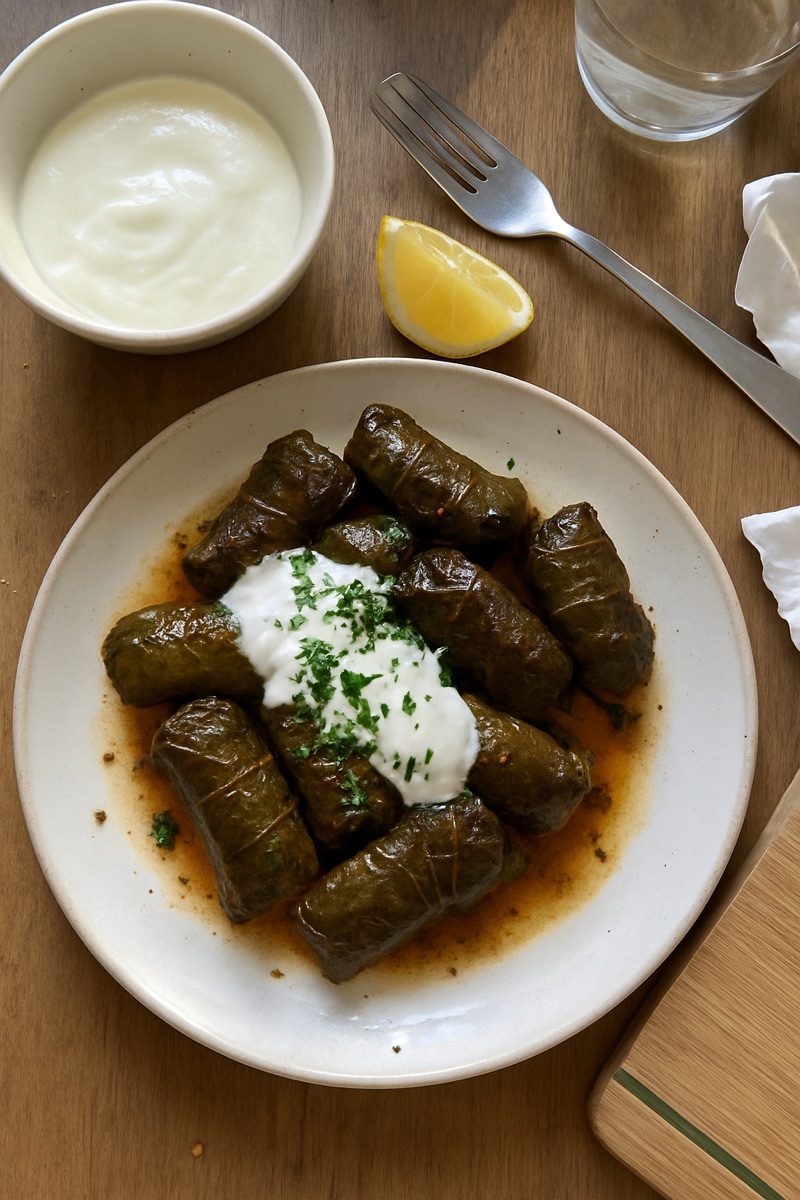
Armenian tolma is minced meat and rice rolled in grape leaves; in Armenia it is typically rolled into a tube. Our tolma recipe grinds purple basil and parsley straight into the beef and serves it with cold garlic yogurt. The rice goes in raw and swells in the pot; the rolls are packed seam side down under a plate and simmered 30 to 40 minutes, with no tomato and no lemon. A meatless version, yalanchi tolma, is filled with seasoned rice.
The origin of dolma is disputed, above all between Armenia and Azerbaijan. Here are the main positions, without a verdict:
- Armenian origin: the Russian food historian William Pokhlebkin traced the dish to Armenian cuisine, and the Oxford Companion to Food notes that, according to some, it may have begun in Armenia. Armenian scholars link the name to toli, the Armenian word for a wild grapevine.
- Turkic and Ottoman origin: the word dolma is Turkish for "stuffed". Gil Marks, Charles Perry and the Oxford Companion tie stuffed vegetables to Ottoman cooking, and the concept is commonly placed in the Ottoman palace kitchens of the 15th century. Azerbaijani sources point to the Turkic name.
- The heritage lists: UNESCO inscribed dolma making in Azerbaijan in 2017, and tolma is on Armenia's national heritage list. In response to Azerbaijani statements in 2011, Armenia held its own dolma festival under the name uduli.
Other dishes to know from Armenia
Lamb, eggplant and lavash are the basic features of Armenian cooking, and Armenians traditionally prefer cracked wheat to maize and rice. Lavash, the thin flatbread baked in the tonir, wraps khorovats, lula kebab and cheese with herbs. Khashlama, a lamb and vegetable stew, is another tonir dish eaten with lavash.
You will find our three Armenian recipes on our page about the food of Armenia. For the same dish on the other side of the dispute, read Azerbaijan's national dish, and for khachapuri, a common street food in Armenia, see Georgia's national dish. The wider picture is in our guide to Caucasian food.
The recipes
- Harissa🇦🇲 Armenia · 19 hours and 10 minutes
 Khorovats🇦🇲 Armenia · 7 hours and 30 minutes
 Dolma🇦🇲 Armenia · 1 hour and 50 minutes
Questions people ask
Is Armenian harissa the same as harissa paste?
No. Armenian harissa is a wheat and meat porridge. The North African harissa is a chilli pepper paste; the two only share a name.
Is dolma Armenian or Azerbaijani?
Both countries claim it. Pokhlebkin and some sources cited by the Oxford Companion to Food favour an Armenian origin, while the Turkish name and several food historians point to Ottoman kitchens. UNESCO lists dolma making in Azerbaijan (2017) and tolma is on Armenia's national heritage list.
When is harissa eaten in Armenia?
Harissa is traditionally served on Easter day and has long been cooked in large communal pots as a charity meal.
What meat is used for khorovats?
Khorovats can be lamb, beef, chicken or fish, but in Armenia it is most often pork, frequently grilled on the bone.
What does khorovats mean?
Khorovats means "grilled" in Armenian and comes from the verb khorovel, to grill.
Keep reading
- Traditional food of Armenia: 14 dishes to know
- What is the national dish of Azerbaijan?
- What is the national dish of Georgia?
- Traditional food of Azerbaijan: 13 dishes to know
- Traditional food of Georgia: 14 dishes to know
- What is the national dish of Afghanistan?