 COPPER
Traditional food of Georgia: 14 dishes to know
Georgian food is built on cheese bread, walnuts, fresh herbs, beans, grilled and stewed meat and wine, seasoned with coriander, blue fenugreek, marigold and sour plum. Walnut sauces bind many dishes, and every region has its own specialities. The most emblematic are the cheese bread khachapuri, the soup dumplings khinkali, the bean stew lobio and the walnut sauce dish satsivi.
What Georgian food is built on
Georgia sat on the Silk Road between the Caucasus, the Middle East and Eastern Europe, and its cuisine shares something with all three while keeping its own character. Walnuts are everywhere, ground into sauces such as bazhe for poultry, vegetables and fish. Fresh coriander, parsley, dill and tarragon are used by the handful, and the spice cupboard holds khmeli suneli, a dried herb and spice blend, blue fenugreek and dried marigold, sometimes called Georgian saffron.
Sour flavours come from tkemali, a cherry plum sauce, pomegranate and vinegar; heat, where there is any, comes from adjika, a chilli paste from Samegrelo and Abkhazia. Cheeses such as sulguni and imeruli fill the breads, and cornmeal is the base of mchadi and ghomi in the west.
Food is made for sharing at the supra, the Georgian feast, led by a tamada, the toastmaster, who gives the toasts and keeps the table going. The dish it is known for abroad is covered in our article on the national dish of Georgia.
Breads and dumplings
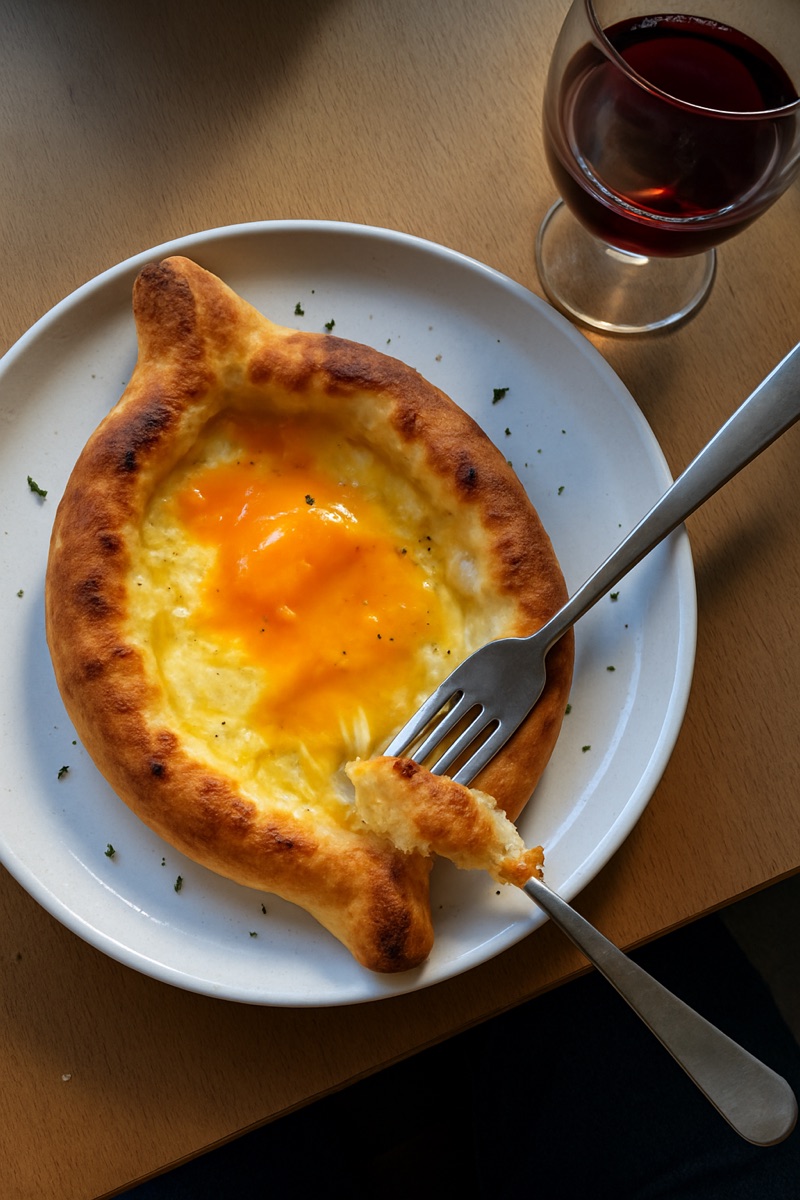
- Khachapuri — A leavened bread filled with salty cheese, made in a different shape in almost every region: round and closed in Imereti, topped with extra cheese in Samegrelo, and an open boat finished with a raw egg yolk and butter in Adjara. It is eaten at home, in restaurants and as street food, and the khachapuri tradition has been on Georgia's intangible heritage list since 2019.
- Khinkali — Pleated dumplings from the mountains of eastern Georgia, filled with raw spiced meat loosened with water so it turns into broth as they boil. They are eaten by hand: you hold the knot, bite the side, drink the broth and leave the knot on the plate. Mushroom, potato and cheese fillings exist too, and mushroom khinkali are eaten on Orthodox fasting days. The oldest filling, khevsuruli, is only meat, onion, chilli, salt and cumin; the town of Pasanauri is known for them.
- Mchadi — Cornbread, the traditional bread of Guria and Imereti in western Georgia. It is the usual partner of lobio and pickles; in Svaneti, chvishtari is mchadi with sulguni cheese inside.
Walnuts, beans and vegetables
Georgian cooking has a long list of meatless dishes, and on Orthodox fasting days vegetables, beans and walnuts take over the table.
- Lobio — Red kidney beans stewed and partly mashed with onion, garlic, coriander and often walnuts, seasoned with blue fenugreek and marigold. It is the everyday bean dish of western Georgia, served warm with mchadi and pickles.
- Pkhali — Chopped vegetables such as spinach, beetroot, cabbage or beans mixed with ground walnuts, garlic, vinegar and herbs, shaped into balls and topped with pomegranate seeds. Restaurants usually serve a trio of spinach, beetroot and white bean.
- Badrijani nigvzit — Fried aubergine with a walnut sauce, a speciality of Imereti and Guria. A close cousin, badrijnis khizilala or "aubergine caviar", mixes chopped aubergine with pomegranate seeds and herbs.
Meat, poultry and soups
- Mtsvadi — Georgian shashlik: cubes of pork, lamb or beef grilled on skewers over embers. It is a signature of Kakheti, the meat-loving wine region in the east.
- Satsivi — Boiled turkey or chicken served cold in bazhe, a sauce of walnuts, garlic, blue fenugreek, marigold and vinegar. The name means "cold dish". It is a staple of winter holiday feasts, eaten at New Year with corn porridge.
- Kupati — A sausage of pork, from Samegrelo, Guria and Imereti, fried before serving. The Megrelian version is made from pork offal and belly meat.
- Chakhokhbili — Chicken or turkey cooked in a tomato base, a dish that originated in western Georgia.
- Kharcho — A soup of beef, rice, cherry plum purée and chopped walnuts, seasoned with khmeli suneli and coriander. In Samegrelo, Megrelian kharcho is a thick beef and walnut stew eaten with ghomi, cornmeal porridge.
- Chakapuli — A stew of spring lamb or veal with tarragon, cherry plums, herbs and white wine, from Kakheti and Kartli in the east. It is considered one of the most popular dishes in Georgia.
Sweets and wine
- Churchkhela — Walnuts threaded on a string, dipped in grape must thickened with flour and dried into a candle-shaped sweet. It comes from Kakheti, whose traditional churchkhela-making was inscribed on Georgia's intangible heritage list in 2015; in Guria, janjukha uses hazelnuts instead.
- Qvevri wine — Wine is part of Georgian identity: the country has made it for at least 8,000 years. In the traditional method, grape juice, skins, stalks and pips ferment and age for five to six months in a qvevri, a large egg-shaped clay jar buried in the ground. UNESCO inscribed the qvevri wine-making method on its intangible heritage list in 2013.
Regional food and where to go next
Each Georgian region has its own cuisine. Samegrelo in the west is the most heavily spiced, with adjika, sulguni, ghomi and Megrelian khachapuri. Imereti and Guria cook with walnuts, cornbread and poultry. Adjara on the Black Sea gave the boat-shaped khachapuri. Kakheti in the east is the land of wine, mtsvadi and churchkhela, and the mountain regions of Mtianeti, Khevsureti, Pshavi and Tusheti are the home of khinkali. Svaneti makes kubdari, a bread filled with spiced meat, and Racha is known for lori, its smoked pork, and lobiani, a khachapuri filled with kidney beans. In Samtskhe-Javakheti, in the south, goose goes into soups and even khinkali.
Khachapuri is also a common street food in neighbouring Armenia; compare Georgian food with the traditional food of Armenia or the traditional food of Turkey.
Cook Georgian food at home
Adjarian khachapuri, khinkali and lobio have full recipes, with ingredients and steps, on our page about the food of Georgia. For the wider region, see our guide to Caucasian food.
The recipes
- Khachapuri adjaruli🇬🇪 Georgia · 2 hours and 20 minutes
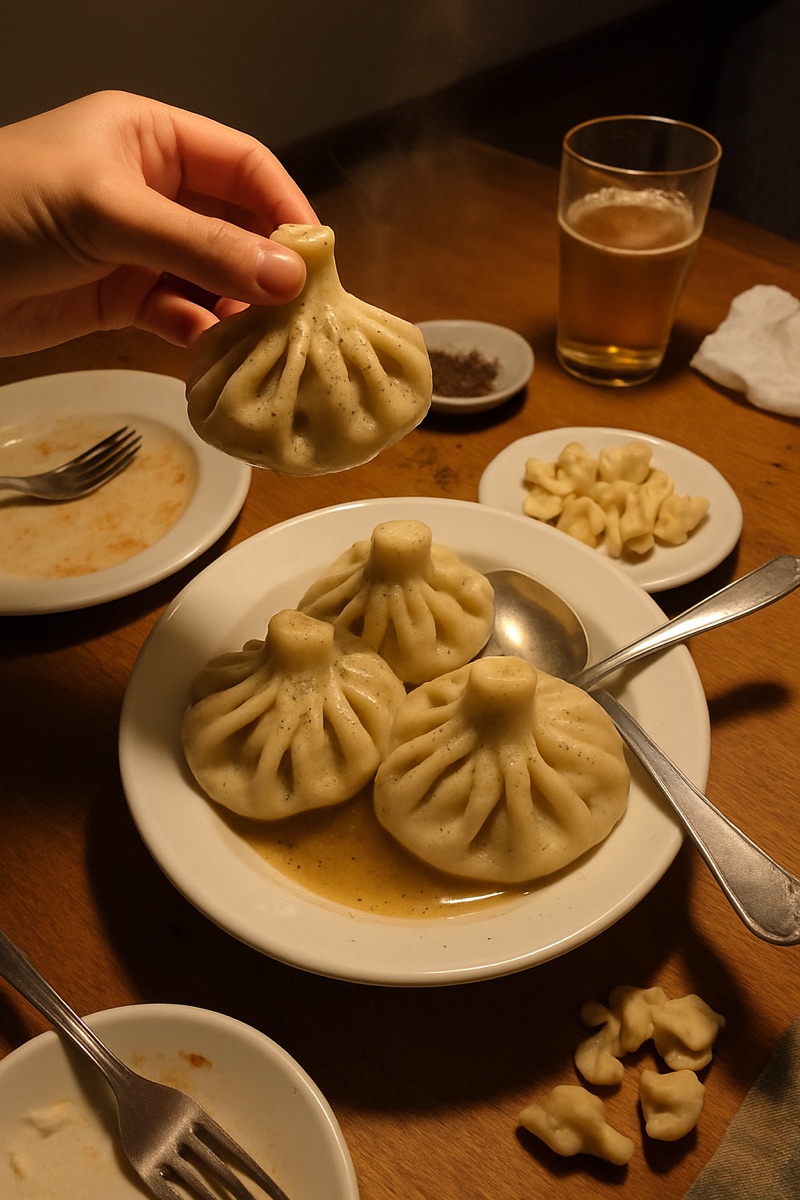 Khinkali🇬🇪 Georgia · 2 hours and 10 minutes
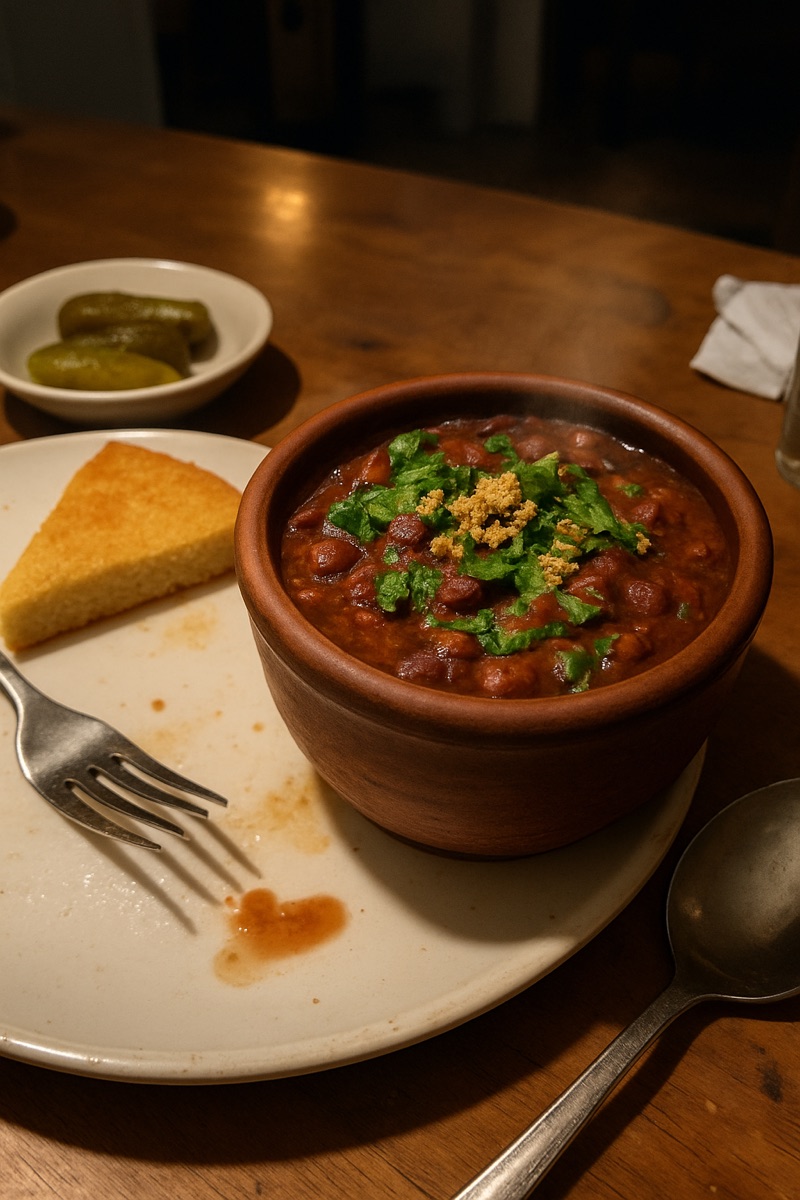 Lobio🇬🇪 Georgia · 14 hours and 30 minutes
Questions people ask
What is the most popular food in Georgia?
Khachapuri, the cheese-filled bread, and khinkali, the soup dumplings, are the two best-known Georgian foods. Lobio, mtsvadi, pkhali and satsivi are also on most Georgian tables.
Is Georgian food spicy?
Mostly not hot, but it is heavily seasoned with herbs, walnuts and spice blends such as khmeli suneli. The exception is Samegrelo in the west, where adjika, a hot chilli paste, flavours many dishes.
Is Georgian food vegetarian-friendly?
Yes. Because of Orthodox fasting days there are many meatless dishes: lobio, pkhali, badrijani nigvzit, mchadi, cheese khachapuri, and mushroom or potato khinkali.
What is a supra?
A supra is the traditional Georgian feast, offered to family, friends and guests, with many shared dishes and wine. It is led by a tamada, the toastmaster, who gives the toasts.
What is churchkhela?
Churchkhela is a Georgian sweet made by threading walnuts on a string, dipping them in grape must thickened with flour and drying them into a candle shape. It comes from Kakheti.
Keep reading
- What is the national dish of Georgia?
- Traditional food of Armenia: 14 dishes to know
- Traditional food of Azerbaijan: 13 dishes to know
- What is the national dish of Armenia?
- What is the national dish of Azerbaijan?
- Traditional food of Afghanistan: 12 dishes to know