 COPPER
Traditional food of Trinidad and Tobago: 13 dishes to know
Traditional food in Trinidad and Tobago mixes Indian, West African, Creole, European, Chinese and Amerindian cooking. Curry, flatbreads and chickpeas sit next to coconut milk, okra, pigeon peas and salt fish, all lifted with green seasoning of culantro and with pepper sauce. The most emblematic dishes are doubles, roti, callaloo and pelau.
What Trinidad and Tobago food is built on
The twin-island republic cooks with influences from India and South Asia, West Africa, Creole and European kitchens, China, the Amerindian peoples, Latin America and the Levant. The biggest single shift came after slavery was abolished: from 1845, Indians were recruited as indentured labourers, and the curries, flatbreads and fried snacks they brought now make up a large share of everyday food.
Three seasonings hold the cuisine together. Green seasoning is a cold purée of culantro (chadon beni), green onions, garlic, pimento peppers and herbs, used as a marinade and table sauce. Pepper sauce is made from scotch bonnet or other hot peppers. Chutneys of mango, tamarind or cucumber go with every fried snack.
Other communities left their mark too: the Portuguese brought garlic pork, the Spanish pastelles, and Chinese cooks the chow mein, fried rice and pows, steamed buns filled with char siu pork, that are sold from street stands. Tobago, the smaller island, eats more seafood and more "blue food", the local name for dasheen, sweet potato, eddoe, cassava and yam.
Breakfast and street food
- Doubles — Curried chickpeas (channa) spooned onto two small fried flatbreads called bara, topped with pepper sauce and chutneys. It is the country's most popular breakfast, sold from roadside stalls but eaten all day. Our doubles recipe gives the bara and channa step by step.
- Bake and shark — Seasoned fried shark in a split fried bake, dressed with sauces, salad, cucumber and sometimes pineapple. It is the beach food of Maracas Beach in Trinidad and Store Bay in Tobago, especially at weekends.
- Buljol — A cold salad of shredded salt cod with tomatoes, hot pepper, onion and sweet peppers. The name comes from the French brûle gueule, "burnt mouth", and it is eaten for breakfast with fried bake or toast.
- Aloo pie — A fried pastry 10 to 15 cm long, filled with mashed potato seasoned with cumin, garlic and onion. It is cut open and filled with curried chickpeas, chutney and pepper sauce, and often sold by the same vendors as doubles.
- Pholourie — Golf-ball-sized fritters of ground split peas and flour, spiced with turmeric, garlic or cumin, served with tamarind or mango chutney. They are a street snack, a Christmas and Diwali appetiser, and are closely tied to the Hindu festival of Holi.
- Roti — Sada roti, a plain flatbread of flour, baking powder and water cooked on an iron tawa, is the traditional Indo-Trinidadian breakfast, torn into quarters and eaten with chokhas of roasted, mashed aubergine, tomato or pepper. Paratha, nicknamed buss-up-shut, and dhalpuri, filled with ground split peas, are wrapped around curry as the roti sold in roti shops. See our sada roti recipe.
Main dishes
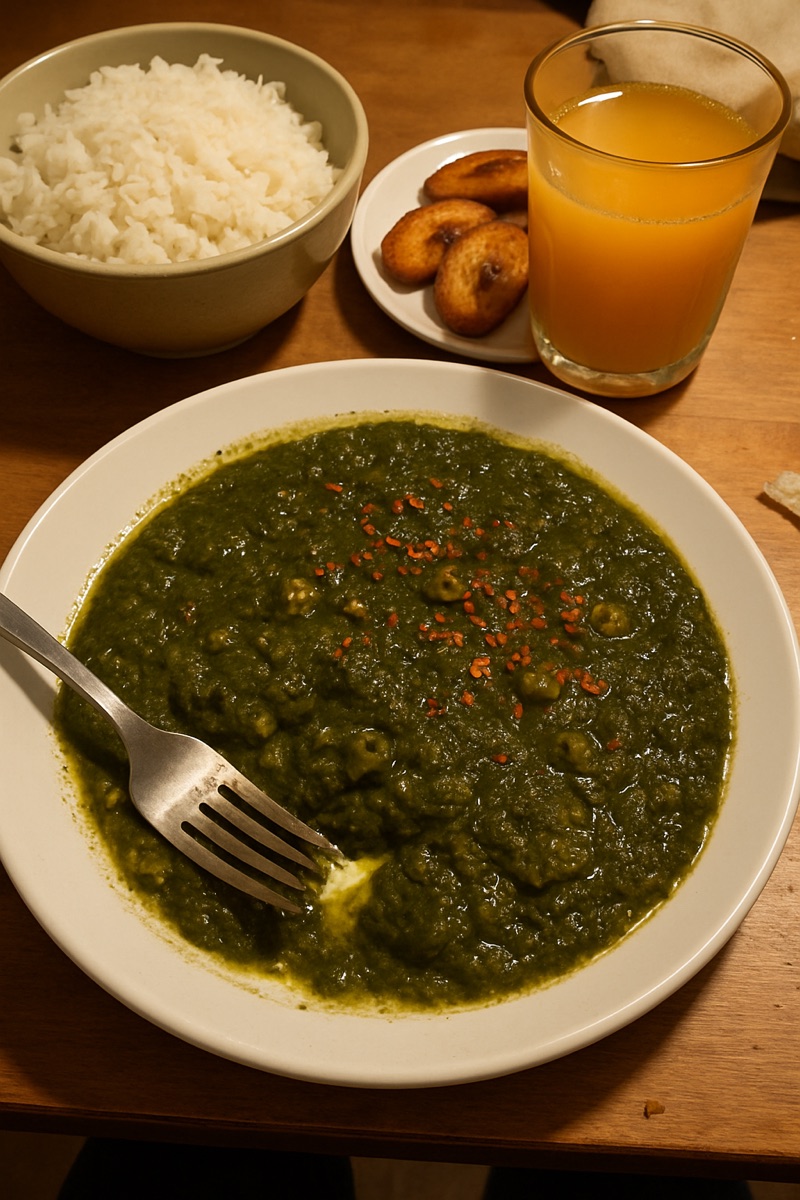
- Callaloo — Young dasheen (taro) leaves cooked with okra, pumpkin, coconut milk and crab or salted pigtail, then swizzled smooth. It is the dish most often named as the national dish of Trinidad and Tobago, served with rice, macaroni pie, coo-coo or provisions. Our callaloo recipe keeps the crab in the pot.
- Pelau — A one-pot rice dish started by caramelising sugar and browning chicken or beef in it, then simmering rice, pigeon peas and coconut milk until dark brown. It descends from pilaf, with the caramelised meat as the African part of the method, and is often served with coleslaw.
- Curry duck — Duck cooked down in curry until tender, served with roti or rice. It is one of the best-known Trinidadian dishes, and curried goat, conch, shrimp and chicken are cooked the same way for the roti shop counter.
- Curry crab and dumplings — Crab cooked in curry and served with boiled flour dumplings. It is the signature dish of Tobago, where seafood dominates the table, alongside fish broth, a soup in the style of bouillabaisse.
- Geera pork — Pork marinated overnight with roasted ground cumin (geera), garam masala, hot pepper and culantro, then cooked until the water evaporates. It is served in bars as a snack, part of the small plates known as cutters.
Christmas food and drinks
All year, sorrel, mauby, peanut punch and coconut water are the usual drinks, and fruit is eaten as chow: mango, pommecythère or pineapple tossed with culantro, pepper, salt and garlic. At Christmas the table fills with garlic pork, baked ham, black cake, sweet bread and sorrel, plus two specialities from the Spanish-speaking world:
- Pastelles — Small cornmeal parcels filled with seasoned meat, fish or vegetables with raisins, olives and capers, wrapped and steamed in banana leaf. They are made at Christmas and are believed to date from Spanish rule; a sweet version with coconut and raisins is called paime.
- Ponche de crème — A Christmas cream liqueur of milk, eggs, sugar and rum flavoured with nutmeg, cinnamon and lime peel. It is the local version of Venezuela's ponche crema, served cold in small glasses.
Trinidad, Tobago and their neighbours
Much of this food is shared across the southern Caribbean. Guyana has the same roti, pholourie and curries, brought by the same indentured workers, and Barbados eats cou-cou, the cornmeal and okra dish Trinidadians call coo-coo. Venezuela, just across the Gulf of Paria, shows up in the Christmas food: pastelles are cousins of the Venezuelan hallaca, and ponche de crème of ponche crema. Compare with the traditional food of Guyana and the traditional food of Barbados.
Cook Trinidadian food at home
Doubles for breakfast, callaloo with rice for lunch and roti with curry for dinner make a complete Trinidadian day. All three have tested, step-by-step recipes in Copper, on our page about the food of Trinidad and Tobago.
The recipes
- Callaloo🇹🇹 Trinidad and Tobago · 1 hour
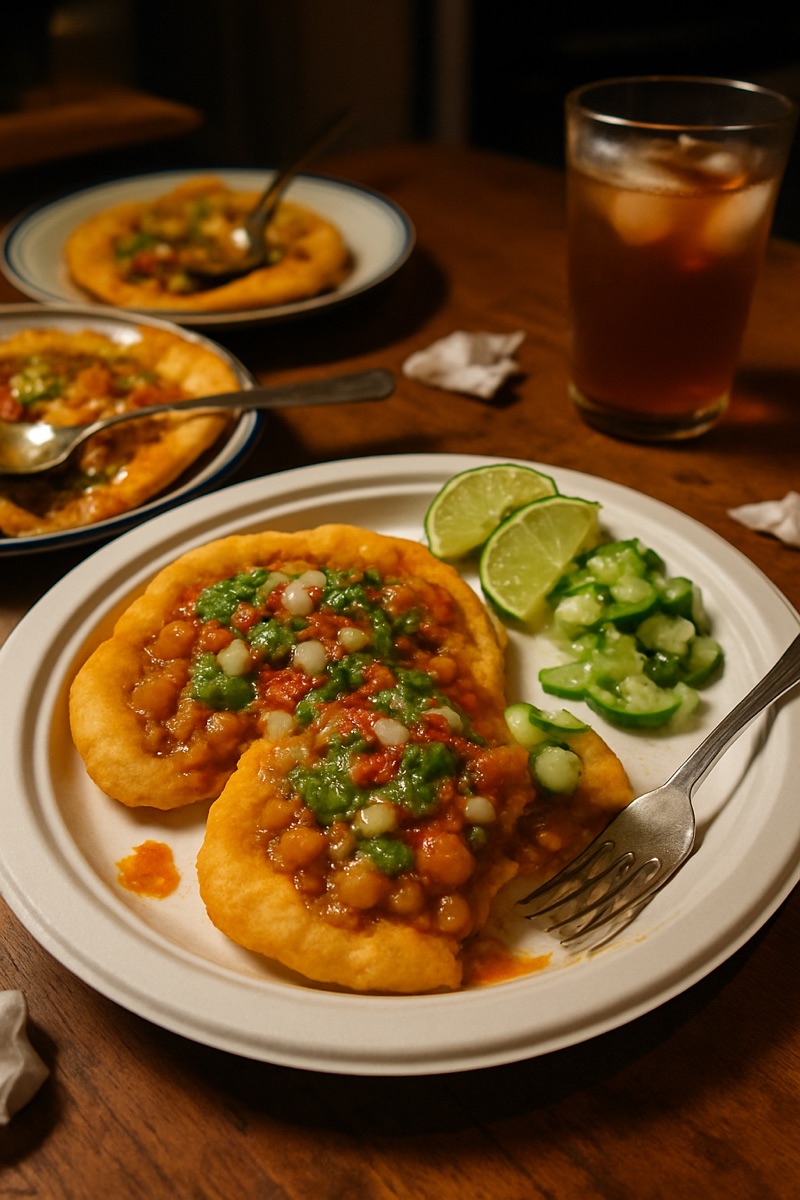 Doubles🇹🇹 Trinidad and Tobago · 10 hours and 20 minutes
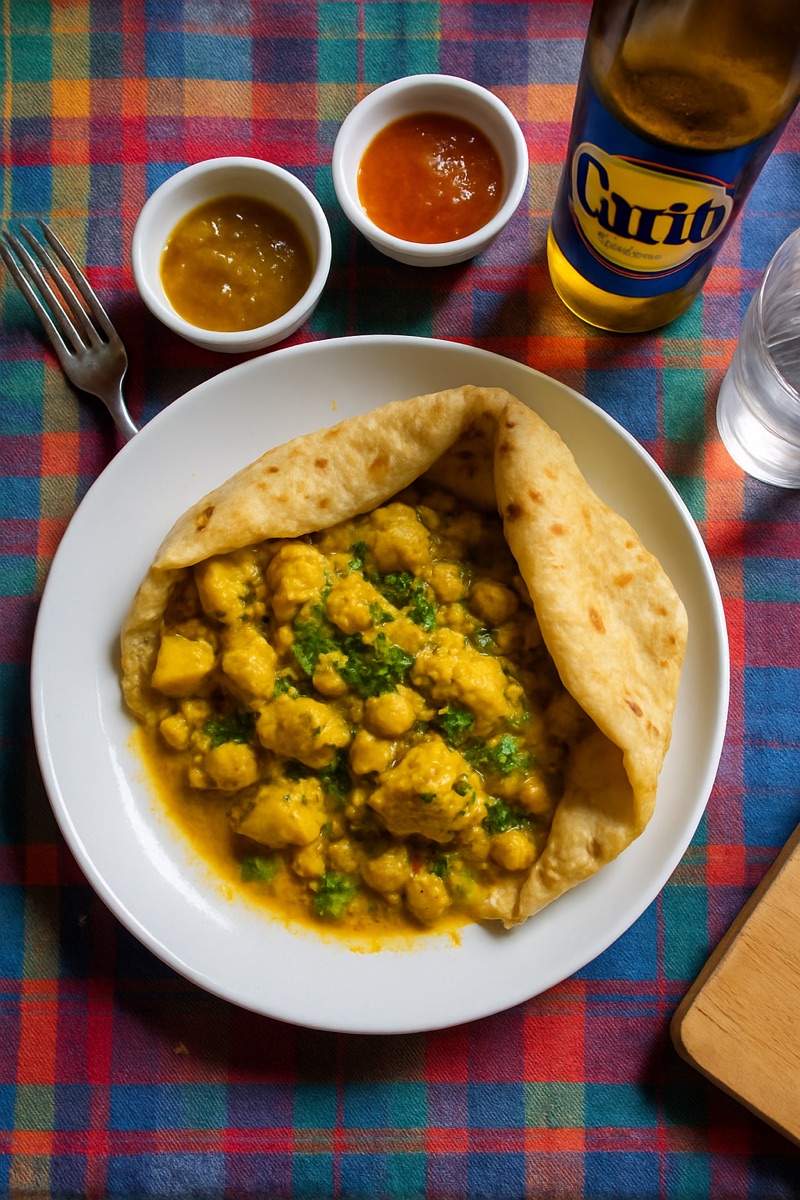 Roti🇹🇹 Trinidad and Tobago · 2 hours and 30 minutes
Questions people ask
What is the most popular food in Trinidad and Tobago?
Doubles is the most popular breakfast and street food. Roti with curry, callaloo, pelau, bake and shark and curry duck are the other dishes most associated with the country.
What do people in Trinidad eat for breakfast?
Doubles, sada roti with chokhas of roasted aubergine or tomato, fried bake with buljol or salt fish, and coconut bake are the classic breakfasts. On beach weekends, bake and shark is eaten in the morning too.
Is Trinidadian food spicy?
It can be very hot. Pepper sauce made from scotch bonnet goes on doubles, aloo pie and pholourie, and you are usually asked how much you want. Curries and green seasoning are aromatic rather than hot until pepper is added.
What is the national dish of Trinidad and Tobago?
There is no official one. Callaloo is the dish most often named, with doubles and pelau as the common alternatives, and Tobago points to curry crab and dumplings.
What is buss-up-shut?
It is paratha roti, a flatbread layered with ghee and beaten on the tawa until it tears into flaky pieces. The name means "busted-up shirt", from its torn look.
Keep reading
- What is the national dish of Trinidad and Tobago?
- Traditional food of Antigua and Barbuda: 11 dishes to know
- Traditional food of the Bahamas: 12 dishes to know
- Traditional food of Barbados: 12 dishes to know
- Traditional food of Cuba: 12 dishes to know
- Traditional food of Dominica: 12 dishes to know