 COPPER
Traditional food of Saint Vincent and the Grenadines: 10 dishes to know
Vincentian food is built on breadfruit, root vegetables such as yam, sweet potato and cassava, fish from the surrounding sea, dasheen leaves and coconut, with African, Kalinago, French, British and Indian roots. The most emblematic dishes are roasted breadfruit and fried jackfish, the national dish, callaloo, cook-up, a rice and pigeon pea pot, and souse.
What Vincentian food is built on
Saint Vincent and the Grenadines is a chain of 32 islands, only 9 of them inhabited, and its food reflects a blend of African, Kalinago (Carib), French and British influences, with an Indian layer added by indentured workers in the 19th century. Fish matters: tuna, kingfish, dorado and snapper are all commonly eaten. Root vegetables such as yam, sweet potato and cassava are boiled or roasted and served alongside main dishes.
The population is about 66% of African descent and 19% of mixed descent, with East Indian, Portuguese (from Madeira, who arrived from 1845) and Kalinago minorities.
Breadfruit is the island's emblem. After a failed first voyage on the Bounty, William Bligh led a second expedition, which set out in 1791, collected breadfruit plants in Tahiti and carried them to Saint Vincent and Jamaica as cheap food for enslaved workers. Today it is eaten boiled in soups, roasted and fried, the ripe fruit goes into drinks, cakes and ice cream, and the islands hold a breadfruit festival every August.
Saint Vincent also has a long history with arrowroot, a root whose fine starch was the island's main export: from the 1930s to the 1960s the arrowroot industry brought in close to half of the country's export earnings and was the main source of jobs and income for rural people. The north-east coast of Saint Vincent, with deep, well-drained soils and a hot, humid climate, gives the root ideal growing conditions.
The national dish and the big pots
Roasted breadfruit and jackfish is the dish most sources name as the national dish of Saint Vincent and the Grenadines; callaloo is the other candidate.
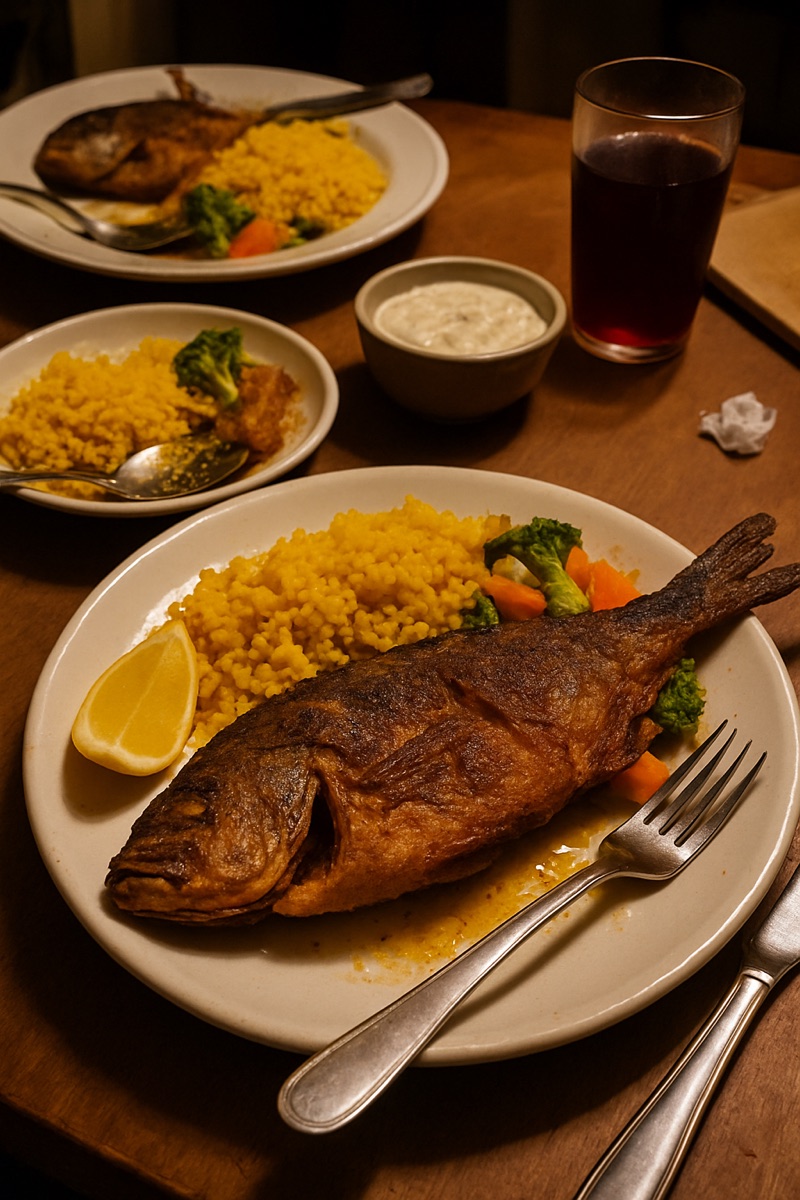
- Roasted breadfruit and fried jackfish — A whole breadfruit roasted over an open fire or in the oven until soft, cut into wedges and served with small jack fish washed in lime, rubbed with chive, garlic and thyme, floured and fried. Jackfish, or jack crevalle, are plentiful in Vincentian waters, which made them a natural partner for the breadfruit. The plate is eaten year-round and especially at weekends and on festive occasions, sometimes with a simple salad or slices of avocado.
- Callaloo — Dasheen leaves and okra cooked down with coconut milk, often with salted meat, and served as part of a larger meal with provisions such as yam and sweet potato. It appears at Christmas and Carnival, and some guides present it as the country's iconic dish. In Saint Vincent it is a main course rather than a side, and Copper's Vincentian version is a full meal, with salt beef, white sweet potato and flour dumplings in the pot.
- Cook-up — A one-pot meal of rice, pigeon peas and meat, usually chicken or pork, cooked together until the rice takes on all the seasoning.
Saltfish, street food and breads
- Souse — Pickled meat, often pig's feet or chicken, served cold. It is typically eaten as a weekend treat, and the same snack is a classic in Antigua and Dominica too.
- Buljol — A salad of shredded salted cod with onions, tomatoes and peppers, served cold. It is a dish shared with Trinidad and Tobago, where it is best known; the name comes from the French brûlé, burnt, and gueule, mouth.
- Bakes — Rounds of dough baked or fried, the breakfast bread of Saint Vincent as in Trinidad and Barbados, usually eaten with stewed saltfish, a fry-up, or eggs cooked with onions, tomatoes and green peppers.
- Ducana — Grated sweet potato and coconut with flour, sugar, raisins and spices, wrapped in a leaf and boiled until firm. Saint Vincent shares it with Antigua and Saint Kitts, and it is often served with saltfish. Cooks argue over the wrapping, foil or banana or sea grape leaves, but the parcels always boil in salted water until firm.
- Roti — A flatbread of flour, water and salt cooked on a griddle, brought by the Indian workers who arrived between 1861 and 1888. About 6% of Vincentians today are of East Indian descent. A frank note: Copper's recipe is the plain bread; the curry-filled roti wrap most people picture comes from Trinidad.
Sweets and drinks
Ripe breadfruit is also turned into drinks, cakes and ice cream. Mauby, a drink made from tree bark, is bottled on the island as Hairoun Mauby by the St Vincent Brewery.
- Tamarind balls — Tamarind pulp rolled with sugar into sweet and sour balls, one of the traditional Vincentian sweets.
- Sugar cakes — Grated coconut cooked with sugar on low heat, often coloured, then moulded into small cakes as soon as it comes off the stove. They are a favourite of schoolchildren across the Caribbean.
Cook Vincentian food at home
To cook the national plate, pierce the breadfruit and roast it whole, over a flame for 45 to 60 minutes or in a moderate oven for about 1½ hours, until a skewer slides through. Wash the fish in lime, rub in chive, garlic and thyme pounded with salt, coat in flour and fry about 4 minutes a side. Vincentian callaloo is better still reheated the next day. Copper has full recipes for fried jackfish with roasted breadfruit, callaloo and roti on our page about the food of Saint Vincent and the Grenadines, part of our collection of Caribbean recipes.
Some guides name callaloo, not breadfruit and jackfish, as the dish closest to Vincentian identity; Copper has both, so you can judge for yourself. Breadfruit also anchors Grenada's national dish, oil down, and Saint Lucia shares callaloo and saltfish with its southern neighbour: see the traditional food of Grenada and the traditional food of Saint Lucia.
The recipes
- Fried jackfish🇻🇨 Saint Vincent and the Grenadines · 1 hour and 45 minutes
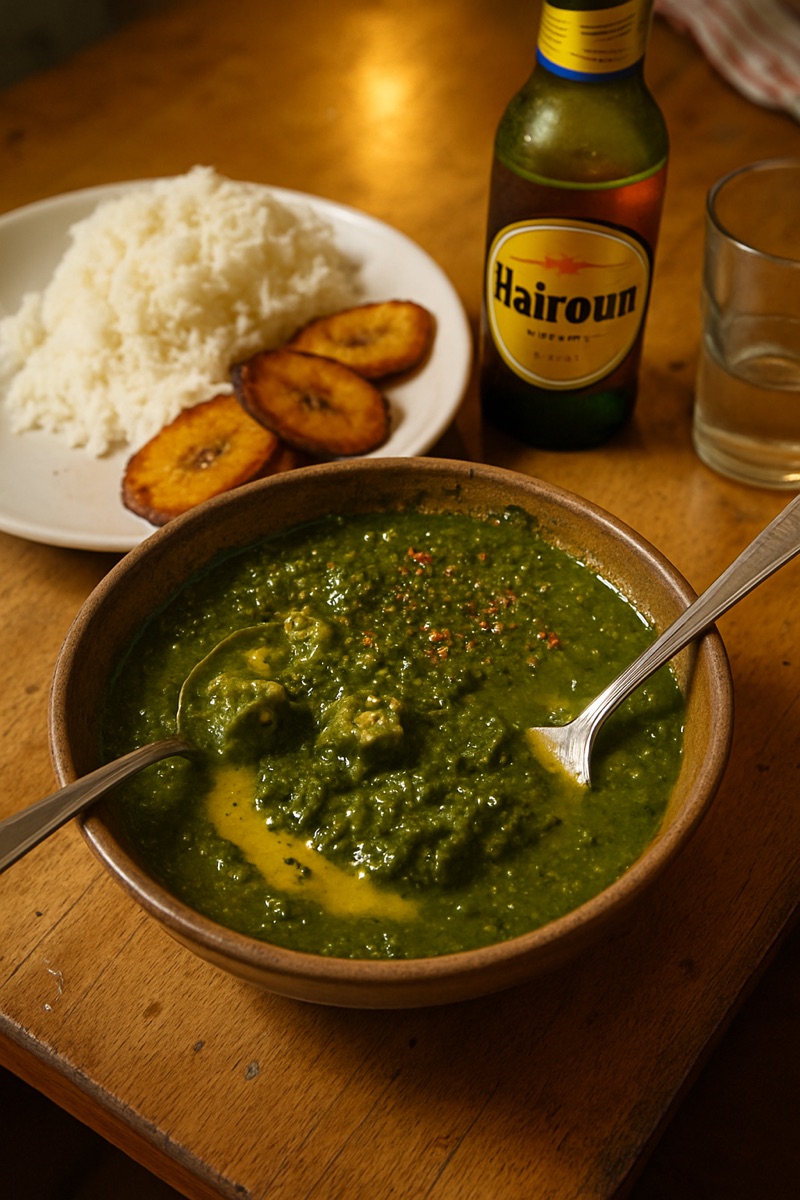 Callaloo🇻🇨 Saint Vincent and the Grenadines · 2 hours and 25 minutes
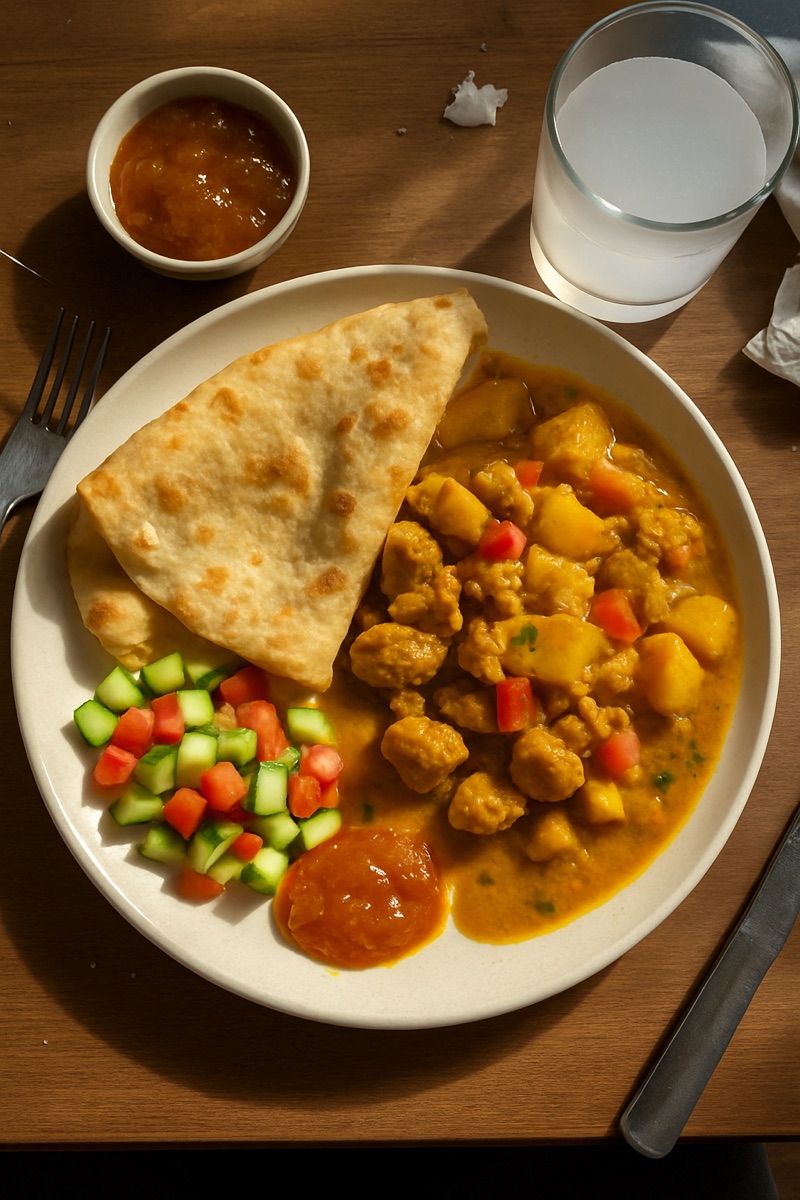 Roti🇻🇨 Saint Vincent and the Grenadines · 40 minutes
Questions people ask
What is the national dish of Saint Vincent and the Grenadines?
Roasted breadfruit and fried jackfish. No law makes it official, but it is the dish most sources name; callaloo is sometimes cited too.
Why is breadfruit so important in Saint Vincent?
William Bligh's second breadfruit expedition, which set out in 1791, carried plants from Tahiti to Saint Vincent. It became a staple, and the islands now hold a breadfruit festival every August.
What do people in Saint Vincent eat for breakfast?
Bakes with stewed saltfish or eggs are a common breakfast, as in neighbouring Trinidad and Barbados.
Is Vincentian food spicy?
Not especially. Dishes are seasoned with chive, thyme, garlic and lime; hot pepper is added to taste.
What is cook-up?
A one-pot dish of rice, pigeon peas and meat, usually chicken or pork, cooked together.
Keep reading
- What is the national dish of Saint Vincent and the Grenadines?
- Traditional food of Antigua and Barbuda: 11 dishes to know
- Traditional food of the Bahamas: 12 dishes to know
- Traditional food of Barbados: 12 dishes to know
- Traditional food of Cuba: 12 dishes to know
- Traditional food of Dominica: 12 dishes to know