 COPPER
Traditional food of Madagascar: 12 dishes to know
Malagasy food is built on rice (vary), eaten at almost every meal with an accompaniment called laoka: a broth, a stew of greens or meat, seasoned with ginger, garlic, onion and tomato, and coconut milk on the coast. The most emblematic dishes are romazava, the beef and greens broth, ravitoto with pork, the street cake koba and the rice cake mofo gasy.
What Malagasy food is built on
Rice is the centre of the Malagasy meal. It was grown by the island's first settlers, Austronesian seafarers who arrived from Southeast Asia during the first millennium CE, and it is still eaten at breakfast, lunch and dinner. The Malagasy verb for "to eat a meal", *mihinam-bary*, literally means to eat rice. Zebu, the humped cattle brought by East African settlers around 1000 CE, supplies most of the beef, while later trade with Arab, Indian, Chinese and French communities added spices, achards, noodles and pastries.
A typical plate is a mound of rice (*vary*) with a *laoka*, the accompaniment. In the highlands the laoka sauce is usually tomato-based; on the coast, coconut milk is often added, along with vanilla, cloves or turmeric. Chilli is not cooked into most dishes: it comes on the side as a paste, so each person sets their own heat. A broth called *ro* is often spooned over the rice to moisten it.
Laoka: the dishes eaten with rice
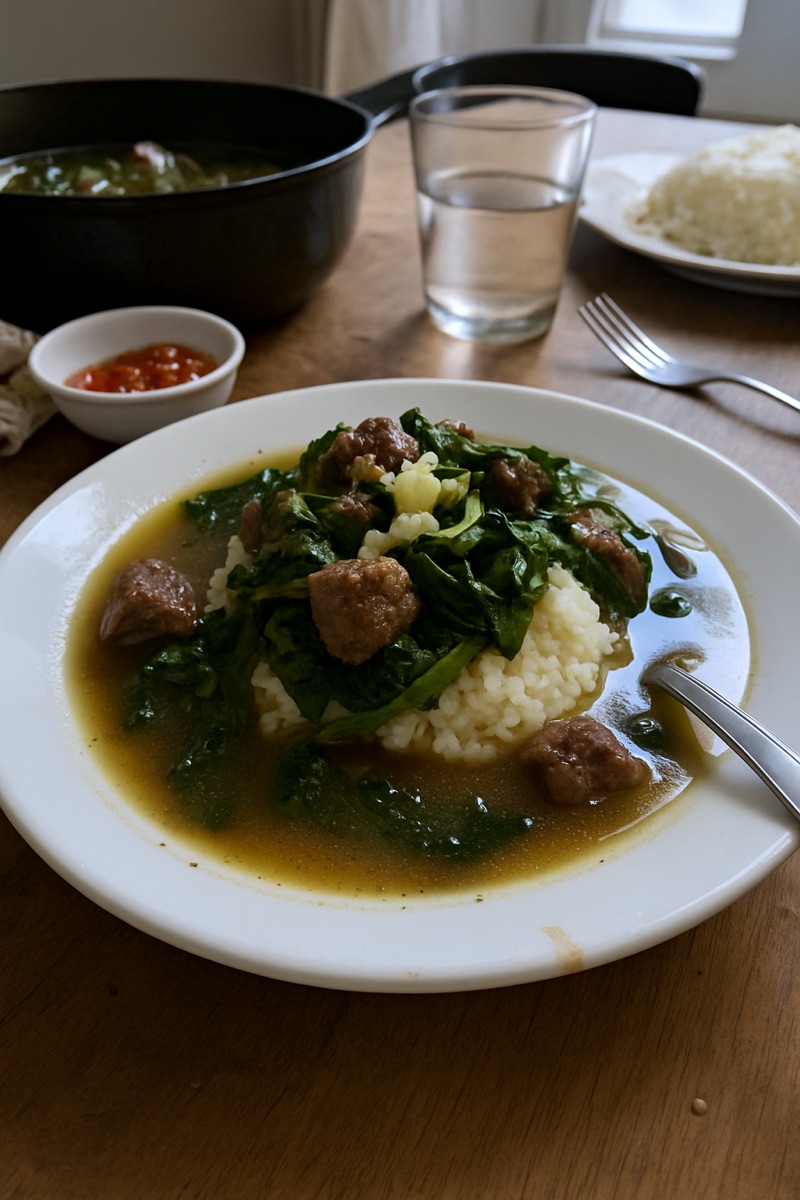
- Romazava — A clear broth of beef, traditionally zebu, simmered with leafy greens, usually with tomato, onion and ginger. What defines it is *anamalao* (brèdes mafana, or paracress), whose flower buds leave a tingling, slightly numbing feeling on the tongue. It is served in deep bowls over plain white rice and is the dish most often called Madagascar's national dish.
- Ravitoto — Cassava leaves pounded to a green paste in a mortar, boiled, then simmered for about an hour with fatty pork until the mixture is almost dry. It was one of the *hanim-pito loha*, the seven dishes served at Merina royal festivals in the 19th century. On the coast it is finished with coconut milk, a version called *ravitoto sy voanio*.
- Voanjobory sy henakisoa — Bambara groundnuts (*voanjobory*), a hard pulse grown on the island, stewed with pork (*henakisoa*). Bambara groundnuts were also among the seven royal dishes, and they are cooked with beef or fish as well as pork. Like most laoka, it comes with rice.
- Varanga — Beef shredded into thin slivers and fried or roasted until browned. Together with romazava it completed the list of the seven royal dishes of the Merina court, and it is still eaten at home and in restaurants as a dry laoka with rice.
- Kitoza — Strips of zebu meat that are smoked or dried. Sun-curing, smoking and salting were the old Malagasy ways of keeping meat for transport and trade, and kitoza is still sold at meat stalls in Antananarivo. It is a usual partner of the morning rice porridge.
- Vary amin'anana — A traditional rice porridge cooked with meat and chopped greens, a whole meal in one pot. It sits alongside *vary sosoa*, plain rice cooked with extra water until soupy, which is the usual Malagasy breakfast and the food given to the sick.
Street food and sweets
- Mofo gasy — Literally "Malagasy bread": a sweetened rice-flour batter poured into greased round moulds and cooked over charcoal. It is the most common breakfast bought from street kiosks, eaten with coffee. On the coast it is made with coconut milk and called *mokary*; a savoury version, *mofo sakay*, adds greens, onion, tomato and chilli.
- Koba — Ground peanuts, mashed banana and sugar or honey bound with corn or rice flour, wrapped in banana leaves and steamed or boiled until the paste sets. The traditional *koban-dravina* is a large cylinder boiled for 24 to 48 hours until the sugar caramelises, then sold in thin slices at markets, roadsides and petrol stations.
- Godro-godro — A firm, cake-like pudding of coconut milk, also made in the Comoros. It belongs to the coastal sweet tradition, alongside *bonbon coco*, shredded coconut cooked in caramelised sugar.
Condiments and drinks
- Sakay — The basic Malagasy condiment: a paste of red or green chilli with ginger and garlic, served on the side of almost every meal. Malagasy dishes are usually mild, and sakay is how heat is added at the table. Some versions are very hot.
- Lasary — On the coast, lasary are Indian-style pickles (achards) of mango, lemon or other fruit, a speciality of the northwest. In the highlands the same word means a salad of green beans, cabbage, carrot and onion in vinaigrette, eaten as a side or stuffed into a baguette.
- Ranovola — The traditional table drink, also called *ranon'ampango*: hot water poured into the pot over the toasted rice stuck to the bottom after cooking. It tastes of toasted rice and has long been a safe alternative to fresh water.
Regional Madagascar
In the central highlands, home of the Merina and Betsileo, rice grows in terraced paddies and the laoka are tomato-based: romazava, ravitoto, varanga. On the east and north coasts, coconut milk goes into fish, chicken and rice, and vanilla, introduced in 1840, appears in sauces for poultry and seafood. The northwest, around Mahajanga, has long had Indian communities: achards are a local speciality and *khimo*, curried minced beef, is popular in the town. In the arid south and west, among the Bara and Antandroy herders, rice gives way to cassava, maize, millet and sweet potato, often cooked with zebu milk or crushed peanuts. Food taboos called *fady* also shape the table: the Sakalava, for example, traditionally avoid pork.
Cook Malagasy food at home
Romazava is the dish usually named as the national dish of Madagascar, with ravitoto as its main rival. Copper has full recipes for romazava, ravitoto and koba, with ingredients and step-by-step methods, on our page about the food of Madagascar.
Madagascar shares cassava-leaf stews, coconut sauces and spiced rice with the islands and coasts around it. Explore more East African recipes to compare.
Across the Indian Ocean, compare the traditional food of Mauritius and the traditional food of Comoros.
The recipes
- Romazava🇲🇬 Madagascar · 2 hours
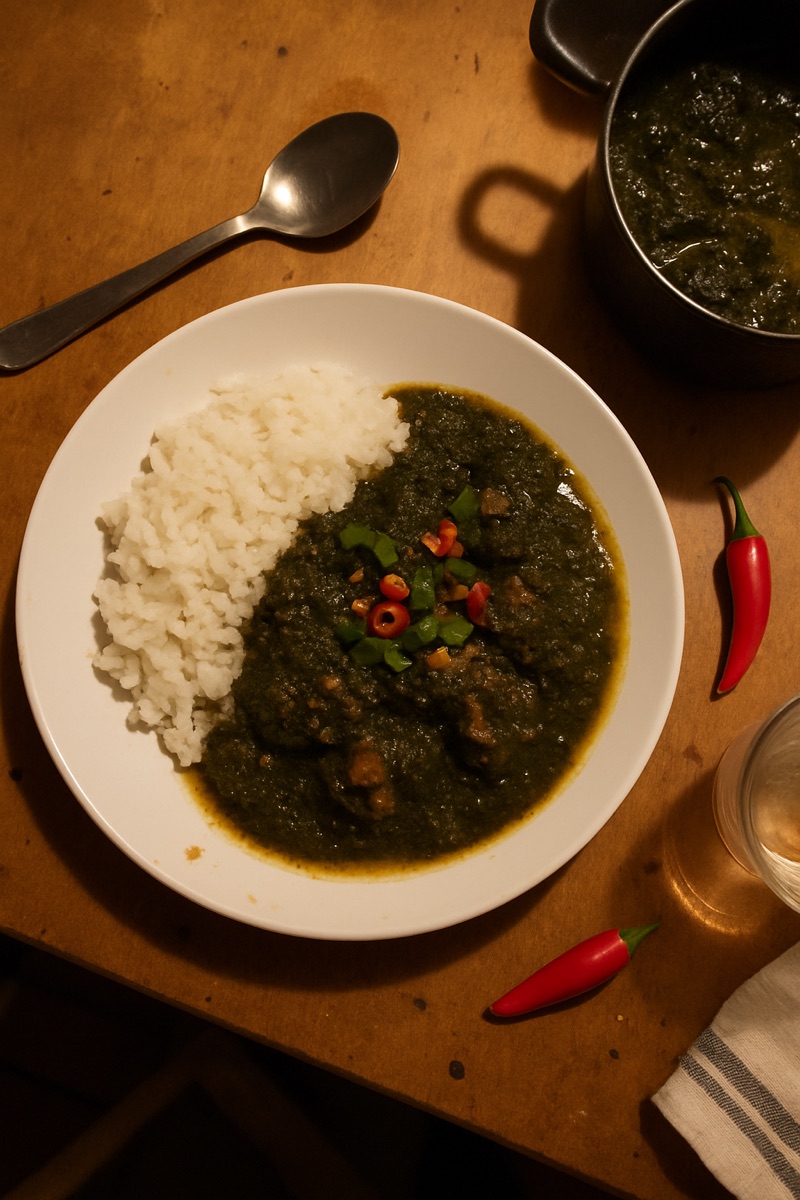 Ravitoto🇲🇬 Madagascar · 2 hours and 5 minutes
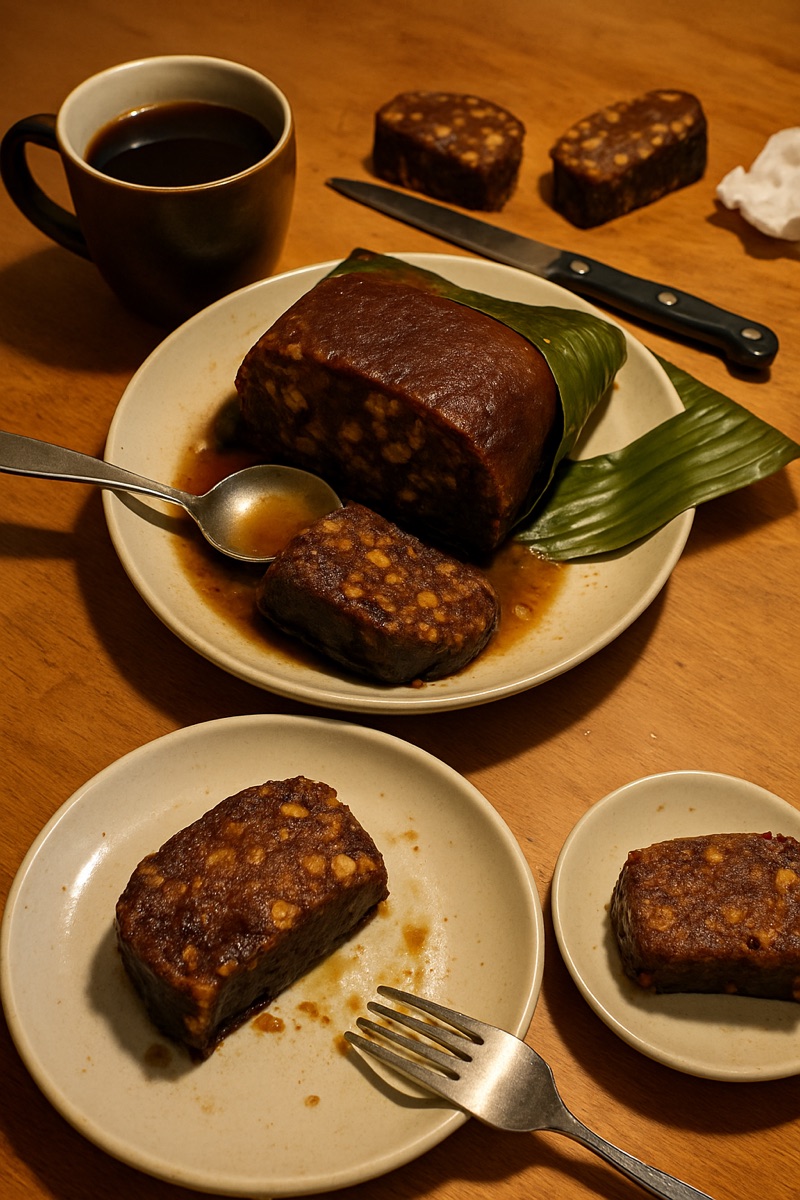 Koba🇲🇬 Madagascar · 3 hours and 20 minutes
Questions people ask
What is the most popular food in Madagascar?
Rice, eaten at nearly every meal with a laoka. Romazava, a beef and greens broth, is the dish most often called the national dish, and ravitoto with pork is just as common in homes.
What do people in Madagascar eat for breakfast?
Vary sosoa, a soupy rice porridge, often with kitoza (smoked zebu strips), or mofo gasy rice cakes bought from a kiosk with coffee.
Is Malagasy food spicy?
Most Malagasy dishes are mild, seasoned with ginger, garlic, onion and tomato. Heat comes from sakay, a chilli paste served on the side, which can be very hot.
What is laoka?
Laoka is the name for whatever is served with rice: a broth, a stew of greens, meat, fish or pulses. A Malagasy meal is rice plus laoka.
What is ranovola?
Ranovola is a drink made by pouring hot water over the toasted rice left in the cooking pot. It is the traditional drink served with meals in Madagascar.
Keep reading
- What is the national dish of Madagascar?
- Traditional food of Burundi: 11 dishes to know
- Traditional food of Comoros: 13 dishes to know
- Traditional food of Djibouti: 13 dishes to know
- Traditional food of Eritrea: 13 dishes to know
- Traditional food of Ethiopia: 13 dishes to know